

Where Once Upon a Time Was Real: Exploring Germany's Fairy Tale Road
Walk Germany's 600km Fairy Tale Road, from the Brothers Grimm's birthplace to Sleeping Beauty's castle and the Pied Piper's Hamelin.
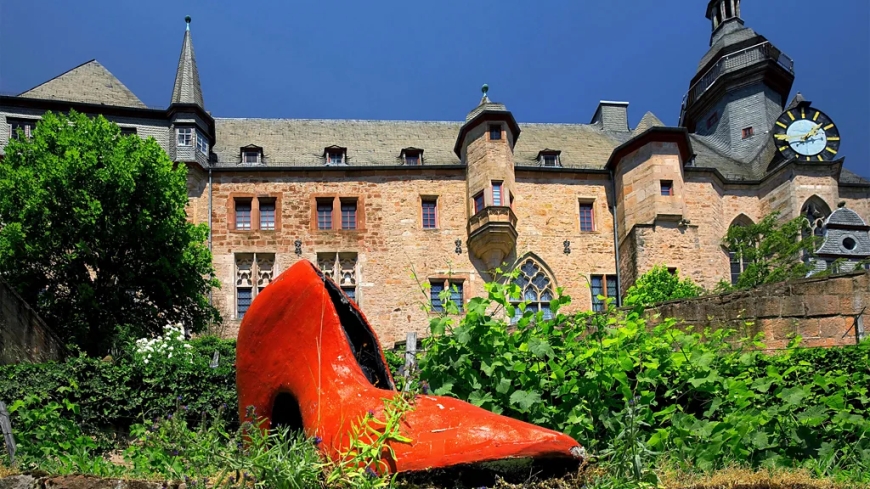
Table of Contents
- What Is the German Fairy Tale Road?
- The Story Behind the Brothers Grimm
- Hanau: Where the Journey Begins
- Steinau an der Straße: A Childhood Frozen in Time
- Kassel: The Heart of the Grimm Legacy
- Sababurg: The Real Sleeping Beauty Castle
- Bodenwerder: The Town of Tall Tales
- Hamelin: Following the Pied Piper
- Bremen: Where Four Animal Friends Found Fame
- Best Time to Visit the Fairy Tale Road
- How to Plan Your Route
- Practical Travel Tips
- Final Thoughts
-
What Is the German Fairy Tale Road?
The German Fairy Tale Road is a themed travel route that stretches from Hanau, near Frankfurt, all the way north to the port city of Bremen. It was created in 1975 to connect the towns and landscapes linked to the Brothers Grimm and the folklore they preserved, but its roots go back centuries further, to the oral traditions that shaped this part of Central Germany long before anyone wrote them down.
The route isn't a single highway. It's more of a connect-the-dots trail through Hesse, Lower Saxony, and North Rhine-Westphalia, looping through more than 60 towns, cities, and villages. Along the way, you'll find castles that may have inspired Sleeping Beauty, forests linked to Little Red Riding Hood, a town tied to the Pied Piper legend, and the city where the Brothers Grimm wrote and worked for most of their adult lives.
What makes this road different from a typical European driving route is its narrative thread. Each stop builds on the last, so by the end of the journey, the stories you grew up with start to feel less like fiction and more like local history that got a magical rewrite.
-
The Story Behind the Brothers Grimm
Before diving into the towns themselves, it helps to know who you're actually following.
Jacob and Wilhelm Grimm were born in the late 18th century in Hanau, and their early years were shaped by financial hardship after their father's death left the family struggling. Rather than inventing fairy tales from scratch, the brothers worked as linguists and folklorists, traveling through villages and collecting stories that had been passed down orally for generations. Their goal was as much academic as it was creative, they wanted to preserve German cultural identity and language at a time when Europe was being reshaped by war and shifting borders.
Their first collection, published in 1812, included stories like Cinderella, Snow White, and Hansel and Gretel, tales that were often darker and stranger than the versions most people know today. Over the decades, the brothers revised and softened many stories for general audiences, while continuing their scholarly work on German grammar and language, including the start of what became a comprehensive German dictionary.
Understanding this background changes how you experience the Fairy Tale Road. You're not just visiting tourist attractions. You're tracing the footsteps of two researchers who treated folklore as something worth saving.
-
Hanau: Where the Journey Begins
Every good story needs a starting point, and for the Fairy Tale Road, that's Hanau the birthplace of Jacob and Wilhelm Grimm.
The city's main square features a striking bronze monument of the two brothers, often used as the unofficial starting photo for travelers beginning the route. Hanau itself was heavily rebuilt after World War II, so it doesn't have the storybook architecture you'll find further along the road, but it carries genuine historical weight as the place where this whole legacy began.
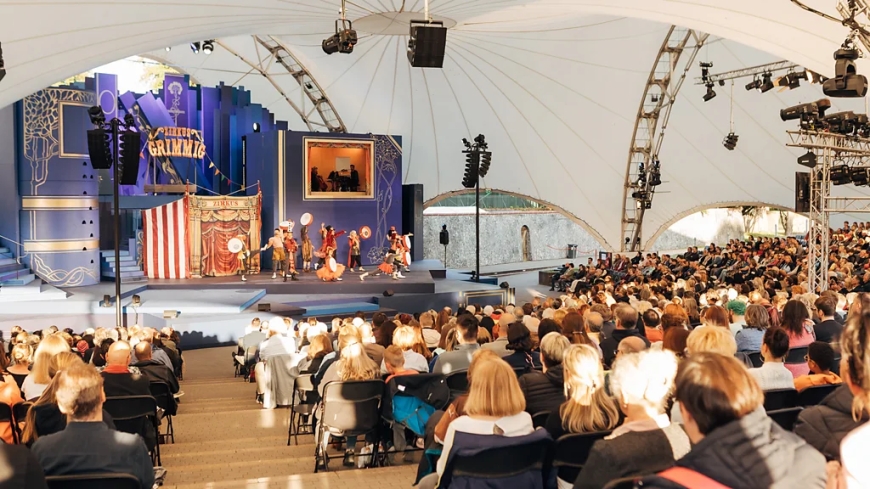
Don't rush through Hanau. The Hanau Brothers Grimm Festival, held in the summer months, brings open-air theater performances of classic fairy tales to the city, often staged right near the historic Schloss Philippsruhe. If your visit lines up with the festival season, it's worth building extra time into your schedule here.
-
Steinau an der Straße: A Childhood Frozen in Time
About an hour north of Hanau sits Steinau an der Straße, a town that feels like it was paused sometime in the early 1800s and never quite restarted.
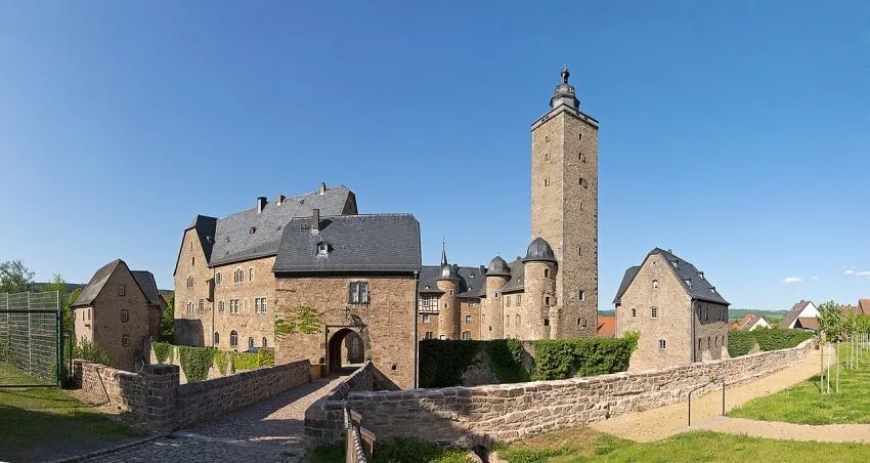
This is where the Grimm family actually lived during the brothers' childhood, after their father took a position as a local district magistrate. The house they grew up in, known as the Brüder Grimm-Haus, has been converted into a museum filled with original manuscripts, family artifacts, and exhibits that walk visitors through the brothers' early life and later scholarly work.
The town square outside the museum is lined with timber-framed buildings in shades of cream, ochre, and deep red, and it's easy to imagine a young Jacob or Wilhelm wandering these same streets. Steinau also hosts open-air fairy tale performances during the summer, staged in a natural amphitheater near the old castle grounds, where local actors bring stories like Hansel and Gretel to life for both children and adults.
If you only have time for one stop beyond Hanau, this town offers the most direct, personal connection to the Grimm brothers themselves.
-
Kassel: The Heart of the Grimm Legacy
Kassel is where the Brothers Grimm spent the bulk of their working lives, and it remains the intellectual center of the entire Fairy Tale Road.
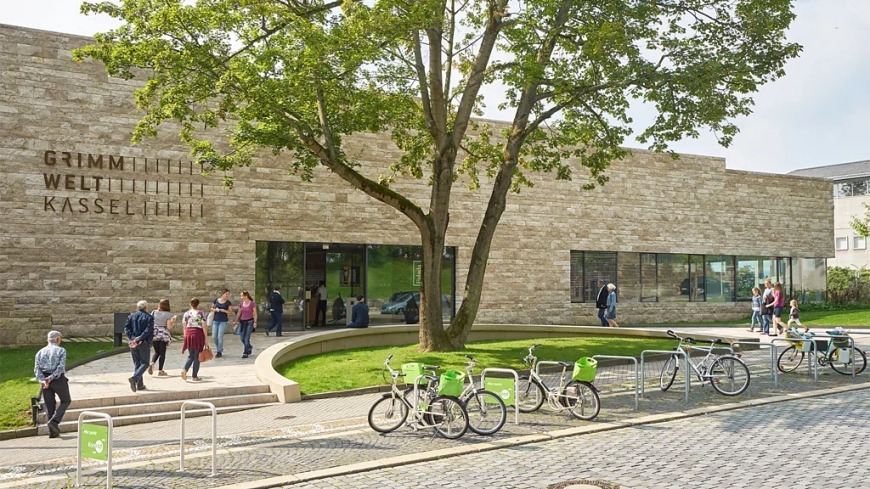
This is the city where Jacob and Wilhelm held positions as court librarians, conducted much of their research, and prepared early editions of their fairy tale collections for publication. Today, the GRIMMWELT museum stands as one of the most thoughtfully designed cultural spaces dedicated to the brothers' work, blending interactive exhibits with rare original documents, including handwritten manuscript pages.
Kassel is also home to Bergpark Wilhelmshöhe, a UNESCO World Heritage site featuring sweeping gardens, cascading water features, and the towering Hercules monument overlooking the city. While not directly tied to a specific fairy tale, the park's dramatic, almost theatrical landscaping gives a sense of the grandeur and imagination that surrounded the Grimm brothers during their time here.
Beyond the museums, Kassel functions as a practical hub for travelers, with good rail connections, a wider range of accommodation, and enough restaurants and cafes to make it a comfortable overnight base before continuing north.
-
Sababurg: The Real Sleeping Beauty Castle
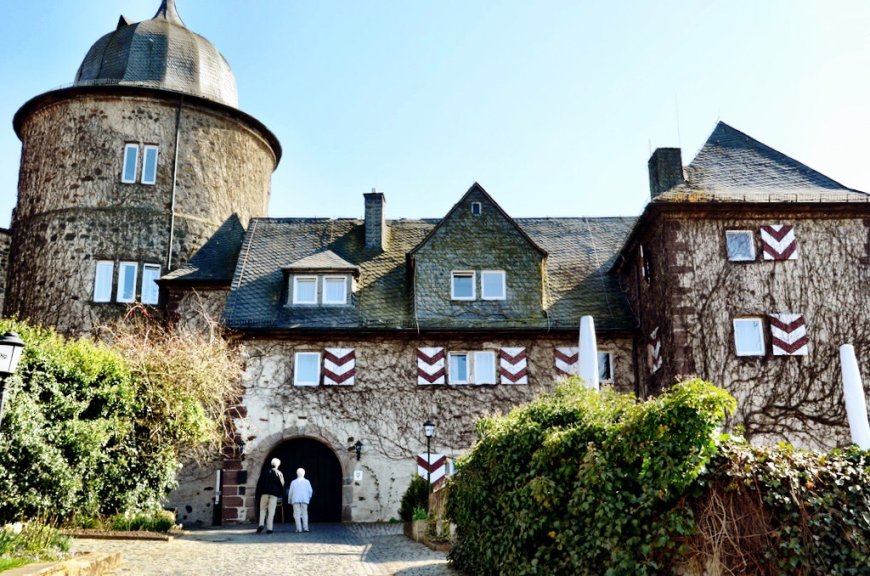
Tucked into the Reinhardswald forest, Sababurg Castle is widely associated with the Sleeping Beauty legend, and one visit makes it obvious why.
The castle's romantic ruins, partially restored and now operating as a hotel, sit surrounded by dense woodland that genuinely feels enchanted, especially in early morning fog or golden evening light. Thick ivy climbs over old stone walls, and the surrounding forest has changed little over the centuries, preserving the same wild, slightly eerie beauty that likely inspired local tales of a sleeping princess hidden behind a wall of thorns.
Adjacent to the castle is the Sababurg Tierpark, one of the oldest animal parks in Europe, where you can see European bison, wild boar, and other native species roaming in naturalistic enclosures. It's a worthwhile add-on if you're traveling with children or simply want a slower, nature-focused afternoon between fairy tale stops.
Whether or not Sababurg was the literal inspiration for Sleeping Beauty remains debated among historians, but the atmosphere alone makes the visit worthwhile.
-
Bodenwerder: The Town of Tall Tales
Bodenwerder isn't tied to the Grimm brothers directly, but it earns its place on the Fairy Tale Road through a different kind of storyteller: Baron Munchausen.
This small town along the Weser River was the real birthplace of Hieronymus von Münchhausen, the 18th-century nobleman whose wildly exaggerated tales of adventure, riding cannonballs, traveling to the moon, pulling himself out of a swamp by his own hair, became the basis for a beloved series of tall tales.
The Münchhausen Museum here, housed in the town hall, dives into both the historical figure and the folklore that grew around him. Even if you've never heard a single Munchausen story before arriving, the museum does a good job of explaining why this particular brand of absurd, self-aware exaggeration became such an enduring piece of German storytelling tradition.
The town itself, with its riverside setting and quiet streets, makes for a pleasant, low-key stop between the more heavily visited locations further along the route.
-
Hamelin: Following the Pied Piper
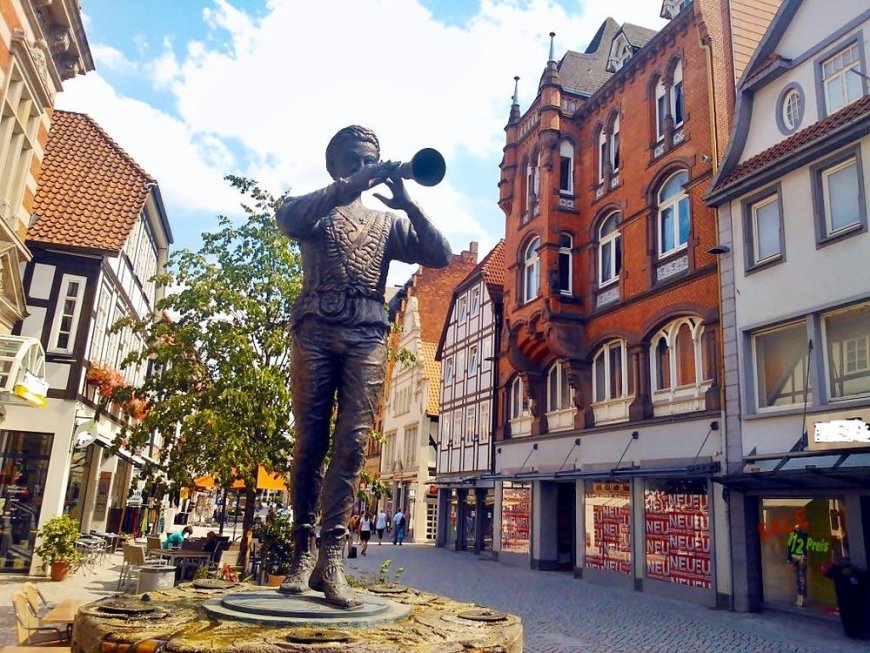
Few legends are as eerie or as enduring as the Pied Piper of Hamelin, and the town of Hamelin leans fully into its connection to the story.
According to the legend, a mysterious piper lured the town's rats away with his music after officials refused to pay him for ridding the town of a rat infestation. When the town still refused payment, he returned and led the children of Hamelin away as well, never to be seen again. Historians still debate what real historical event the story might be based on, with theories ranging from plague outbreaks to medieval emigration movements.
Walking through Hamelin's old town today, you'll spot rat motifs everywhere. bronze rat sculptures embedded in the sidewalks, bakery window displays shaped like rats, and the Rattenfängerhaus (Pied Piper's House), a striking Weser Renaissance building marking where the legend is said to have unfolded.
From May through September, the town stages an open-air reenactment of the Pied Piper story most Sundays at noon, performed by local actors in the square in front of the Hochzeitshaus. It's a genuinely charming way to experience the legend the way it's been told for generations, rather than just reading about it on a plaque.
-
Bremen: Where Four Animal Friends Found Fame
The Fairy Tale Road reaches its northern end in Bremen, home to one of the Grimm brothers' most beloved stories: The Town Musicians of Bremen.
The tale follows a donkey, a dog, a cat, and a rooster, each cast aside by their owners, who band together and head toward Bremen hoping to become musicians. Along the way, they outsmart a group of robbers by stacking themselves on top of one another and frightening the thieves out of their hideout. Notably, the animals never actually make it into Bremen in the original story, but the city has embraced them as honorary residents anyway.
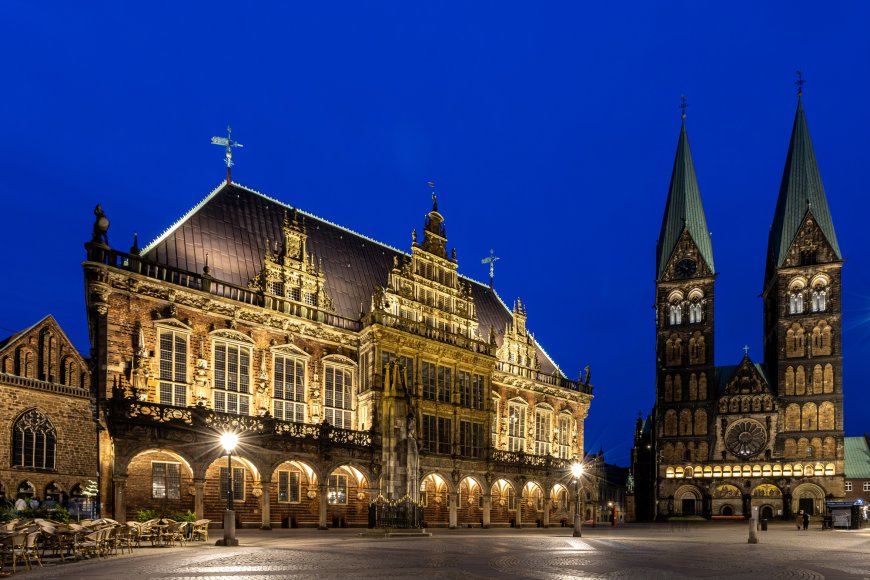
A bronze statue of the four animals, stacked exactly as described in the tale, stands beside Bremen's town hall and is one of the most photographed spots in the city. Local tradition holds that making a wish while holding the donkey's front legs will bring good luck, a tradition you'll notice from the noticeably shinier bronze on that particular spot.
Beyond the statue, Bremen offers a beautiful Altstadt (old town), a UNESCO-listed town hall, and the Schnoor quarter, a maze of narrow medieval lanes filled with small shops and cafes. It's a fitting, lively conclusion to a road trip that began in quiet, storybook villages further south.
-
Best Time to Visit the Fairy Tale Road
The Fairy Tale Road is enjoyable nearly year-round, but the experience shifts noticeably with the seasons.
Late spring through early autumn (May to September) brings the best weather for walking tours and outdoor castle visits, along with the open-air theater performances in towns like Hamelin and Steinau that only run during these months. This is also peak tourist season, so popular spots like Bremen and Kassel can get busy, especially on weekends.
Winter has its own appeal, particularly around the Christmas markets in Kassel, Hamelin, and Bremen, where the half-timbered architecture takes on an even more magical quality under string lights and light snow. Just be prepared for shorter days and the possibility that some smaller museums or open-air sites reduce their hours.
-
How to Plan Your Route
Most travelers approach the Fairy Tale Road in one of two ways: as a dedicated road trip covering the full route over five to seven days, or as a series of shorter detours added onto a broader Germany itinerary.
If you're working with limited time, prioritize Hanau, Steinau, Kassel, and either Hamelin or Bremen, since these stops offer the richest combination of history, museums, and atmosphere. Renting a car gives you the most flexibility, since some of the smaller towns have limited train connections, though major stops like Kassel and Hamelin are well served by rail if you'd rather skip the driving.
A reasonable pace allows one to two nights in Kassel as a central base, with day trips to Sababurg and surrounding areas, before continuing north toward Hamelin and finishing in Bremen.
-
Practical Travel Tips
A few details can make the difference between a smooth trip and a frustrating one. Book accommodation in smaller towns like Steinau and Bodenwerder well in advance during summer months, since options are limited. Many open-air performances and smaller museums operate on seasonal schedules, so check opening times directly before building them into your itinerary. Comfortable walking shoes matter more than usual here, since most of these towns are best explored on foot through cobblestone streets that aren't particularly kind to fragile footwear.
It's also worth setting aside cash for smaller museums and family-run shops, as not all of them accept card payments, especially in the more rural stretches of the route.
-
Final Thoughts
The German Fairy Tale Road isn't trying to recreate fiction for tourists. It's something closer to the reverse: real towns, real forests, and real history that happened to produce stories strange and powerful enough to outlast centuries. Walking through Steinau's town square or standing beneath Sababurg's ivy-covered walls, you start to understand that the Brothers Grimm weren't inventing magic. They were simply paying close attention to the place they came from.
Whether you're chasing childhood nostalgia, genuine literary history, or just an excuse to drive through some of Germany's most beautiful countryside, this route delivers all three. Pack good shoes, leave room in your schedule for slow afternoons, and let the story unfold one town at a time.
What's Your Reaction?
 Like
0
Like
0
 Dislike
0
Dislike
0
 Love
0
Love
0
 Funny
0
Funny
0
 Wow
0
Wow
0
 Sad
0
Sad
0
 Angry
0
Angry
0

A spirit that pursues sunsets and tales. Entrepreneur at heart, globe-trotter by soul. Founder of an art-worshiping jewelry brand that embodies emotion & individuality — where each piece is a tale of culture, craft, and character. From trails up mountains to gem markets, I'm inspired by all journeys — transforming wanderlust into enduring design. Establishing a brand built on authenticity, refinement & purpose — one work at a time.













Comments (0)