

Dublin by Rail: A Scenic Journey Along Ireland's Coast
Skip the car and see Ireland's coastline the local way. Discover Dublin's DART and coastal rail routes from Howth's cliffs to Bray's headland in this complete scenic rail travel guide.
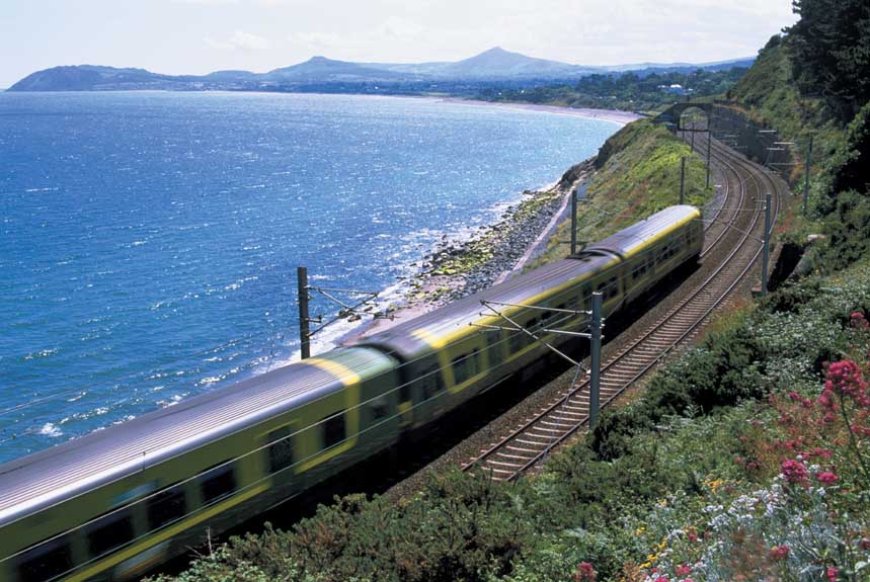
Table of Contents
- Introduction: The Best Views in Ireland Cost the Price of a Train Ticket
- Meet the DART: Dublin's Coastal Lifeline
- Howth: Cliffs, Fishing Boats and Seafood by the Harbour
- Dun Laoghaire: Victorian Piers and Sea Views
- Bray to Greystones: The Cliff Walk Route
- Malahide: Castles, Marinas and Quiet Coastal Charm
- Skerries and the Northern Coastline
- Why Rail Beats the Car Along This Coast
- Practical Tips for Riding Dublin's Coastal Rail Network
- Planning the Perfect Day: Sample Itineraries
- Final Thoughts: Slow Travel, Big Views
-
Introduction: The Best Views in Ireland Cost the Price of a Train Ticket
Ask most visitors how to see Ireland's coastline, and the answer is almost always the same: rent a car, drive the Wild Atlantic Way, chase the cliffs and the headlands from behind a windscreen. It's good advice for the west coast. But it overlooks something remarkable sitting right on Dublin's doorstep, a coastal railway that locals have used for generations to reach some of the most scenic stretches of shoreline in the country, without ever needing to drive.
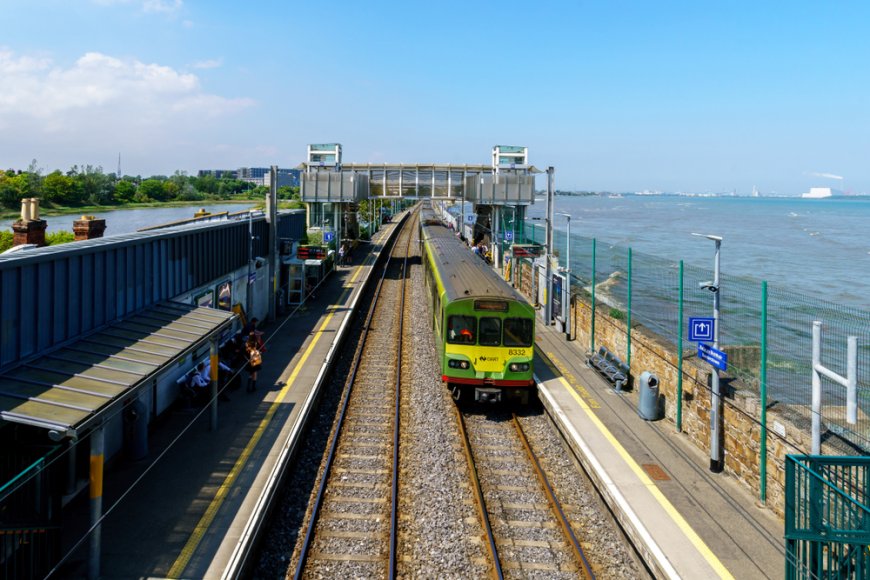
Dublin's rail network, anchored by the DART (Dublin Area Rapid Transit), hugs Dublin Bay and pushes out along the coast in both directions north towards Howth, Malahide and Skerries, and south towards Dun Laoghaire, Bray and Greystones. Along the way, the train tracks run so close to the water that at high tide, sea spray occasionally reaches the windows. Cliffs rise up beside the carriages. Fishing harbours, Martello towers, and sweeping bay views unfold one after another, all without the stress of parking, navigation, or traffic.
This is how Dubliners themselves get to the coast on a Saturday morning. It's cheap, frequent, scenic, and remarkably still something of a secret to visitors who assume Ireland's best coastal views require a hire car and a long drive west. They don't. Some of the most beautiful coastal scenery in the country is a twenty-minute train ride from the city centre.
-
Meet the DART: Dublin's Coastal Lifeline
The DART is an electrified rail line that runs roughly 53 kilometres along the Dublin coastline, from Malahide and Howth in the north down through the city centre and out to Greystones in County Wicklow in the south. It's been running since the mid-1980s and remains one of the most efficient and scenic ways to explore the region.
Unlike Ireland's intercity rail services, which connect Dublin to other major cities, the DART is a local commuter line, but one that happens to trace one of the most photogenic stretches of coastline in Europe. Trains run frequently, generally every 10 to 20 minutes depending on the time of day, making it easy to hop on and off at different stations without rigid scheduling.
The beauty of the DART is its simplicity. A single ticket or a tapped Leap Card gets you access to the entire line, and because it operates as an above-ground urban and suburban railway, nearly every seat offers a view. Sit on the right-hand side heading south from the city centre, or the left-hand side heading north, and you'll get the best sea-facing views for most of the route.
For visitors, this transforms the DART from a simple transit system into one of Dublin's most underrated tourist attractions in its own right.
-
Howth: Cliffs, Fishing Boats and Seafood by the Harbour
Howth sits at the very northern tip of the DART line, roughly 30 minutes from Dublin's city centre, and it's often the first stop visitors make once they discover the coastal rail route.
Howth is a working fishing village built around a busy harbour, and the moment you step off the train, the scene is immediate, trawlers unloading their catch, seals occasionally surfacing near the pier, and a string of seafood restaurants and chippers lining the harbour front. Fish and chips eaten on a bench overlooking Howth Harbour, with the Irish Sea stretching out beyond the pier, is one of the simplest and most satisfying experiences the DART route offers.
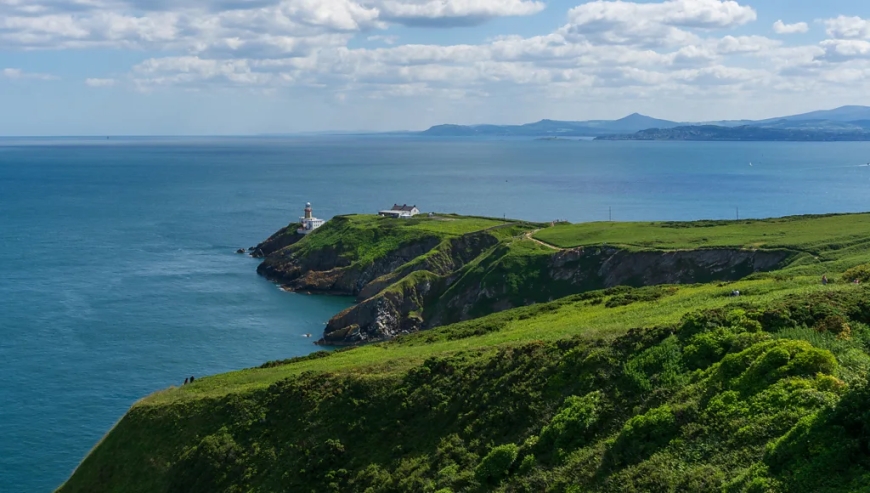
Beyond the harbour, Howth's real draw is its cliff walk. The Howth Head loop trail climbs up from the village onto dramatic sea cliffs, tracing the headland with sweeping views back across Dublin Bay towards the city skyline and, on clear days, as far as the Wicklow Mountains to the south. The full loop takes around two to three hours, though shorter sections are easily manageable for a half-day trip.
Howth also offers Ireland's Eye, a small uninhabited island just offshore, reachable by a short boat trip from the harbour in summer months, home to seabird colonies and the ruins of an early Christian monastic settlement.
-
Dun Laoghaire: Victorian Piers and Sea Views
Heading south from the city centre, Dun Laoghaire is one of the first major coastal stops, and it offers an entirely different atmosphere from Howth's fishing-village charm.
Dun Laoghaire was built up in the 19th century as a major harbour town, and its most distinctive feature is a pair of enormous granite piers that stretch far out into Dublin Bay, forming one of the largest artificial harbours in the world. Walking the length of either pier, a favourite local pastime offers uninterrupted sea views and, on a clear day, sightlines across the bay to Howth Head in one direction and the Wicklow coastline in the other.
The town itself has a handsome Victorian seafront, with the People's Park, a lively Sunday market, and a growing café and restaurant scene that has made Dun Laoghaire increasingly popular with both locals and visitors in recent years. The James Joyce Tower and Museum, housed in a restored Martello tower at nearby Sandycove, is a short walk along the coast and marks the opening setting of Ulysses.
Just beside the tower is the Forty Foot bathing spot, a rocky sea-swimming point that has been used by open-water swimmers for well over a century, regardless of season. Watching, or joining, the hardy swimmers who take a dip here year-round is a genuinely local experience most visitors never encounter.
-
Bray to Greystones: The Cliff Walk Route
If there's one stretch of Dublin's coastal rail network that deserves to be far better known internationally, it's the section between Bray and Greystones.
Bray, at the southern end of the DART line, is a traditional seaside town with a long promenade, a pebble beach, and a backdrop dominated by Bray Head, a steep, grassy headland that rises sharply from the sea. From Bray, one of Ireland's most rewarding coastal walks begins: the Bray to Greystones Cliff Walk.
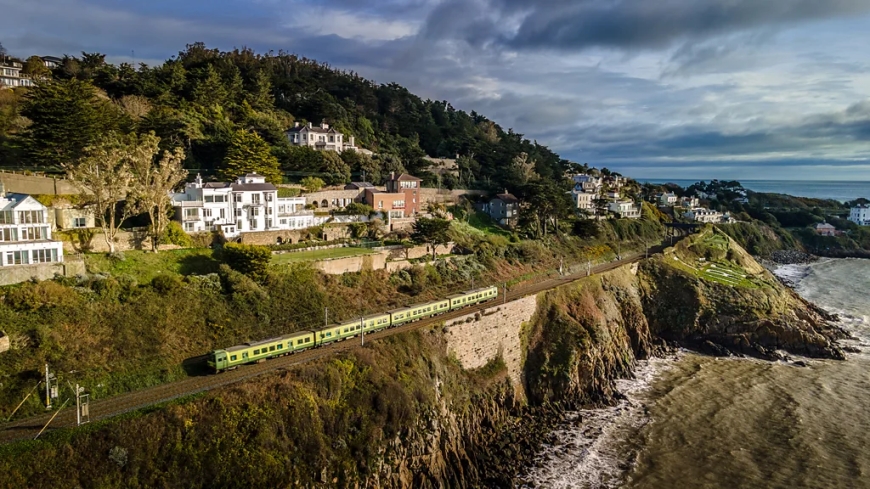
This roughly 7-kilometre trail hugs the cliffside directly above the railway line, offering dramatic views over the Irish Sea as it winds its way south towards Greystones. Much of the walk is close enough to the tracks that you can watch trains snake along the coastline below, following the very same route carved into the cliff face over a century ago. The walk typically takes two to three hours at a relaxed pace, and it's flat enough for most fitness levels, though sturdy shoes are recommended given the exposed, sometimes uneven terrain.
The genius of this route for train travellers is its structure: you can take the DART to Bray, walk the cliff path to Greystones, and then simply catch the train back from Greystones station, no need to double back on foot or arrange transport. Greystones itself, once a quiet fishing village, has developed a lively harbour redevelopment with restaurants and cafés, making it a satisfying place to rest before the return journey.
-
Malahide: Castles, Marinas and Quiet Coastal Charm
North of the city, beyond Howth, sits Malahide, a smaller, quieter coastal town that offers a gentler pace than some of the DART's busier stops.
Malahide's centrepiece is Malahide Castle, a striking medieval castle set within 250 acres of parkland, walled gardens, and woodland trails. The castle dates back roughly 800 years and was home to the same family for much of that time, making it one of Ireland's most historically significant residences still open to the public. The surrounding demesne is free to explore and offers a pleasant contrast to the coastal scenery elsewhere on the line rolling lawns, mature trees, and formal gardens rather than cliffs and sea air.
Malahide's marina and estuary front add to the appeal, with a walkway along the water lined with restaurants and independent shops. The town has a noticeably relaxed, well-heeled character, and it makes for an easy half-day trip that pairs well with a morning in Howth given their proximity on the same rail line.

-
Skerries and the Northern Coastline
For travellers willing to venture slightly further from central Dublin, Skerries, reachable by a short connecting bus or onward rail journey from Rush and Lusk station offers one of the most authentically local coastal experiences on this list.
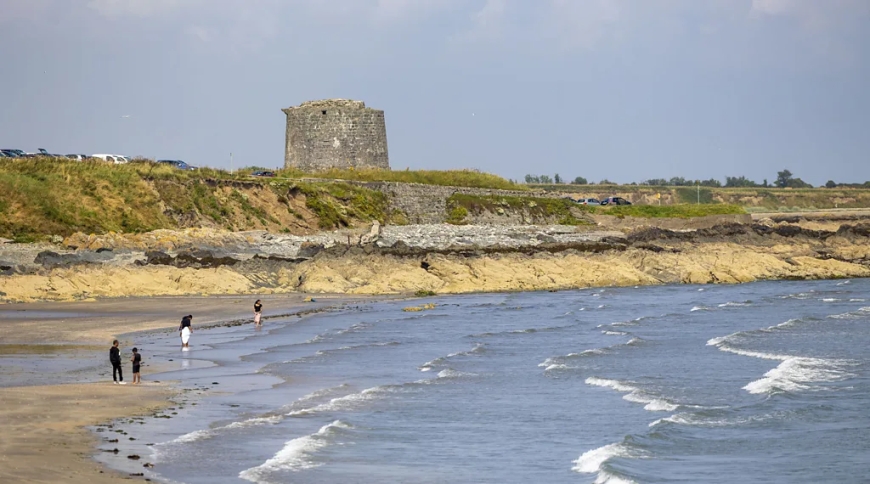
Skerries is a traditional seaside town with sandy beaches, a working harbour, and a set of small islands just offshore, including Church Island and St Patrick's Island, both steeped in early Christian history. The town retains a distinctly unhurried, community feel, popular with Dublin day-trippers but far less discovered by international visitors than Howth or Bray.
A pair of restored windmills on the edge of town, remnants of Skerries' milling history have been converted into a small heritage attraction, and the harbour area offers excellent fish and seafood, much of it landed just metres away.
-
Why Rail Beats the Car Along This Coast
There's a strong practical case for choosing the train over a hire car for exploring Dublin's coastline, beyond simply avoiding the stress of driving on the opposite side of the road.
Parking in towns like Howth, Dun Laoghaire, and Bray can be limited and expensive, particularly during peak summer weekends. The DART, by contrast, drops you directly into the centre of each town, often within walking distance of the harbour or seafront. There's no need to double back to collect a car after a linear walk like the Bray to Greystones cliff path, you simply catch a train from wherever you end up.
The rail route also offers something a car journey can't: an uninterrupted, hands-free view of the coastline as it unfolds. Ireland's coastal roads, while scenic, require constant attention, particularly on narrower stretches. The train allows every passenger, not just those without driving duties, to simply watch the scenery pass.
Finally, the environmental case is straightforward. The DART is electrified and produces a fraction of the emissions of a car covering the same distance, making it a genuinely lower-impact way to explore the coast.
-
Practical Tips for Riding Dublin's Coastal Rail Network
A Leap Card, available from convenience stores and rail stations across Dublin, is the easiest way to pay for DART journeys and offers lower fares than single paper tickets. Visitors can also use contactless bank cards directly at DART gates in many cases, which removes the need to purchase a card in advance.
Trains run from early morning until around midnight on most days, with slightly reduced frequency on Sundays. Weekday mornings and evenings can get busy with commuters, so travelling mid-morning or early afternoon typically means a quieter, more relaxed journey with a better chance of a window seat.
It's worth checking seasonal timetables before travelling, as frequency can vary slightly outside peak commuting hours. Stations are well signposted, and free rail apps provide live departure information, which is particularly useful for the smaller stops further from the city centre.
Comfortable walking shoes are essential if you're planning to combine any DART trip with a coastal walk, particularly the Bray to Greystones cliff path, which has sections of uneven, exposed terrain.
-
Planning the Perfect Day: Sample Itineraries
Half-day trip: Take the DART to Howth in the morning, explore the harbour and enjoy fresh seafood, then walk a section of the Howth Head cliff loop before returning to the city by early afternoon.
Full-day coastal walk: Catch an early DART to Bray, walk the full cliff path to Greystones, have lunch at the harbour, and take the train back into the city in the late afternoon.
Castle and coast combination: Head north to Malahide in the morning to explore the castle grounds and gardens, then continue on to Howth in the afternoon for harbour views and a coastal walk before heading back to Dublin.
Slow Sunday: Take the DART south to Dun Laoghaire, walk the length of the East Pier, visit the Sunday market, and continue on foot to Sandycove for a look at the Forty Foot and the James Joyce Tower before returning by train.
Each of these can comfortably be done without a car, using only the DART and a reasonable amount of walking, making them ideal for visitors without access to a vehicle or those simply looking to avoid the hassle of driving.
-
Final Thoughts: Slow Travel, Big Views
Dublin's coastal rail network is one of those rare travel experiences that delivers far more than its modest reputation suggests. It's not marketed as a scenic railway in the way some of Europe's famous mountain or coastal lines are, yet it offers views, access, and variety that rival routes charging considerably more for the privilege.
What makes it especially valuable is its accessibility. There's no need to book in advance, hire a car, or plan an elaborate itinerary. You can simply arrive at a Dublin city centre station, board a train, and within half an hour find yourself walking along cliffs, browsing a harbour market, or eating freshly caught seafood by the sea.
For visitors willing to look slightly beyond the well-worn path of Temple Bar and Trinity College, Dublin's coastal rail line offers a different side of the city and its surroundings entirely one defined by cliffs, harbours, and the steady rhythm of trains tracing the edge of the Irish Sea. It's slow travel in the best sense: unhurried, scenic, and genuinely local.
What's Your Reaction?
 Like
0
Like
0
 Dislike
0
Dislike
0
 Love
0
Love
0
 Funny
0
Funny
0
 Wow
0
Wow
0
 Sad
0
Sad
0
 Angry
0
Angry
0

A spirit that pursues sunsets and tales. Entrepreneur at heart, globe-trotter by soul. Founder of an art-worshiping jewelry brand that embodies emotion & individuality — where each piece is a tale of culture, craft, and character. From trails up mountains to gem markets, I'm inspired by all journeys — transforming wanderlust into enduring design. Establishing a brand built on authenticity, refinement & purpose — one work at a time.













Comments (0)