























































Two Lands, One Soul: A Pilgrimage Connecting Jordan and Spain
Discover the unexpected spiritual connection between Jordan and Spain in this pilgrim's guide. From Petra to the Alhambra, Wadi Rum to the Camino de Santiago, two lands, one unforgettable soul.
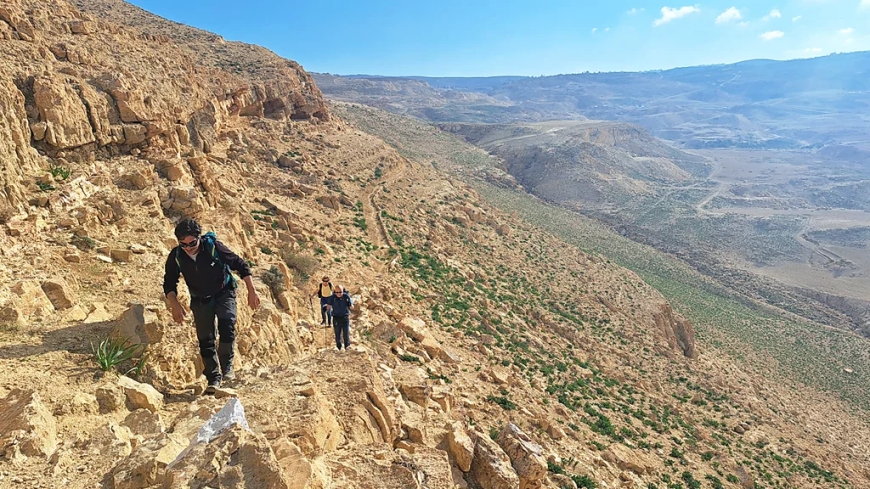
Table of Contents
- Introduction: When Two Worlds Speak the Same Language
- The Historical Thread That Binds Jordan and Spain
- Petra and the Alhambra: Stone Carved by Devotion
- The Desert and the Olive Grove: Landscapes That Pray
- Walking the Pilgrim Roads: Wadi Rum to the Camino de Santiago
- Food as a Form of Prayer: Shared Tables Across Two Continents
- The People You Meet on Sacred Ground
- Practical Guide: Planning Your Jordan–Spain Pilgrimage
- Why This Journey Changes You
- Final Reflection: One Soul, Many Homecomings
-
Introduction: When Two Worlds Speak the Same Language
There is a particular kind of silence that only holy ground can produce. You feel it in the rose-red corridors of Petra, where Nabataean priests once walked barefoot over sun-warmed sandstone. You feel it again, months later, on the Meseta plateau of central Spain, where the wind sweeps across wheat fields and every footfall on the Camino de Santiago seems to echo something ancient and unresolved inside you.
What strikes a thoughtful traveller who moves between Jordan and Spain is not the contrast, it is the continuity. These two lands sit on opposite ends of the Mediterranean world, separated by sea and century, yet they vibrate at a shared frequency. Both were shaped by the meeting of civilisations. Both carry the fingerprints of Moorish architecture, Abrahamic faith, and the human need to make a journey mean something.
This blog is for those who sense there is more to travel than sightseeing. It is for pilgrims in the original sense: people who leave home in order to find it.
-
The Historical Thread That Binds Jordan and Spain
To understand why Jordan and Spain feel like two halves of one story, you need to stand briefly inside history.
Between the 7th and 15th centuries, the Islamic world connected the Arabian Peninsula to the Iberian Peninsula in an arc of scholarship, trade, and spiritual exchange. Jordan, sitting at the crossroads of ancient caravan routes, was part of this living network. Scholars from what is now Amman and Jerash contributed to a body of knowledge that eventually made its way westward, through North Africa, across the Strait of Gibraltar, and into the great libraries of Córdoba and Toledo.
Spain, particularly in its Andalusian south, became Al-Andalus, a civilisation where Muslim, Jewish, and Christian thinkers shared ideas with a generosity that the rest of medieval Europe could barely imagine. The Arabic word for pilgrimage, rihla, was also the word for intellectual journey. Ibn Battuta, the great Moroccan explorer, embodied this tradition, and his spirit wanders still through both Jordan's desert forts and Spain's sun-baked plazas.
When you travel between Amman and Seville, you are not just crossing a map. You are tracing a conversation that never fully ended.
-
Petra and the Alhambra: Stone Carved by Devotion
No pilgrimage between Jordan and Spain can pass without pausing at its two greatest monuments: Petra and the Alhambra. These are not merely tourist attractions. They are theological statements made in stone.
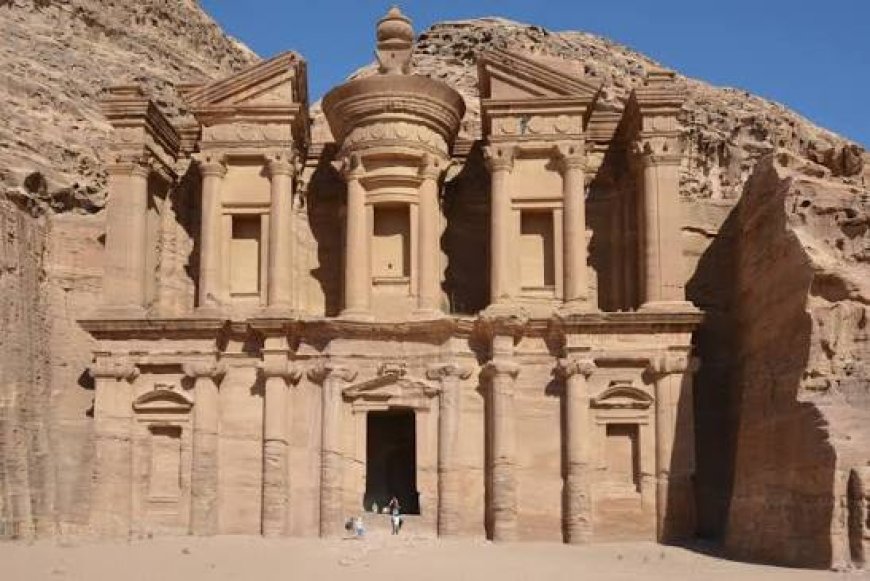
Petra, the ancient Nabataean capital hidden in the Jordanian mountains, is a city of the dead that somehow pulses with life. The Rose City was carved entirely from sandstone cliffs by a people who understood that beauty and commerce were not opposites. The Siq, the narrow canyon that serves as Petra's entrance, builds suspense like the nave of a cathedral. When the Treasury suddenly appears at the end of that shadowed corridor, pink, columned, and seemingly impossible, something in your chest releases. You had been holding your breath without knowing it.
The Alhambra in Granada produces a similar surrender. The Nasrid palaces, constructed between the 13th and 14th centuries, are a study in what happens when artisans are given unlimited patience. The muqarnas ceilings, the geometric tile panels, the pools that perfectly reflect the sky, everything here was designed to suggest the infinite through the finite. The Arabic inscriptions on the walls repeat a phrase that becomes a mantra: "There is no victor but God."
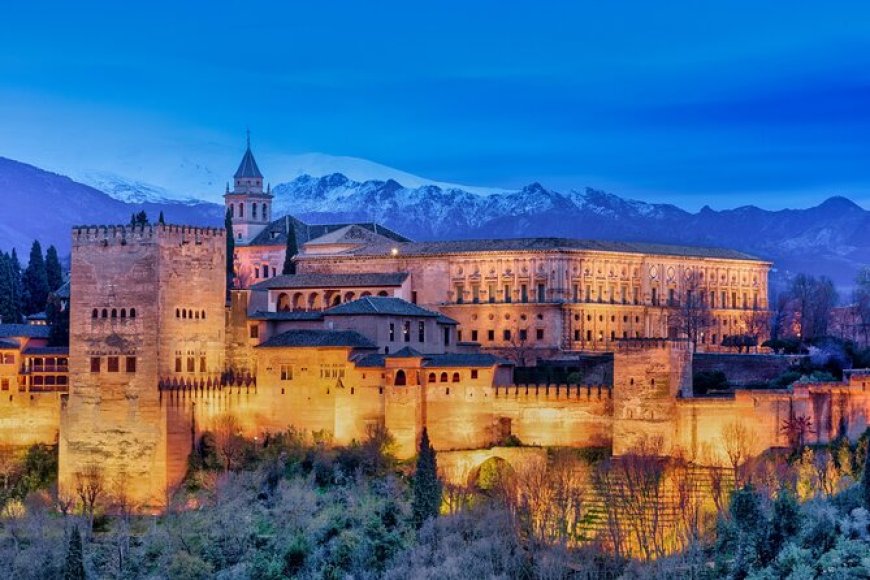
Standing in the Alhambra after having stood in Petra, you understand that the same civilisation built both places, not architecturally, but spiritually. Both are answers to the same question: how do you build something worthy of the sacred?
-
The Desert and the Olive Grove: Landscapes That Pray
Pilgrimages are not only made through buildings. The land itself is the teacher.
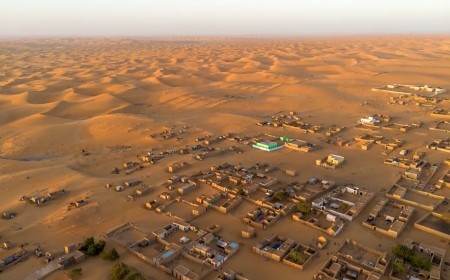
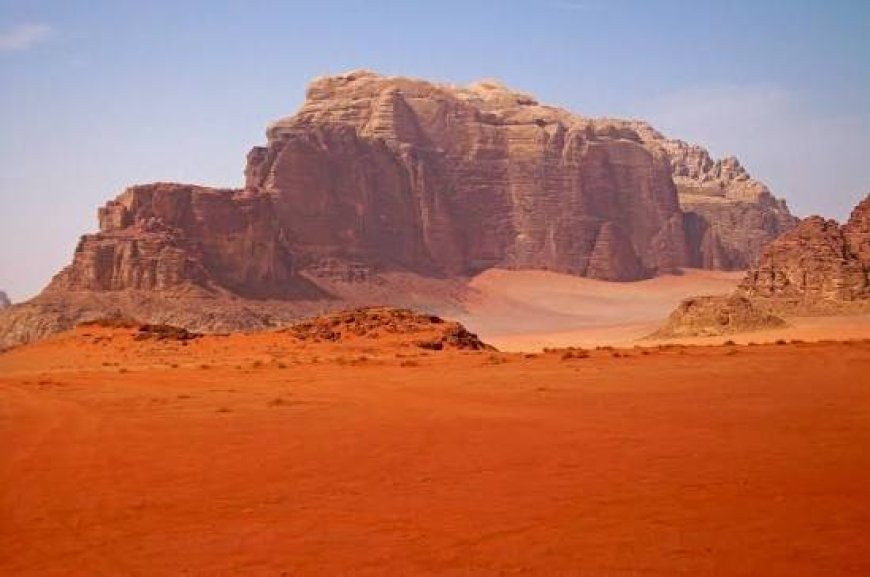
Jordan's landscape demands a kind of surrender. The Wadi Rum desert, with its extraordinary red and ochre sandstone formations, is a place where human concerns feel temporarily resolved. Bedouin camps at the desert's edge offer tea and silence in equal measure. The Dana Biosphere Reserve, where the land descends from highlands to the Wadi Araba valley, moves through seven distinct ecological zones, a journey within a journey. The Dead Sea, the lowest point on earth, has a strange gravitational pull on the mind. You float without trying. Resistance becomes optional.
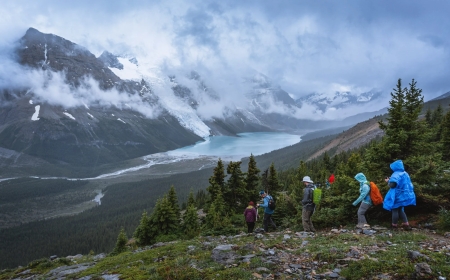
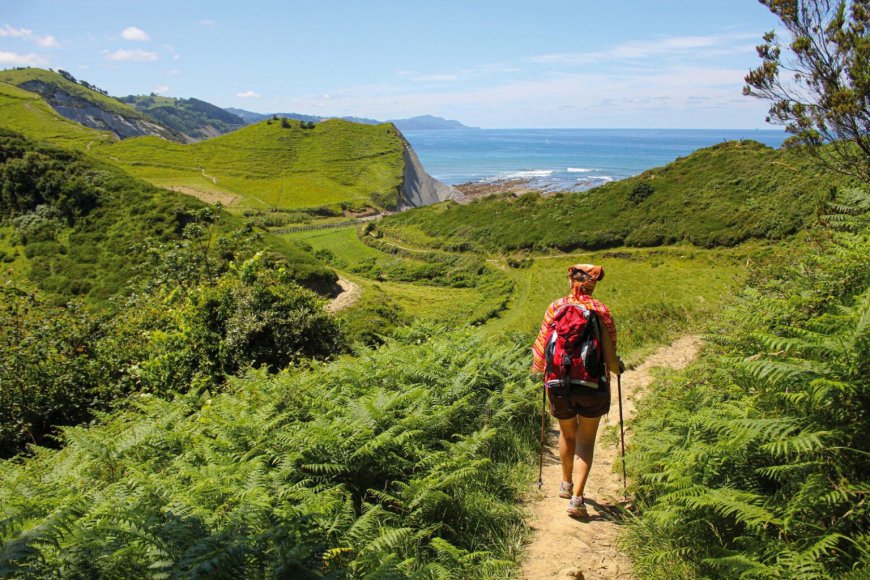
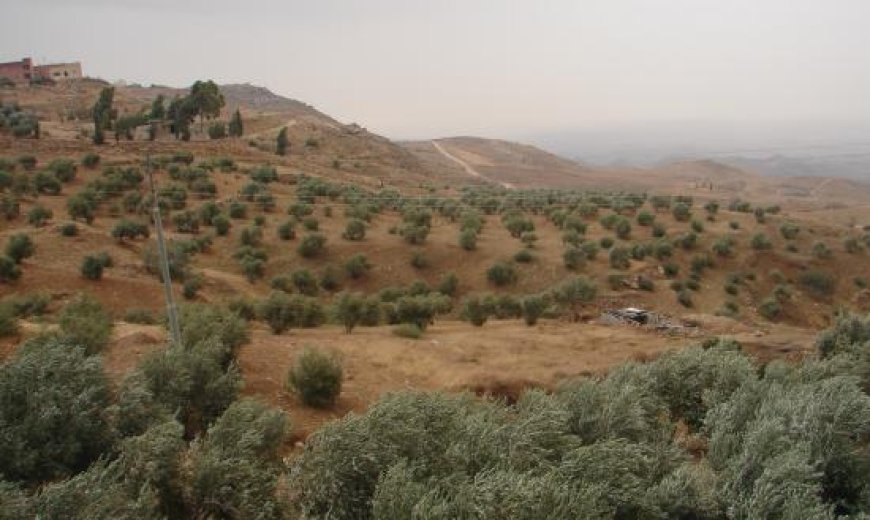
Spain's landscapes pray differently. The meseta, the high plateau of Castile, teaches through monotony, a lesson that only reveals itself when you have walked it for several days. The pilgrimage route to Santiago de Compostela passes through vineyards, oak forests, medieval bridges, and small stone villages where the church bell still marks the hours. Galicia, in the far northwest, receives pilgrims with green mist and granite churches. After the severity of the meseta, it feels like grace.
Both landscapes share one quality: they are larger than your thoughts. They make introspection easier by making ego harder to sustain.
-
Walking the Pilgrim Roads: Wadi Rum to the Camino de Santiago
The act of walking, deliberate, sustained, sometimes painful, is what separates a pilgrimage from a holiday.
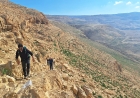
In Jordan, the Jordan Trail stretches 650 kilometres from Um Qais in the north to Aqaba on the Red Sea, passing through landscapes that Biblical characters once crossed. Sections of this trail wind through the Ajloun Forest Reserve, across the Dana highlands, and through Petra itself. To walk it, even partially, is to inhabit history rather than observe it from behind a screen.
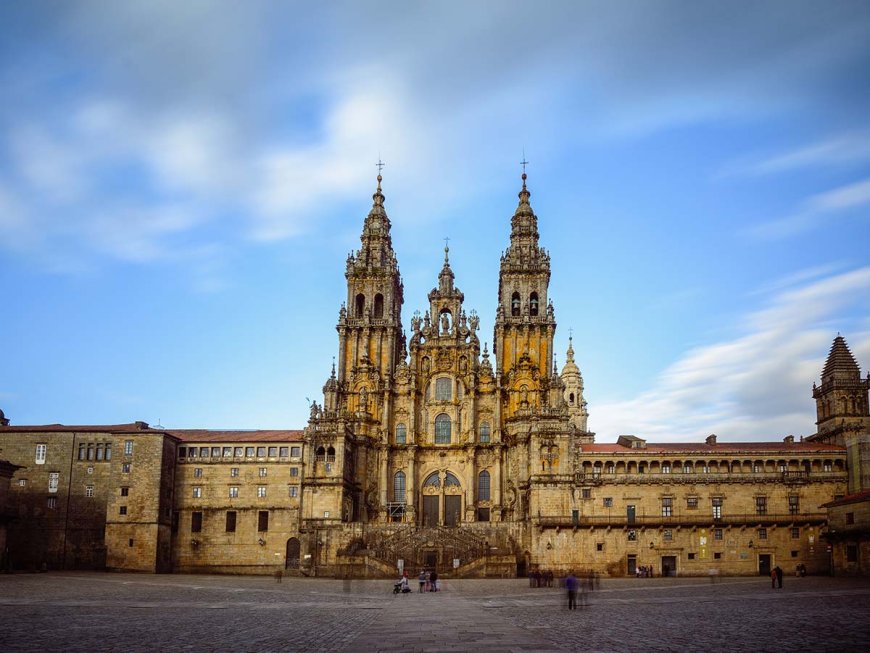
In Spain, the Camino de Santiago is one of the world's oldest and most walked pilgrim routes. The Camino Francés, beginning at Saint-Jean-Pied-de-Port on the French side of the Pyrenees, covers roughly 800 kilometres to the Cathedral of Santiago de Compostela, where the remains of St James are said to lie. But there are dozens of routes. The Camino Portugués begins in Lisbon. The Via de la Plata departs from Seville, which feels particularly right if you have just flown in from Jordan, still carrying the warmth of the Middle East in your clothes.
The overlap between these walking traditions is not coincidental. Medieval Christian pilgrims to Compostela and Muslim pilgrims performing Hajj were engaged in the same fundamental act: the body moving through space as prayer.
-
Food as a Form of Prayer: Shared Tables Across Two Continents
The culinary thread between Jordan and Spain is one of the most tangible pleasures of this dual pilgrimage.
Jordanian food is built on generosity. Mansaf, the national dish lamb slow-cooked in a tangy fermented yoghurt sauce called jameed, served over rice and flatbread, is a meal designed to be eaten communally, with hands, around a single large dish. The message is embedded in the method: you cannot eat mansaf selfishly. Similarly, Jordanian meze, hummus, baba ganoush, fattoush, kibbeh, vine leaves, is a culture of abundance expressed through hospitality.
Spanish food, particularly in the south, carries the same Moorish inheritance in its ingredients: saffron, cumin, almonds, pomegranates, and orange blossoms. A plate of gazpacho in Seville tastes of the same agricultural genius that once made Andalusia the breadbasket of the Roman world and then the garden of Al-Andalus. The Spanish tradition of tapas, many small plates shared among friends, mirrors the Jordanian meze in spirit, even if the ingredients differ.
On pilgrimage, the table is never just about eating. It is about the softening that happens when strangers share bread.
-
The People You Meet on Sacred Ground
One thing both Jordan and Spain offer the modern pilgrim is an encounter with people who have not yet lost the habit of welcome.
Jordanians practise hospitality as a form of honour. Being invited into a home for tea which will happen, if you are open to it means entering a different relationship with time. Tea is not a transaction. It is a signal that this hour belongs to conversation, and that conversation belongs to something larger than the two of you.
On the Camino, a different kind of openness emerges. Pilgrims shed their social identities over the first hundred kilometres. By the time you reach the middle stretches, you know your fellow walkers by their first name, their blisters, and the thing they are trying to work through. An accountant from Seoul and a retired teacher from Brazil and a young man from Nairobi will share a dormitory and compare their reasons for walking, and none of those reasons will be about exercise.
What the people of both journeys share is a willingness to be known. Holy ground seems to produce this. When you are somewhere that has been visited by millions of seekers before you, the performance of ordinary life becomes harder to maintain.
-
Practical Guide: Planning Your Jordan–Spain Pilgrimage
When to Go
- Jordan: March to May or September to November. Avoid peak summer heat, especially in Wadi Rum and the Dead Sea region.
- Spain (Camino): April to June or September to October. July–August sees heavy pilgrim traffic and summer heat.
Visa & Entry Jordan offers visa-on-arrival for most nationalities, or a Jordan Pass which bundles the visa fee with entrance to Petra and other sites, excellent value for longer stays. Spain uses the standard Schengen visa system.
Route Suggestions
- Begin in Amman, spend two days exploring the Roman ruins of Jerash and the old city.
- Head south to Petra for two to three days. Spend the first day on the main trail, the second on the Monastery trail, and consider a sunrise visit.
- Continue to Wadi Rum for at least one night under desert stars.
- Fly from Aqaba or Amman to Seville, Madrid, or Lisbon.
- Begin the Camino de Santiago from Seville (Via de la Plata) or Saint-Jean-Pied-de-Port (Camino Francés).
- Plan 30 to 40 days for a full Camino on foot, or choose a shorter section if time is limited.
What to Pack Lightweight, breathable layers that work in both desert and Atlantic climate. Good walking shoes broken in before departure. A small journal. An open appointment book.
Budget Jordan is moderately priced; the Jordan Pass (approximately JD 70–80 depending on days) is the smartest first purchase. Spain's Camino can be done on a budget of €35–50 per day using pilgrim hostels (albergues) and the €10 pilgrim menu offered at restaurants along the route.
-
Why This Journey Changes You
Travel journalism tends to describe destinations. Pilgrimage writing is obliged to describe what happens to the person making the journey and that is harder to say honestly.
What Jordan teaches, in the end, is perspective. The oldest ruins in Jerash are over two thousand years old. Petra was ancient before Rome was powerful. Standing in these places dismantles the urgency of your ordinary concerns. The Jordanian phrase inshallah, often reduced to a joke in Western usage is in its genuine form, a statement about the limits of human control. The desert teaches the same lesson through heat and silence.
What Spain teaches, walking the Camino, is that the destination is not what you thought it was. Most pilgrims arrive in Santiago and feel, unexpectedly, that the ending is not an ending. The cathedral is beautiful. The Botafumeiro, the great silver censer swung across the transept, is theatrical and moving. But the real arrival happened somewhere on a hillside a week earlier, in a moment that cannot be photographed.
Together, these two journeys create something that neither can provide alone: a before and an after. A rupture in the ordinary timeline of your life, large enough that you can look back across it and see clearly.
-
Final Reflection: One Soul, Many Homecomings
The title of this journey "Two Lands, One Soul", is not a poetic flourish. It is a geographical and spiritual observation.
Jordan and Spain have been speaking to each other for over a thousand years, through trade routes, philosophy, architecture, and the quiet migration of ingredients, words, and ideas. The traveller who moves between them is not doing something unusual. They are continuing a very old conversation, simply by showing up.
A pilgrimage, at its core, is not about the destination. It is about the willingness to be changed by the road. Jordan will offer you beauty, antiquity, and the peculiar peace of the desert. Spain will offer you community, walking, and the small daily victories of continuing. Together, they will offer you something that no single country can give alone: the feeling that the world is larger and more interconnected than your ordinary life suggests and that you, however small, are woven into it.
Come back changed. Come back full. Come back knowing that two lands can, in fact, share one soul.
What's Your Reaction?
 Like
0
Like
0
 Dislike
0
Dislike
0
 Love
0
Love
0
 Funny
0
Funny
0
 Angry
0
Angry
0
 Sad
0
Sad
0
 Wow
0
Wow
0