

Mauritania: Inside One of the World's Least-Visited Countries
Journey into Mauritania, one of the world's least-visited countries. From the legendary Iron Ore Train and Sahara dunes to ancient desert libraries in Chinguetti, discover why this North African nation is adventure travel's best-kept secret.
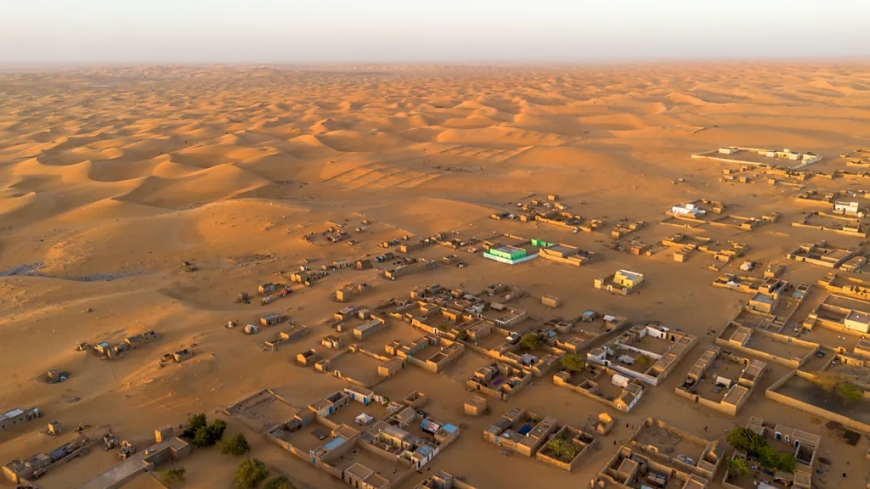
Table of Contents
- Introduction: The Country Most Travellers Can't Place on a Map
- Where Is Mauritania and Why Does Nobody Visit?
- The Iron Ore Train: The World's Most Extraordinary Free Ride
- Chinguetti: The Desert City of Ancient Libraries
- The Sahara Like You've Never Seen It
- Nouakchott: A Capital Unlike Any Other
- The Banc d'Arguin: Where the Desert Meets the Atlantic
- Culture, People and the Rhythm of Mauritanian Life
- Is Mauritania Safe to Visit?
- Practical Guide: Visas, Costs and Getting Around
- Final Thoughts: Why Mauritania Rewards the Brave
-
Introduction: The Country Most Travellers Can't Place on a Map
Ask a room full of well-travelled people to point to Mauritania on a map, and most will hesitate. Ask how many have actually been, and you'll likely be met with silence. Mauritania sits firmly among the least-visited countries on Earth, a vast, sand-swept nation nearly twice the size of France that receives only a small trickle of genuine tourists each year.
And yet, for a certain kind of traveller, Mauritania is the destination. It offers experiences that exist nowhere else on the planet: riding on top of one of the longest trains in the world as it thunders through the open Sahara, sleeping under skies so dark the Milky Way casts shadows, and leafing through medieval manuscripts in desert libraries that have survived for centuries in one of the harshest climates imaginable.
This is not a destination of beach resorts and curated experiences. Mauritania is raw, demanding, and utterly unforgettable. Here's what waits inside one of the world's least-visited countries and why it deserves a place on the most adventurous travel lists.
-
Where Is Mauritania and Why Does Nobody Visit?
Mauritania occupies the north-western corner of Africa, where the Arab Maghreb meets sub-Saharan West Africa. It is bordered by Western Sahara and Algeria to the north, Mali to the east, Senegal to the south, and the Atlantic Ocean along its western coast. Roughly ninety percent of the country lies within the Sahara Desert.
So why do so few travellers come? The reasons are a tangle of perception and practicality. Mauritania spent years on many government travel advisory lists following security incidents in the late 2000s, and reputations, once formed, are slow to fade even though the security situation in the areas travellers actually visit has improved considerably since then. There's also minimal tourism infrastructure, very little international marketing, limited flight connections, and a general absence of the country from mainstream travel media.
The result is a nation that remains genuinely off the beaten path not in the diluted, marketing-brochure sense of the phrase, but in reality. Travellers who visit Mauritania frequently report going days without seeing another foreign tourist. In an era where even remote destinations are saturated with visitors chasing the same photographs, that kind of solitude has become one of travel's rarest commodities.
-
The Iron Ore Train: The World's Most Extraordinary Free Ride
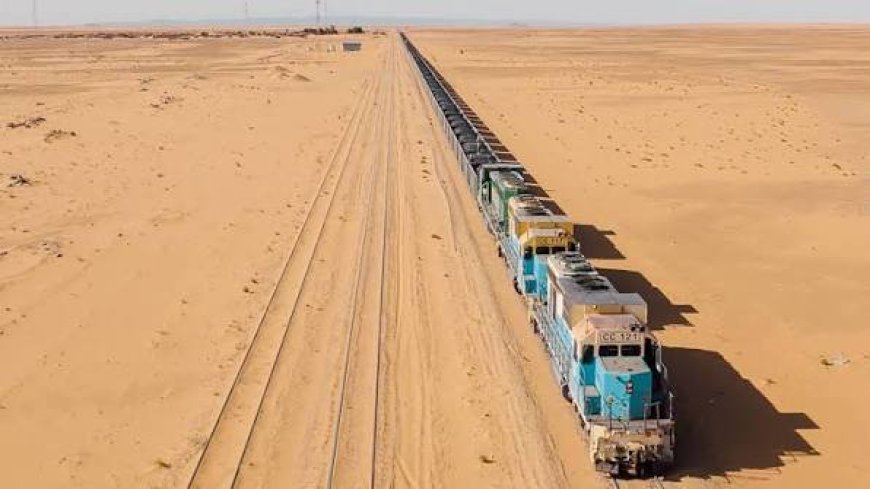
If Mauritania is known for one thing among adventurous travellers, it is the Iron Ore Train, one of the longest and heaviest trains in the world, and arguably the most extreme rail journey a traveller can legally take.
The train runs between the iron mines of Zouérat, deep in the Sahara, and the port city of Nouadhibou on the Atlantic coast, a journey of around 700 kilometres. Stretching up to two and a half kilometres in length, with well over a hundred wagons loaded with iron ore, the train cuts a slow, thunderous line across the emptiness of the desert.
Here's the remarkable part: travellers can ride it. There is a single passenger carriage attached to some services, but the true experience, the one that has drawn photographers, filmmakers, and adventurers from around the world is riding on top of the ore itself, in the open hopper wagons, free of charge.
It is not comfortable. Riders are exposed to scorching daytime heat, bitter night-time cold, and a constant cloud of fine iron dust that works its way into every layer of clothing. The journey takes somewhere between twelve and twenty hours depending on direction and delays. There are no announcements, no facilities, and no assistance.
But those who make the trip describe something close to transcendence: watching the Sahara scroll past from atop a mountain of ore, sunset bleeding across an endless horizon, and a night sky of impossible clarity overhead as the train rumbles on through the darkness. It is one of the last great raw travel experiences left on Earth, unpolished, unticketed, and unforgettable.
-
Chinguetti: The Desert City of Ancient Libraries
Deep in the Adrar region, several hours' drive from the nearest city, lies Chinguetti, a place that redefines what most people think they know about the Sahara.
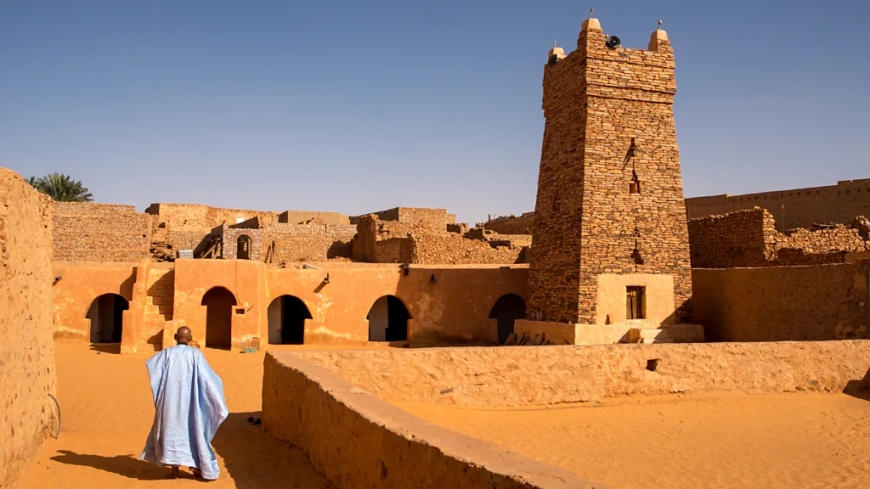
Founded in the 13th century, Chinguetti was once a major gathering point for pilgrims crossing the desert towards Mecca, and it grew into a celebrated centre of Islamic scholarship. At its height, the city was renowned across the Islamic world for its schools of religious study, rhetoric, law, and astronomy. It is often described as one of the historic holy cities of Islam and is recognised by UNESCO as a World Heritage Site, together with the ancient ksour (fortified villages) of Ouadane, Tichitt, and Oualata.
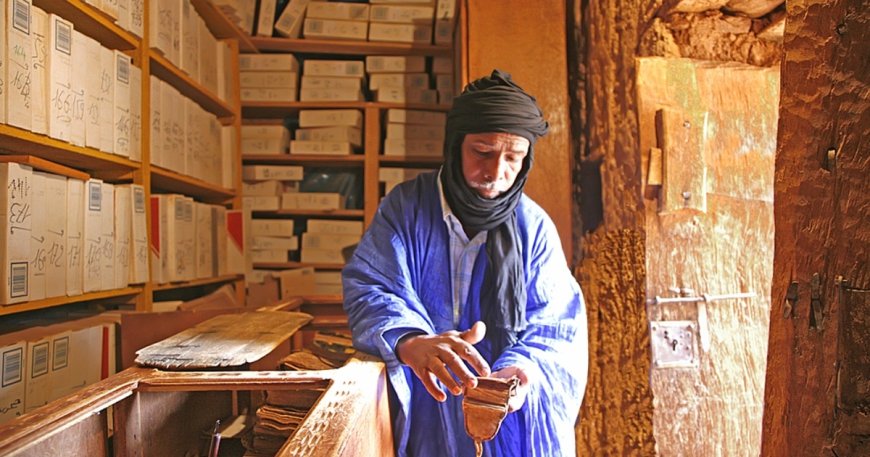
The city's most astonishing treasures are its libraries. Family-run and passed down through generations, these small desert archives hold thousands of manuscripts, some dating back to the medieval period, covering theology, mathematics, astronomy, and poetry. The texts have survived centuries of heat, sand, and time, preserved by the very dryness of the desert air and by families who consider their guardianship a sacred duty.
Visiting these libraries is a quietly moving experience. Custodians will carefully open ancient volumes by hand, pointing out the calligraphy and marginal notes of scholars who died eight hundred years ago. Around you, the old stone town sits half-swallowed by advancing dunes, and the silence of the Sahara presses in from every direction. Few places on Earth make the weight of history feel so physically present.
-
The Sahara Like You've Never Seen It
Morocco has commercialised its desert experience. Egypt frames its sands with pyramids. Mauritania simply gives you the Sahara, vast, silent, and almost entirely empty of other travellers.
The Adrar plateau, the heart of Mauritanian desert tourism, offers a landscape of extraordinary variety: towering golden dunes, black stone plateaus, hidden oases fringed with date palms, and dramatic escarpments that glow amber at sunset. The oasis of Terjit, tucked into a narrow canyon, is a genuine surprise, a ribbon of palm trees and natural spring pools in the middle of arid mountains, where travellers can swim and camp beneath the palms.
Further afield lies one of the planet's great geological curiosities: the Richat Structure, better known as the Eye of the Sahara. This enormous circular formation, roughly 40 kilometres across, is so large it is best appreciated from space, astronauts have used it as a visual landmark for decades. Standing within it, you're inside a natural bullseye of concentric rock ridges formed over millions of years, a place that has fuelled scientific study and internet speculation in equal measure.
Desert travel here typically means 4x4 expeditions with local guides, nights in nomad-style camps, meals cooked over fires, and the kind of star-gazing that city dwellers simply cannot imagine. With virtually no light pollution across most of the country, the Mauritanian night sky is among the clearest on Earth.
-
Nouakchott: A Capital Unlike Any Other
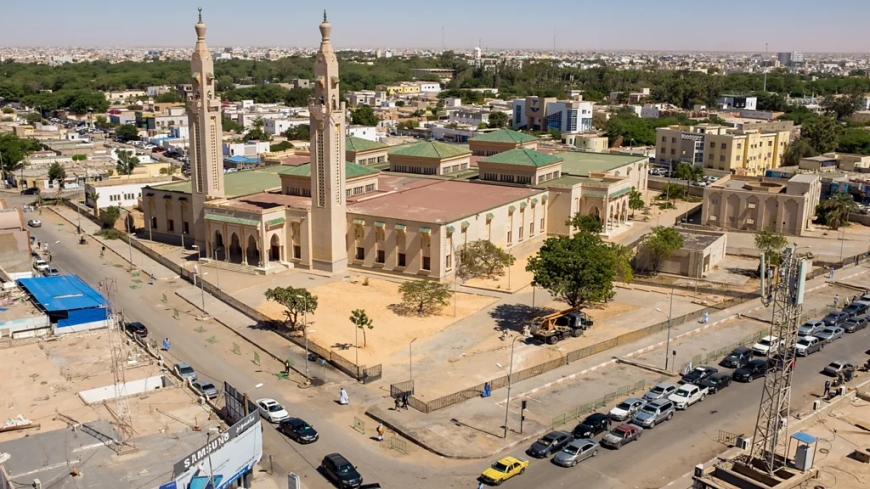
Nouakchott is one of the world's youngest capitals, little more than a village when it was chosen as the capital of newly independent Mauritania in 1960, it has since grown into a sprawling city of well over a million people, built on sand at the edge of the Atlantic.
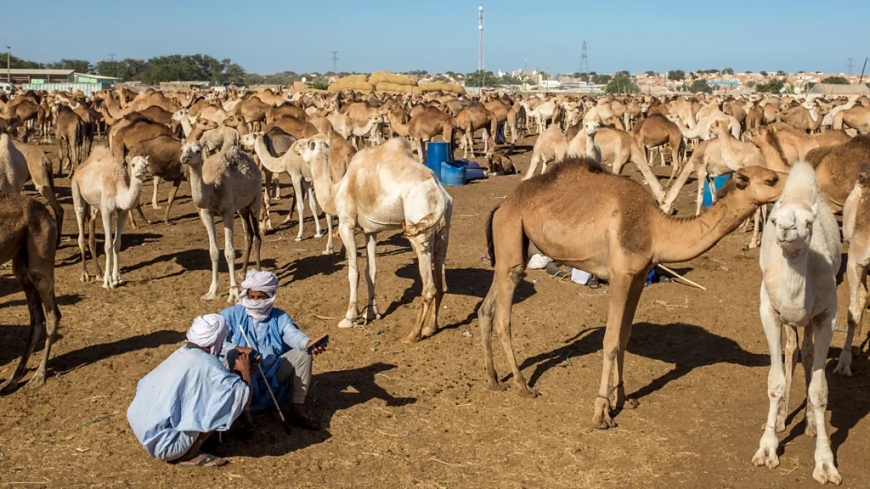
It's a place of striking contrasts. Camels are traded on the city's outskirts while smartphones are sold in busy market stalls downtown. The Marché Capitale hums with fabric sellers, silversmiths, and spice traders. And on the shoreline sits Nouakchott's most photogenic spectacle: the Port de Pêche, the traditional fishing port, where hundreds of brightly painted wooden pirogues launch into the Atlantic surf and return each afternoon to unload their catch in a scene of glorious, chaotic energy.
Few travellers linger in Nouakchott for long, the desert is the main event but as an introduction to the country's culture, commerce, and daily rhythm, a day or two here is genuinely worthwhile.
-
The Banc d'Arguin: Where the Desert Meets the Atlantic
Mauritania holds one of the most important coastal ecosystems on the planet, and almost nobody outside ornithological circles has heard of it.
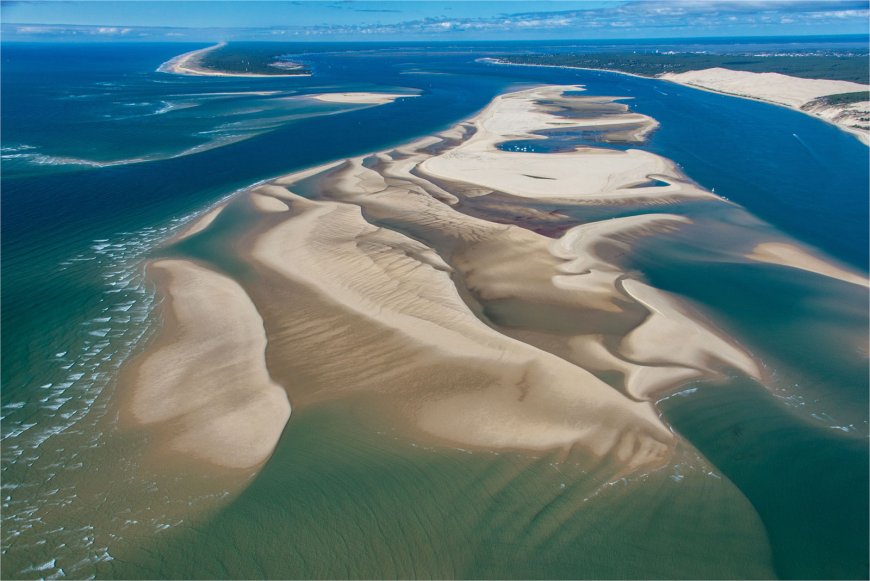
The Banc d'Arguin National Park, a UNESCO World Heritage Site stretching along the Atlantic coast between Nouakchott and Nouadhibou, is where the Sahara runs directly into the sea. Its shallow waters, mudflats, and islands form one of the most significant wintering grounds for migratory birds anywhere in the world, millions of shorebirds travelling between Europe and Africa depend on it, including flamingos, pelicans, terns, and vast flocks of waders.
The park is also home to the Imraguen people, traditional fishing communities who have historically worked these waters using techniques passed down over generations, fishing from sail-powered boats in cooperation with the rhythms of the sea. Visiting the park, typically arranged with local guides and permits offers a side of Mauritania that few would expect: a wild, bird-filled coastal wilderness at the edge of the world's greatest desert.
-
Culture, People and the Rhythm of Mauritanian Life
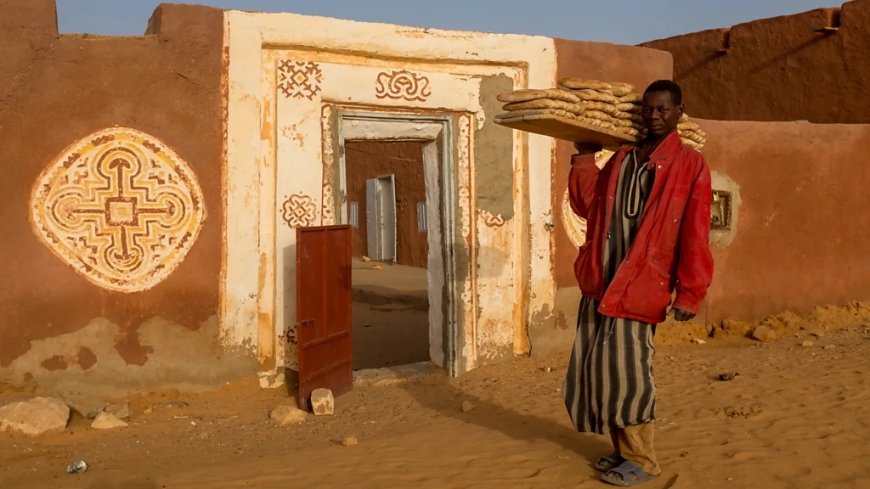
Mauritania sits at a cultural crossroads, blending Arab-Berber (Moorish) heritage with sub-Saharan African traditions. This mix shapes everything, language, music, dress, and cuisine.
Hospitality is central to Mauritanian identity, and its most famous expression is tea. The traditional three glasses of sweet mint tea, poured theatrically from height to raise a foam, are a ritual of welcome that no visitor escapes nor would want to. Each glass is said to carry its own character, growing progressively sweeter, and the ceremony can stretch across an hour of conversation. Declining tea is nearly unthinkable; accepting it opens doors.
The traditional dress is striking and practical: men wear the flowing blue or white daraa (boubou), while women wrap themselves in the malahfa, a full-length veil of vividly coloured fabric. Mauritanian cuisine reflects the desert and the ocean both, thieboudienne (fish and rice) along the coast, camel and goat dishes inland, dates from the oases, and couscous throughout.
Music is another point of pride. Mauritania's griot tradition hereditary musician families who preserve history through song has produced internationally recognised artists, and the hypnotic sound of the ardine (a harp played by women) and tidinit (a lute) remains central to celebrations.
-
Is Mauritania Safe to Visit?
This is the question every prospective visitor asks, and it deserves an honest answer.
Mauritania's security reputation was shaped by incidents that occurred more than a decade ago, which led to years of restrictive travel advisories. Since then, the country has invested heavily in security, and the regions on the main tourist circuit, Nouakchott, the Atlantic coast, and the Adrar region including Atar, Chinguetti, and Terjit, have hosted steadily growing numbers of travellers, including organised group tours from Europe, without serious incident in recent years.
That said, sensible caution applies. Remote border areas, particularly near Mali in the east, remain off-limits for good reason, and most government advisories still recommend against travel to those zones. Independent travellers should stick to established routes, travel with reputable local guides in the desert, register with their embassy where possible, and check their government's current travel advice before booking, as conditions can change.
The day-to-day reality reported by travellers is one of overwhelming hospitality rather than danger. Petty crime exists in Nouakchott as it does in any large city, but violent crime against tourists is rare. As with all adventurous destinations, preparation and local knowledge are your best protection.
-
Practical Guide: Visas, Costs and Getting Around
Visas: Most nationalities can obtain a visa on arrival at Nouakchott–Oumtounsy International Airport and at some land borders. Requirements and fees change, so verify current rules before travelling.
Getting there: Nouakchott has flight connections through hubs such as Casablanca, Paris, Istanbul, and Dakar. Overlanders frequently enter from Morocco/Western Sahara in the north, a classic route on the West Africa overland trail.
Getting around: Distances are vast and public transport between regions is limited. Most travellers hire a 4x4 with a driver-guide, particularly for the Adrar. Shared taxis connect major towns cheaply for the more patient and adventurous.
Costs: Mauritania is inexpensive by Western standards once you're there, local meals, guesthouses (auberges), and shared transport cost very little. The main expenses are 4x4 hire and guided desert expeditions.
When to visit: November to March is the sweet spot, when daytime desert temperatures are manageable and nights are cool. Summer heat in the interior is extreme and best avoided entirely.
What to pack: Sun protection, a headscarf or shesh for dust and sun, warm layers for desert nights, and modest clothing out of respect for local customs. If you're planning to ride the Iron Ore Train: goggles, a dust mask, and clothes you're willing to sacrifice.
-
Final Thoughts: Why Mauritania Rewards the Brave
Mauritania will never be a mainstream destination, and honestly, that's part of its power. It demands more of its visitors than most countries, more preparation, more patience, more willingness to trade comfort for experience. In return, it offers what has almost vanished from modern travel: genuine discovery.
Nowhere else can you ride atop an iron ore train through an ocean of sand, read medieval manuscripts by lamplight in a desert library, stand inside the Eye of the Sahara, and drink three glasses of ceremonial tea with nomads under the clearest night sky you will ever see, all in a single trip, and quite possibly without meeting another tourist along the way.
The world's least-visited countries are usually empty of travellers for reasons of either danger or dullness. Mauritania is that rarest of exceptions: a country overlooked not because it lacks wonders, but because so few people have realised they're there.
For those willing to look, Mauritania isn't just a destination. It's proof that the age of true adventure isn't over, you've just been searching in the wrong places.
What's Your Reaction?
 Like
0
Like
0
 Dislike
0
Dislike
0
 Love
0
Love
0
 Funny
0
Funny
0
 Wow
0
Wow
0
 Sad
0
Sad
0
 Angry
0
Angry
0

A spirit that pursues sunsets and tales. Entrepreneur at heart, globe-trotter by soul. Founder of an art-worshiping jewelry brand that embodies emotion & individuality — where each piece is a tale of culture, craft, and character. From trails up mountains to gem markets, I'm inspired by all journeys — transforming wanderlust into enduring design. Establishing a brand built on authenticity, refinement & purpose — one work at a time.










Comments (0)