

Bhutan Unveiled: A Remote Nation Steps Into the Spotlight
Discover why Bhutan is finally in the global spotlight from Gross National Happiness and the $100 Sustainable Development Fee to the visionary Gelephu Mindfulness City.
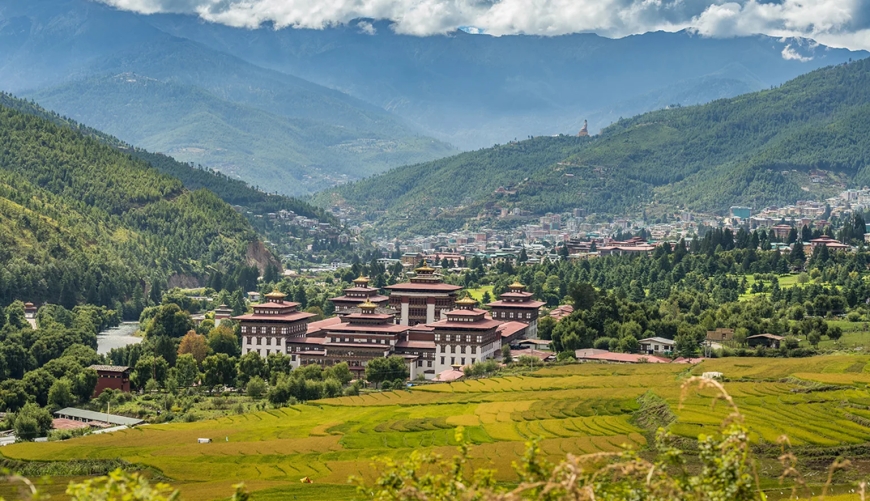
Table of Contents
- Where Is Bhutan, and Why Was It So Hidden?
- Gross National Happiness: The Idea That Made Bhutan Famous
- The World's First Carbon-Negative Country
- Why Bhutan Is Suddenly in the Spotlight
- Gelephu Mindfulness City: A Kingdom's Boldest Bet
- Visiting Bhutan in 2026: What You Need to Know
- Must-See Places When You Visit Bhutan
- Travel Tips for First-Time Visitors
- Frequently Asked Questions
- Final Thoughts
-
Where Is Bhutan, and Why Was It So Hidden?
Tucked into the eastern Himalayas between India and China, Bhutan is a landlocked nation roughly the size of Switzerland, home to fewer than 800,000 people. Its terrain rises from steamy southern lowlands to snow-locked peaks above 7,000 metres, and that dramatic geography shaped its destiny. For most of its history, Bhutan was simply hard to reach.
But isolation here was never purely accidental, it was also a choice. The kingdom did not welcome its first foreign tourists until 1974, and even then it did so cautiously, wary of the cultural erosion that unchecked tourism had brought to other parts of the Himalayas. Television and the internet were not permitted until 1999, making Bhutan one of the last countries on earth to switch on a screen. This deliberate slowness gave the nation something most modern destinations have lost: an identity that feels genuinely intact rather than curated for visitors.
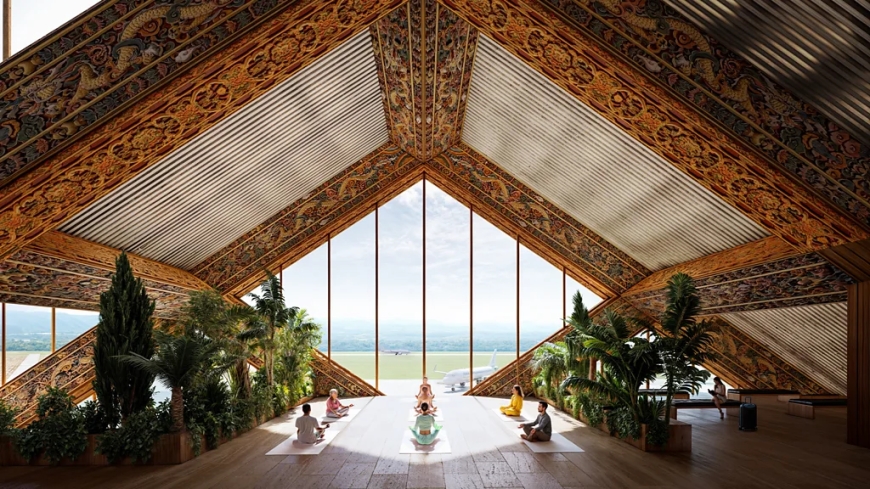
Today that intactness is precisely what makes Bhutan so magnetic. Prayer flags still snap in the wind above mountain passes, monks still debate in centuries-old fortresses, and the architecture remains so consistent that even a new airport terminal is designed to echo traditional Bhutanese form. The country did not preserve its character by accident. It built a philosophy around it.
-
Gross National Happiness: The Idea That Made Bhutan Famous
If one concept put Bhutan on the world's radar long before any city-building megaproject, it is Gross National Happiness. Coined in the 1970s, the idea was startlingly simple and quietly radical: a country's success should not be measured only by how much money it produces, but by the wellbeing of its people and the health of its environment and culture.
Gross National Happiness is not a marketing slogan in Bhutan, it is woven into governance. Policy decisions are weighed against four pillars: sustainable development, environmental conservation, cultural preservation, and good governance. A new road, a factory, or a tourism plan must justify itself not just economically but in terms of how it affects community life, ecology, and the spiritual fabric of the nation.
Skeptics have long asked whether such an idealistic framework can survive contact with the modern economy. That question matters more now than ever, because Bhutan is about to test its happiness philosophy against some of the most ambitious development plans in its history. The fascinating part is that the country isn't abandoning the idea under pressure, it is doubling down on it.
-
The World's First Carbon-Negative Country
Bhutan holds a distinction almost no other nation can claim: it absorbs more carbon dioxide than it emits. Thanks to vast forest cover roughly 70% of the country is wooded, with a constitutional mandate to keep at least 60% forested for all time, Bhutan functions as a net carbon sink. Its abundant rivers also power hydroelectric plants that export clean energy to neighbouring India.
This isn't a happy coincidence; it is the result of conscious restraint. Where other countries cleared land for short-term gain, Bhutan protected it. Where others measured progress in smokestacks, Bhutan measured it in canopy. The carbon-negative status has become a powerful part of the country's global story, positioning this small kingdom as an unlikely environmental leader at a moment when the rest of the world is scrambling to catch up.
For travellers, the appeal is obvious. Few destinations let you explore pristine forests, glacier-fed rivers, and Himalayan wilderness with the knowledge that your visit is supporting one of the planet's most environmentally responsible nations.
-
Why Bhutan Is Suddenly in the Spotlight
So what changed? Why is a country famous for keeping the world at a distance now making global headlines?
The answer is partly economic. For all its philosophical riches, Bhutan faces real-world pressures: limited job opportunities for young people, a growing wave of educated citizens emigrating in search of careers abroad, and an economy that leans heavily on hydropower and tourism. A nation that built its reputation on contentment found itself confronting a quiet crisis, a brain drain that threatened its future.
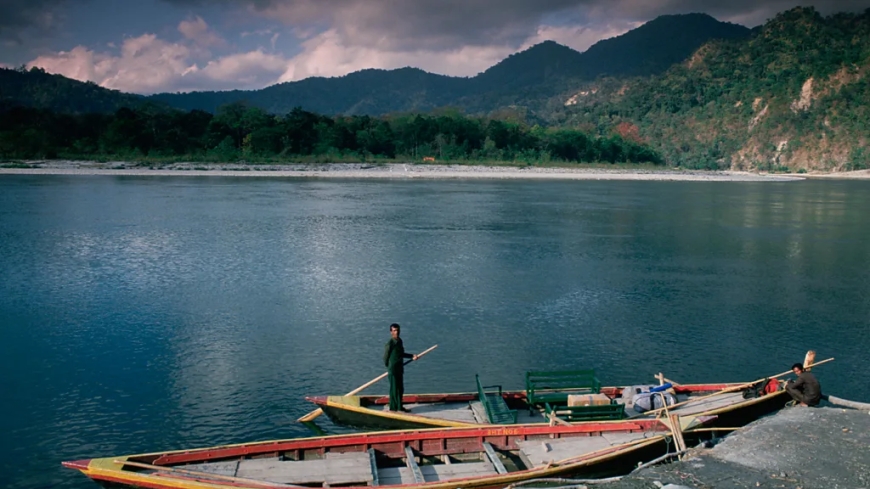
Rather than retreat, Bhutan's leadership chose to reinvent. The government has rolled out incentives for innovation and entrepreneurship, introduced a year of national service for young citizens, and most strikingly unveiled a plan to build an entirely new kind of city. At the same time, the kingdom recalibrated its tourism strategy to make the country more accessible without surrendering its values.
Put simply, Bhutan is no longer asking whether to engage with the modern world. It is deciding how to do so on its own terms, with happiness and sustainability still at the centre. That confidence, a small nation offering the world a different blueprint for progress is exactly what has captured global attention.
-
Gelephu Mindfulness City: A Kingdom's Boldest Bet
No single project explains Bhutan's new visibility better than the Gelephu Mindfulness City, or GMC. Announced by King Jigme Khesar Namgyel Wangchuck in December 2023, it is the most ambitious undertaking in the nation's modern history, and arguably its most surprising.
Located in the southern town of Gelephu, near the Indian border, the project will create a Special Administrative Region with its own legal framework designed to attract international business and investment. The vision spans more than 1,000 square kilometres, making it enormous relative to the country's size. Yet the concept is not a generic economic zone. The "mindfulness" in its name is the whole point: this is meant to be a place where conscious, sustainable enterprise grows alongside Buddhist spiritual heritage and Bhutanese identity.
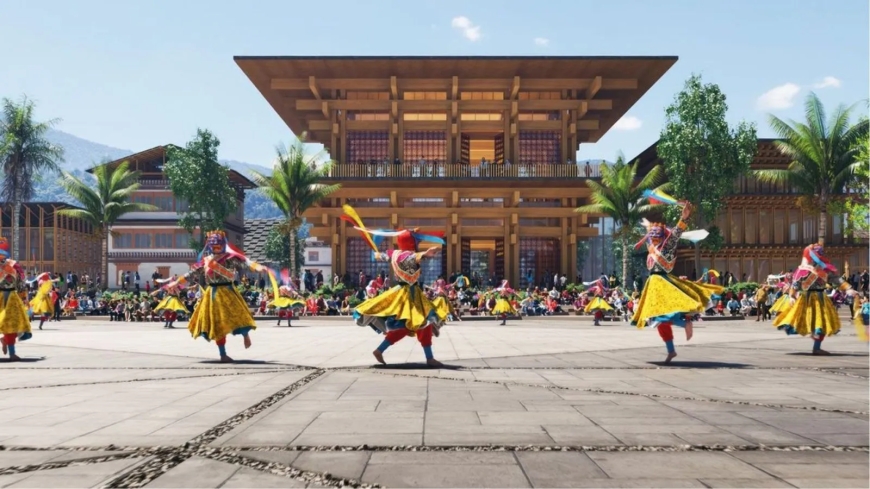
The master plan, developed by the renowned Danish architecture firm Bjarke Ingels Group together with engineering consultancy Arup and others, imagines a city of mandala-inspired neighbourhoods linked by green corridors and inhabitable bridges spanning the region's many rivers. Plans include a new international airport, rail connections, public spaces, and architecture that borrows from the dzongs, the fortified monasteries that have defined Bhutanese building for centuries. The goal is a city that grows like a living ecosystem rather than a grid of concrete.
The project has drawn endorsements from Nobel-winning economists and global business figures, lending it serious credibility. Progress so far is concentrated in planning, negotiation, and design rather than visible construction, and the timeline stretches over decades. Whether Bhutan can pull off something this audacious without compromising the values that make it special remains the central question, and the world is watching closely to find out.
-
Visiting Bhutan in 2026: What You Need to Know
For travellers, the most welcome news is that visiting Bhutan has become noticeably more affordable. The kingdom's tourism model is built on a principle often described as "High Value, Low Volume" the aim is to attract considerate visitors rather than overwhelming crowds, protecting both the environment and the visitor experience.
The cornerstone of this approach is the Sustainable Development Fee, or SDF, a daily levy paid by international tourists. The SDF was once set at $200 per person per night, but in 2023 the government halved it to $100 per person per night to revive arrivals after the pandemic. This reduced rate is scheduled to remain in place through 31 August 2027, giving travellers an unusual window to experience Bhutan at a more accessible price.
It's important to understand what the SDF does and doesn't cover. The fee funds national priorities such as free healthcare and education for citizens, environmental conservation, and cultural preservation, it is a direct contribution to keeping Bhutan, well, Bhutan. It does not include your accommodation, meals, transport, or guide, which are charged separately. Children under six are typically exempt, while those between six and eleven generally receive a discount. Indian nationals follow a different fee structure. There is also a one-time visa fee of $40 per person.
Looking ahead, the country is also working to deepen its presence in global travel markets. The inaugural Bhutan International Travel Mart is scheduled for Thimphu in June 2026, a sign of how seriously the kingdom is courting thoughtful, high-value tourism for the years to come.
-
Must-See Places When You Visit Bhutan
A trip to Bhutan rewards slow, intentional travel. A few highlights belong on almost every itinerary.
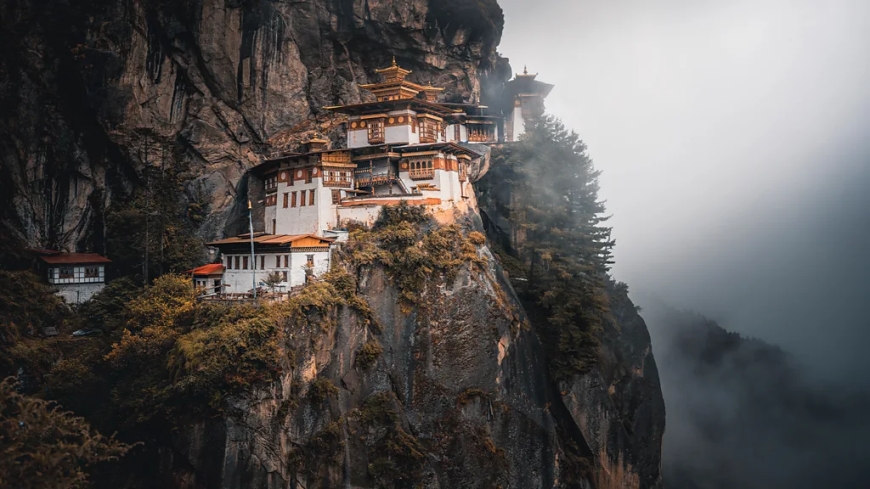
Paro Taktsang (Tiger's Nest Monastery). Clinging impossibly to a cliff face nearly 900 metres above the Paro Valley, this sacred monastery is Bhutan's most iconic image. The hike up is demanding but unforgettable, rewarding visitors with one of the most dramatic views in the entire Himalayas.
Thimphu. Bhutan's capital is one of the few in the world without a single traffic light. It blends monasteries, markets, and a youthful energy, offering a window into how tradition and modern life coexist.
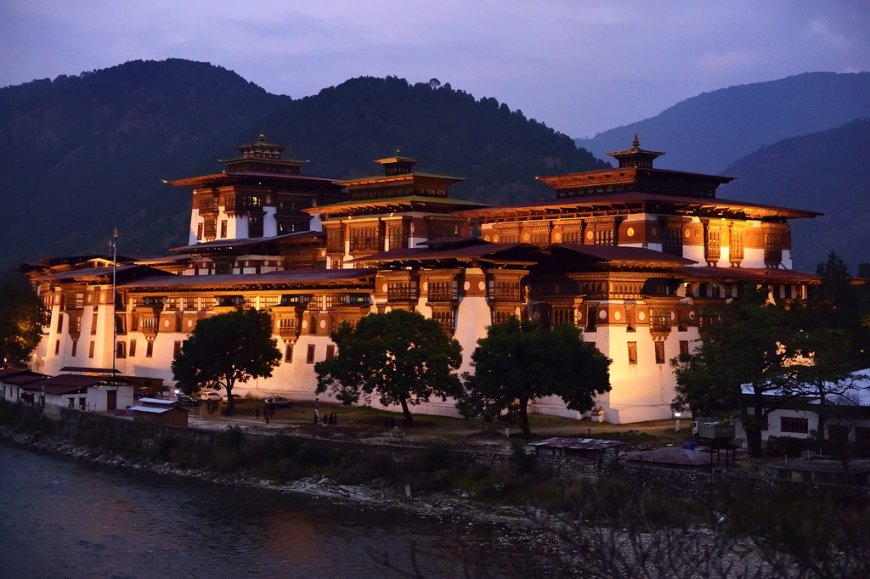
Punakha Dzong. Set at the meeting point of two rivers, this majestic fortress-monastery is widely considered the most beautiful dzong in the country, especially when surrounded by lilac jacaranda blooms in spring.
Paro Valley. Beyond the famous monastery, the valley itself is a patchwork of rice terraces, traditional farmhouses, and ancient temples, framed by mountains on every side.
Phobjikha Valley. This glacial valley is a haven for the rare black-necked cranes that migrate here each winter, and a perfect example of Bhutan's commitment to protecting wildlife habitats.
-
Travel Tips for First-Time Visitors
Planning a trip to Bhutan is unlike planning a holiday almost anywhere else, so a little preparation goes a long way.
Most international visitors must arrange their travel through a licensed Bhutanese tour operator, who handles the SDF, visa, and logistics. So choosing a reputable, locally rooted operator matters enormously. The best time to visit is generally spring (March to May) and autumn (September to November), when skies are clear and festivals fill the calendar. Pack layers, since temperatures swing widely between valleys and high passes, and break in your walking shoes before tackling the climb to Tiger's Nest.
Above all, travel with respect. Dress modestly when visiting religious sites, ask before photographing people, and embrace the country's unhurried pace. Bhutan rewards visitors who come to absorb rather than tick boxes.
-
Frequently Asked Questions
Is Bhutan expensive to visit?
Bhutan is more costly than its Himalayan neighbours by design, since its tourism model favours quality over quantity. However, the reduced Sustainable Development Fee of $100 per night, in place until August 2027, has made it considerably more affordable than it was just a few years ago.
Do I need a guide to travel in Bhutan?
Most international tourists are required to book through a licensed tour operator, who arranges guides, permits, and travel. This isn't just bureaucracy, a knowledgeable guide transforms the experience, opening doors to context and culture you'd otherwise miss.
What is Bhutan most famous for?
Bhutan is best known for its Gross National Happiness philosophy, its status as the world's only carbon-negative country, its dramatic Himalayan landscapes, and cultural treasures like the Tiger's Nest Monastery.
What is Gelephu Mindfulness City?
It is a vast planned city and Special Administrative Region in southern Bhutan, conceived as a hub for sustainable, mindful business that blends economic ambition with Bhutanese spiritual values.
When is the best time to visit Bhutan?
Spring and autumn offer the most reliable weather and the richest festival calendar, making them the ideal seasons for first-time travellers.
-
Final Thoughts
Bhutan's story has always been a quiet rebellion against the assumptions of the modern world, the belief that bigger is better, that progress means consumption, that a country must open its doors wide to matter. For fifty years it offered a gentler alternative, measured in happiness, forests, and faith.
Now, as it steps confidently into the global spotlight, Bhutan faces its most defining test. Can a nation built on mindfulness embrace ambition without losing its soul? The Gelephu Mindfulness City, the reimagined tourism model, and the renewed energy of its young population are all chapters in a single, fascinating experiment.
For travellers, the message is clear: the Last Shangri-La is no longer quite so hidden, and there has never been a more compelling time to see it for yourself, before the rest of the world fully catches on.
What's Your Reaction?
 Like
0
Like
0
 Dislike
0
Dislike
0
 Love
0
Love
0
 Funny
0
Funny
0
 Wow
0
Wow
0
 Sad
0
Sad
0
 Angry
0
Angry
0

A spirit that pursues sunsets and tales. Entrepreneur at heart, globe-trotter by soul. Founder of an art-worshiping jewelry brand that embodies emotion & individuality — where each piece is a tale of culture, craft, and character. From trails up mountains to gem markets, I'm inspired by all journeys — transforming wanderlust into enduring design. Establishing a brand built on authenticity, refinement & purpose — one work at a time.









Comments (0)