

E20 Petrol Explained: Will It Save Money or Cost You More in the Long Run?
Wondering whether E20 petrol will save you money or increase vehicle costs? Learn how E20 works, the latest news, vehicle compatibility, mileage impact, government policy, and whether it's the right fuel for your car.

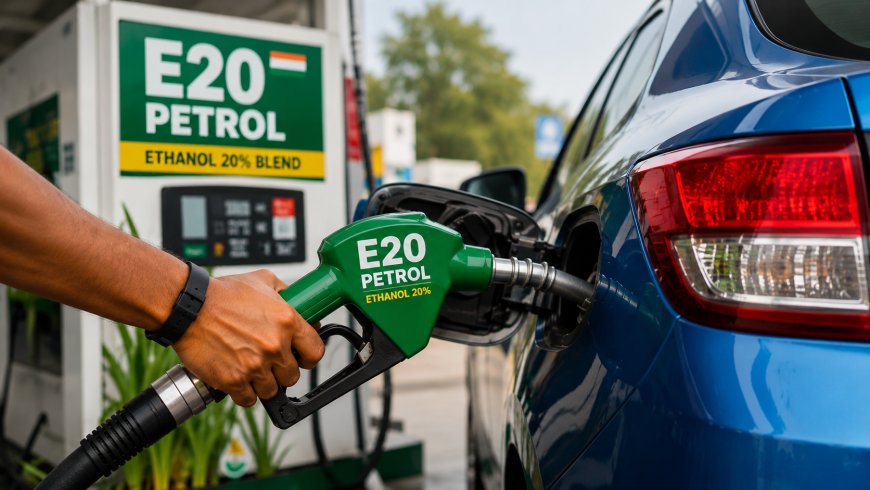
You've probably noticed more petrol pumps across India now displaying "E20 Petrol Available Here." The government has been actively rolling out E20 fuel as part of its clean energy mission, but the transition hasn't been without controversy. In recent months, E20 petrol has dominated headlines for several reasons. Bhutan reportedly decided not to purchase E20 petrol from India, many Indian motorists have questioned whether the new fuel is suitable for older vehicles, the government has defended why E20 isn't cheaper than regular petrol, and a petition before the Supreme Court has raised concerns over transparency and consumer choice.
Adding to the debate, Union Minister Nitin Gadkari challenged critics to name a single vehicle that has been damaged solely because of E20 fuel, arguing that many concerns are based on misconceptions rather than evidence.
So, what exactly is E20 petrol? Will it actually save you money, or could it increase your long-term vehicle costs?
Let's break it down in simple terms.
What Is E20 Petrol?
E20 petrol is a blend of:
- 80% conventional petrol
- 20% ethanol, a biofuel produced mainly from sugarcane, maize, damaged food grains, and agricultural biomass.
This differs from the earlier E10 fuel, which contained only 10% ethanol.
India is gradually increasing ethanol blending as part of its broader strategy to reduce dependence on imported crude oil and promote cleaner, domestically produced fuels.
Why Is India Promoting E20 Petrol?
The push towards E20 isn't only about reducing emissions.
The government has several objectives:
Reduce Crude Oil Imports
India imports nearly 85% of its crude oil, making fuel prices highly sensitive to global markets.
Greater ethanol blending can reduce this dependence.
Support Indian Farmers
Ethanol production creates an additional market for:
- Sugarcane
- Maize
- Damaged food grains
This provides farmers with new income opportunities while helping stabilize agricultural prices.
Lower Carbon Emissions
Ethanol burns differently from petrol and can reduce certain greenhouse gas emissions over a vehicle's lifecycle, supporting India's climate goals.
Improve Energy Security
Producing more fuel domestically helps reduce exposure to global supply disruptions and geopolitical risks.
Latest News Surrounding E20 Petrol
The rollout has sparked significant debate across India and neighbouring countries.
Bhutan Declines to Buy E20 Petrol from India
One of the biggest headlines recently came when Bhutan reportedly chose not to import India's E20 petrol.
Reports suggested that Bhutan preferred conventional petrol because a large portion of its existing vehicle fleet was not designed for higher ethanol blends.
The development reignited discussions about whether E20 should be introduced gradually depending on vehicle compatibility.
"India Is Adding Biofuels to Petrol – But Many Drivers Are Unhappy"
Several media reports have highlighted concerns from motorists.
Common worries include:
- Reduced fuel efficiency
- Uncertainty about compatibility
- Possible long-term maintenance costs
- Lack of awareness about which vehicles support E20
Much of the frustration comes from confusion rather than confirmed mechanical failures.
Nitin Gadkari Challenges Critics
Road Transport and Highways Minister Nitin Gadkari has repeatedly defended India's ethanol blending programme.
Responding to criticism, he challenged opponents to:
"Name one car damaged because of ethanol fuel."
His argument is that vehicles designed for E20 have undergone extensive testing, and widespread claims of engine damage lack credible evidence.
He has also emphasized the environmental and economic benefits of biofuels.

Why Isn't E20 Cheaper Than Pure Petrol?
This has become one of the most frequently asked questions.
Many consumers assumed:
More ethanol = lower price.
However, the government has explained that retail petrol pricing depends on several factors:
- International crude prices
- Refining costs
- Transportation
- State taxes
- Dealer commissions
- Ethanol procurement costs
Because fuel pricing is influenced by multiple components, adding ethanol does not automatically reduce pump prices.
Supreme Court Petition Raises Transparency Questions
A recent petition before the Supreme Court of India argues that consumers are facing a form of "silent compulsion" as E20 becomes increasingly available.
The petition seeks greater transparency regarding:
- Fuel composition
- Vehicle compatibility
- Consumer awareness
- Availability of conventional petrol
The case has further intensified public discussion around informed consumer choice during India's transition toward blended fuels.
How Does E20 Affect Your Car?
This is perhaps the most important question for everyday drivers.
The answer depends largely on your vehicle's age and manufacturer approval.
Newer Vehicles
Most cars and two-wheelers manufactured in recent years have been designed or updated to handle E20 petrol.
Manufacturers have gradually introduced E20-compatible fuel systems.
Older Vehicles
Older vehicles may not have components specifically designed for prolonged exposure to higher ethanol blends.
Possible concerns include:
- Rubber seals
- Fuel hoses
- Fuel pumps
- Certain engine components
However, experts note that compatibility varies significantly by manufacturer and model.
Always check your owner's manual before regularly using E20.
Will E20 Improve Fuel Efficiency?
Not necessarily.
Ethanol contains less energy per litre than petrol.
This means:
- Fuel economy may decrease slightly.
- Some drivers could notice marginally lower mileage.
For many users, the difference is relatively small, but it may vary depending on:
- Driving style
- Vehicle type
- Engine tuning
Can E20 Damage Your Engine?
This remains one of the biggest myths surrounding ethanol fuel.
Current evidence suggests:
- E20-compatible vehicles are designed to safely use the fuel.
- For older vehicles, manufacturers may recommend lower ethanol blends or specific maintenance precautions.
So far, there is no broad evidence showing widespread engine failures caused solely by E20 in vehicles approved for its use.
Routine servicing remains important regardless of the fuel used.
Will E20 Save You Money?
Here's where things become more complicated.
Potential Savings
- Reduced dependence on imported oil
- Better long-term national energy security
- Environmental benefits
Potential Costs
- Slightly lower mileage
- Possible compatibility concerns for some older vehicles
- No significant reduction in retail fuel prices
So while the country may benefit economically over time, individual motorists may not immediately notice savings at the petrol pump.
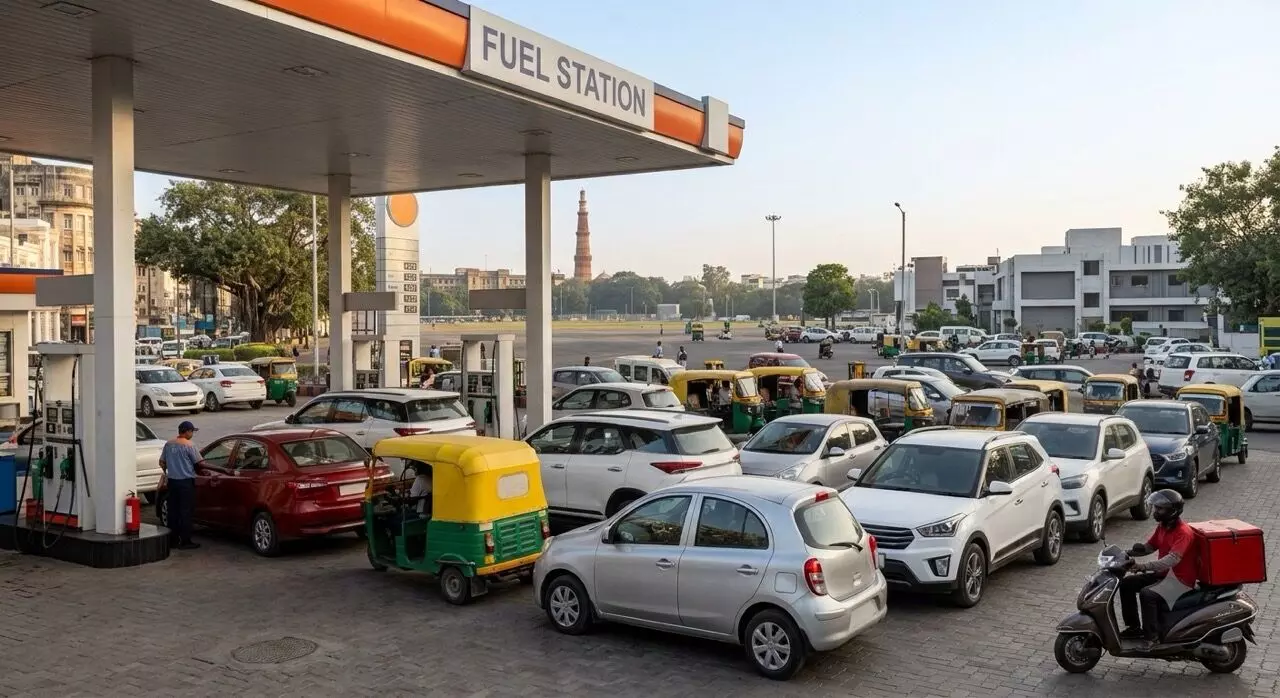
Pros of E20 Petrol
✅ Supports cleaner fuel initiatives
✅ Reduces crude oil imports
✅ Encourages domestic biofuel production
✅ Creates additional income opportunities for farmers
✅ Helps lower certain emissions
Cons of E20 Petrol
⚠ May slightly reduce mileage
⚠ Older vehicles should confirm compatibility
⚠ Consumer awareness remains limited
⚠ Pump prices are not significantly lower
⚠ Ongoing public debate over rollout and transparency
How to Check If Your Vehicle Supports E20
Before switching permanently:
- Check your owner's manual.
- Visit your vehicle manufacturer's website.
- Ask your authorised service centre.
- Look for official E20 compatibility notifications.
Most manufacturers now clearly identify whether a particular model is E20-ready.
Frequently Asked Questions
Is E20 petrol mandatory in India?
The rollout is expanding, but fuel availability varies by location. Consumers should always check manufacturer recommendations before switching permanently.
Does E20 reduce mileage?
Ethanol has lower energy content than petrol, so some vehicles may experience a small reduction in fuel efficiency.
Is E20 safe for motorcycles?
Many newer motorcycles are designed for E20 compatibility. Older models should follow manufacturer guidance.
Why isn't E20 cheaper?
Fuel pricing depends on taxes, crude oil prices, refining, logistics, and ethanol procurement—not simply on ethanol content.
Can older cars use E20?
Some can, while others may not be recommended for continuous use. Always check manufacturer specifications.
The Bigger Picture
The debate surrounding E20 isn't just about one type of fuel.
It's about balancing:
- Environmental sustainability
- Energy security
- Consumer affordability
- Vehicle compatibility
- Agricultural growth
While some drivers remain skeptical, the government sees ethanol blending as an important step toward reducing India's dependence on imported fossil fuels. As vehicle technology evolves, E20 compatibility is expected to become increasingly common.
Conclusion
E20 petrol represents one of India's biggest changes in automotive fuel policy in decades.
Whether it's discussions about Bhutan declining imports, concerns from motorists, debates in the Supreme Court, or the government's defence of ethanol blending, one thing is clear; E20 has become much more than just another fuel option.
For owners of newer E20-compatible vehicles, the transition is likely to be relatively smooth. Those driving older vehicles should take the time to understand their manufacturer's recommendations rather than relying on rumours circulating online.
In the long run, E20 may contribute to cleaner energy, greater energy security, and stronger support for Indian agriculture. But for individual motorists, the biggest questions remain practical ones: How does it affect my car, my mileage, and my fuel bill? Knowing the facts can help you make an informed decision as India's fuel landscape continues to evolve.
Did You Know?
- India aims to increase ethanol blending to reduce crude oil imports and improve energy security.
- Ethanol is produced from crops such as sugarcane, maize, and damaged food grains.
- Most new vehicles sold in India are being designed to support E20 fuel.
- Ethanol contains less energy than petrol, which may result in a slight reduction in mileage.
- A Supreme Court petition has sought greater transparency around E20 fuel composition and vehicle compatibility.
What's Your Reaction?
 Like
0
Like
0
 Dislike
0
Dislike
0
 Love
0
Love
0
 Funny
0
Funny
0
 Wow
0
Wow
0
 Sad
0
Sad
0
 Angry
0
Angry
0

















Comments (0)