

India's First Hydrogen-Powered Train Is Here: Marks a New Era of Clean and Sustainable Rail Transport
India is entering a new chapter in railway innovation. With its first hydrogen-powered train moving closer to reality, Indian Railways is taking a major step toward cleaner, greener, and more sustainable transportation. Here's everything you need to know about how hydrogen trains work, why they matter, and what they could mean for the future of travel in India.

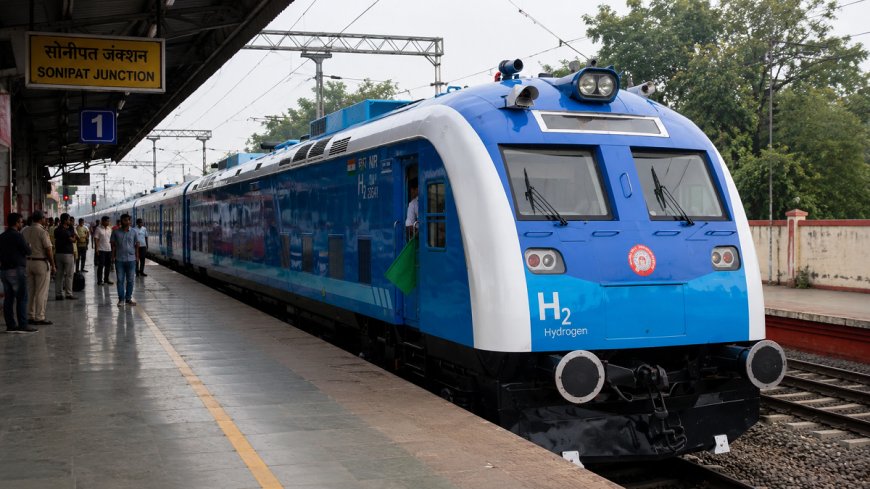
For more than 170 years, Indian Railways has been the backbone of the country's transportation network, connecting millions of people every day. Now, it is preparing for one of its biggest technological upgrades yet; India's first hydrogen-powered train.
Unlike traditional diesel locomotives that emit carbon dioxide and other pollutants, hydrogen-powered trains generate electricity using hydrogen fuel cells, with water vapor as the primary emission.
This isn't just another railway project. It's part of India's broader vision of reducing carbon emissions, embracing clean energy, and building a more sustainable transport system.
If successful, hydrogen trains could become an important addition to Indian Railways' green mobility initiatives, especially on routes where full electrification is challenging or uneconomical.
What Is a Hydrogen-Powered Train?
A hydrogen-powered train is a train that uses hydrogen fuel cells instead of diesel engines to generate electricity.
Rather than burning fuel, the train produces electricity through a chemical reaction between hydrogen and oxygen.
The electricity powers electric motors that drive the train, while the only significant by-product is water vapor.
Diesel vs Electric vs Hydrogen Trains
|
Diesel Train |
Electric Train |
Hydrogen Train |
|
Runs on diesel fuel |
Powered by overhead electric lines |
Powered by hydrogen fuel cells |
|
Produces carbon emissions |
Low emissions depending on electricity source |
Emits mainly water vapour |
|
Higher noise levels |
Quiet |
Very quiet |
|
Requires fuel stations |
Requires electrified tracks |
Requires hydrogen refuelling stations
|
Hydrogen trains combine the flexibility of diesel trains with the environmental benefits of electric trains.
Why Is India Introducing Hydrogen Trains?
The move is driven by multiple long-term goals.
Reducing Carbon Emissions
Transportation is one of the largest contributors to greenhouse gas emissions.
Replacing diesel-powered locomotives with hydrogen-powered alternatives could significantly reduce pollution on non-electrified railway routes.
Supporting India's Clean Energy Goals
India has committed to expanding renewable energy and reducing its carbon footprint.
Hydrogen technology aligns with the country's push toward green hydrogen, which is produced using renewable electricity.
Modernizing Indian Railways
Indian Railways has already electrified a large portion of its network.
Hydrogen trains represent another step toward creating one of the world's most environmentally friendly railway systems.
Improving Energy Security
Using domestically produced hydrogen could gradually reduce dependence on imported fossil fuels and strengthen India's energy security.
How Does a Hydrogen Train Work?
Despite sounding futuristic, the process is surprisingly straightforward.
Step 1: Hydrogen Is Stored in Tanks
Special high-pressure tanks safely store hydrogen onboard the train.
Step 2: Fuel Cell Generates Electricity
Inside the fuel cell, hydrogen reacts with oxygen from the air.
This chemical reaction produces electricity without combustion.
Step 3: Electricity Powers the Train
The generated electricity drives electric motors that move the train.
Any excess energy can also be stored in onboard batteries for improved efficiency.
Step 4: Water Vapor Is Released
Instead of smoke or harmful gases, the primary emission is simply water vapor.
This makes hydrogen trains one of the cleanest railway technologies available today.
Key Features of India's First Hydrogen Train
Indian Railways has announced plans to introduce hydrogen-powered trains as part of its green mobility mission.
Expected Highlights
-
India's first hydrogen fuel-cell train developed under Indian Railways' green transport initiative.
-
Intended primarily for heritage or non-electrified routes in the initial phase.
-
Designed to reduce dependence on diesel locomotives.
-
Equipped with advanced safety systems for hydrogen storage and fuel-cell operation.
-
Supported by dedicated hydrogen production and refueling infrastructure.
Proposed Route
Indian Railways has announced plans to deploy the country's first hydrogen-powered train on the Jind–Sonipat section of the Northern Railway in Haryana, subject to project completion and operational readiness.
Investment
The project involves significant investment in:
-
Hydrogen fuel-cell technology
-
Refueling infrastructure
-
Safety systems
-
Specialized maintenance facilities
It is part of a broader effort to introduce alternative fuels into India's railway network.
When Did India's First Hydrogen Train Start?
India's first hydrogen-powered train was officially inaugurated on 17 July 2026 by Prime Minister Narendra Modi, marking a historic milestone for Indian Railways and India's clean transportation ambitions.
The train has begun operations on the 89-kilometre Jind–Sonipat route in Haryana, making India one of the few countries in the world to operate hydrogen-powered passenger trains.
Route and Timings
The hydrogen train operates on the Jind–Sonipat section under Northern Railway, covering approximately 89 km with stops at intermediate stations along the route. It was flagged off from Jind Railway Station and entered passenger service after inauguration.
Ticket Prices: Is It More Expensive?
One question many travellers have is whether riding India's first hydrogen-powered train costs extra.
The answer is no.
Indian Railways has not introduced any special premium fare for the hydrogen-powered service. Passengers can book tickets using the regular fare structure applicable to the route, making the experience accessible without paying extra simply because the train uses green technology.
Passenger Features and Onboard Experience
Although the biggest innovation lies under the floor- in the hydrogen fuel-cell propulsion system; the train also offers a comfortable travel experience.
Passengers can expect:
-
Comfortable modern seating
-
Low-noise travel due to electric propulsion
-
Smooth acceleration with reduced vibration
-
Cleaner onboard environment with near-zero tailpipe emissions
-
Improved energy efficiency
-
Advanced onboard monitoring and safety systems
The train is designed with two hydrogen-powered driving cars and eight passenger coaches, accommodating around 2,600 passengers, making it one of the world's largest hydrogen-powered passenger trainsets.
Safety Features
Since hydrogen is a highly flammable gas, Indian Railways has equipped the train with multiple safety mechanisms.
These include:
-
Hydrogen leak detection sensors
-
Heat and flame detection systems
-
Smoke monitoring
-
Automatic safety shutdown systems
-
Dedicated hydrogen storage and refuelling infrastructure at Jind
Officials say the train has undergone extensive testing before entering passenger service.
Environmental Benefits
Hydrogen-powered trains offer several important environmental advantages.
Lower Carbon Emissions
Hydrogen fuel cells do not burn fossil fuels, helping reduce greenhouse gas emissions compared to diesel trains.
Cleaner Air
The primary by-product is water vapor, meaning far fewer pollutants such as particulate matter and nitrogen oxides.
Quieter Journeys
Hydrogen trains operate more quietly than diesel locomotives, reducing noise pollution near railway stations and residential areas.
Supporting India's Net-Zero Goals
Green transportation technologies like hydrogen trains could contribute to India's long-term climate and sustainability targets.
Challenges Ahead
While hydrogen trains offer exciting possibilities, several hurdles remain.
High Infrastructure Costs
Building hydrogen production plants, storage facilities, and refueling stations requires substantial investment.
Hydrogen Production
Producing green hydrogen at scale remains expensive compared to conventional fuels.
As production technology improves, costs are expected to decline.
Refueling Network
Unlike diesel, hydrogen requires dedicated storage and dispensing infrastructure, which is still in its early stages in India.
Maintenance
Hydrogen fuel-cell systems require specialized technicians and maintenance facilities.
Training personnel will be an important part of the rollout.
How Other Countries Are Using Hydrogen Trains
India isn't alone in exploring hydrogen-powered rail transport.
Germany
Germany introduced the world's first commercially operated hydrogen passenger trains, replacing diesel services on several regional routes.
China
China has been testing hydrogen-powered rail vehicles and expanding hydrogen technology across public transport.
Japan
Japan continues investing heavily in hydrogen-powered mobility, including trains, buses, and passenger vehicles.
United Kingdom
The UK has conducted successful trials of hydrogen-powered trains as part of efforts to decarbonize its rail network.
These international projects provide valuable experience that India can learn from as it expands hydrogen rail technology.
What This Means for Indian Railways
Hydrogen trains could play an important role in areas where electrification is difficult or costly.
Potential benefits include:
-
Cleaner regional passenger services
-
Greener operations on non-electrified routes
-
Lower long-term environmental impact
-
Greater technological innovation within Indian Railways
If pilot projects prove successful, hydrogen-powered trains may gradually expand to additional routes in the coming years.
Frequently Asked Questions
Is a hydrogen train faster than a diesel train?
Not necessarily. Speed depends on the train's design and route. The primary advantage of hydrogen trains is cleaner operation rather than higher speed.
Is hydrogen fuel safe?
Yes. Hydrogen storage systems are designed with multiple safety measures, including reinforced tanks, leak detection systems, and strict operational standards.
How much pollution does it reduce?
Hydrogen fuel-cell trains produce virtually no tailpipe carbon emissions during operation, with water vapor being the main by-product.
Will hydrogen trains replace diesel trains completely?
Probably not immediately.
Hydrogen trains are expected to complement electrification, particularly on routes where installing overhead electric lines is not practical.
What's Next?
Indian Railways plans to continue investing in alternative fuel technologies alongside its ongoing electrification program.
Future developments may include:
-
Expansion of hydrogen-powered routes
-
Increased investment in green hydrogen production
-
Additional hydrogen refueling stations
-
Indigenous development of fuel-cell technology
-
Wider adoption of clean-energy transport solutions
As technology matures and costs decrease, hydrogen-powered rail systems could become an increasingly common sight across India.
Did You Know?
-
Hydrogen fuel cells generate electricity through a chemical reaction between hydrogen and oxygen.
-
The primary emission from a hydrogen fuel-cell train is water vapor.
-
Germany was among the first countries to introduce commercial hydrogen-powered passenger trains.
-
Indian Railways is pursuing multiple green initiatives, including large-scale electrification, renewable energy adoption, and alternative fuels like hydrogen.
Conclusion
India's first hydrogen-powered train is far more than a technological milestone; it represents a vision for a cleaner and more sustainable future.
By combining cutting-edge fuel-cell technology with one of the world's largest railway networks, Indian Railways is demonstrating its commitment to reducing emissions while embracing innovation.
Challenges such as infrastructure development, hydrogen production, and costs still need to be addressed. However, if the pilot projects succeed, hydrogen trains could become an important part of India's green transportation ecosystem.
As the country moves toward cleaner energy and smarter infrastructure, the arrival of hydrogen-powered trains may well mark the beginning of a new era; one where the future of rail travel is not only faster and more efficient but also significantly kinder to the planet.
What's Your Reaction?
 Like
0
Like
0
 Dislike
0
Dislike
0
 Love
0
Love
0
 Funny
0
Funny
0
 Wow
0
Wow
0
 Sad
0
Sad
0
 Angry
0
Angry
0















Comments (0)