

India’s First Traffic Light-Free City: The Surprising Student Hub That Outsmarted Delhi and Bengaluru
Discover how Kota became India’s First Traffic Light-Free City, blending smart design, flyovers, and innovation to keep traffic moving effortlessly.
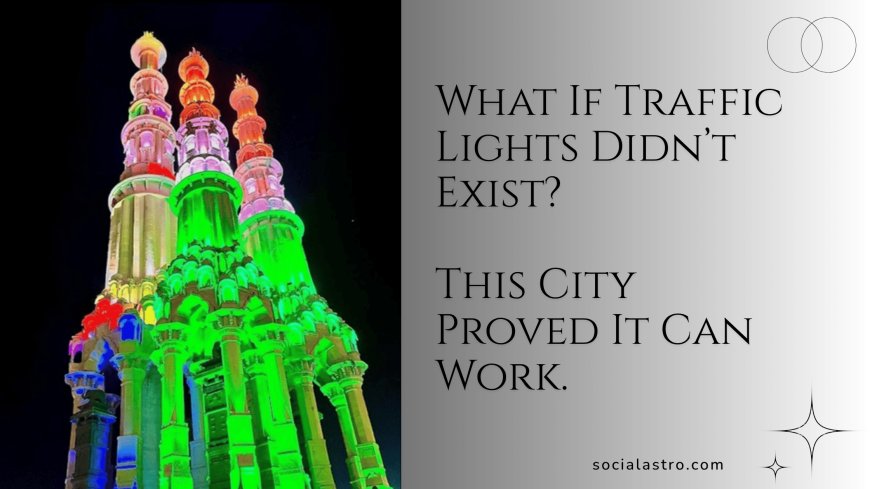
Ever driven through a busy Indian city and realized you never had to stop at a single red light? Sounds unbelievable, doesn't it? But that is exactly what happens in Kota, Rajasthan, which has now become India's first traffic light-free city. Recognized as the country's education powerhouse, Kota has pulled off something extra: a complete traffic revamp that keeps the vehicles going without a single signal stopping the flow.
This is not just an infrastructure milestone but a complete rethink of urban mobility. The Kota model has shown that modern cities can have smooth traffic movement through smart design and civic cooperation rather than by using conventional traffic lights.
The Coaching Capital That Needed a Smarter System
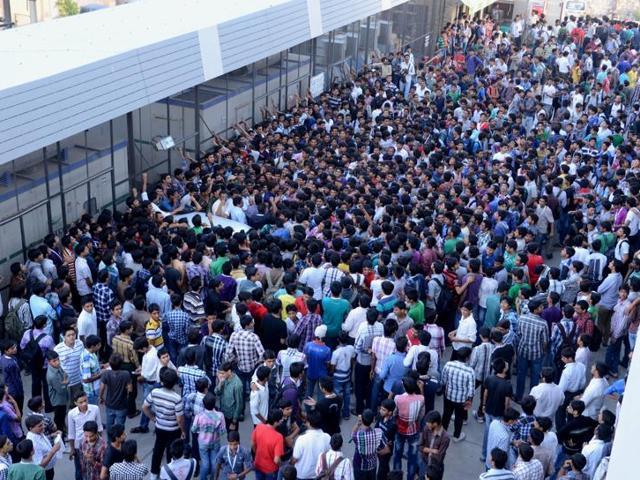
Kota, for years, was branded as the "Coaching Capital" of India. Lakhs of students come here every year from different parts of the country to prepare for highly competitive examinations such as IIT-JEE and NEET. Adding to this young mass were the local commuters, and thus, traffic congestion was a regular affair throughout the year, particularly around coaching hubs, hostels, and food zones.
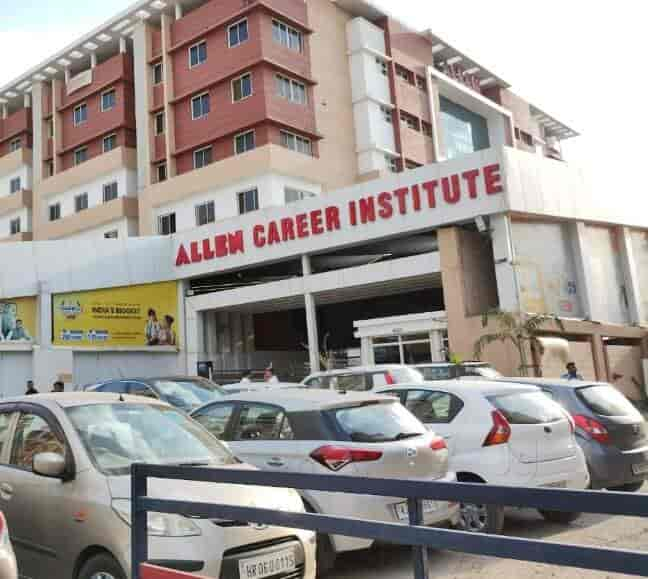
Managing this growing pressure on the city's roads was not an easy task. Conventional traffic lights often made things worse, turning already busy intersections into bottlenecks. Delays and jams were becoming a wide concern for the city built around punctuality, where every second of delay counts. Kota needed an urban mobility model that could match the heavy traffic, narrow roads, and constantly moving student population.
How Kota Became India's First Traffic Light-Free City
It did not happen overnight, but was a result of consistent planning by the Kota Urban Improvement Trust in close collaboration with the Rajasthan government to achieve this simple yet ambitious goal: to replace every traffic light with infrastructure that naturally keeps vehicles in motion.
In the decade-plus that has passed, UIT built more than 30 flyovers, underpasses, and large rotary intersections at main junctures around town. These new routes allowed vehicles to move freely without the interference of signals. Roads were widened and clearly marked with directional signs that intuitively guided drivers rather than forced them to stop and wait.

Intelligent roundabouts substituted the traditional signals at major junctions. These were designed to handle high volumes of traffic in a smooth manner so that there is minimal confusion and vehicles move along in a well-controlled manner. But even a well-designed system can flop without public participation; thus, UIT launched awareness campaigns that encourage disciplined lane driving and responsible yielding. The combined impact of engineering and education helped Kota transition into a signal-free city.
What Changed After the Transformation
The results of this venture have indeed been phenomenal. Travel time across the city has come down considerably, especially during peak hours. No frustrating stops at intersections for drivers, and daily commutes turned out to be much smoother and quicker.
The environmental gains are clearly there, too. No idling at the red lights means a sharp drop in fuel wastage, the result of which is cleaner air and lowered carbon emissions. Noise pollution has reduced on account of less constant honking at the signals. In all, driving in Kota has now become calmer, safer, and more efficient.
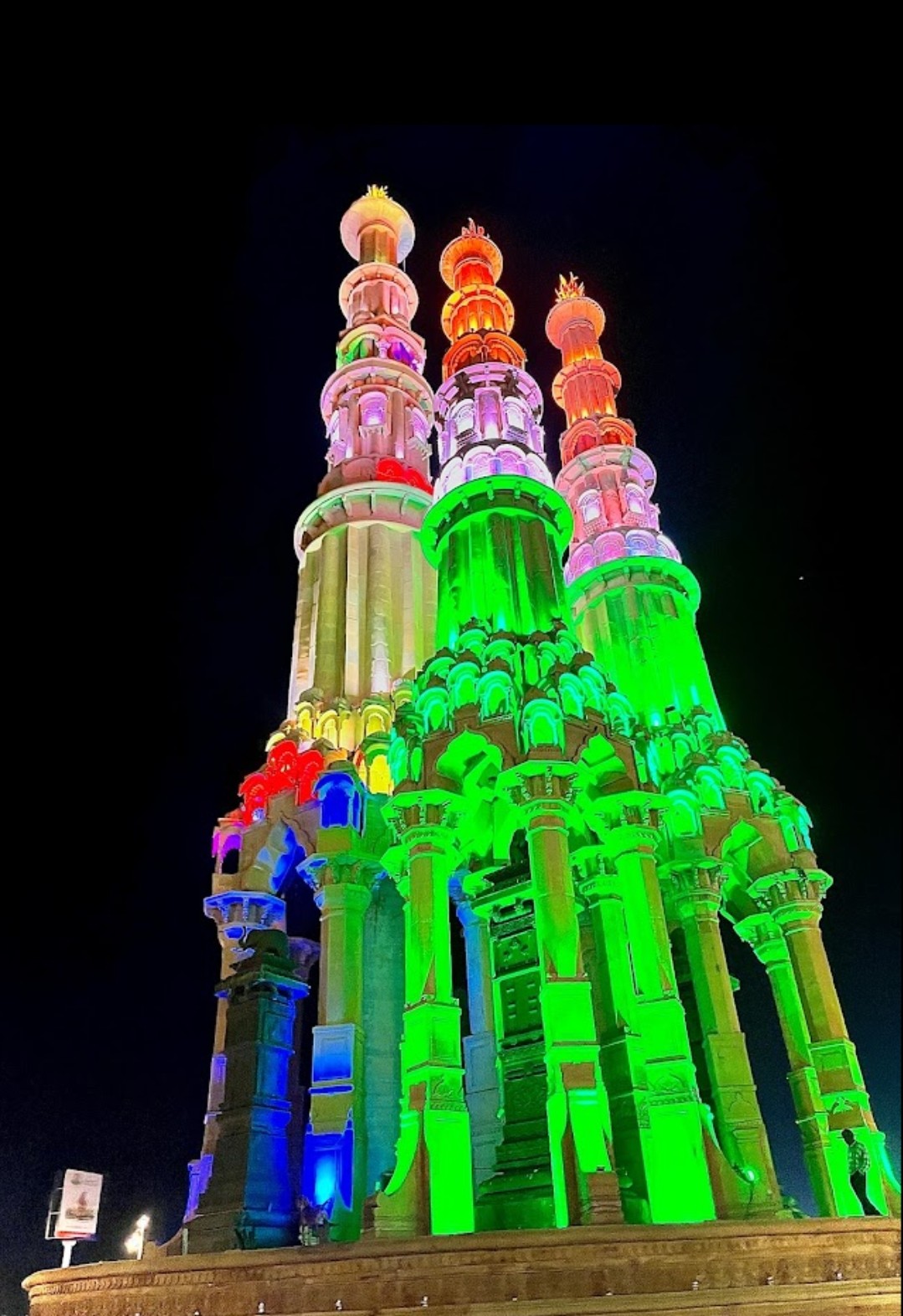
The change has been nothing short of transformative for the thousands of students dependent on punctuality. Shuttling between coaching institutes, hostels, and messes is much faster and more predictable now, making daily life easier in a city that never really slows down.
Kota's Approach in Detail
Kota's rise as the first traffic light-free city in India stands as a national example of what smart planning can achieve. The UIT took the initiative to design an ambitious citywide plan aimed at removing all the traffic signals. Over 30 flyovers and underpasses were built, with advanced roundabouts at major crossings.
These infrastructural upgrades revolutionized the aspect of mobility. Nowadays, vehicles barely halt at crossways and move freely, which lessens congestion in traffic, conserves travel time, saves fuel, and cleans the air. The project underlines the growing emphasis on sustainability in Kota, as continuous motion cuts pollution and cleans the air.
This is a rare feat on the global platform. It is the second city in the world, after Thimphu in Bhutan, to have introduced an entirely signal-free traffic system. The feat makes Kota not only a national leader in urban innovation but part of an elite global example of sustainable traffic management.
Why Kota's Model Works
Engineering and human nature work together in a fine balance, and thus, the signal-free system works in Kota. Instead of the stop-and-go system of traffic control, there is continuous flow. While flyovers handle long-distance routes, underpasses facilitate local movement, and roundabouts ensure controlled merging without signals.
And then, of course, there are lane markings and signage. Drivers are given clear visual cues that ease them through turns and exits. The system encourages natural, slower speeds through intersections, reducing the chances of collisions and creating generally safer conditions.
Most importantly, the citizens of Kota adapted quickly: awareness campaigns promoting lane discipline, patience, and yielding helped the citizens take to this modern model in traffic. A strong reminder is that an infrastructure functions effectively only when the community utilizing it is responsible.
Lessons for Other Indian Cities
Kota's makeover provides a roadmap that others could emulate. It shows that traffic lights are not a panacea; in fact, sometimes the solution lies in the intelligent design of roads and collective civic discipline.
What this portends for nascent metropolises like Indore, Surat, or Mysuru is that a similar approach might ease congestion and pollution. The core takeaway here is to design roads that facilitate movement, not waiting. Well-designed flyovers, rotaries, and synchronized lanes can make self-regulating traffic systems that require minimal manual intervention.
Success is about public cooperation, too. One cannot correct undisciplined driving through infrastructure only. Kota succeeded because its residents understood the bigger picture and respected the new system. Any city replicating this model needs to combine engineering upgrades with continuous education and enforcement.
More Than Just a Traffic Upgrade
Beyond smoother roads, Kota's achievement has marked a new frontier of urban innovation. It reflects a shift toward sustainability, efficiency, and smart planning that characterizes India's Smart Cities Mission. In doing so, Kota also proved that one doesn't necessarily need high-end automation or digital platforms to bring in progress. Sometimes, it's just about simple, logical planning that yields far-reaching results.
This change has increased productivity and improved the quality of life in the city as well. With less time spent in traffic, citizens can focus on more meaningful activities. Cleaner air and quieter streets mean improved health and a generally better well-being. Kota turned moving within the city into an experience, not an obstacle.
The Road Ahead
Yet, the Kota success story has not ended. The city continuously refines its infrastructure to maintain the efficiency and safety of the signal-free model as volumes of traffic surge upwards. Designs are in the pipeline for pedestrian walkways, eco-friendly transport systems, and intelligent parking systems. If this model continues to perform well, it could serve as a national reference point for the design of sustainable urban traffic. Other Indian cities-large and small-can take a cue from Kota's vision: good planning backed by community participation can replace chaos with order.
Conclusion
Kota's emergence as India's first city without traffic lights is a proud moment not only for Rajasthan but for the entire country. Basically, it is proof that in urban developments, complicated technology or massive budgets are not always required; sometimes it is just a question of rethinking possibilities. With modern infrastructure and clear planning, combined with public discipline, Kota has evolved as a living example of intelligent city development. The climax of it all: a cleaner, safer, and more efficient city that no longer waits for the green light to move. Kota has set the stage for a future where Indian roads might flow freely, not through control but due to design.
What's Your Reaction?
 Like
0
Like
0
 Dislike
0
Dislike
0
 Love
0
Love
0
 Funny
0
Funny
0
 Wow
0
Wow
0
 Sad
0
Sad
0
 Angry
0
Angry
0

I’m Ryan Rehan, Business Development Executive and a passionate blogger dedicated to sharing insights, tips, and experiences that inspire and inform. Through my blogs, I explore topics that matter, spark curiosity, and encourage thoughtful conversations. Whether I’m breaking down complex ideas, offering practical advice, or simply sharing stories, my goal is to create content that adds real value to a growing community of curious minds and passionate readers.














Comments (0)