

Jagannath Rath Yatra: The Fascinating Story Behind the World's Biggest Chariot Festival
From the unfinished wooden idols of Lord Jagannath to the gigantic chariots pulled by millions of devotees, discover the history, legends, mysteries, and traditions behind one of India's most iconic festivals.

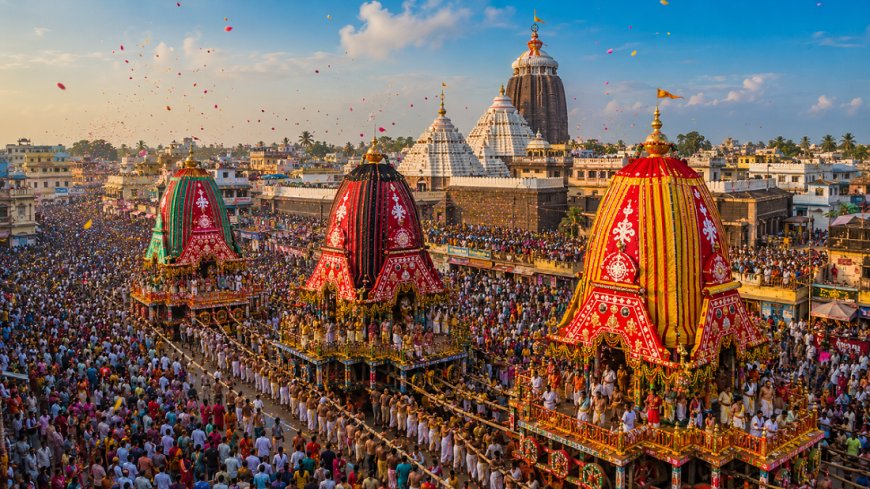
Imagine standing in the heart of Puri, Odisha, as millions of devotees chant "Jai Jagannath!" while three towering wooden chariots slowly roll through the streets.
The sound of conch shells fills the air. Drums beat rhythmically. Flowers shower from balconies. People from every corner of India, and even from around the world, gather to pull the ropes of these magnificent chariots.
This isn't just another religious festival.
Jagannath Rath Yatra is considered the world's biggest chariot festival, celebrated with immense devotion for centuries. Every year, it attracts millions of pilgrims, tourists, photographers, historians, and spiritual seekers.
What makes this festival truly fascinating isn't only its massive scale; it's the incredible stories, legends, traditions, and mysteries surrounding Lord Jagannath that continue to captivate people worldwide.
If you've ever wondered:
- Why does Lord Jagannath leave the temple every year?
- Why do the idols have such large eyes?
- Why are they made of wood?
- Why can anyone pull the chariots?
- What makes the Jagannath Temple so mysterious?
This guide answers all these questions and much more.
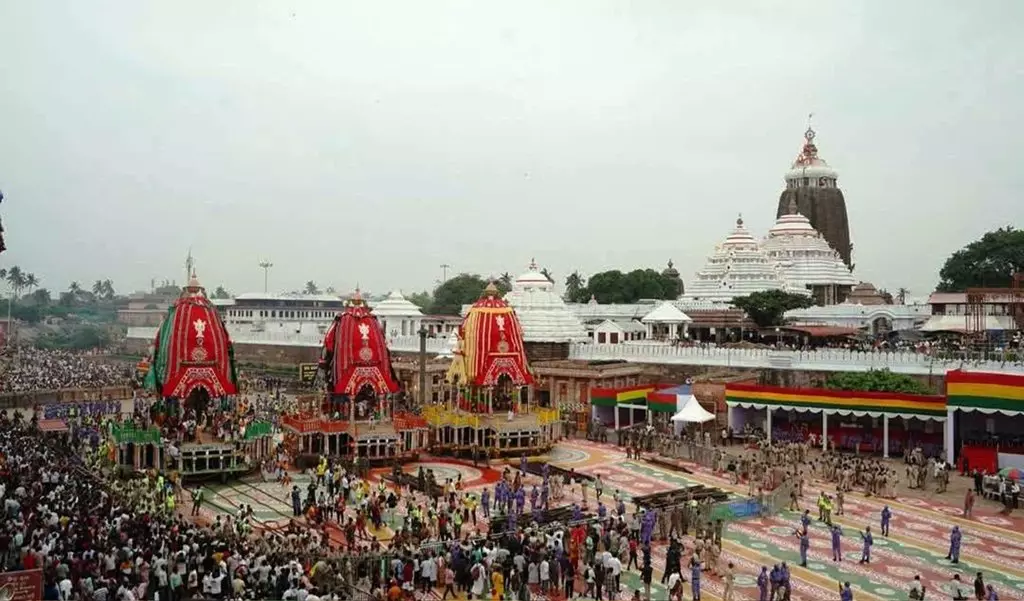
What Is Jagannath Rath Yatra?
Jagannath Rath Yatra is an annual Hindu chariot festival held in Puri, Odisha, dedicated to Lord Jagannath, his elder brother Lord Balabhadra, and sister Devi Subhadra.
During the festival, the three deities leave the sanctum of the famous Jagannath Temple and travel in grand wooden chariots to the Gundicha Temple, located about 3 kilometers away.
Unlike most Hindu temples, where devotees visit the deity, Rath Yatra symbolizes God coming out to bless everyone, regardless of caste, background, or nationality.
That message of openness and equality is one of the reasons the festival holds such universal appeal.

Who Is Lord Jagannath?
Lord Jagannath is widely worshipped as a form of Lord Krishna, who is considered an incarnation of Lord Vishnu.
Inside the Jagannath Temple, three wooden deities are worshipped together:
- Lord Jagannath (Krishna)
- Lord Balabhadra (Balarama)
- Devi Subhadra (their sister)
Unlike the polished stone idols seen in many temples, these deities have a distinctive appearance with:
- Large round eyes
- A broad smiling face
- No clearly defined hands
- No visible feet
This unique form has become one of the most recognizable symbols of Indian spirituality.
The Fascinating Story Behind Lord Jagannath's Appearance
One of the most intriguing legends associated with Jagannath begins with King Indradyumna, a devout ruler who longed to worship Lord Vishnu in his divine form.
According to Hindu tradition, the king had a divine dream in which Lord Vishnu instructed him to build a grand temple and carve idols from a sacred wooden log that would wash ashore.
Soon, a mysterious old carpenter appeared and offered to carve the idols; but with one condition:
No one should open the workshop door until he finished.
Days passed without any sound from inside.
Growing anxious, the king eventually ordered the door to be opened.
The carpenter had disappeared.
Inside stood three unfinished wooden idols.
Their hands and feet were incomplete.
At that moment, the king realized the mysterious carpenter was believed to have been Lord Vishwakarma, the divine architect, or Lord Vishnu himself in disguise.
Instead of replacing the idols, the king accepted them as the Lord's chosen form.
Today, these unfinished idols symbolize an important spiritual message:
- God is beyond physical perfection.
- The divine cannot be limited by human imagination.
- True devotion matters more than outward appearance.
Why Does Lord Jagannath Have Large Eyes?
The large circular eyes are believed to symbolize:
- Constant watchfulness over the universe
- Infinite compassion
- Equality toward every devotee
They remind devotees that the Lord sees everyone equally.
How Was the Jagannath Temple Built?
The present-day Jagannath Temple is believed to have been constructed in the 12th century CE during the reign of King Anantavarman Chodaganga Deva of the Eastern Ganga dynasty.
The temple is one of India's finest examples of Kalinga architecture, with:
- Towering shikhara (main temple tower)
- Intricate carvings
- Massive stone walls
- Monumental gateways
Standing over 65 meters tall, it dominates the skyline of Puri and has remained one of Hinduism's most sacred pilgrimage sites for centuries.
It is also one of the Char Dham pilgrimage destinations established in Hindu tradition.
Why Is Rath Yatra Celebrated?
The Rath Yatra commemorates the annual journey of Lord Jagannath, Balabhadra, and Subhadra from the Jagannath Temple to the Gundicha Temple.
According to tradition, the Gundicha Temple is considered the home of Lord Jagannath's aunt.
The journey represents:
- Visiting loved ones
- Blessing devotees outside the temple
- Compassion reaching every person
- The removal of barriers between God and devotees
For many devotees, Rath Yatra carries a profound message:
The divine belongs to everyone—not just those inside a temple.
Why Does Everyone Pull the Chariots?
One of the most beautiful aspects of Rath Yatra is that anyone can help pull the chariots.
People from different:
- Castes
- Communities
- Social backgrounds
- Nationalities
come together to hold the same ropes.
Many devotees believe pulling the chariot brings blessings and spiritual merit.
But beyond religious belief, the tradition also represents equality.
During Rath Yatra, distinctions disappear—everyone becomes simply a devotee.

The Three Giant Chariots
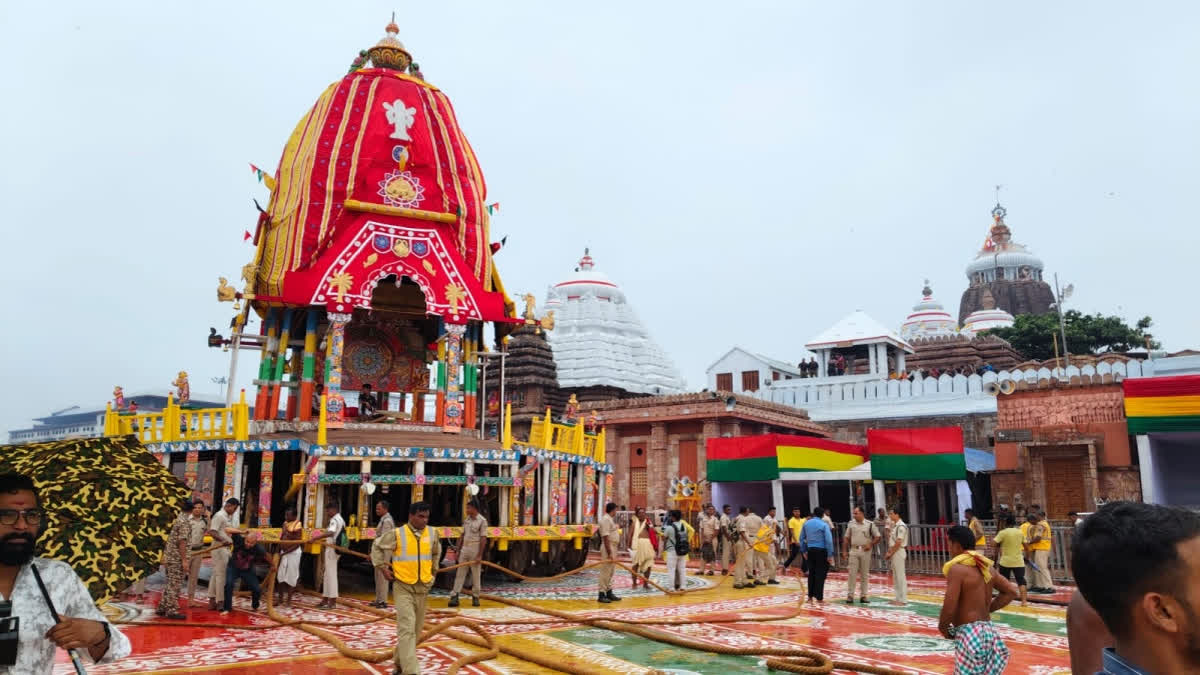
Every year, three magnificent wooden chariots are built from scratch using traditional methods.
Nandighosha – Lord Jagannath
- Height: Approximately 45 feet
- Wheels: 16
- Dominant Colors: Red and Yellow
- Flag: Trailokyamohini
The largest and most elaborate of the three chariots.
Taladhwaja – Lord Balabhadra
- Height: Around 44 feet
- Wheels: 14
- Dominant Colors: Green and Red
Known for its powerful appearance and elegant decorations.
Darpadalana (Devadalana) – Devi Subhadra
- Height: Around 43 feet
- Wheels: 12
- Dominant Colors: Black and Red
The smallest among the three, yet equally significant.
Fascinating Mysteries of Jagannath Temple
The Jagannath Temple has inspired countless stories and traditional beliefs over the centuries.
While many of these are matters of faith rather than scientifically established facts, they remain an important part of the temple's cultural heritage.
The Temple Flag
A popular belief says the temple flag always appears to flutter opposite the direction of the wind.
This is regarded by devotees as one of the temple's many mysteries.
The Sudarshan Chakra
The Sudarshan Chakra atop the temple is traditionally believed to appear as though it is facing you, regardless of where you stand.
Many visitors describe this as one of the temple's most fascinating visual experiences.
Nabakalebara
Perhaps the temple's most unique tradition.
Every 12–19 years (depending on the Hindu calendar), the wooden idols are ceremonially replaced using sacred neem trees selected through elaborate rituals.
This ceremony is known as Nabakalebara, meaning "new body."
Mahaprasad
The temple's Mahaprasad is famous across India.
Prepared in earthen pots using traditional methods, it is shared equally among devotees, reflecting the temple's long-standing emphasis on community and equality.
Why Is Rath Yatra Famous Worldwide?
Although the festival is rooted in Odisha, its influence extends far beyond India.
Today:
- Millions visit Puri every year.
- ISKCON organizes Rath Yatras across the globe.
- Cities including London, New York, Toronto, Melbourne, and Johannesburg host grand processions inspired by Puri's tradition.
- International tourists visit Odisha specifically to witness the festival.
Its blend of spirituality, culture, architecture, music, and community participation makes it one of the world's most remarkable religious events.
Interesting Facts About Jagannath Rath Yatra
Did You Know?
- Every chariot is rebuilt from scratch every year.
- Thousands of skilled artisans spend weeks constructing the chariots.
- Millions of devotees gather in Puri during Rath Yatra.
- The tradition has continued for centuries.
- Lord Jagannath's idols are made of sacred wood rather than stone.
- Rath Yatra is celebrated in dozens of countries worldwide.
Frequently Asked Questions
Why does Lord Jagannath leave the temple?
To visit the Gundicha Temple and bless devotees outside the main shrine, symbolizing accessibility and equality.
Can non-Hindus enter Jagannath Temple?
No. Entry into the main Jagannath Temple is traditionally restricted to Hindus.
However, non-Hindu visitors can witness the Rath Yatra and view the temple from nearby vantage points such as the Raghunandan Library rooftop.
Why are the idols made of wood?
According to temple tradition, the wooden form reflects ancient rituals and allows the unique Nabakalebara ceremony, in which the deities receive new wooden bodies at prescribed intervals.
How long does Rath Yatra last?
The main festival spans about nine days, culminating in the Bahuda Yatra, when the deities return to the Jagannath Temple.
What is Bahuda Yatra?
Bahuda Yatra is the return journey of Lord Jagannath, Balabhadra, and Subhadra from the Gundicha Temple back to the Jagannath Temple.
It marks the conclusion of the annual Rath Yatra celebrations.
Why Jagannath Rath Yatra Continues to Inspire Millions
Jagannath Rath Yatra is much more than a religious procession.
It is a celebration of devotion, equality, craftsmanship, history, and community that has united millions for generations.
Whether you're drawn by its spiritual significance, intrigued by the unfinished wooden idols, fascinated by the engineering of the massive chariots, or simply captivated by the sight of millions of people pulling together with a shared purpose, Rath Yatra offers something extraordinary.
In an increasingly fast-paced world, this centuries-old tradition reminds us that faith, culture, and collective celebration still have the power to bring people together.
What's Your Reaction?
 Like
0
Like
0
 Dislike
0
Dislike
0
 Love
0
Love
0
 Funny
0
Funny
0
 Wow
0
Wow
0
 Sad
0
Sad
0
 Angry
0
Angry
0












Comments (0)