

The Caucasus' Best-Kept Secret: Azerbaijan, the Land of Fire
Explore Azerbaijan, the Land of Fire, from futuristic Baku and ancient Silk Road towns to burning mountains, mud volcanoes, and Caucasus villages. Discover why this hidden gem is the Caucasus' best-kept travel secret in all time
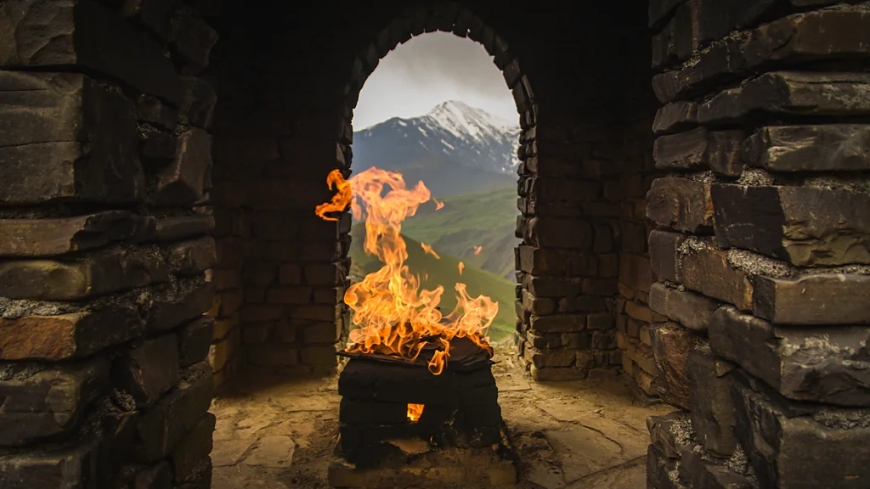
Table of Contents
- Introduction: The Country Most Travellers Can't Place on a Map
- Why Is Azerbaijan Called the Land of Fire?
- Baku: Where Medieval Walls Meet Futuristic Skylines
- Beyond the Capital: Ancient Silk Road Towns
- Natural Wonders You Won't Find Anywhere Else
- The Mountain Villages of the Greater Caucasus
- Azerbaijani Cuisine: A Feast You Didn't See Coming
- Culture, Hospitality and the Azerbaijani Way of Life
- Practical Guide: Visas, Costs and Getting Around
- Best Time to Visit Azerbaijan
- Final Thoughts: Go Before Everyone Else Does
-
Introduction: The Country Most Travellers Can't Place on a Map
Ask the average traveller to point to Azerbaijan on a map, and you'll likely get a hesitant finger hovering somewhere between Europe and Asia. That hesitation is understandable, because that's exactly where Azerbaijan sits, both geographically and culturally. Wedged between the Caspian Sea and the Greater Caucasus mountains, bordered by Russia, Georgia, Armenia, and Iran, this former Soviet republic occupies one of the most fascinating crossroads on Earth.
And yet, while its neighbour Georgia has surged onto travel bucket lists over the past decade, Azerbaijan has remained curiously overlooked. Fewer crowds, lower prices, and experiences you genuinely cannot have anywhere else on the planet, mountains that burn eternally, more mud volcanoes than any other country in the world, and a capital city that looks like it was designed for a science-fiction film.
This is the Caucasus' best-kept secret. And like all good secrets, it won't stay one for long.
-
Why Is Azerbaijan Called the Land of Fire?
Azerbaijan's nickname is Odlar Yurdu, the Land of Fire, is not a marketing slogan. It's rooted in geology, history, and faith.
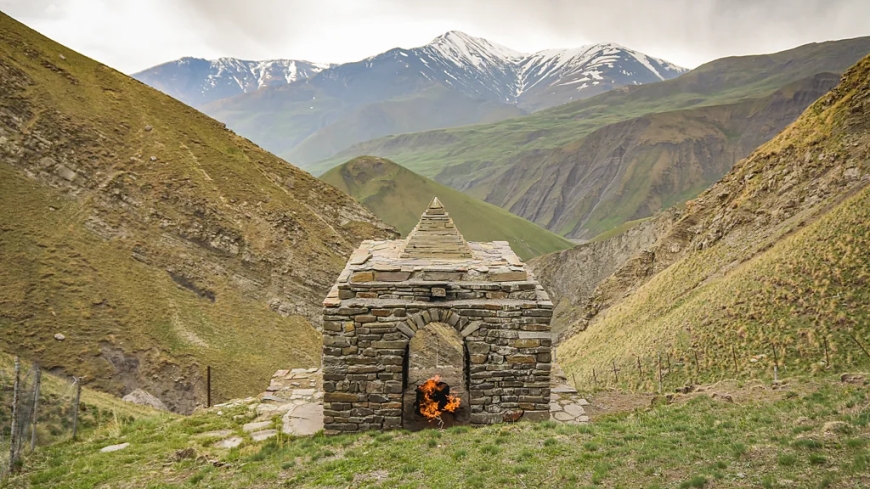
The country sits on enormous reserves of natural gas, and in places, that gas seeps naturally through the earth's crust and ignites on contact with air. The result is one of the strangest sights in world travel: hillsides that have been burning continuously for decades, and by some accounts, far longer.
The most famous of these is Yanar Dag literally "Burning Mountain" on the Absheron Peninsula near Baku. A ten-metre wall of flame dances along the base of a hillside day and night, through rain, wind, and snow. It never goes out. Standing before it at dusk, with the heat washing over your face, feels like witnessing something ancient and elemental.
These natural fires shaped the region's spiritual history too. Zoroastrianism, one of the world's oldest religions, in which fire represents purity and divine light, flourished here long before Islam arrived. The Ateshgah Fire Temple in Surakhani, built around a natural gas vent, drew fire-worshipping pilgrims from as far away as India for centuries. The pentagonal temple complex still stands today, and walking through its stone cells and central altar is one of the most atmospheric experiences in the country.
Fire, quite literally, runs through Azerbaijan's identity from its ancient temples to the flame-shaped skyscrapers that now define Baku's skyline.
-
Baku: Where Medieval Walls Meet Futuristic Skylines
Few capital cities in the world offer the visual whiplash of Baku. In a single afternoon, you can wander lanes that have barely changed since the 12th century, stroll past ornate oil-boom mansions from the 1900s, and then look up to see three colossal flame-shaped towers glowing against the evening sky.
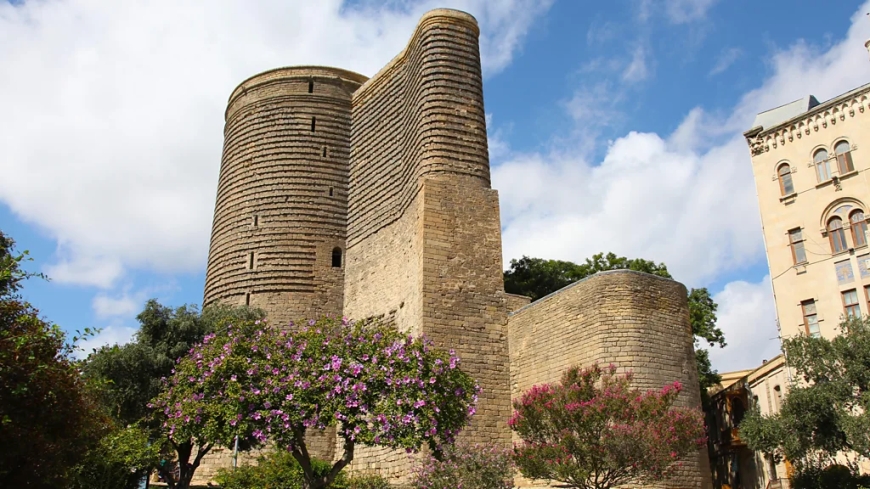
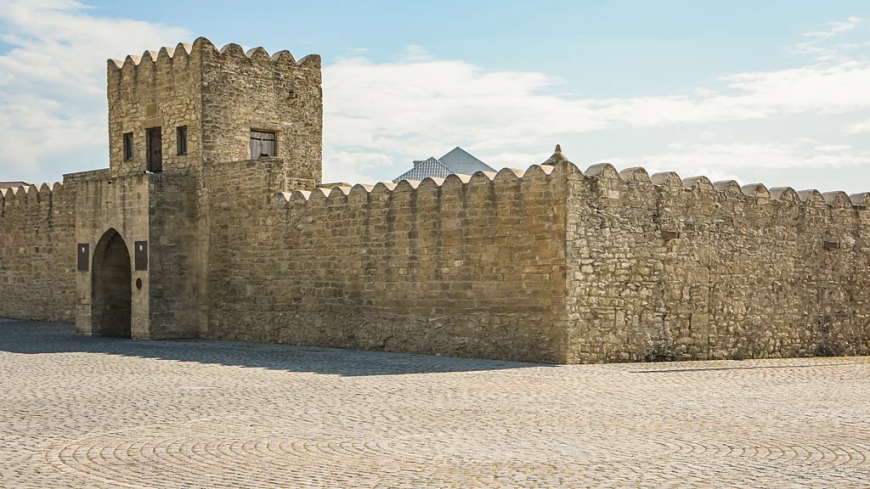
Icherisheher, the walled Old City and a UNESCO World Heritage Site, is Baku's historic heart. Inside its fortress walls you'll find the enigmatic Maiden Tower, a cylindrical stone structure whose original purpose still puzzles historians and the elegant Palace of the Shirvanshahs, a 15th-century royal complex of courtyards, mosques, and bathhouses. The Old City's narrow alleys hide carpet shops, tea houses, and caravanserais that once sheltered Silk Road merchants.
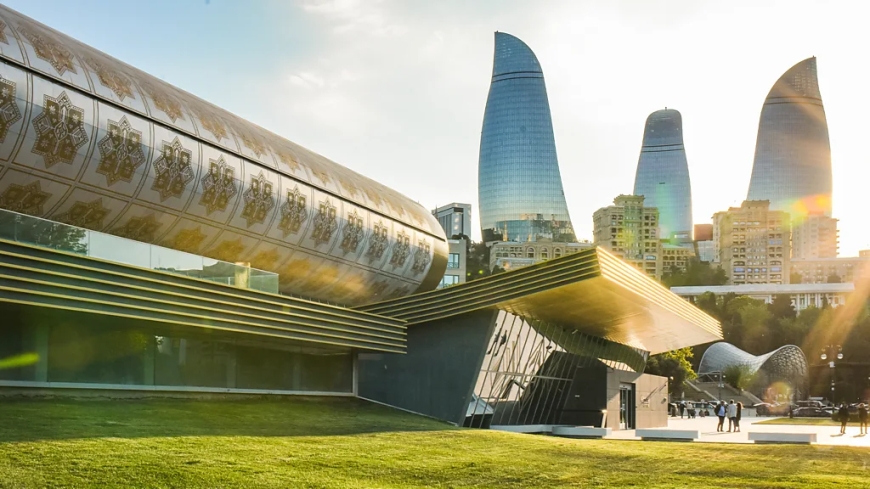
Step outside the walls and the city transforms. The Flame Towers dominate the skyline, their façades turning into giant LED displays after dark rippling flames, the national flag, cascading water. Down by the Caspian shore, the Baku Boulevard stretches for kilometres along the waterfront, lined with parks, cafés, and a giant Ferris wheel.
Then there's the Heydar Aliyev Center, designed by the late Zaha Hadid, a building with not a single straight line, its white curves flowing like fabric caught in the wind. It's regularly cited among the most remarkable buildings of the 21st century, and it alone justifies a trip to Baku for architecture lovers.
What surprises most first-time visitors is how polished and walkable the city feels. Baku is clean, safe, and easy to navigate, with a cheap and efficient metro whose Soviet-era stations are attractions in themselves.
-
Beyond the Capital: Ancient Silk Road Towns
Azerbaijan's magic multiplies once you leave Baku behind. The country was a vital artery of the Great Silk Road, and echoes of that era survive in its provincial towns.
Sheki, tucked into the foothills of the Greater Caucasus about five hours from Baku, is the jewel. Its star attraction is the Palace of the Sheki Khans, an 18th-century summer residence celebrated for its shebeke, stained-glass windows assembled from thousands of hand-cut pieces of coloured glass and wood, fitted together without a single nail or drop of glue. Sunlight streaming through them scatters jewelled patterns across intricately painted walls. It's a UNESCO World Heritage Site and, for many travellers, the single most beautiful interior in the Caucasus.
Sheki also offers the chance to sleep inside history: the town's 18th-century Caravanserai has been converted into a hotel, its vaulted brick chambers once used by Silk Road traders now hosting overnight guests.
Lahij, a mountain village reached via a dramatic canyon road, has been a centre of copper craftsmanship for centuries. Its cobbled main street rings with the sound of hammers as artisans work metal in open workshops, much as their ancestors did. The village even has its own language, distinct from Azerbaijani, spoken by only a few thousand people.
Gobustan, south of Baku, takes you much further back, to prehistory. Its rocky landscape shelters more than 6,000 petroglyphs, some dating back thousands of years, depicting hunters, dancers, boats, and animals. It's another UNESCO site, and a humbling reminder of how long humans have called this land home.
-
Natural Wonders You Won't Find Anywhere Else
Azerbaijan's landscapes are astonishingly varied for a country of its size. Nine of the world's eleven recognised climate zones exist within its borders, from subtropical lowlands to semi-desert to alpine peaks.
Its most peculiar claim to fame? Mud volcanoes. Azerbaijan has more of them than any other country on Earth several hundred, concentrated around Gobustan and the Absheron Peninsula. These gurgling, burping cones of cool grey mud look like a landscape borrowed from another planet. Watching them slowly bubble and spit under a wide desert sky is a genuinely surreal experience, and one that remains blissfully free of crowds.
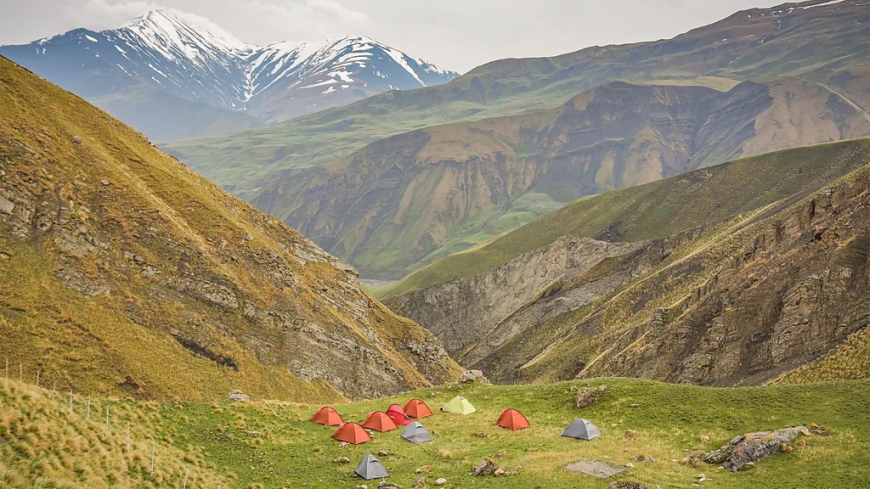
In the north, the Greater Caucasus mountains rise to over 4,000 metres, offering hiking in summer and skiing in winter at resorts like Shahdag and Tufandag at prices dramatically lower than anything in the Alps.
In the south, the Hirkan forests near Lankaran preserve ancient woodland that survived the last Ice Age, home to rare ironwood trees and according to camera traps if rarely human eyes, the elusive Caucasian leopard.
And running along the entire eastern edge of the country is the Caspian Sea, the largest enclosed body of water on the planet, with beach resorts north and south of Baku where you can swim in what is technically neither sea nor lake.
-
The Mountain Villages of the Greater Caucasus
For many travellers, the most memorable part of Azerbaijan isn't a building or a landscape it's a village.
Khinalug may be the most extraordinary of them all. Perched at around 2,300 metres, it's one of the highest continuously inhabited settlements in Europe, and one of the oldest locals claim a history stretching back thousands of years. Its stone houses stack up the mountainside like steps, the roof of one home serving as the courtyard of the next. The villagers speak Khinalug, a language found nowhere else on Earth. Reaching the village involves a spectacular drive through the Qudyalchay river canyon from the town of Quba, and staying overnight in a family guesthouse sharing bread, cheese, and mountain tea with your hosts is the kind of travel experience that's becoming vanishingly rare elsewhere.
Nearby Laza, set beneath waterfalls and jagged peaks near the Shahdag range, offers similar beauty on a smaller scale. In the northwest, villages around Gakh and Zagatala sit among walnut orchards and hazelnut groves, with a laid-back pace of life that hasn't changed in generations.
What unites these places is authenticity. There are no ticket booths, no souvenir megastores, no queues. Just mountains, hospitality, and silence of a kind that modern travel rarely provides.
-
Azerbaijani Cuisine: A Feast You Didn't See Coming
If Azerbaijani food remains one of the world's most underrated cuisines, it's only because so few outsiders have tasted it. Sitting at the crossroads of Persian, Turkish, Central Asian, and Caucasian traditions, the country's cooking takes the best of all of them.
Plov is the national treasure, saffron-scented rice crowned with lamb, chestnuts, dried fruits, and caramelised onions, with dozens of regional variations. Dolma, vine leaves or vegetables stuffed with spiced minced meat and rice, is so central to the culture that it's inscribed on UNESCO's Intangible Cultural Heritage list.
Then there's piti, a slow-cooked lamb and chickpea stew served in individual clay pots, traditionally eaten in two stages, first the broth poured over bread, then the meat mashed with the vegetables. Qutab, thin stuffed flatbreads sizzled on a griddle, make the perfect street snack, and Sheki halva layers of fried batter, nuts, and syrup is a dessert worth planning a detour for.
Tea culture is central to daily life. Azerbaijanis drink strong black tea from pear-shaped armudu glasses, always accompanied by jam, sweets, or fruit, and always offered to guests. Refusing tea in Azerbaijan is nearly impossible and honestly, why would you?
Add fresh Caspian fish, pomegranates (the country hosts an annual pomegranate festival in Goychay), and a wine industry rooted in one of the oldest winemaking regions on the planet, and you have a food scene that alone justifies the journey.
-
Culture, Hospitality and the Azerbaijani Way of Life
Azerbaijan's cultural identity defies easy labels. It is a majority-Muslim country with a firmly secular state, a place where Europe and Asia genuinely blend rather than merely meet. You'll hear the influence of Persian poetry, see Soviet-era architecture beside Ottoman-style mosques, and encounter a population that is strikingly warm towards visitors.
Hospitality here isn't performative, it's cultural bedrock. Guests are considered a blessing, and travellers routinely report being invited to share meals, tea, or even overnight stays by people they met minutes earlier. In rural areas especially, this generosity can be genuinely humbling.
Music runs deep too. Mugham, Azerbaijan's improvisational classical music tradition, is recognised by UNESCO as a masterpiece of intangible heritage, and hearing it performed live, the wavering vocals soaring over the tar and kamancha, is spine-tingling even for first-time listeners. Carpet weaving, another UNESCO-listed art, remains a living craft; the Azerbaijan Carpet Museum in Baku, housed in a building shaped like a rolled carpet, tells the story beautifully.
-
Practical Guide: Visas, Costs and Getting Around
One of Azerbaijan's biggest draws is how easy and affordable it has become to visit.
Visas: Most nationalities can obtain an e-visa online through the official ASAN Visa portal in a matter of days, at modest cost. The process is straightforward and fully digital.
Costs: Azerbaijan is refreshingly affordable. Outside luxury hotels in central Baku, prices for food, transport, and accommodation are far lower than in Western Europe. A generous restaurant meal, a cross-country bus ticket, or a night in a guesthouse all cost a fraction of what you'd pay in most European destinations.
Getting around: Baku's metro is cheap and efficient. Comfortable modern trains connect Baku with regional cities including an overnight service towards Sheki, while shared minibuses (marshrutkas) reach smaller towns. For mountain regions like Khinalug, hiring a driver or joining a small tour is the practical option and still inexpensive by international standards.
Language: Azerbaijani is the official language, and Russian is widely understood among older generations. English is increasingly common in Baku and among younger people, though a few words of Azerbaijani, salam (hello), sağ ol (thank you), go a long way.
-
Best Time to Visit Azerbaijan
Spring (April–June) is arguably the finest season, mild temperatures, green mountain valleys, and blooming landscapes. Autumn (September–October) runs it close, with warm days, harvest festivals, and pomegranates everywhere.
Summer (July–August) can be intensely hot in Baku and the lowlands, but it's the ideal window for the high Caucasus villages, where mountain air stays cool.
Winter (December–March) brings skiing at Shahdag and Tufandag, and a quieter, moodier Baku, with the bonus of the lowest prices of the year.
-
Final Thoughts: Go Before Everyone Else Does
Every few years, a destination breaks out of obscurity and floods onto every travel list, Georgia did it, Albania is doing it now. Azerbaijan has all the ingredients to be next: a spectacular and walkable capital, UNESCO treasures, otherworldly natural phenomena, soulful mountain villages, remarkable food, and prices that make it accessible to almost any budget.
For now, though, it remains what it has quietly been all along, the Caucasus' best-kept secret. The flames of Yanar Dag have burned for generations waiting to be witnessed. The shebeke windows of Sheki scatter their coloured light whether anyone is watching or not. The tea is always brewing.
The Land of Fire is ready. The only question is whether you'll get there before the rest of the world catches on.
What's Your Reaction?
 Like
0
Like
0
 Dislike
0
Dislike
0
 Love
0
Love
0
 Funny
0
Funny
0
 Wow
0
Wow
0
 Sad
0
Sad
0
 Angry
0
Angry
0

A spirit that pursues sunsets and tales. Entrepreneur at heart, globe-trotter by soul. Founder of an art-worshiping jewelry brand that embodies emotion & individuality — where each piece is a tale of culture, craft, and character. From trails up mountains to gem markets, I'm inspired by all journeys — transforming wanderlust into enduring design. Establishing a brand built on authenticity, refinement & purpose — one work at a time.











Comments (0)