

All Aboard the World's Slowest Train: A Crawling Journey Through India's Nilgiri Hills
Ride the Nilgiri Mountain Railway, India's slowest train and a UNESCO World Heritage Site. Discover the Ooty toy train route, history, best time to visit, ticket booking tips, and what to see along the way.
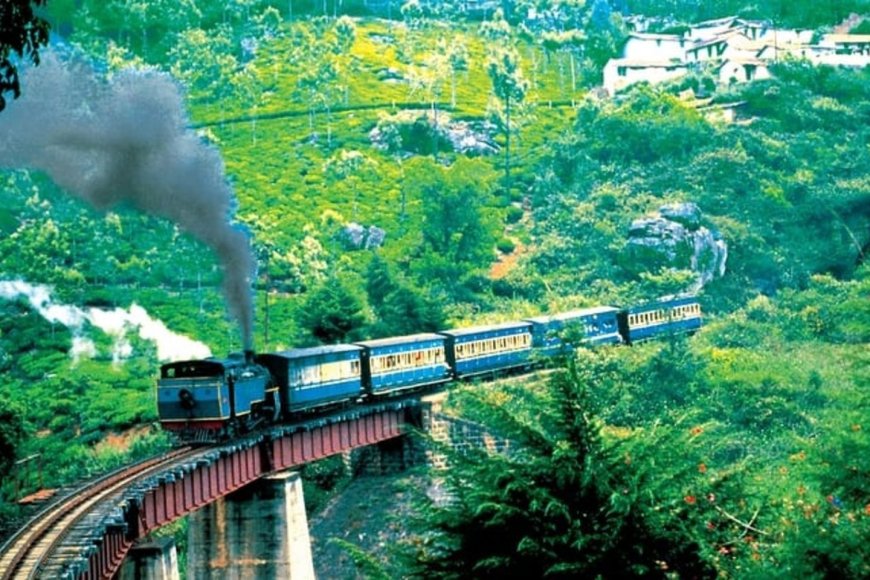
Table of Contents
- What Makes It the World's Slowest Train?
- A Journey Back in Time: The History of the Ooty Toy Train
- The Engineering Marvel: How the Rack-and-Pinion System Works
- The Route: From Mettupalayam to Ooty, Station by Station
- What You'll See Along the Way
- Best Time to Ride the Nilgiri Mountain Railway
- How to Book Tickets and Plan Your Trip
- Insider Tips: Where to Sit and What to Pack
- Beyond the Train: Things to Do in Ooty and Coonoor
- Frequently Asked Questions
- Final Thoughts: Why Slow Is the New Luxury
-
What Makes It the World's Slowest Train?
Let's get the numbers out of the way, because they are genuinely astonishing. The Nilgiri Mountain Railway crawls along at an average speed of roughly 10 to 12 kilometres per hour, and on its steepest, toughest sections it slows to as little as 9 kilometres per hour. That is slower than a fit cyclist, slower than a brisk runner, and just a notch above a determined walking pace. A car would cover the same distance in a little over an hour. The train takes around five.
So why on earth is it this slow? The answer is not poor engineering, it is the opposite. The Nilgiri hills rise so dramatically and so abruptly that this is the steepest railway gradient in Asia, climbing at a ratio of about 1 in 12 in places. Hauling carriages up that kind of incline safely demands a special grip on the rails and an unhurried, deliberate pace. The slowness is not a flaw. It is a necessity dictated by the mountain itself.
And here is the lovely paradox: that very slowness is what has made the journey legendary. While the rest of the world races to shave minutes off travel times, the Ooty toy train invites you to do nothing but look out of the window for five uninterrupted hours. In an age of doom-scrolling and constant hurry, that is closer to a luxury than an inconvenience.
-
A Journey Back in Time: The History of the Ooty Toy Train
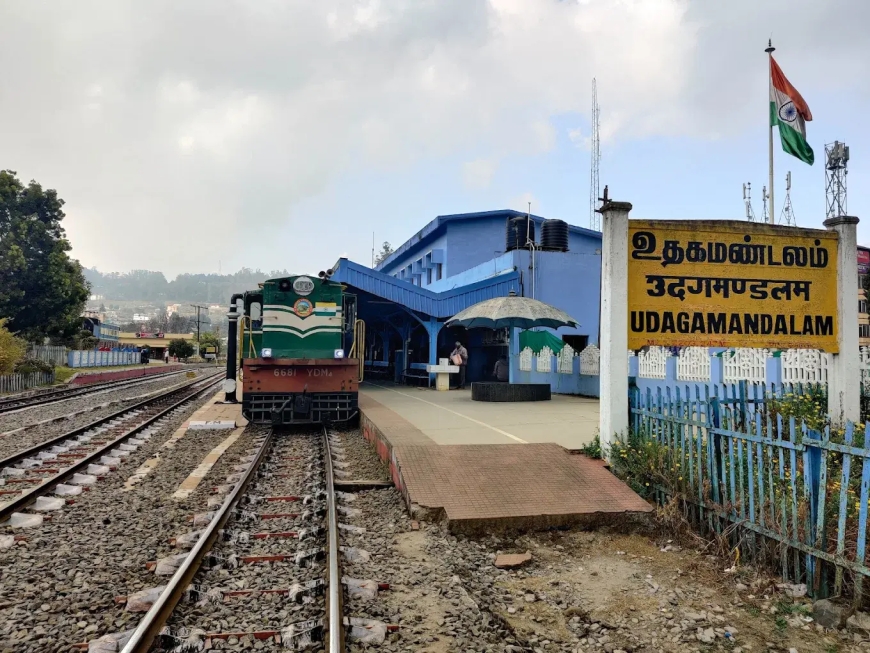
The story of the Nilgiri Mountain Railway is a tale of stubborn ambition. The idea of laying a railway up to the British hill station of Ootacamund (today's Udagamandalam, or Ooty) was floated as far back as the 1850s, but the terrain was so forbidding that decades passed before construction truly took hold. The line was finally opened to traffic in 1908, connecting the foothill town of Mettupalayam with the cool, misty heights of Ooty.
The railway was built during the British colonial era as a way to reach the summer retreats of the Nilgiris, where officials and their families escaped the searing heat of the southern plains. More than a century later, the train still rolls past tidy little stations that look as if they were lifted straight from a Raj-era postcard, complete with whitewashed walls, hanging flower baskets, and old-fashioned signage.
In 2005, the Nilgiri Mountain Railway earned its place in history when UNESCO inscribed it on the World Heritage List as part of the Mountain Railways of India, an honour it shares with the Darjeeling Himalayan Railway and the Kalka-Shimla Railway. The recognition celebrated not just the line's age, but its bold engineering and the fact that it remains a living, working piece of heritage rather than a museum exhibit. The railway has weathered storms, landslides, and the occasional threat of closure, yet it keeps running and tickets are almost always in demand.
-
The Engineering Marvel: How the Rack-and-Pinion System Works
If you remember only one technical detail about the Nilgiri Mountain Railway, make it this: it is the only rack-and-pinion railway still operating in India, and one of just a handful left in Asia.
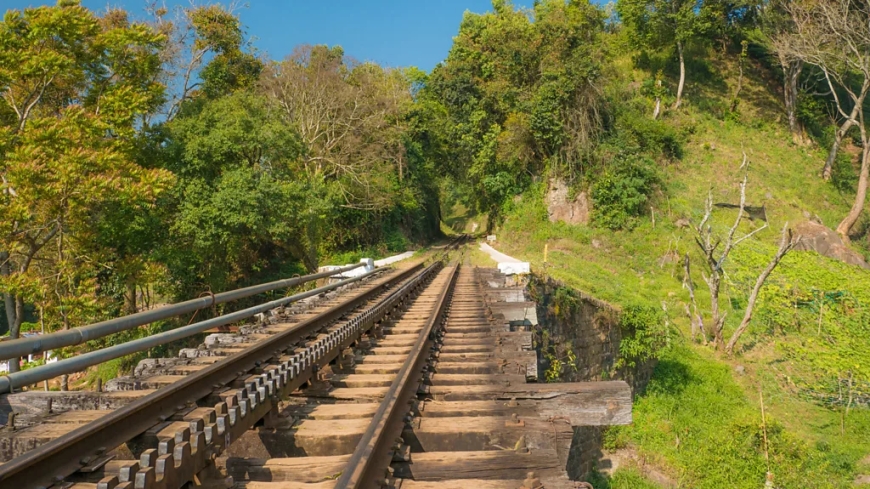
On a normal railway, trains rely on simple friction between smooth metal wheels and smooth metal rails. That works fine on flat or gently rolling ground. But on a slope as severe as the climb out of Mettupalayam, ordinary wheels would simply spin and slip. The solution, borrowed from Swiss mountain railways, is ingenious. A toothed central rail the "rack" runs down the middle of the track. A matching cogwheel, or "pinion," beneath the locomotive engages with those teeth like a zipper, physically gripping its way up and down the mountain. It is the same principle that lets a funicular conquer an Alpine peak.
This rack system is used on the toughest stretch between Mettupalayam and Coonoor, which is also where the railway's beloved steam locomotives still do the heavy lifting. These vintage X-class engines, lovingly maintained at Indian Railways workshops, burn coal and oil, hiss great clouds of steam, and provide the soundtrack of clanks, chugs, and whistles that no diesel could ever replicate. Beyond Coonoor, where the gradient eases, diesel locomotives usually take over for the gentler run up to Ooty. The combination means a single journey lets you experience both the romance of steam and the practicality of modern haulage.
-
The Route: From Mettupalayam to Ooty, Station by Station
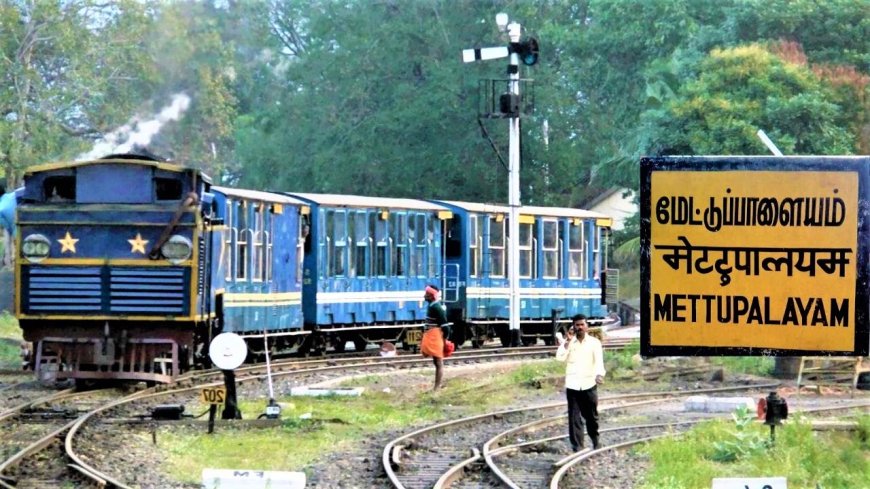
The full ascent begins at Mettupalayam, sitting at roughly 326 metres above sea level in the warm Tamil Nadu plains. From here the train climbs to Ooty at around 2,203 metres, a vertical gain of nearly two kilometres packed into a horizontal distance of just 46. Along the way it threads through approximately 16 tunnels, crosses more than 200 bridges and viaducts, and curves around hundreds of bends carved into the hillside.
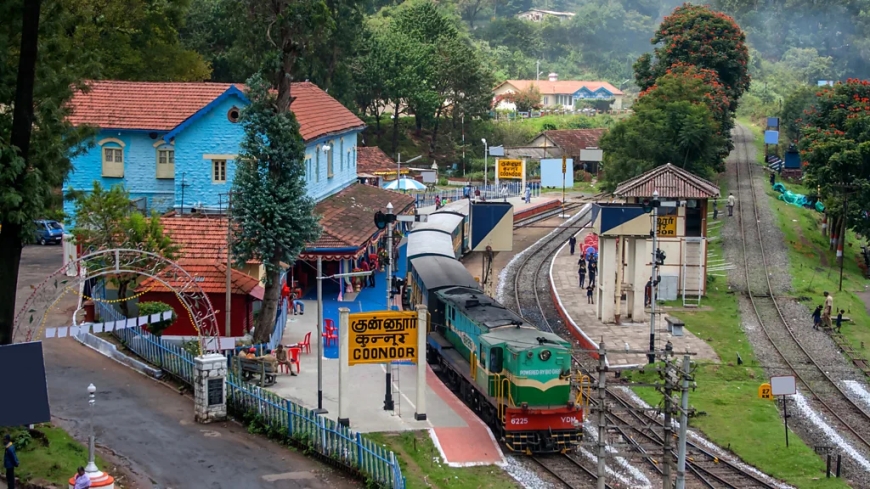
The early section after Mettupalayam, through stations such as Kallar and Hillgrove, is the most thrilling. This is where the rack engages, the forest closes in, and waterfalls tumble alongside the track. The midpoint is Coonoor, a delightful tea town and a major stop where the steam engine is typically swapped for diesel and passengers can stretch their legs.
From Coonoor onward, the train passes through stations whose very names sound like a colonial daydream Wellington, Aravankadu, Ketti, and Lovedale before finally pulling into Udagamandalam. Each little station has its own character, and many travellers find the slow rhythm of stopping, starting, and gliding between them is exactly what makes the experience so meditative.
-
What You'll See Along the Way
This is the part no statistic can capture. As the train hauls itself upward, the landscape transforms before your eyes, almost like a slow-motion nature documentary unfolding through the carriage window.
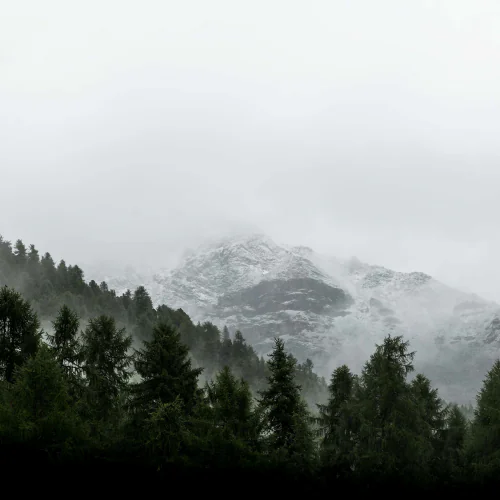
You begin in dense, tropical forest, all tangled green and dappled light, where it is not unusual to spot monkeys, deer, and a spectacular array of birds. As you gain altitude, the forest gives way to the famous tea gardens of the Nilgiris, endless rolling carpets of manicured green that drape over the hillsides like velvet. Higher still, eucalyptus groves perfume the cooling air, mist begins to drift across the valleys, and the temperature drops noticeably with every kilometre.
The sensory shift is part of the magic. You can start the morning swatting away the heat of the plains and arrive in Ooty wrapped in a sweater, watching clouds roll through the streets. Add in the rhythmic chug of the engine, the occasional vendor passing through with hot, milky chai and crispy snacks, and the gentle sway of the carriage, and you have a travel experience that engages every sense at once.
-
Best Time to Ride the Nilgiri Mountain Railway
The Nilgiri Mountain Railway runs throughout the year, but timing your trip well makes a real difference.
The most pleasant window is generally from October to June, when skies tend to be clearer and the hills are at their photogenic best. The cooler months from October through March are especially lovely if you enjoy crisp mountain air and don't mind chilly mornings, while April to June is peak summer-holiday season, when Ooty fills with domestic tourists escaping the heat, book well ahead.
The one period to approach with caution is the monsoon, roughly June to September, when heavy rain can trigger landslides in the hills and occasionally disrupt or suspend services for safety. The scenery during the rains is undeniably lush and dramatic, but reliability takes a hit, so build flexibility into your plans if you visit then.
Whatever the season, the uphill journey is the more popular direction because the views unfold ahead of you as you climb. The downhill run is faster, taking closer to three and a half hours, and is a perfectly good option if uphill seats are sold out.
-
How to Book Tickets and Plan Your Trip
Here is the single most important piece of advice in this entire blog: book your tickets in advance. The toy train has only a handful of small carriages and limited seats, and it is one of the most sought-after experiences in the region. Tickets, especially for the popular uphill morning service, are routinely snapped up days or even weeks ahead, particularly during holidays and peak season.
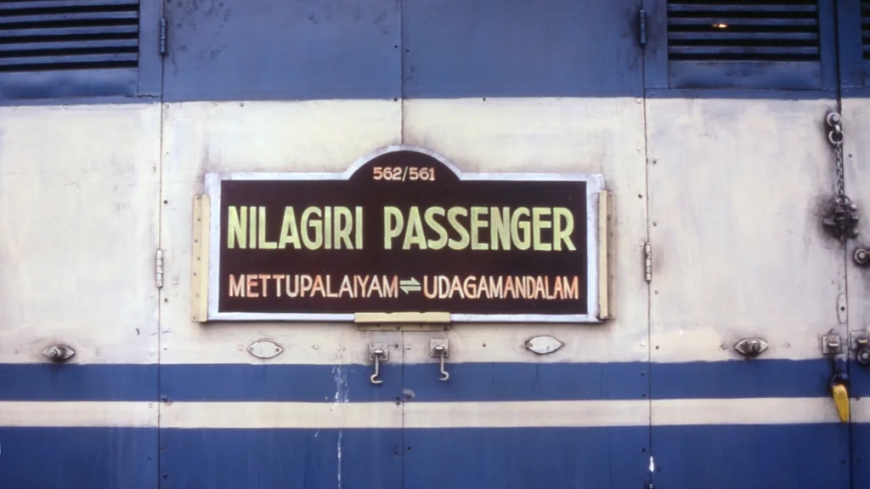
Reservations can be made through the Indian Railways IRCTC system, just as you would for any other Indian train, by searching the Mettupalayam–Udagamandalam route. There are typically first-class and second-class seating options; first class offers a little more comfort and fewer crowds, while second class is wonderfully atmospheric and easy on the budget, with fares for this short heritage run remaining very affordable by most standards.
A few logistics worth knowing. Most travellers reach Mettupalayam via Coimbatore, the nearest major city with an airport and well-connected railway station, and then board the toy train for the climb. Because the schedule and fares are subject to change, always confirm the current timetable and ticket prices on the official Indian Railways or IRCTC platforms before you travel, and arrive at the station with time to spare.
-
Insider Tips: Where to Sit and What to Pack
A few small choices can make a great journey even better.
When it comes to seating, try to grab a spot on the side of the carriage that faces out into the valley rather than the hillside the open, sweeping views are far more rewarding than a wall of rock. On the uphill journey, this generally means looking out toward the drop-offs and tea slopes.
For packing, layers are your best friend. You may board in warm, even hot conditions at Mettupalayam and disembark into genuinely cold mountain air at Ooty, so a sweater or light jacket is essential. Bring a charged camera or phone for the endless photo opportunities, a bottle of water, and some snacks, though vendors and station stalls also offer hot tea and local treats along the way. Sunscreen and a hat are sensible for the brighter stretches, and motion-sensitive travellers may appreciate the fact that the train's gentle pace makes queasiness far less likely than on a winding bus.
Finally, slow down mentally as well as physically. Put the phone away for stretches, let the scenery wash over you, and lean into the unhurried spirit of the ride. That, after all, is the whole point.
-
Beyond the Train: Things to Do in Ooty and Coonoor
The train ride is the headline act, but the destinations deserve their own encore.
Coonoor, the midway tea town, is quieter and arguably more charming than Ooty itself. It is surrounded by emerald tea estates, dotted with viewpoints like Dolphin's Nose, and home to colonial-era bungalows and cosy cafés. Many travellers use Coonoor as a calmer base for exploring the hills.
Ooty, the "Queen of Hill Stations," rewards you with a botanical garden dating back to the 1840s, a serene lake for boating, bustling markets selling homemade chocolate and fragrant essential oils, and sweeping viewpoints across the surrounding ranges. Tea-estate tours, where you can see how Nilgiri tea makes its way from leaf to cup, are a natural complement to a journey that spends hours rolling past those very plantations.
Together, the train and the towns form a complete slow-travel itinerary one where the journey and the destination are equally unforgettable.
-
Frequently Asked Questions
Is the Nilgiri Mountain Railway really the slowest train in India?
Yes, it is widely regarded as India's slowest regular passenger train, averaging around 10 to 12 kilometres per hour and dipping to roughly 9 km/h on its steepest sections.
How long does the Ooty toy train take?
The uphill journey from Mettupalayam to Ooty takes about five hours to cover 46 kilometres. The downhill return is quicker, at roughly three and a half hours.
Is it a UNESCO World Heritage Site?
Yes. It was inscribed in 2005 as part of the Mountain Railways of India, alongside the Darjeeling Himalayan and Kalka–Shimla railways.
Do I need to book in advance?
Absolutely. Seats are limited and demand is high, so reserve through IRCTC well ahead of your travel date, especially in peak season.
Does it still use a steam engine?
Steam locomotives still operate on the steep Mettupalayam–Coonoor section using the rack-and-pinion system, while diesel typically handles the gentler Coonoor–Ooty stretch.
-
Final Thoughts: Why Slow Is the New Luxury
The Nilgiri Mountain Railway is a beautiful contradiction. It is a feat of bold engineering whose purpose is to go slowly. It is a relic of the colonial past that remains vividly, noisily alive. And it is a train journey where arriving late is precisely the experience you paid for.
In a world obsessed with speed, the Ooty toy train offers something increasingly rare: permission to simply sit, breathe in the mountain mist, and watch India's Nilgiri hills reveal themselves one gentle curve at a time. So when you finally climb aboard, resist the urge to check how much longer is left. The slowest train in India has only one lesson to teach, and it is a good one, the best journeys are the ones you never want to rush.
All aboard.
What's Your Reaction?
 Like
0
Like
0
 Dislike
0
Dislike
0
 Love
0
Love
0
 Funny
0
Funny
0
 Wow
0
Wow
0
 Sad
0
Sad
0
 Angry
0
Angry
0

A spirit that pursues sunsets and tales. Entrepreneur at heart, globe-trotter by soul. Founder of an art-worshiping jewelry brand that embodies emotion & individuality — where each piece is a tale of culture, craft, and character. From trails up mountains to gem markets, I'm inspired by all journeys — transforming wanderlust into enduring design. Establishing a brand built on authenticity, refinement & purpose — one work at a time.













Comments (0)