

An Aurora Chaser's Guide to the Northern Lights: When, Where & How to See Them
Dreaming of seeing the Northern Lights? This complete aurora chaser's guide covers the best time to see the aurora borealis, the top destinations across the Arctic, and expert tips on how to maximise your chances of witnessing nature's greatest light show.
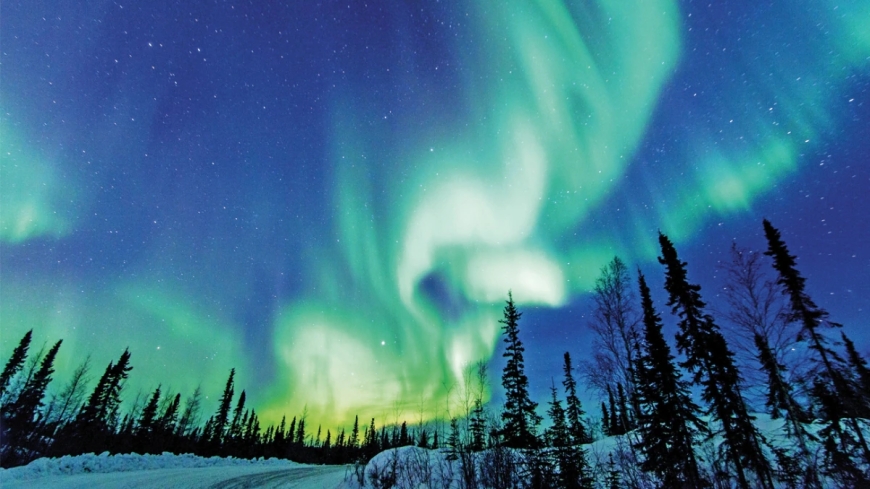
Table of Contents
- Introduction: The Greatest Show on Earth
- What Actually Causes the Northern Lights?
- When to See the Northern Lights: Timing Is Everything
- Where to See the Northern Lights: The Best Destinations
- How to Maximise Your Chances: An Aurora Chaser's Toolkit
- Understanding Aurora Forecasts and the KP Index
- Photographing the Aurora: Camera Settings That Work
- What to Pack for an Aurora Hunt
- Common Mistakes First-Time Aurora Chasers Make
- Final Thoughts: Patience, Darkness and a Little Luck
-
Introduction: The Greatest Show on Earth
There are travel experiences you tick off a list, and there are experiences that change the way you see the world. Watching the Northern Lights ripple across an Arctic sky belongs firmly in the second category.
Ask anyone who has stood beneath a full auroral display and they'll struggle to describe it without reaching for words like "otherworldly" or "spiritual." Curtains of green light folding and unfolding across the darkness. Sudden flashes of pink and violet at the edges. The eerie sensation that the sky itself is alive and moving. No photograph, however stunning quite captures what it feels like to be there.
But here's the truth that glossy travel brochures rarely mention: seeing the aurora borealis takes planning, patience, and a realistic understanding of how the lights work. Plenty of travellers fly north with high hopes and come home having seen nothing but clouds.
This guide exists to shift the odds in your favour. Whether you're planning your first aurora trip or refining your strategy after a near miss, here's everything you need to know about when, where, and how to see the Northern Lights.
-
What Actually Causes the Northern Lights?
Understanding the science behind the aurora isn't just interesting it genuinely helps you plan a better trip.
The Northern Lights begin 150 million kilometres away, on the surface of the sun. The sun constantly releases a stream of charged particles known as the solar wind. When these particles reach Earth, most are deflected by our planet's magnetic field. But near the poles, where the magnetic field lines converge, some particles funnel down into the upper atmosphere.
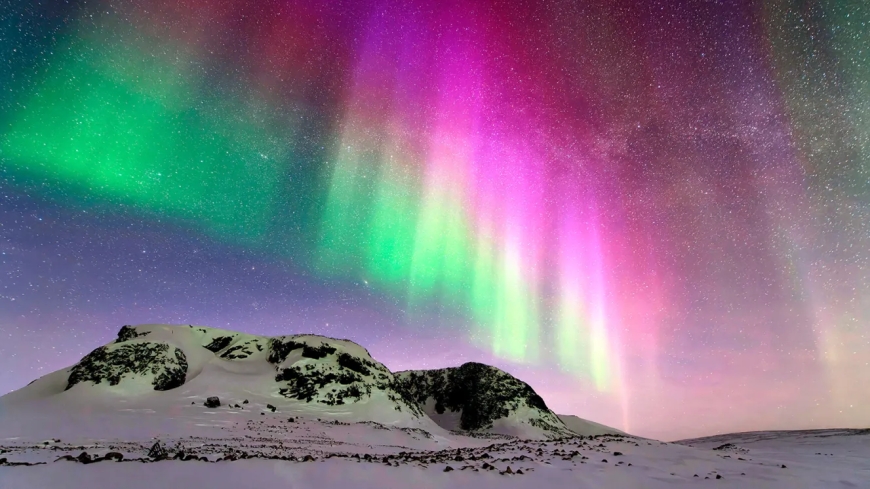
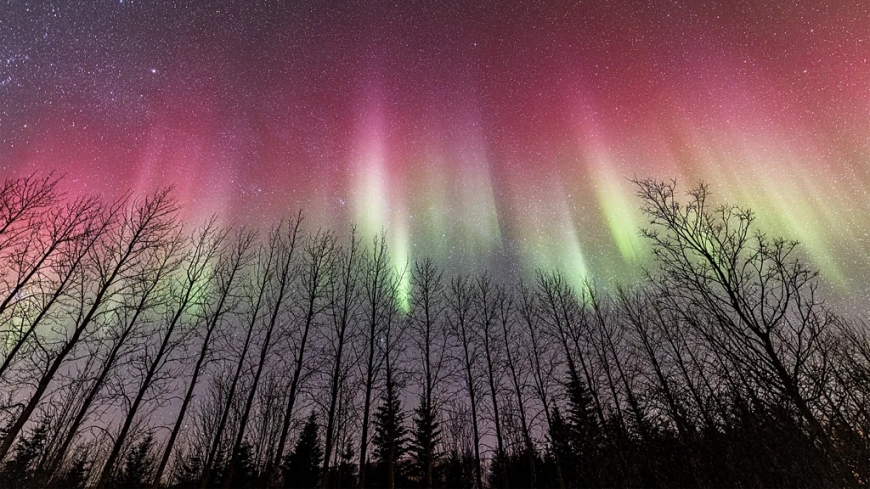
There, roughly 100 to 300 kilometres above the ground, they collide with gas molecules. Those collisions release energy in the form of light. Oxygen produces the classic green glow (and, at higher altitudes, deep red), while nitrogen contributes blues, purples, and pinks.
Two practical takeaways follow from this science. First, auroral activity depends on solar activity and the sun runs on an approximately 11-year cycle of rising and falling intensity. The current solar cycle peaked around 2024–2025, which means the next few winters remain an exceptional window for aurora hunting, with stronger and more frequent displays than travellers have seen in over a decade.
Second, the aurora forms an oval-shaped ring around the magnetic pole, the auroral oval, rather than sitting directly on top of it. This is why the best viewing locations are at high latitudes, but not necessarily the northernmost point you can reach.
-
When to See the Northern Lights: Timing Is Everything
The single most important fact about aurora timing: the lights are technically active year-round, but you can only see them when the sky is dark. In the Arctic summer, the midnight sun makes viewing impossible.
The best months run from late September to late March. Within that window, two periods stand out:
- Late September to October: The autumn equinox brings a statistical spike in geomagnetic activity, and lakes that haven't yet frozen offer stunning aurora reflections. Temperatures are also far milder than mid-winter.
- February to March: The spring equinox brings a similar activity spike, skies are often clearer than in December and January, and the days have lengthened just enough to make travel more comfortable.
The best time of night is typically between 9pm and 2am, with activity often peaking around magnetic midnight (roughly 10:30pm to 11:30pm local time in most Nordic destinations). That said, strong displays can appear as early as dusk or persist until dawn, so committed chasers stay flexible.
Moon phases matter less than people think. A full moon does wash out fainter displays, but it also illuminates the landscape beautifully for photography. Strong auroras cut through moonlight without difficulty. If you can choose, aim for a new moon but don't cancel a trip over lunar timing.
Plan for multiple nights. This is non-negotiable advice. Aurora sightings depend on both solar activity and clear skies aligning, and one night gives you poor odds. Three nights improve them dramatically. A week in a good location during the season makes a sighting highly likely.
-
Where to See the Northern Lights: The Best Destinations
The sweet spot for aurora viewing lies between roughly 65° and 70° north, directly beneath the auroral oval. Here are the destinations that consistently deliver.
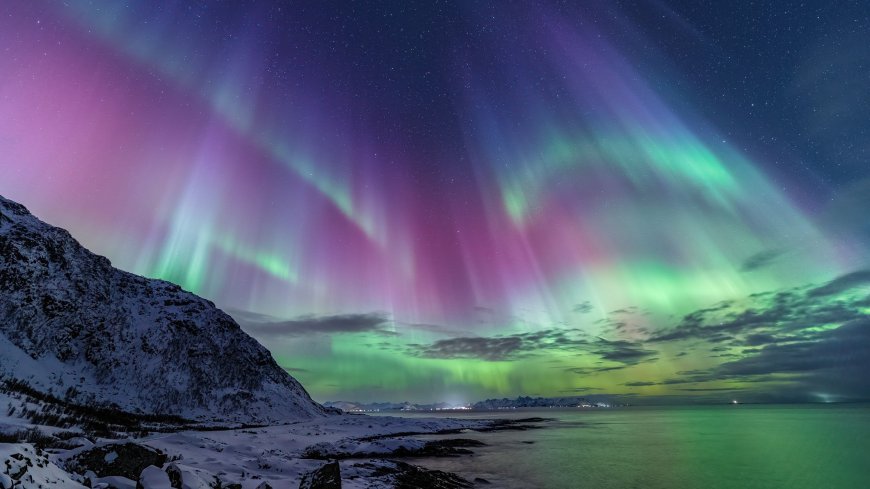
Tromsø, Norway. Often called the aurora capital of the world, Tromsø combines a lively small city with prime positioning under the oval. The surrounding fjords and mountains offer dramatic foregrounds, and the local aurora-chasing industry is the most developed anywhere with guides who drive hours across the Norwegian-Finnish border to find clear skies.
Abisko, Sweden. This tiny village in Swedish Lapland has a legendary microclimate. The surrounding mountains create a rain shadow that keeps Abisko's skies clearer than almost anywhere else in the Arctic, the famous "blue hole of Abisko." Statistically, it may offer the best sighting odds in Europe.
Finnish Lapland (Rovaniemi, Levi, Saariselkä). Finland's north pairs aurora viewing with glass igloos and heated cabins designed specifically for watching the sky from bed. Roughly 200 auroral displays light up Finnish Lapland's skies each year.
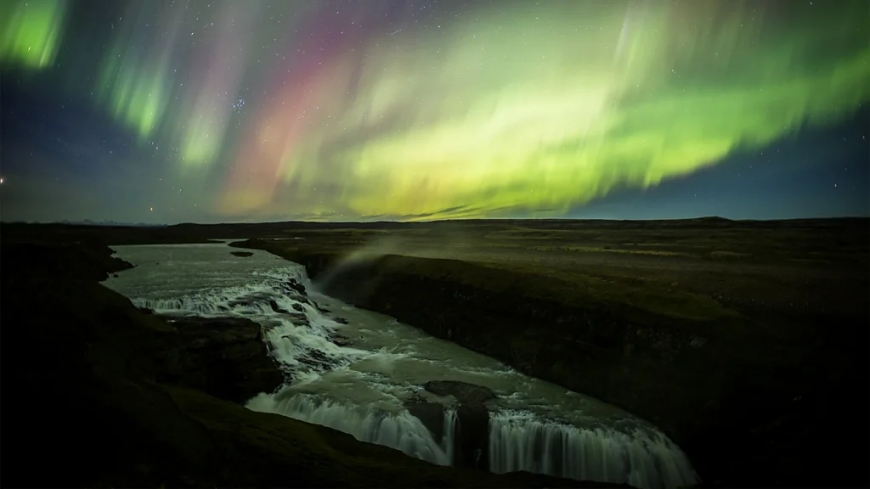
Iceland. The most accessible option for many travellers, with direct flights from across Europe and North America. Iceland's weather is famously changeable, which cuts both ways, clouds move in fast, but they also move out fast. The advantage here is the scenery: auroras over glaciers, waterfalls, and black-sand beaches.
Fairbanks, Alaska. North America's premier aurora destination, sitting directly under the oval with cold, dry, clear winter air. Fairbanks offers among the most statistically reliable viewing on the continent.
Yellowknife, Canada. The capital of Canada's Northwest Territories enjoys flat terrain, minimal light pollution, and famously clear winter skies. Its aurora-viewing infrastructure, including heated teepee camps is superb.
Greenland and Svalbard offer viewing for the more adventurous, with Svalbard being one of the few places on Earth where you can see auroras during the day in the polar night's permanent darkness.
-
How to Maximise Your Chances: An Aurora Chaser's Toolkit
Seasoned aurora chasers don't rely on luck. They stack every controllable factor in their favour.
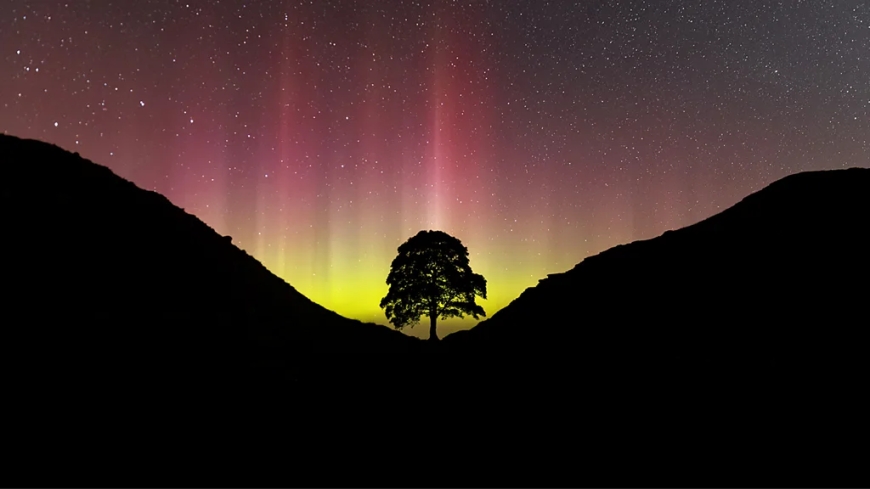
Get away from light pollution. City lights are the enemy of aurora viewing. Even in Tromsø or Reykjavik, you'll need to travel 20–30 minutes outside town to see displays properly. Darkness reveals detail and colour that urban skies erase.
Stay mobile. Clear skies matter more than location perfection. A guided minibus tour that can chase gaps in the cloud cover will outperform a fixed lodge on a cloudy night every time. Many Tromsø guides routinely drive 2–3 hours to find clear conditions.
Book aurora-focused accommodation. Glass igloos, aurora cabins with skylights, and hotels offering aurora wake-up calls mean you won't sleep through a 2am display.
Use local guides at least once. A good guide reads cloud maps and solar wind data in real time, knows the back roads, brings thermal suits and hot drinks, and can teach you camera settings on the spot. For first-timers, one guided night is worth three self-guided ones.
Commit to the wait. Aurora chasing involves hours of standing in the cold staring at an apparently empty sky. Displays can erupt from nothing in minutes. The chasers who see the most are simply the ones who stay out longest.
-
Understanding Aurora Forecasts and the KP Index
The KP index is the number you'll hear constantly in aurora circles. It measures geomagnetic activity on a scale of 0 to 9, and it's useful, but widely misunderstood.
A higher KP number means the auroral oval expands southward, making the lights visible from lower latitudes. If you're in Scotland or northern Germany, you need a KP of 6 or higher. But here's what many first-timers miss: if you're already under the oval in Tromsø, Abisko, or Fairbanks, a KP of just 1 or 2 can produce beautiful overhead displays. Don't cancel a night out because the KP forecast looks modest.
More useful for short-term prediction is real-time solar wind data, particularly the speed, density, and the direction of the interplanetary magnetic field (the "Bz" value). When the Bz turns strongly negative (southward), auroras often ignite within the hour.
Apps worth downloading: My Aurora Forecast, Aurora Alerts, SpaceWeatherLive, and the Glendale App (a favourite among serious chasers). Pair any of them with a local cloud-cover forecast, because the strongest geomagnetic storm on record means nothing under an overcast sky.
-
Photographing the Aurora: Camera Settings That Work
The aurora is one of the most rewarding subjects in all of photography and one of the most forgiving once you know the basics.
Essential settings for a starting point:
- Mode: Full manual
- Aperture: As wide as your lens allows (f/2.8 or lower is ideal)
- ISO: 1600–3200
- Shutter speed: 5–15 seconds (shorter for fast-moving displays, longer for faint ones)
- Focus: Manual, set to infinity, autofocus fails in the dark. Focus on a distant light or bright star, then don't touch it.
A tripod is non-negotiable. No amount of camera technology compensates for hand-holding a multi-second exposure. Bring a spare battery too, Arctic cold drains batteries at a startling rate, so keep spares warm in an inside pocket.
Modern smartphones can do it. Recent flagship phones with night mode can capture surprisingly good aurora images, especially when braced on a tripod or a stable surface. Use the phone's pro or night mode, lock focus, and hold still for the full exposure.
One final piece of advice that every veteran chaser gives: don't spend the entire display staring at your screen. Take your shots, then put the camera down and watch. The memory is worth more than the photograph.
-
What to Pack for an Aurora Hunt
Aurora viewing means standing still, outdoors, at night, in the Arctic, often for hours. Standing still generates no body heat, which means you need to dress far more warmly than you would for daytime winter activities.
Layer like a local: a merino wool or synthetic base layer (never cotton), a thick fleece or wool mid-layer, and a windproof insulated outer jacket and trousers. Extremities need extra care: insulated winter boots rated well below freezing, wool socks (two pairs), a warm hat covering your ears, and mittens rather than gloves, with thin liner gloves underneath so you can operate a camera without exposing bare skin.
Add hand and toe warmers, a thermos of something hot, a headlamp with a red-light mode (which preserves night vision), and something insulated to sit or stand on. Many guided tours provide thermal suits, one more argument for booking at least one.
-
Common Mistakes First-Time Aurora Chasers Make
Learning from other people's disappointments is cheaper than learning from your own.
Booking only one or two nights. The most common and most costly mistake. The aurora doesn't run on a schedule, and weather is the great disruptor. Give yourself at least three nights, ideally more.
Staying in the city and hoping. Light pollution hides all but the strongest displays. If you're not getting into genuine darkness, you're not really aurora chasing.
Trusting the KP index too literally. As covered above, under the oval, low-KP nights regularly deliver spectacular shows, and travellers who stay in because "the forecast was only KP 2" miss them.
Expecting camera colours with the naked eye. Long exposures gather more light than human eyes can. Faint auroras often appear grey-white or pale green in person, especially early in a display. Strong displays, however, are vividly colourful to the eye and utterly unforgettable.
Giving up too early. Displays come in waves. A quiet sky at 10pm can explode at midnight. Veterans stay out; beginners go to bed.
Ignoring the cold. Nothing ends an aurora night faster than being underdressed. If you're comfortable when you first step outside, you're probably wearing too little for the hours ahead.
-
Final Thoughts: Patience, Darkness and a Little Luck
Chasing the Northern Lights is unlike any other kind of travel. You can't book the aurora the way you book a museum ticket. It demands flexibility, patience, warm clothing, and a willingness to stand in the frozen dark trusting that the sky will eventually reward you.
But that uncertainty is precisely what makes it special. When the first pale arc strengthens, splits, and suddenly floods the sky with rippling green fire, every cold hour of waiting evaporates. People cheer. People cry. People stand in complete silence. There is simply nothing else like it.
Stack the odds in your favour: travel between late September and March, head for the auroral oval, stay several nights, escape the city lights, watch the solar wind data, and dress warmer than you think you need to. Then look up and let the sky do the rest.
The lights are dancing up there right now, somewhere over the Arctic. The only question is when you'll go and meet them.
What's Your Reaction?
 Like
0
Like
0
 Dislike
0
Dislike
0
 Love
0
Love
0
 Funny
0
Funny
0
 Wow
0
Wow
0
 Sad
0
Sad
0
 Angry
0
Angry
0

A spirit that pursues sunsets and tales. Entrepreneur at heart, globe-trotter by soul. Founder of an art-worshiping jewelry brand that embodies emotion & individuality — where each piece is a tale of culture, craft, and character. From trails up mountains to gem markets, I'm inspired by all journeys — transforming wanderlust into enduring design. Establishing a brand built on authenticity, refinement & purpose — one work at a time.












Comments (0)