

Lab-Grown Diamonds vs Natural Diamonds: What Are Indians Choosing in 2026?
Thinking of buying a diamond in 2026? Discover the differences between lab-grown and natural diamonds, including pricing, appearance, resale value, investment potential, sustainability, and what Indian consumers are choosing today.

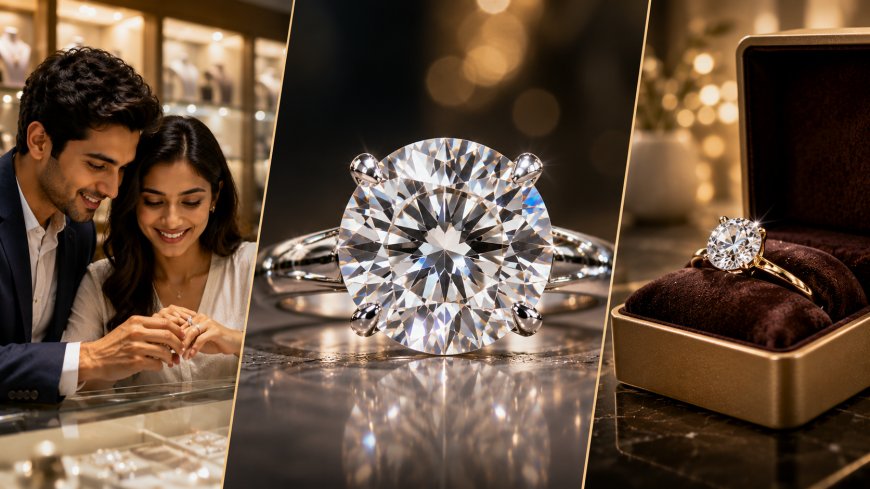
A few years ago, if someone told you they bought a diamond ring for nearly half the price of a traditional diamond; and it looked exactly the same; you probably wouldn't have believed them.
In 2026, however, that's becoming increasingly common.
Walk into a jewellery showroom, browse online jewellery stores, or scroll through Instagram, and you'll notice a major shift happening in the Indian jewellery market. More consumers are asking questions about lab-grown diamonds. Young couples are comparing them with natural diamonds before getting engaged. Even luxury jewellery brands are launching dedicated collections.
This has created one of the biggest debates in the jewellery industry today:
Should you buy a lab-grown diamond or a natural diamond?
The answer isn't as simple as many people think.
Both options have advantages. Both have drawbacks. And the best choice depends entirely on why you're buying the diamond in the first place.
Whether you're shopping for an engagement ring, wedding jewellery, everyday luxury, or long-term investment, this guide will help you understand what Indians are choosing in 2026 and which option may be right for you.
Why This Debate Matters More Than Ever in 2026
For decades, natural diamonds dominated the market.
If you wanted a diamond, there was really only one option: a stone that formed deep beneath the Earth's surface over billions of years and was later mined, cut, polished, and sold.
Today, technology has changed that.
Scientists can now create diamonds in controlled laboratory environments that are physically, chemically, and optically identical to natural diamonds.
That's the key point many people misunderstand.
A lab-grown diamond is not a fake diamond.
It is not cubic zirconia.
It is not a diamond substitute.
It is a real diamond.
Even professional gemologists often require specialized equipment to distinguish between a lab-grown diamond and a natural one.
Because of this, Indian consumers are increasingly asking whether paying significantly more for a natural diamond still makes sense.

What Exactly Is a Natural Diamond?
Natural diamonds are formed under extreme heat and pressure beneath the Earth's surface over billions of years.
These stones are mined from the earth, processed, cut, polished, and eventually transformed into jewellery. One reason natural diamonds have traditionally been valuable is scarcity. The process that creates them cannot be replicated naturally on a human timescale.
Every natural diamond carries a geological history that is literally billions of years old. For many buyers, that story adds emotional value that goes beyond appearance alone.

What Is a Lab-Grown Diamond?
A lab-grown diamond is created using advanced technology that replicates the conditions under which natural diamonds form.
The two most common methods are:
-
High Pressure High Temperature (HPHT)
-
Chemical Vapor Deposition (CVD)
The result is a genuine diamond with the same physical structure, sparkle, hardness, and brilliance as a natural diamond.
In fact, when viewed without specialized testing equipment, most consumers; and many jewellers; cannot tell the difference.
That's why lab-grown diamonds have become one of the fastest-growing segments of the global jewellery industry.


Why Indians Are Suddenly Buying More Lab-Grown Diamonds
The biggest reason is simple:
Value for money.
Imagine two diamonds.
Both look identical.
Both are certified.
Both have the same cut, color, clarity, and carat weight.
One costs ₹2 lakh. The other costs ₹80,000.
For many younger buyers, the decision becomes obvious. Millennials and Gen Z consumers are increasingly prioritizing practicality over tradition. Instead of spending a large portion of their wedding budget on a natural diamond, many prefer to allocate money toward travel, homes, investments, or experiences.
This shift is particularly visible in urban cities such as Mumbai, Delhi, Bengaluru, Hyderabad, Pune, and Ahmedabad.

The Biggest Advantage of Lab-Grown Diamonds
The most obvious benefit is affordability.
Lab-grown diamonds typically cost between 40% and 80% less than comparable natural diamonds.
This allows buyers to purchase:
-
Larger diamonds
-
Better clarity
-
Better color grades
-
More elaborate jewellery designs
without increasing their budget.
For example, a buyer who can afford a 0.75-carat natural diamond may be able to purchase a 1.5-carat lab-grown diamond for a similar price.
That difference is significant.


Why Natural Diamonds Still Dominate Premium Jewellery
Despite the growth of lab-grown diamonds, natural diamonds continue to dominate luxury jewellery.
Why? Because many buyers are purchasing more than just a gemstone.
They're purchasing rarity.
They're purchasing history.
They're purchasing something that took billions of years to form.
For many families in India, jewellery is deeply connected to tradition, heritage, and legacy. A natural diamond often carries symbolic value that goes beyond its physical characteristics. This emotional factor remains one of the strongest reasons people continue choosing natural diamonds.

What Are Indian Couples Choosing in 2026?
Interestingly, the answer depends on age.
Younger buyers entering the market for engagement rings and wedding jewellery are increasingly open to lab-grown diamonds. Many of them view jewellery as a fashion purchase rather than a long-term asset.
Older buyers and high-net-worth consumers, however, still show a stronger preference for natural diamonds, especially when purchasing premium or heirloom-quality pieces. The market isn't shifting entirely toward one side. Instead, both categories are growing for different reasons.
Which Looks Better?
This is where things become surprisingly simple.
Neither.
A lab-grown diamond does not sparkle more.
A natural diamond does not sparkle more.
If both diamonds have the same cut quality, color, clarity, and carat weight, they will appear virtually identical. Most consumers cannot visually distinguish between the two. This means appearance alone should not determine your decision.
The Investment Question Everyone Asks
This is perhaps the most important section of the discussion. Many consumers assume all diamonds are investments.
In reality, that isn't always true. Unlike gold, diamonds generally do not offer the same liquidity or predictable appreciation. However, if your primary goal is preserving value over time, natural diamonds currently have a significant advantage.
Natural diamonds have an established resale market and long-term scarcity. Lab-grown diamonds, on the other hand, continue to become cheaper as production technology improves. As manufacturing scales up globally, prices have been steadily declining. This means resale values for lab-grown diamonds are generally much weaker. If your main objective is investment, wealth preservation, or passing jewellery to future generations, natural diamonds remain the stronger choice.
Should You Buy Diamonds as an Investment?
In most cases, no. If investment is your primary goal, gold generally remains the preferred option for Indian buyers.
Gold offers:
-
Better liquidity
-
Easier resale
-
Transparent pricing
-
Long-term wealth preservation
Diamonds should primarily be viewed as luxury purchases rather than financial investments.
If investment is important, prioritize gold. If beauty, symbolism, and personal enjoyment are important, diamonds make perfect sense.
Which Option Is Better for Different Buyers?
If you're shopping for a proposal ring, fashion jewellery, or modern bridal jewellery and want maximum size and sparkle within a fixed budget, lab-grown diamonds often provide better value. If you're purchasing a milestone piece, a family heirloom, or jewellery intended to hold value over decades, natural diamonds remain the preferred choice.
There is no universal winner. The best choice depends entirely on your priorities.
The Future of Diamonds in India
Industry experts expect both categories to continue growing. Lab-grown diamonds are becoming increasingly mainstream, especially among younger consumers who value affordability and sustainability. Natural diamonds, meanwhile, are likely to become even more associated with exclusivity, rarity, and luxury.
Rather than replacing each other, the two categories may ultimately serve different customer needs. The market is evolving toward choice rather than competition.
Final Verdict: What Should You Buy in 2026?
If you're looking for the biggest, most beautiful diamond possible within a specific budget, lab-grown diamonds offer extraordinary value. If you're looking for rarity, legacy, tradition, and stronger long-term value retention, natural diamonds remain the better choice. And if you're buying purely for investment purposes, gold is still likely to outperform both.
The good news is that consumers today have more options than ever before. Whether you choose a lab-grown diamond or a natural diamond, the most important thing is understanding why you're buying it. Because the best jewellery purchase isn't necessarily the most expensive one; it's the one that aligns with your goals, budget, and personal values.
In 2026, that's exactly how most Indian consumers are approaching the diamond debate.
What's Your Reaction?
 Like
0
Like
0
 Dislike
0
Dislike
0
 Love
0
Love
0
 Funny
0
Funny
0
 Wow
0
Wow
0
 Sad
0
Sad
0
 Angry
0
Angry
0

















Comments (0)