

Why the Pacific and Atlantic Oceans Do Not Mix — The Real Reason Explained
The Pacific and Atlantic Oceans do mix, just not instantly. Discover the real reason behind the visible line where these two massive oceans meet.
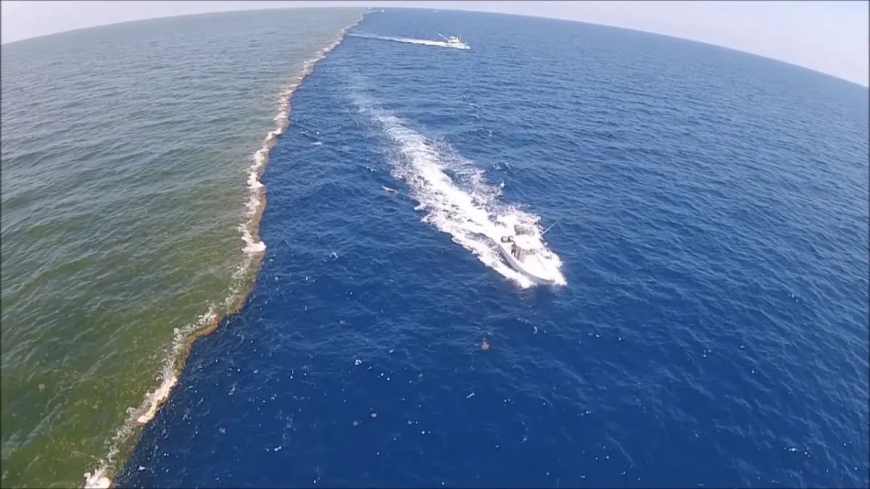
Most of us have seen those viral images and videos of two massive oceans meeting, a clear line between them, blue on one side, darker on the other. The caption usually says something dramatic like “The Pacific and Atlantic Oceans do not mix.”
It looks unreal. Almost staged.
So what’s actually going on here? Are these oceans really refusing to blend, or is the internet overselling the mystery?
Let’s break it down properly, without the science textbook headache.
The Short Answer
The Pacific and Atlantic Oceans do mix. Slowly. Constantly. Inevitably.
But they don’t mix instantly.
And that delay is what creates the illusion of separation.
Now let’s talk about why.
Where This “They Don’t Mix” Idea Comes From
The idea exploded thanks to photos and videos taken near places like:
In these spots, you can visibly see two bodies of water touching but not blending right away. One looks lighter, the other darker. There’s a visible boundary. Almost like oil and water.
Our brains love clear explanations. So the internet jumped to a dramatic conclusion:
“These oceans don’t mix.”
But nature is rarely that simple.
The Real Reason Oceans Don’t Mix Instantly
The keyword here is density.
Ocean water isn’t just water. It’s a complex mix of salt, temperature, minerals, sediments, and living organisms. When two large water bodies with different characteristics meet, they don’t immediately merge like two cups of the same liquid.
Here’s what really controls the mixing.
1. Salinity: Salt Changes Everything
The Atlantic Ocean is saltier than the Pacific.
This matters more than most people realize.
Saltier water is denser. That means Atlantic water tends to sink slightly below the less salty Pacific water when they meet.
Think of it like this.
If you pour honey and water into the same glass, they don’t blend instantly. One is heavier. One is lighter. The same principle applies here, just on a planetary scale.
2. Temperature Differences Slow the Blend
Temperature affects density too.
Cold water is heavier than warm water.
In many places where the Pacific and Atlantic meet, one body of water is colder than the other. This creates layers. Instead of immediate mixing, the waters stack, slide, and flow past each other.
It’s not a wall.
It’s more like slow-motion choreography.
3. Ocean Currents Are Powerful and Directional
Oceans aren’t still. They move constantly through massive currents.
The Pacific and Atlantic each have their own dominant circulation systems. When these systems collide, they don’t cancel each other out. They push, pull, curve, and resist.
Currents can run parallel for long distances before gradually blending. This keeps the visual boundary intact for longer than we expect.
4. Sediments Create Visible Color Differences
This is the part most viral posts completely ignore.
In places like the Gulf of Alaska, one side of the water carries huge amounts of glacial meltwater. That meltwater is packed with fine sediments and minerals, giving it a cloudy, lighter appearance.
The other side is clearer, deeper blue ocean water.
So what looks like “two oceans refusing to mix” is often sediment-rich water meeting clearer water.
They are mixing.
You just can’t see it happening instantly.
Why the Line Looks So Sharp
This is where human perception gets fooled.
Our eyes are excellent at spotting contrast. When two colors differ sharply, we interpret it as separation.
But if you zoom out in time instead of space, the line disappears.
Given enough hours, days, or weeks, those waters blend completely.
Nature doesn’t rush.
The Role of the Southern Ocean
Many people don’t realize this, but the Southern Ocean plays a massive role here.
It wraps around Antarctica and connects the Pacific, Atlantic, and Indian Oceans. It’s one of the most powerful mixing zones on Earth.
Over time, it ensures that all major oceans exchange heat, salt, nutrients, and life.
If oceans truly didn’t mix, Earth’s climate system would collapse.
The fact that it hasn’t tells you everything you need to know.
Why This Myth Refuses to Die
Honestly? Because it’s visually irresistible.
It looks dramatic
It feels mysterious
It suggests nature has secrets we aren’t meant to understand
And social media rewards simple, shocking explanations.
“Different densities and slow diffusion” doesn’t get clicks.
“They don’t mix.” does.
A Better Way to Understand It
Here’s a more accurate way to think about it.
The Pacific and Atlantic don’t collide.
They negotiate.
They exchange water slowly, layer by layer, current by current. It’s less like two liquids smashing together and more like a long, careful handshake.
Does This Happen Only With Oceans?
Not at all.
You see the same thing when:
1. Rivers meet the sea
2. Two rivers with different sediment levels merge
3. Freshwater meets saltwater in estuaries
The boundary is visible at first. Over time, it fades.
Same physics. Different scale.
So Are They “Not Mixing” Right Now?
They are mixing as you read this.
Just not in a way that satisfies our expectation of instant blending.
Nature operates on timelines we’re not used to measuring.
What This Really Teaches Us
Beyond the science, there’s something quietly fascinating here.
We assume mixing means immediate sameness. Nature disagrees.
It allows differences to coexist for a while.
It moves gradually.
It values balance over speed.
The Pacific and Atlantic don’t fight each other. They adapt.
Final Thoughts
So no, the Pacific and Atlantic Oceans are not locked in some eternal standoff.
They mix. They flow into each other. They shape the planet together.
What we see in those viral images is a moment. A pause. A visual illusion created by density, temperature, currents, and sediments.
And honestly? That makes the story better, not worse.
Because instead of magic walls in the sea, we get something far more impressive:
a planet-sized system working patiently, constantly, and flawlessly, even when it doesn’t look like it is.
That’s the real reason the oceans seem like they don’t mix.
What's Your Reaction?
 Like
0
Like
0
 Dislike
0
Dislike
0
 Love
0
Love
0
 Funny
0
Funny
0
 Wow
0
Wow
0
 Sad
0
Sad
0
 Angry
0
Angry
0

I’m Ryan Rehan, Business Development Executive and a passionate blogger dedicated to sharing insights, tips, and experiences that inspire and inform. Through my blogs, I explore topics that matter, spark curiosity, and encourage thoughtful conversations. Whether I’m breaking down complex ideas, offering practical advice, or simply sharing stories, my goal is to create content that adds real value to a growing community of curious minds and passionate readers.














Comments (0)