




















































Where the Desert Bites Back: The Haunting Beauty of Jordan's Terrain
A traveler's guide to the deserts, canyons, and salt seas that make Jordan one of the most striking landscapes on Earth.
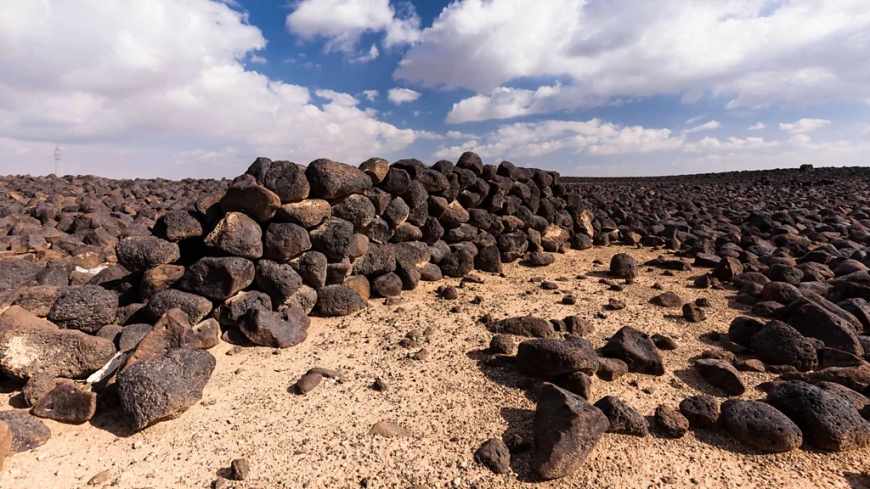
Table of Contents
- Introduction: A Country Carved by Patience
- A Land Shaped by Extremes
- Wadi Rum: The Valley of the Moon
- Petra: When Stone Becomes Architecture
- The Dead Sea: Floating at the Bottom of the World
- Dana Biosphere Reserve: Where Ecosystems Collide
- The Jordan Rift Valley: A Wound in the Earth
- The Eastern Badia: Black Rock and Silence
- Reading the Desert: Practical Notes for Travelers
- Why Jordan's Landscape Stays With You
-
Introduction: A Country Carved by Patience
There is a particular kind of silence you only find in Jordan. It arrives at dusk, when the sandstone shifts from amber to bruised violet and the wind drops to nothing. Stand still in the open desert at that hour, and you begin to understand the title of this piece. Jordan's terrain does not exist to be admired from a distance. It presses in, demands respect, and occasionally through heat, thirst, or sheer scale bites back.
This is a country roughly the size of Portugal, yet it packs in an improbable variety of landscapes: lunar deserts, rose-colored canyons, the lowest exposed point on the planet, fertile river valleys, and fields of volcanic rock that stretch toward the horizon like a frozen ocean. For travelers drawn to raw, elemental scenery, few destinations deliver as much drama per square mile.
In this guide, we'll move across Jordan's most haunting terrain what shaped it, what it feels like to stand inside it, and how to experience it without being humbled too harshly by the elements. Consider it a love letter to a landscape that rewards the patient and punishes the careless.
-
A Land Shaped by Extremes
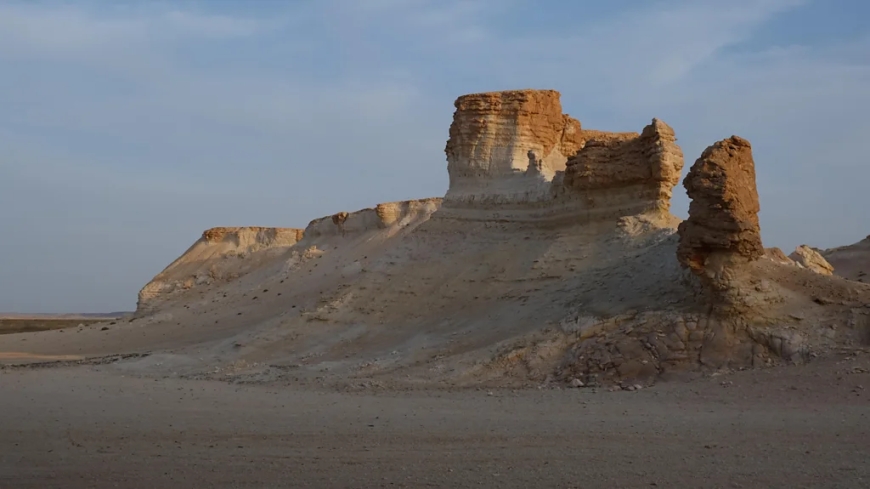
To understand Jordan's terrain, it helps to understand what built it. Tens of millions of years of tectonic strain, ancient seabeds, wind erosion, and flash floods have all left their signatures here. The country sits at a geological crossroads where the Arabian Plate grinds slowly against the African Plate, and that tension created the vast Jordan Rift Valley that defines the western edge of the country.
What this means for the visitor is simple: contrast is everywhere. In a single day's drive you can leave the cool, terraced hills near Amman, descend below sea level to the mineral haze of the Dead Sea, and climb again into the sandstone wilderness of the south. Elevation swings by more than a kilometer. Temperatures can shift by twenty degrees. The vegetation thins from olive groves to scrub to nothing at all.
This is also a largely arid country more than three-quarters of Jordan is desert or semi-desert. Water has always been the precious thread running through its history, which is why the ancient peoples who lived here, from the Nabataeans to the Bedouin, became masters at coaxing survival out of impossibly dry ground. Their ingenuity is part of what makes the landscape feel alive rather than empty. Everywhere you look, the terrain tells a story of negotiation between humans and a hostile, beautiful environment.
-
Wadi Rum: The Valley of the Moon
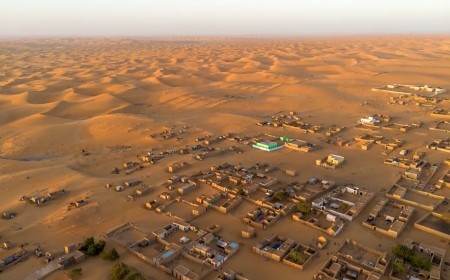
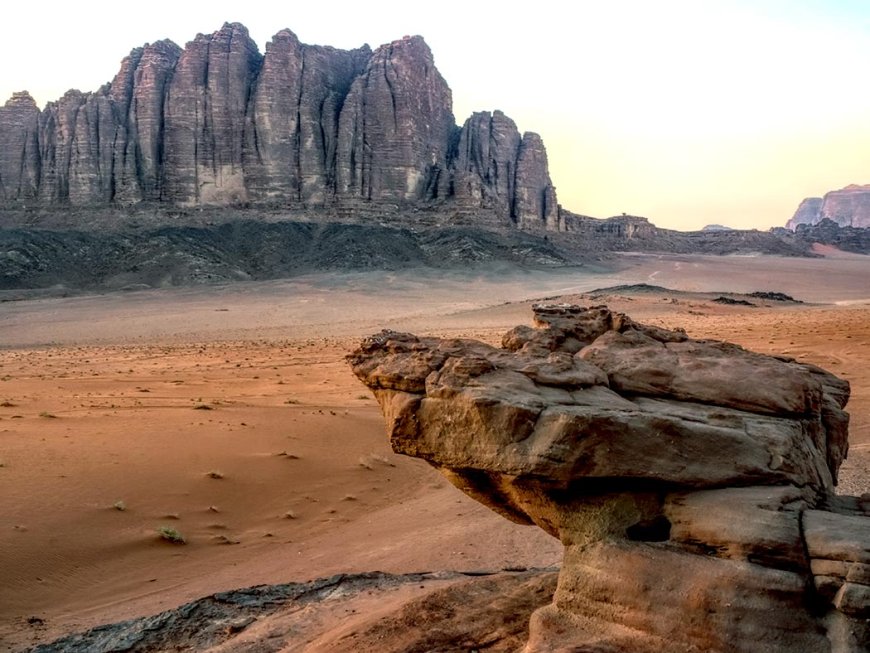
If Jordan has a signature landscape, it is Wadi Rum. Known locally as the Valley of the Moon, this protected desert in the far south is a place that filmmakers have used to stand in for Mars, and it is easy to see why. Towering sandstone and granite massifs rise straight out of the sand, their flanks streaked with iron oxide and weathered into shapes that seem almost deliberately sculpted.
The scale here is hard to convey in photographs. A rock formation that looks like a short walk away can take half an hour to reach on foot, and the sense of distance plays tricks on the eye. By midday, the heat can be punishing, the air shimmering above the orange dunes. By night, the temperature drops sharply and the sky reveals a density of stars that city dwellers rarely witness.
This is also where the desert's edge feels closest. There is little water, little shade, and few landmarks for the untrained eye. Yet the Bedouin who have lived here for generations read the terrain effortlessly, navigating by the shape of a cliff or the angle of a dune. Spending a night in a desert camp, sharing tea brewed over an open fire, is the surest way to feel the dual nature of Wadi Rum at once welcoming and indifferent to your presence.
For travelers, a jeep tour with a local guide is the classic introduction, but those with more time can hike narrow canyons, scramble up rock bridges, or ride a camel along the same routes that traders followed for centuries. However you explore it, Wadi Rum lingers in the memory as the purest distillation of desert beauty.
-
Petra: When Stone Becomes Architecture
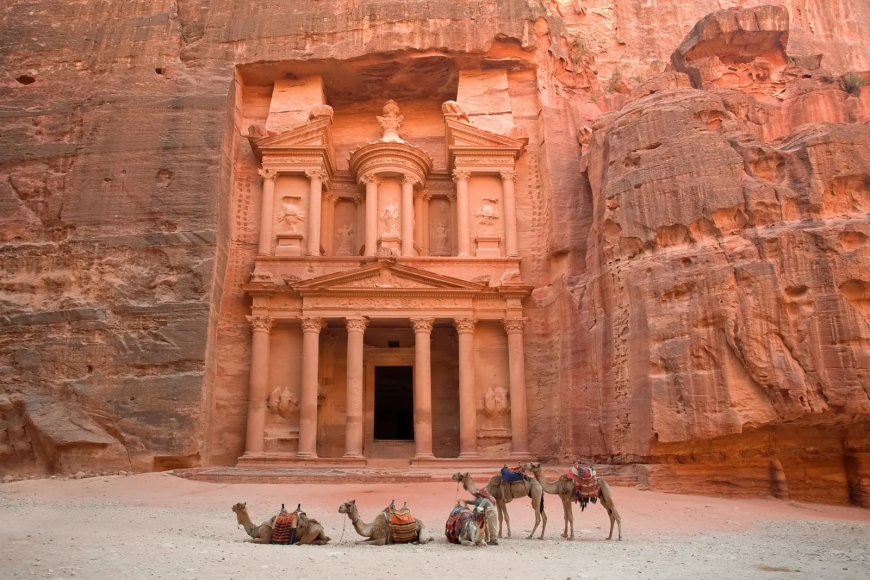
No discussion of Jordan's terrain is complete without Petra, and yet Petra is more than a monument, it is a landscape that human hands transformed without ever quite taming. The ancient Nabataean city is famous for its facades carved directly into rose-tinted sandstone cliffs, but the genius of the place lies in how it works with the terrain rather than against it.
The approach to Petra runs through the Siq, a narrow gorge nearly a kilometer long, its walls rising more than a hundred meters on either side. Walking through it, you feel the rock close in overhead, the light filtering down in shifting bands of pink, ochre, and rust. Then the gorge opens and the famous Treasury appears, framed perfectly by the cliffs, a reveal so theatrical it feels staged, though it is entirely the work of geology and ambition.
What many visitors miss is how vast Petra truly is. Beyond the Treasury lies a sprawling site of tombs, temples, an amphitheater, and high places of sacrifice, all woven into the folds of the surrounding mountains. The climb to the Monastery, reached by hundreds of rock-cut steps, rewards the effort with one of the most commanding views in the country.
Petra also illustrates the desert's capacity to bite back. The Nabataeans were extraordinary hydraulic engineers, building dams, cisterns, and channels to capture the rare rainfall and protect against the flash floods that can roar through these canyons. Their survival here was never guaranteed it was earned, drop by precious drop.
-
The Dead Sea: Floating at the Bottom of the World
Drive west and down, always down, and you eventually reach the shore of the Dead Sea, the lowest point on the surface of the Earth, sitting more than four hundred meters below sea level. The air here feels heavier, hazier, almost mineral on the tongue. The light has a softened, hallucinatory quality, and the surrounding cliffs glow pale in the heat.
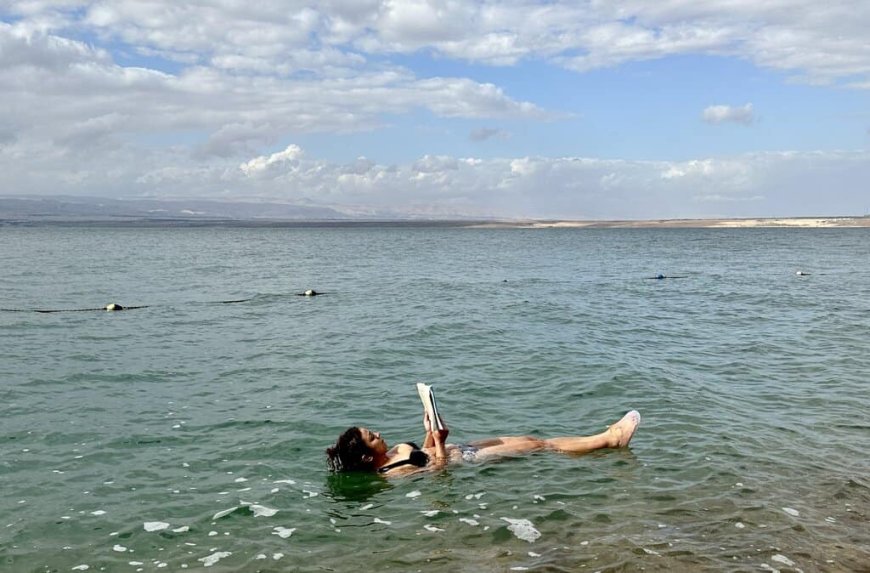
The water itself is famously buoyant. With a salt concentration many times that of the ocean, it is impossible to sink; visitors bob effortlessly on the surface, often reading a newspaper as a photographic cliché. The dark, mineral-rich mud along the shoreline is harvested for cosmetics and slathered on by spa-goers seeking its reputed benefits for the skin.
But the Dead Sea is also a landscape under threat, and this is part of its haunting quality. The water level has been dropping for decades as the rivers feeding it are diverted for agriculture and industry. Sinkholes pock the receding shoreline, swallowing roads and structures, a quiet reminder that this terrain is changing within a single human lifetime. To stand here is to witness both ancient geology and a fragile present.
-
Dana Biosphere Reserve: Where Ecosystems Collide
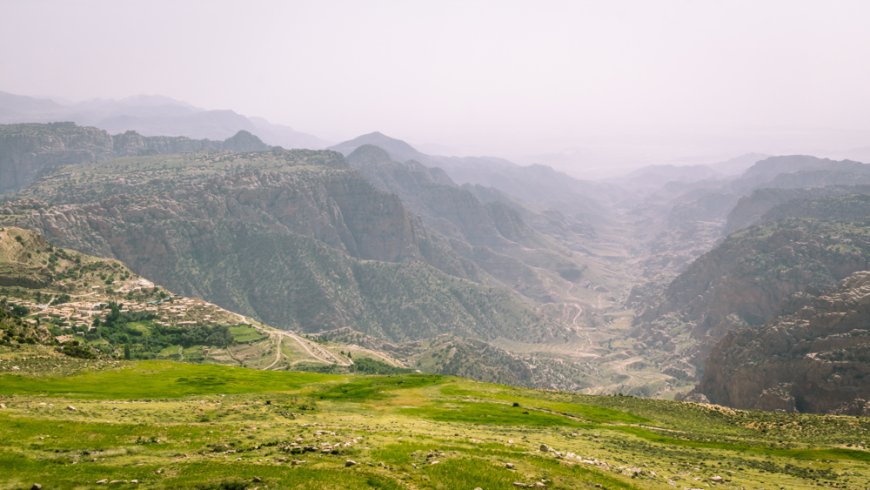
For travelers who think of Jordan as uniformly barren, the Dana Biosphere Reserve offers a revelation. This is the largest nature reserve in the country, draped across a series of valleys that tumble from cool highlands down toward the desert floor. Because it spans such a dramatic range of elevation, Dana contains several distinct ecosystems stacked one atop another, supporting a surprising diversity of plants, birds, and wildlife.
Hiking here means descending through this layered terrain, watching juniper and oak give way to acacia and then to open sand. The old stone village of Dana clings to the edge of the gorge, its terraced gardens hinting at centuries of careful cultivation. Wadi Dana, the long valley that leads down toward the lowlands, is one of the most rewarding multi-hour treks in the region that are quiet, varied, and free of crowds.
Dana captures something essential about Jordan: the way fertility and harshness sit side by side, separated by only a few hundred meters of altitude. It is a place to slow down, listen for the call of a bird against the rock, and feel the terrain breathe.
-
The Jordan Rift Valley: A Wound in the Earth
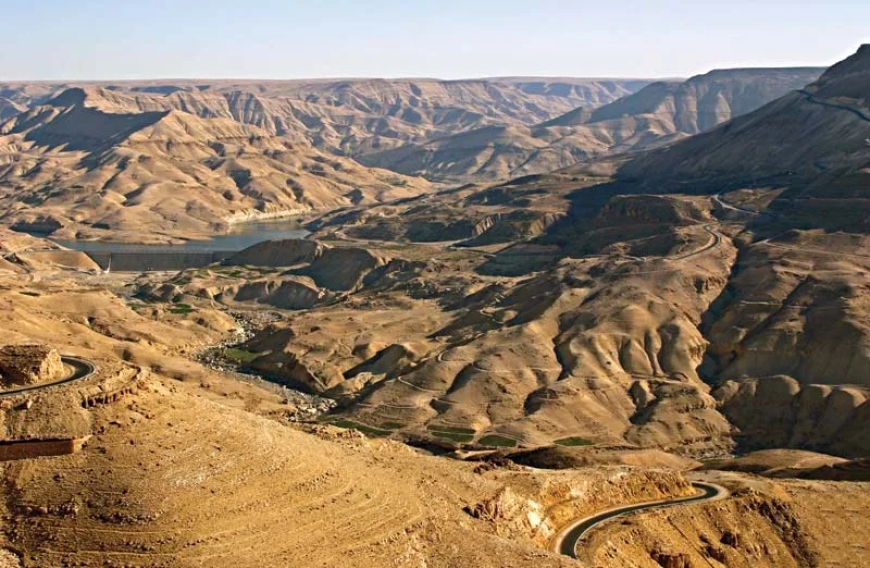
Running the entire length of the country's western flank, the Jordan Rift Valley is the great geological scar that gives Jordan much of its character. Part of the larger Great Rift system that extends down into East Africa, it is here that the land plunges below sea level and the Jordan River traces its winding course toward the Dead Sea.
The valley is a study in contradictions. In its northern stretches, where water is more plentiful, the land turns green with farms and citrus groves. Further south, it becomes a furnace of heat and salt flats. The river itself, so significant in history and faith, is in places little more than a modest, muddy stream, a humbling sight for those expecting grandeur.
Driving the length of the rift gives you the clearest sense of how dramatically Jordan's terrain transforms over short distances. One moment you are among cultivated fields, the next among barren badlands. It is the connective tissue of the country's geography, and understanding it makes every other landscape click into place.
-
The Eastern Badia: Black Rock and Silence
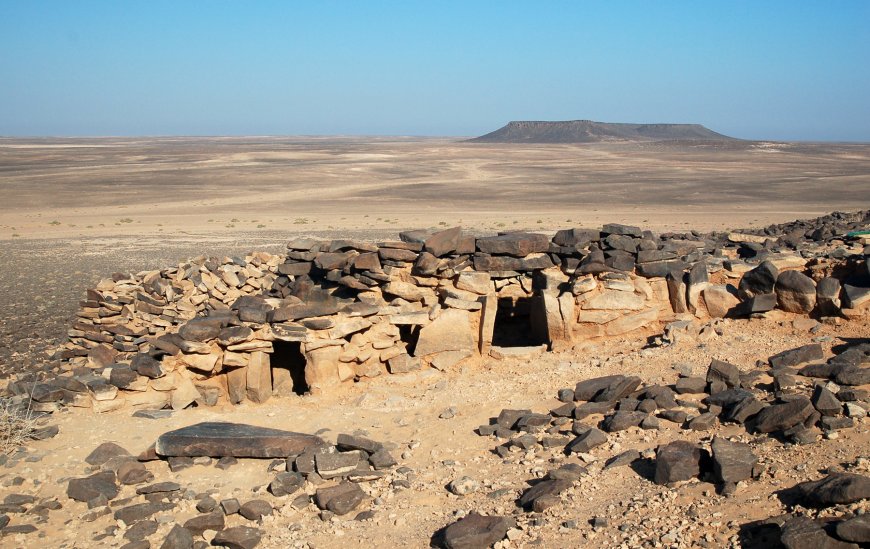
Most visitors never see the eastern reaches of Jordan, and that is precisely what makes the Badia so compelling. Stretching toward the borders with Saudi Arabia, Iraq, and Syria, this is a vast, sparsely populated desert dominated in places by basalt, fields of dark volcanic rock left behind by ancient eruptions. The result is a terrain unlike any other in the country: black, jagged, and profoundly still.
Scattered across this emptiness are the so-called desert castles, a string of early Islamic-era complexes that once served as caravan stops, hunting lodges, and seats of power. Visiting them means crossing long, featureless distances where the silence becomes almost physical. This is the Jordan that feels least touched by tourism, where the desert's indifference is at its most honest.
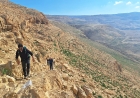
The Badia is not a place for casual wandering. Distances are great, services are minimal, and the terrain offers little forgiveness to the unprepared. But for those who make the effort, it delivers a solitude that the more famous sites cannot match, a reminder that much of Jordan remains wild and unwatched.
-
Reading the Desert: Practical Notes for Travelers
Jordan's terrain is generous to those who come prepared and unkind to those who don't. A few practical points can make the difference between a magical trip and a miserable one.
Timing matters enormously: Spring (March to May) and autumn (September to November) offer the most comfortable conditions, with warm days and cool nights. Summer in the southern deserts and the Dead Sea basin can be dangerously hot, while winter brings surprising cold and even snow to the highlands.
Hydrate relentlessly: The dry air strips moisture faster than you realize, and dehydration sneaks up quietly. Carry more water than you think you need, especially when hiking in Wadi Rum, Petra, or Dana.
Respect the flash-flood risk: Those beautiful narrow canyons can fill with water with terrifying speed during rare rains. Heed local guidance and avoid slot canyons when storms threaten anywhere upstream.
Hire local guides: Beyond safety, Bedouin and local guides unlock the terrain's stories, hidden routes, and rhythms in ways no map can. Their knowledge is the single best upgrade to any itinerary.
Dress for sun and modesty: Lightweight, covering clothing protects against both the sun and cultural missteps, particularly outside major tourist sites.
-
Why Jordan's Landscape Stays With You
Plenty of countries have impressive scenery. What sets Jordan apart is the emotional charge of its terrain, the sense that the land is not passive backdrop but an active presence, shaped by deep time and still shaping the lives lived within it. The desert here is not a void. It is full of texture, history, and a quiet, watchful power.
To travel through Jordan is to be reminded of your own smallness in the most exhilarating way. You stand beneath a sandstone tower that took millions of years to form, or float in a sea that is slowly disappearing, or walk a gorge carved by water in a land that now barely sees rain. The contradictions are everywhere, and they linger long after you've gone home.
The desert bites back, yes through heat, scale, and indifference. But that edge is exactly what makes its beauty so haunting. Jordan does not flatter the traveler. It tests, and in testing, it rewards. And once you've felt that, the memory of its terrain refuses to fade.
What's Your Reaction?
 Like
0
Like
0
 Dislike
0
Dislike
0
 Love
0
Love
0
 Funny
0
Funny
0
 Angry
0
Angry
0
 Sad
0
Sad
0
 Wow
0
Wow
0