

The Secret Behind Greenland Sharks’ 400-Year Lifespan
Greenland sharks can live over 400 years with a rare cancer risk. Discover the slow metabolism, genetics, and survival secrets behind their extreme longevity.

Deep beneath icy Arctic waters, a shark is swimming right now that may have been alive before the modern world even began. While empires rose and fell above the surface, this creature kept moving slowly through the dark, cold ocean.
This is the Greenland shark.
It is officially the longest-living vertebrate ever discovered. Some individuals are estimated to be between 250 and 500 years old. That means a single shark could outlive dozens of human generations.
What makes this incredible isn’t just the number of years. It’s how these sharks manage to stay alive for centuries without being destroyed by disease, cancer, or organ failure.
Getting to Know the Greenland Shark
The Greenland shark, known to scientists as Somniosus microcephalus, lives in the Arctic and North Atlantic Oceans. It prefers deep, cold water where temperatures stay close to freezing all year.
These sharks are massive. Adults can grow longer than 5 meters and weigh over 1,000 kilograms. Despite their size, they are slow swimmers. Very slow.
 Image Credit: National Geographic
They don’t chase prey the way great white sharks do. Instead, they glide quietly through the water, conserving energy and avoiding unnecessary effort.
That slow lifestyle turns out to be one of their biggest secrets.
How Scientists Figured Out Their Age
For a long time, no one knew how old Greenland sharks really were. Sharks don’t have bones, and their cartilage skeletons don’t show age the way tree rings do.
The breakthrough came from studying their eyes.
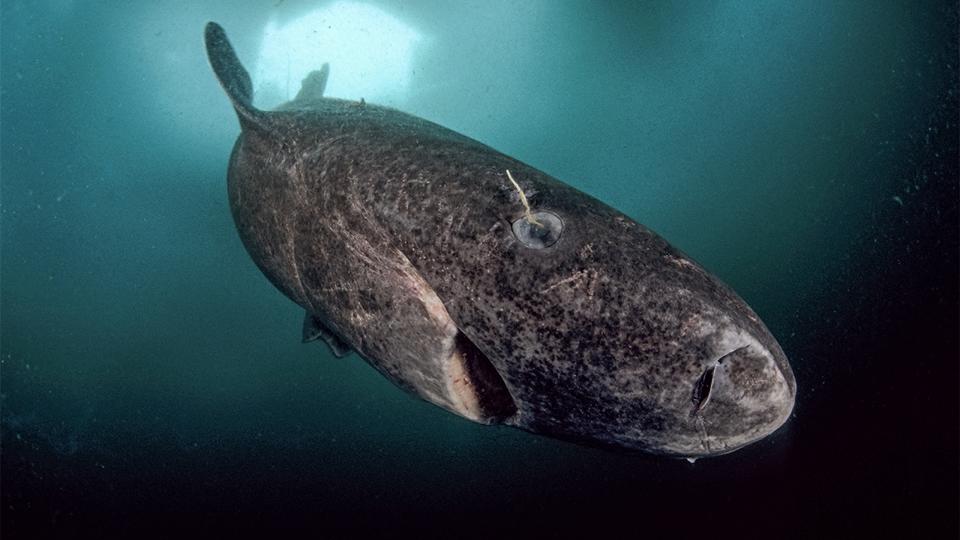 Image Credit: Forbes
The center of a Greenland shark’s eye lens forms before birth and never changes. Scientists used radiocarbon dating on these eye lens proteins to estimate when the shark was born.
The results were shocking.
One large female shark, nearly 5 meters long, was estimated to be around 400 years old. Other sharks studied fell within the range of 250 to 500 years.
No other known vertebrate lives that long.
Growing at the Speed of Ice
Greenland sharks grow incredibly slowly. On average, they grow about 1 centimeter per year.
That means a shark measuring 4 meters long could be more than 150 years old.
 Image Credit: Wikipedia
Even more surprisingly, they don’t reach sexual maturity until around that age. Most animals grow fast and reproduce early. Greenland sharks do the opposite.
They focus on survival first. Reproduction comes much later.
In a deep, stable environment with few predators, this slow approach works perfectly.
Why Cold Water Matters So Much
Cold water changes how bodies work.
In freezing temperatures, metabolism slows down. That means slower digestion, slower movement, and slower growth. But it also means slower aging.
Greenland sharks live in water that rarely goes above 4°C. Their bodies run at a low energy level, reducing stress on cells and organs.
Fewer cell divisions happen over time, which means fewer chances for DNA damage. This plays a major role in reducing aging-related diseases and cancer.
In simple terms, their bodies age at a pace that matches their environment.
Genetics That Support a Long Life
The environment alone doesn’t explain everything. Greenland sharks also have genetic advantages.
Studies of their DNA show extra copies of genes linked to the NF-κB pathway. This system helps control inflammation and immune responses.
In humans, long-term inflammation is one of the biggest causes of aging and chronic illness. Greenland sharks seem to regulate inflammation carefully, activating it only when needed and shutting it down before it causes damage.
This balance helps protect their tissues over hundreds of years.
Why Cancer Is Rare in Greenland Sharks
Living for centuries and growing to massive sizes should increase cancer risk. Yet cancer appears to be extremely rare in Greenland sharks.
There are several reasons for this.
Their slow metabolism reduces oxidative stress, which damages DNA. Their cells divide less often, lowering the chance of mutations. On top of that, they have a highly effective version of the TP53 gene.
TP53 is often called the guardian of the genome. It stops damaged cells from growing out of control. In Greenland sharks, this gene seems especially good at preventing tumors.
Together, these factors create strong protection against cancer.
Aging Without Losing Function
One of the most interesting discoveries comes from studying Greenland shark heart tissue.
Researchers found signs of aging, such as fibrosis and oxidative stress. In humans, these changes usually weaken the heart. In Greenland sharks, the heart continues to function normally.
This shows that the sharks don’t avoid aging entirely. Instead, their bodies are built to tolerate it.
Their organs keep working even after centuries, which is rare in the animal kingdom.
Poor Eyesight, Strong Survival Skills
Many Greenland sharks have parasites attached to their eyes, often affecting their vision. Surprisingly, this doesn’t stop them from surviving.
That’s because they don’t rely much on sight.
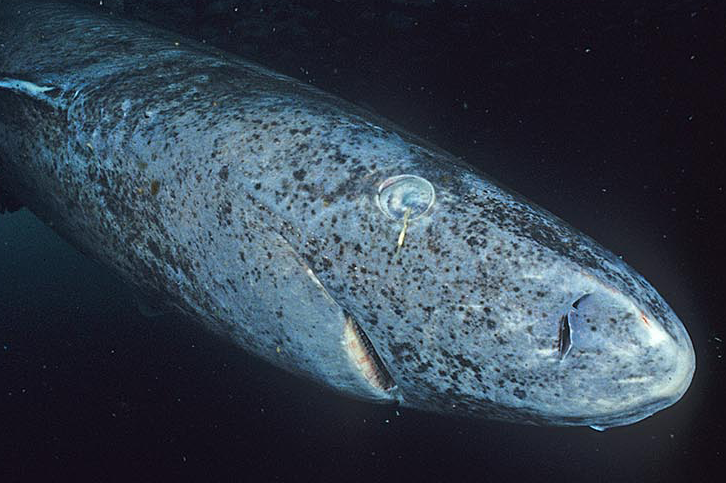 Image Credit: Science Friday
In deep, dark water, smell is far more important than vision. Greenland sharks have an excellent sense of smell, allowing them to locate food and navigate their environment even with limited eyesight.
This adaptability helps them survive conditions that would defeat many other animals.
What Humans Can Learn from Greenland Sharks
Scientists are deeply interested in Greenland sharks because their biology could help humans live healthier lives.
Studying how they control inflammation could lead to treatments for chronic diseases. Understanding their cancer-resistant genes may inspire new approaches to cancer prevention. Learning how their organs function despite aging could help improve treatments for age-related conditions.
The goal isn’t to live for 400 years. It’s to stay healthy for as long as possible.
Greenland sharks offer valuable clues.
A Species That Needs Protection
There’s a serious concern tied to this story.
Before World War II, Greenland sharks were heavily hunted for their liver oil. Because they grow and reproduce so slowly, their populations take centuries to recover.
Today, threats like accidental fishing bycatch and climate change put them at risk. Losing Greenland sharks would mean losing one of nature’s most important examples of long-term survival.
Protecting them matters more than we realize.
Why the Greenland Shark Truly Matters
The Greenland shark doesn’t rush through life. It doesn’t chase speed or constant growth.
Instead, it survives through patience, balance, and resilience.
Its existence challenges how we think about aging and success in nature. Longevity, it turns out, isn’t about avoiding damage completely. It’s about handling damage without falling apart.
In a fast-moving world, the Greenland shark teaches a quiet lesson.
Sometimes, living longer starts with slowing down.
What's Your Reaction?
 Like
0
Like
0
 Dislike
0
Dislike
0
 Love
0
Love
0
 Funny
0
Funny
0
 Wow
0
Wow
0
 Sad
0
Sad
0
 Angry
0
Angry
0

I’m Ryan Rehan, Business Development Executive and a passionate blogger dedicated to sharing insights, tips, and experiences that inspire and inform. Through my blogs, I explore topics that matter, spark curiosity, and encourage thoughtful conversations. Whether I’m breaking down complex ideas, offering practical advice, or simply sharing stories, my goal is to create content that adds real value to a growing community of curious minds and passionate readers.















Comments (0)