

Viral Cockroach Janta Party (CJP): 15M+ Followers in 4 Days, Surpasses BJP on Instagram & Full Story Explained
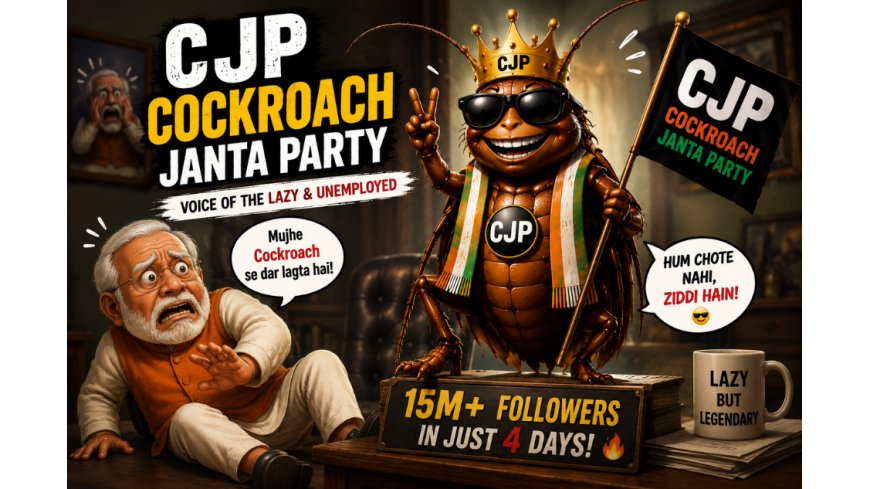
The Cockroach Janta Party (CJP) has become one of India’s biggest internet sensations, gaining over 15 million Instagram followers within days through memes, satire, Gen Z humour, and relatable youth frustration. This in-depth blog explains the full story behind CJP, who founded it, why it went viral, how social media helped its growth, and why students and young audiences across India are connecting with the movement online.


India's Internet has produced numerous viral moments throughout the years: meme pages, parody accounts, political satire, influencer feuds and online campaigns. However, nothing prepared anyone for the 'Cockroach Janta Party' (CJP).
Within a span of days, this satire-driven social movement, built around memes, jokes on unemployment and Gen-Z rage, went viral and became one of India's hottest topics online.
Even more surprising: CJP was rumoured to have over 15M+ followers on Instagram, surpassing even the Bharatiya Janata Party. (Reuters) From a joke page to a youth movement and a political satire sensation, the CJP took over Instagram. The burning question, then, is: What is this page, who created it and why did it become so popular? This blog explains the complete story behind the Cockroach Janta Party.
What Is Cockroach Janta Party (CJP)?
The Cockroach Janta Party (CJP) is a satire-driven youth movement that is being carried online through political memes, Gen-Z humour, social commentary, unemployment jokes, and viral reels. The party's official description, on its profile, claims:
"A political front of the youth, by the youth, for the youth." (Business Today)
However, CJP also playfully refers to itself as: "Voice of the Lazy & Unemployed."
Though the CJP's rhetoric is undeniably funny and ironic, the page addresses deep-rooted frustration among young Indians.
Why Is It Called “Cockroach” Janta Party?
The term, "cockroaches" and "parasites," was allegedly used by people while referring to the unemployed youth during discussions about job prospects. The insult instantly went viral and sparked memes, as well as outrage. The creators of CJP decided to embrace the negativity as their identity, transforming an insult into their brand and emblem. The branding is a reflection of:
- Resilience
- Neglect
- Ability to survive under any circumstance
- Adaptation under duress
The metaphor connected deeply with the youth because, for many of them, this experience reflects their lives as students and unemployed individuals who feel neglected by society, are under constant pressure, are facing economic strain, and are struggling with burnout.
Who Is the Founder of Cockroach Janta Party?
The founder of CJP is Abhijeet Dipke, a political communication strategist who reportedly studied public relations and previously worked around political/social media communication ecosystems.
According to multiple reports:
-
He is around 30 years old
-
He has experience in political communication
-
He understood internet culture deeply
-
He recognized Gen Z frustration early
Reports also mention his previous association with digital political ecosystems, including links discussed online with Aam Aadmi Party circles.
But what made his strategy different was this: He didn’t try to build a traditional political page. He built an internet-native movement.
That is why CJP feels less like a political organization and more like:
-
A meme culture phenomenon
-
A digital protest movement
-
A Gen Z community page
-
A satire-driven youth identity
1. It Used Gen Z Humour Perfectly
CJP posts are filled with sarcasm, dark humor, meme templates, self-deprecating jokes, exaggerated political satire, and relatable unemployment humor.
Unlike traditional political messaging, the tone feels:
-
Casual
-
Internet-native
-
Emotionally relatable
-
Meme-first
Young audiences connected instantly.
2. It Turned Frustration Into Memes
India’s youth today faces massive pressure:
-
Competitive exams
-
Unemployment
-
Inflation
-
Career uncertainty
-
Mental health struggles
-
Social expectations
CJP transformed these frustrations into shareable memes, satirical slogans, viral reels, and relatable posts. This created emotional virality. People weren’t just laughing; they felt represented.
3. The Instagram Algorithm Loved It
CJP’s content was highly optimised for virality - short reels, meme-friendly captions, high-engagement posts, strong comment activity, and extremely shareable humor.
This caused explosive organic growth. At one point, reports claimed the page crossed:
-
10 million followers in around 4 days
-
Then rapidly moved toward 15 million+ followers
That speed shocked the Indian internet.
CJP’s Meme Strategy Is Extremely Smart
One major reason for CJP’s virality is that it doesn’t behave like a political organisation.
It behaves like:
A highly self-aware meme page with political undertones.
This makes the content easier to consume, less preachy, more shareable, and more relatable. Traditional political communication often feels formal.
CJP feels like:
-
Instagram humour
-
Reddit culture
-
Meme community energy
Combined together.
Viral CJP Instagram Posts & Reel
Is CJP a Real Political Party?
As of now, CJP is widely viewed as:
-
A satirical movement
-
A digital youth campaign
-
A meme-driven political commentary platform
Not a formal registered political party.
However, its rapid rise has sparked discussions about whether:
-
Internet movements can become political forces
-
Meme culture can influence real-world politics
-
Gen Z political engagement is changing permanently
Founder Abhijeet Dipke has reportedly said that any activism associated with the movement would remain democratic and peaceful.
The BJP Comparison: Why Everyone Started Talking About CJP
The biggest viral headline came when CJP reportedly surpassed the Instagram following of the Bharatiya Janata Party.
This became symbolic online because:
-
BJP is one of the world’s largest political parties
-
It has an enormous digital infrastructure
-
It dominates online political communication
So when a meme-driven satire page overtook it on Instagram, the internet exploded.
But it is important to understand Instagram followers do not directly translate into real political power.
Much of CJP’s following is driven by meme engagement, curiosity, satire, viral sharing, and youth humor culture. Still, the moment was culturally significant.
Allegations of Account Restrictions & Hacking Attempts
As the page grew rapidly, reports emerged that:
-
CJP’s X (Twitter) account was withheld in India
-
The founder claimed hacking attempts on Instagram accounts
These developments increased online discussion even more. For supporters, this strengthened the narrative that the movement was becoming too influential to ignore.
Is CJP Just a Meme or a Sign of Something Bigger?
This is the most interesting question.
CJP’s success reveals something important about modern India: Young people increasingly communicate politically through internet culture, not traditional political language.
Memes today are not just jokes.
They are social commentary, emotional expression, political frustration, and community identity. CJP understood this shift earlier than most traditional organizations.
Why the Movement Matters Beyond Politics
Even people who do not support CJP politically are discussing it because it reflects the following: Gen Z humour culture, Internet-driven identity, digital activism, meme-powered communication, and youth dissatisfaction.
In many ways, CJP became viral because it captured the emotional mood of a generation online.
Final Thoughts
The Cockroach Janta Party started as satire, but it quickly became something much larger. In just days, it transformed from a meme page into a national internet phenomenon.
Its rise shows how dramatically political communication is changing in the social media era. Today’s young audiences do not always respond to formal speeches, traditional campaigns, and conventional political branding.
They respond to relatability, humour, meme culture, and emotional honesty. Whether CJP remains a viral internet moment or evolves into something larger, one thing is already clear: It has become one of the biggest examples of Gen Z-driven digital political culture India has ever seen.
And in the process, it proved something the internet understands very well: Sometimes memes become movements.
What's Your Reaction?
 Like
0
Like
0
 Dislike
0
Dislike
0
 Love
0
Love
0
 Funny
0
Funny
0
 Wow
0
Wow
0
 Sad
0
Sad
0
 Angry
0
Angry
0

















Comments (0)