






















































World’s Saltiest Sea Revealed: Why it Lets You Float?
Discover the secret behind the world’s saltiest sea and why people float without swimming. Facts, location, and surprising science inside!

Imagine stepping into water so thick it holds you up without swimming. No strokes, no struggle, just effortless floating. That’s the magic of the Dead Sea, often called the world’s saltiest sea and just as often misunderstood. It isn’t really a sea; it doesn’t have waves, and it’s so salty that fish can’t survive in it. Yet every year, thousands of people travel to its shores for a few quiet moments on water unlike anything else on Earth.
Let’s break it down in plain language and explore what makes this strange place unforgettable.
A “Sea” That Isn’t a Sea
Despite the name, the Dead Sea is not a sea at all. It’s a lake. A very salty lake.
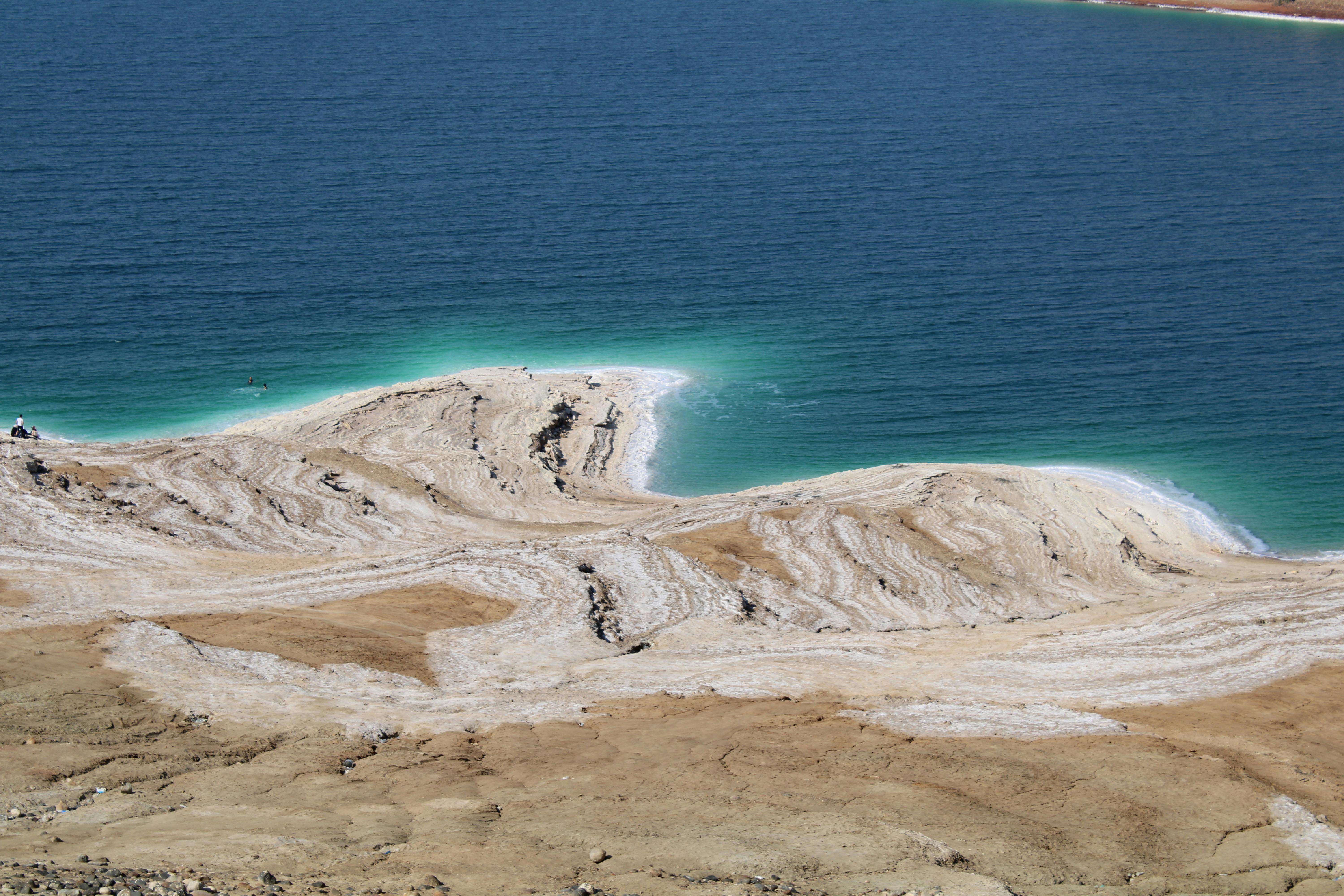 Image Credit: Pexels
So why does it get called a sea? That mostly comes down to history. Ancient travelers and traders described large bodies of water as seas long before modern geography existed. And since this lake is vast, dramatic, and fundamental to the region, the name stuck.
Still, when people talk about the world’s saltiest sea, this is the place everyone points to.
Where Is the Dead Sea Located?
The Dead Sea lies between Jordan on one side and Israel and Palestine on the other. It sits in a deep valley formed by a rift in the Earth’s crust called the Jordan Rift Valley, part of a much larger geological fault that stretches across thousands of kilometers.
If you look at a map, it may seem like just another body of water. But in real life, standing by the Dead Sea feels different, almost unreal. The land slopes sharply toward it, the air is dense and still, and the water glistens in a way that doesn’t look natural.
That’s because it isn’t.
The Lowest Place on Earth You Can Stand
Here’s a stat that gives people pause. The Dead Sea sits nearly 440 meters below sea level. That makes it the lowest exposed point on land anywhere on Earth.
You’re not only visiting the world’s saltiest sea, but you’re also standing at the bottom of the planet.
This extreme location has consequences. The air pressure is higher here. Oxygen levels are slightly richer. Some people with breathing issues even find it easier to breathe around the Dead Sea because of it.
It’s one of those places where geography doesn’t just shape the land, it changes the way your body feels.
How Salty Are We Talking?
Let’s compare numbers.
Normal ocean water contains about 3.5% salt. That’s already quite a bit. But the Dead Sea holds roughly ten times that amount, around 34%.
That’s not a small difference. That’s the kind of change that turns water into something else entirely.
In the Dead Sea, salt crystals form naturally along the shoreline. You can see white crusts on dark rocks. When waves evaporate, they leave behind delicate salt patterns that look carved by hand.
This isn’t seawater. It’s mineral soup.
Why Is It So Salty?
The Dead Sea has one crucial feature that the ocean doesn’t.
No outlet.
Rivers, especially the Jordan River, flow into it. But nothing flows out. So while fresh water enters, it never leaves. Instead, it evaporates under relentless desert heat.
Water disappears.
Salt stays.
Over thousands of years, this has created a body of water so thick with minerals that it behaves more like oil than water. The longer the lake exists, the saltier it becomes.
That’s nature running slow but unstoppable math.
Why Nothing Lives in the Dead Sea
With so much salt, life can’t survive in its normal form.
Fish die instantly. Plants dry up. Even insects avoid the water. The environment is simply too harsh for most living things.
There are a few rare microorganisms that tolerate the salt, but no animals and no greenery.
That emptiness is why the name stuck. When ancient travelers looked into the water and saw no movement, no life, no ripples from fish, they called it dead.
It wasn’t superstition. It was an observation.
Floating Without Trying
This is the moment everyone waits for.
When you step into the Dead Sea, your body lifts instantly. You don’t sink. You don’t float after effort. You float automatically.
 Image Credit: Flickr
That’s because the water is denser than your body. In water this heavy, gravity loses its grip.
You can lean back, spread your arms, and just… hover.
People read newspapers while floating here. Some take naps. Others laugh because their brain cannot understand how they’re staying up without effort.
What this really means is simple. You stay on top of the water without needing to swim.
Minerals, Mud, and the Beauty Industry
One reason the Dead Sea never fades from the public eye is what’s in the water.
It contains more than 20 minerals, some of which aren’t commonly found in oceans anywhere else in the world. Magnesium, potassium, bromide, and calcium are present in unusual concentrations.
 Image Credit: Imaggeo
This mineral makeup is the reason Dead Sea cosmetics exist.
The black mud, thick and silky, is loaded with compounds known to benefit skin. For decades, people have visited the shores to coat themselves in it like sunscreen, then rinse clean in water that feels oily and smooth.
Spas sell “Dead Sea treatments” across the globe. But nothing compares to standing barefoot in the source and smearing that dark earth across your arms like ancient royalty.
Legend even says Cleopatra herself used Dead Sea minerals in her beauty routine.
Is It Really the Saltiest in the World?
Here’s where things get interesting.
The Dead Sea is often called the world’s saltiest sea. But it’s not technically the saltiest body of water on Earth.
Places like Don Juan Pond in Antarctica are saltier.
So what’s the difference?
Size and status.
The Dead Sea is enormous. It behaves like a sea in appearance, scale, and history. Those other salt pools are tiny lakes or ponds. That’s why, in everyday language, the Dead Sea keeps the crown.
Not scientifically perfect, but culturally true.
A Sea That’s Disappearing
One sad truth most travelers don’t realize.
The Dead Sea is shrinking.
Water from the Jordan River is heavily diverted for farming and human use. Evaporation keeps rising. Less freshwater arrives each year.
The shoreline is pulling back. Sinkholes are opening in once-stable ground. Roads collapse where land used to be solid.
What was once a massive inland sea is slowly retreating into itself.
The world’s saltiest sea might not exist as we know it forever.
Can You Swim in It?
Yes.
But not like a normal swim.
You can float, relax, and walk through the shallows. But putting your face in the water is a terrible idea.
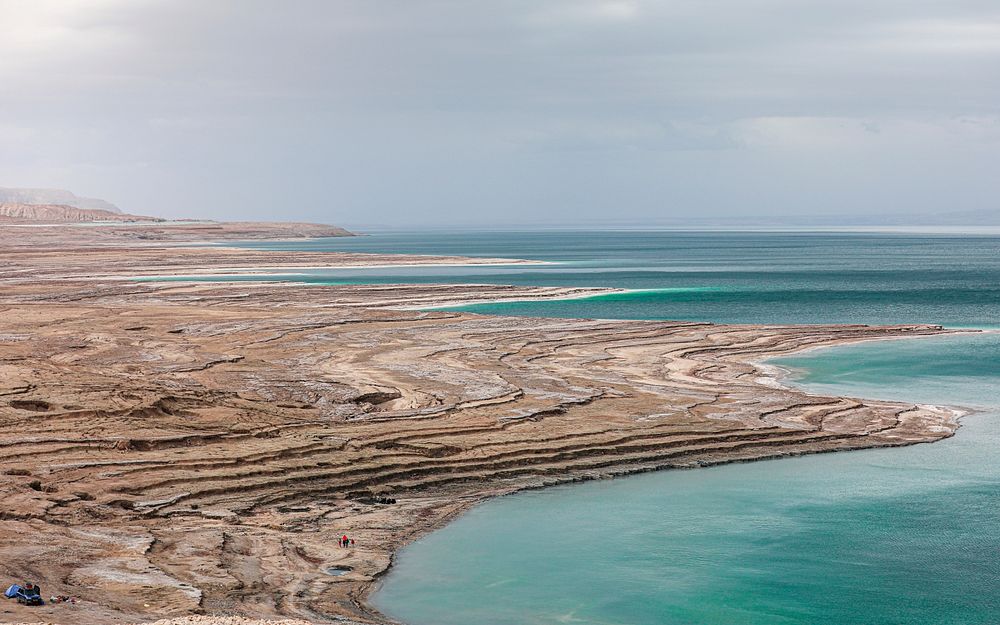 Image Credit: Rawpixel
Salt burns the eyes. Instantly. Any cut on your body will sting like fire. People often rinse immediately after getting out for relief. And drinking it? Don’t even think about it.
One mouthful could dehydrate you severely. The Dead Sea is safe, magical, and unforgettable, but it demands respect.
Why the Name Will Never Change
Calling it a lake would be incorrect. Calling it a sea feels right.
It’s too dramatic, too ancient, too strange to be reduced to a technical term.
The Dead Sea has been written about for thousands of years. In scriptures. In diaries. In maps carved from stone.
Names shaped by centuries don’t disappear overnight.
Especially when they still fit.
Final Thought
You can visit beaches anywhere.
But only one place lets you read a book without sinking.
Only one place sits lower than anywhere else on land.
Only one place holds salt thick enough to carry your body like air.
The world’s saltiest sea isn’t just a location. It’s an experience that resets your sense of reality.
You don’t just see the Dead Sea.
You feel it.
What's Your Reaction?
 Like
0
Like
0
 Dislike
0
Dislike
0
 Love
0
Love
0
 Funny
0
Funny
0
 Angry
0
Angry
0
 Sad
0
Sad
0
 Wow
0
Wow
0