

Bir Billing Paragliding Crash: What Went Wrong and Why Safety Can’t Be Ignored
Paragliding tragedy at Bir Billing exposes safety lapses, pilot death details, rising accidents, and why stricter rules are urgent for tourists and pilots alike.

Bir Billing has always been marketed as a dream.
Soaring views. Perfect thermals. A launch site spoken about in global paragliding circles with genuine respect. People don’t come here casually. They come chasing a feeling. That brief, floating moment when the mountains fall away, and nothing exists except air and silence.
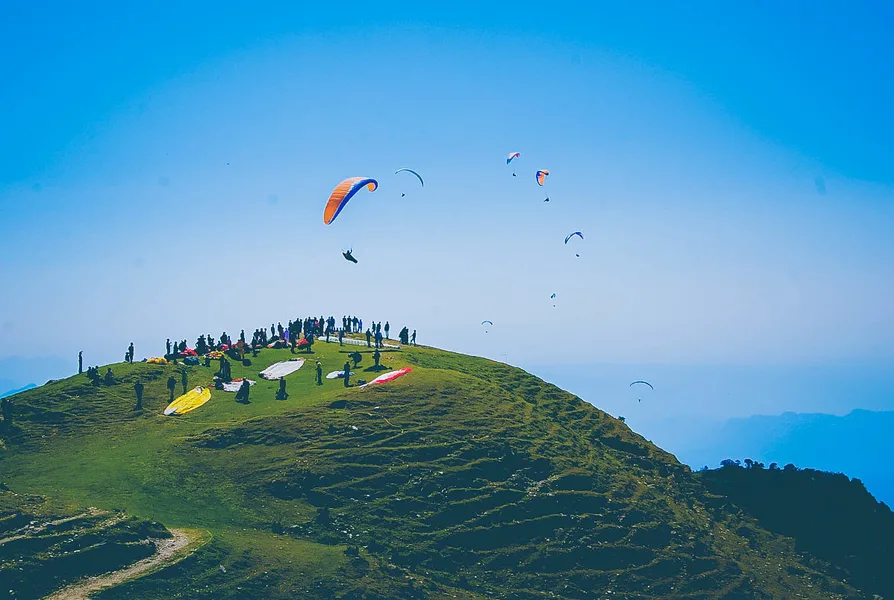 Image Credit: Manu Adventures India
But on December 26, 2025, that promise was broken again. A seasoned tandem pilot, Mohan Singh, lost his life just moments after takeoff. His passenger lived. The rest of us are left asking the same questions Bir Billing has been dodging for years.
What Actually Happened That Morning
Early on December 26, Mohan Singh, 35, took off from the Billing launch site with a female tourist seated in front of him. Mohan wasn’t new to this. He wasn’t careless. He wasn’t learning.
Seconds after liftoff, witnesses say the glider became unstable. Reports suggest a technical failure caused a sudden loss of balance. The paraglider veered and went down near the road below the launch area.
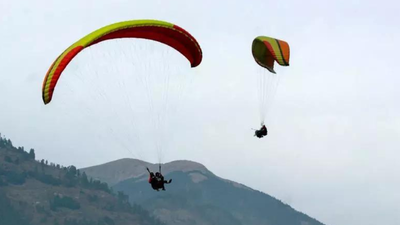 Image Credit: Times Of India
Locals were the first to reach the site. Other pilots followed. First aid was given immediately.
The tourist survived, injured but alive.
Mohan didn’t.
He suffered serious head trauma. An ambulance was called, but the familiar problem returned. Narrow mountain roads. Traffic congestion. Delays that matter far more in emergencies than people like to admit.
Mohan Singh died before reaching the hospital. Flying was cancelled for the day. Police registered a case. Investigations began into whether the crash was caused by faulty equipment, human error, weather conditions, or some combination of all three. For those who know Bir Billing, this story felt painfully familiar.
Who Was Mohan Singh
This wasn’t just another accident. Mohan Singh had close to 15 years of flying experience. He was from Barot in Himachal Pradesh’s Mandi district, another place deeply tied to adventure sports. Within the paragliding community, he was respected. Some knew him personally. Others knew his name.
He had represented India at international paragliding events.
His death shook pilots across the region because it challenged a comforting assumption. That experience alone keeps you safe.
It doesn’t.
Not an Isolated Incident
Mohan’s death marked the third paragliding-related fatality at Bir Billing in 2025. Just two days later, on December 28, another incident claimed the life of a pilot’s assistant. Zoom out further, and the numbers grow heavier. Over the last five to six years, estimates suggest anywhere between 18 and 30 deaths connected to paragliding in and around Bir Billing. Indian pilots. Assistants. Foreign tourists.
As of January 13, 2026, no additional tandem pilot deaths have been officially confirmed. But patterns don’t disappear just because a calendar flips.
Why Accidents Keep Happening at Bir Billing
Here’s the uncomfortable part. Bir Billing itself isn’t the villain. The geography didn’t suddenly turn hostile. The winds didn’t betray anyone. The problem is operational.
Flying When Weather Says Don’t
Mountain weather changes fast. Every experienced pilot knows this. But commercial pressure has a way of dulling judgment. Tourists have tight schedules. Operators fear cancellations. Flights happen in conditions that should have grounded them.
Equipment That Doesn’t Get the Attention It Needs
Paragliders aren’t set-and-forget machines. Lines weaken. Harnesses degrade. Gliders age quietly until they don’t. During peak season, when dozens of flights happen daily, checks become rushed or superficial.
Pilots Who Shouldn’t Be Flying Tandem
Not everyone flying tandem at Bir Billing meets strict certification standards. Tandem flights carry more risk. More weight. More responsibility. Training gaps here aren’t minor. They’re dangerous.
Rules Without Teeth
Safety regulations exist. Enforcement doesn’t always follow. There’s no consistently independent authority on the ground verifying pilots, equipment, and takeoff decisions every single day.
And when oversight becomes optional, risk multiplies.
The Human Cost Beyond Headlines
Every crash ripples outward. Tourists don’t just leave with injuries. Many leave shaken, carrying fear that lasts far longer than bruises.
Residents, who depend on tourism to survive, are often the first responders. They carry injured bodies down slopes. They witness deaths at close range. Their warnings about safety are heard quietly, if at all.
Repeated incidents also chip away at Bir Billing’s reputation. Once a destination becomes known more for accidents than adventure, trust erodes quickly.
What Authorities Have Tried So Far
To be fair, steps have been taken over the years.
1. Flying zones were categorized into green, orange, and red based on safety.
2. Tracking devices became mandatory for pilots.
3. Group takeoffs replaced scattered launches.
4. Daily weather briefings were introduced.
5. These are sensible moves.
But here’s the hard truth. Policies don’t save lives if they aren’t enforced daily, strictly, and without exception.
What Still Needs to Change
If Bir Billing wants to stay relevant as a global paragliding hub, cosmetic fixes won’t cut it.
1. Independent Equipment Audits
Safety checks can’t be self-policed. Third-party inspections need to be routine, random, and mandatory.
2. Stricter Pilot Licensing
Experience is valuable, but it isn’t a substitute for regular assessments and medical clearances, especially for tandem pilots.
3. Non-Negotiable Weather Calls
When conditions aren’t right, flying stops. No debates. No exceptions. No pressure from tourists.
4. Faster Emergency Response
Mohan Singh’s death highlighted a brutal reality. Minutes matter. Dedicated emergency access, on-site medical teams, and quicker evacuation protocols could save lives.
A Larger Warning for Adventure Tourism in India
This isn’t just about Bir Billing. India’s adventure tourism sector has grown fast. Regulation hasn’t kept pace. Risk is part of adventure sports. Preventable risk is not. Every fatal crash isn’t just a tragedy. It’s a signal. And Bir Billing has been sending signals for years.
The question now isn’t whether paragliding can continue here. It’s whether it can continue responsibly. And whether anyone in charge is willing to make the hard calls before another name is added to the list.
Remembering Mohan Singh
Mohan Singh died doing his job, guiding others through an experience he loved and believed in.
His death should not become just another statistic added to a growing list.
If Bir Billing truly wants to honor pilots like him, safety must move from discussion panels to daily action on the ground.
Because in adventure sports, one ignored warning is all it takes for the next tragedy.
Final Thoughts
Bir Billing still has the potential to be one of the safest and most respected paragliding sites in the world. But that future depends on tough decisions, strict enforcement, and valuing human life over short-term tourism gains.
Until then, every flight carries a question no one should have to ask: Is this worth the risk?
If you’re planning to fly, ask hard questions. Choose certified operators. Respect weather calls. And remember that safety is not optional, even in the sky.
What's Your Reaction?
 Like
0
Like
0
 Dislike
0
Dislike
0
 Love
0
Love
0
 Funny
0
Funny
0
 Wow
0
Wow
0
 Sad
0
Sad
0
 Angry
0
Angry
0

I’m Ryan Rehan, Business Development Executive and a passionate blogger dedicated to sharing insights, tips, and experiences that inspire and inform. Through my blogs, I explore topics that matter, spark curiosity, and encourage thoughtful conversations. Whether I’m breaking down complex ideas, offering practical advice, or simply sharing stories, my goal is to create content that adds real value to a growing community of curious minds and passionate readers.

















Comments (0)