
















































































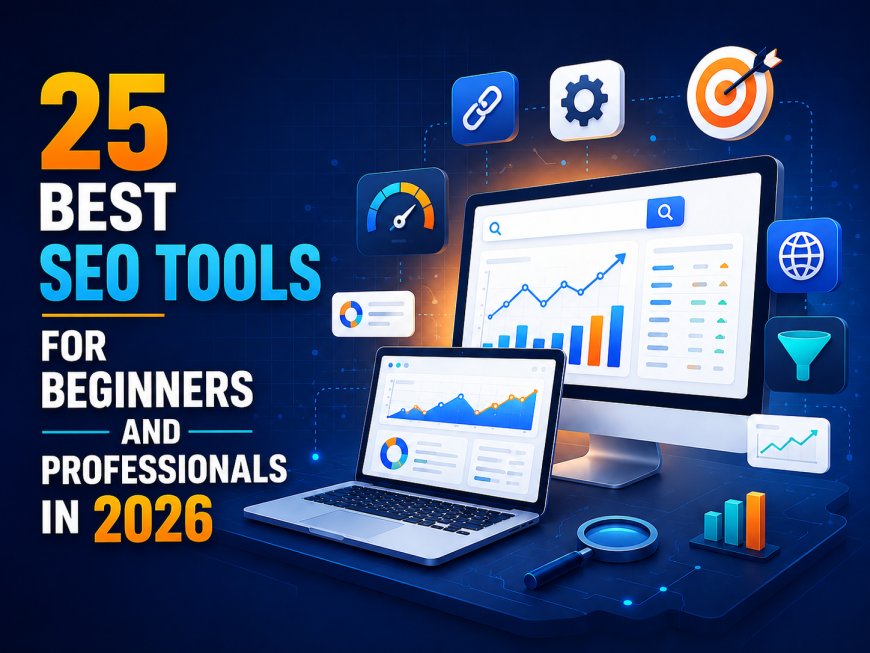
25 Best SEO Tools for Beginners and Professionals in 2026
Explore the 25 best SEO tools of 2026 for beginners and professionals — keyword research, rank tracking, and AI writing platforms plus the affiliate programs behind them.
-
Introduction: SEO Tools Have Never Mattered More
Search itself has changed shape. Between AI Overviews, zero-click results, and the rise of answer engines, ranking well today requires more than a handful of backlinks and a keyword stuffed into a title tag. It requires data, real, current, granular data about what people are searching for, how competitors are winning those searches, and where your own site is quietly leaking visibility.
That's where SEO tools come in. Whether you're a solo blogger trying to understand keyword difficulty for the first time, or an agency managing dozens of client accounts, the right software stack can be the difference between guessing and knowing.
This guide breaks down 25 of the best SEO tools available in 2026, organised into five practical categories: all-in-one platforms, keyword research tools, rank trackers, technical SEO auditors, and AI-assisted writing tools. Along the way, we'll also flag which of these tools run affiliate programs worth knowing about, whether you're a content creator looking to monetise your recommendations or simply curious how the industry funds itself.
Pricing, features, and affiliate terms in this space shift frequently, so treat the figures below as a snapshot rather than gospel, always double-check current terms directly on a tool's website before committing.
-
All-in-One SEO Platforms
These platforms bundle keyword research, site audits, rank tracking, and competitor analysis into a single dashboard ideal if you'd rather not juggle five separate subscriptions.
1. Semrush remains the most recognised name in the category. It combines keyword research, technical audits, backlink analysis, content optimisation, and increasingly, AI visibility tracking, into one suite used by millions of marketers worldwide. It's not the cheapest option, but for teams that want breadth over depth, it's hard to beat.
2. Moz Pro is often the first serious tool beginners reach for. Its interface leans friendlier than Semrush or Ahrefs, and its Domain Authority metric has become something of an industry shorthand, even among people who've never used the platform itself.
3. Search Atlas is a newer entrant that has built a following around its AI automation features, including an "OTTO SEO" tool that handles certain optimisations automatically. It positions itself as a leaner, more affordable alternative to the two giants above.
4. SE Ranking has quietly built a loyal user base among agencies, largely thanks to white-label reporting, client-friendly dashboards, and pricing that undercuts Semrush and Ahrefs while still covering the fundamentals well.
5. Serpstat offers a similar all-in-one approach with a particular strength in PPC-SEO crossover research, making it popular with teams running paid and organic campaigns side by side.
6. SEO PowerSuite takes a different approach entirely, a desktop-based suite of four separate tools (Rank Tracker, Website Auditor, SEO SpyGlass, and LinkAssistant) that you install rather than access through a browser. It appeals to users who want a one-time-feeling purchase rather than an endless subscription treadmill.
-
Keyword Research Tools
Keyword research is the foundation everything else is built on. These tools specialise in finding what people actually search for and how hard it will be to rank for it.
7. Ahrefs is best known for backlink analysis, but its Keyword Explorer is just as respected, drawing on a database of billions of keywords and layering in clickstream data to estimate real traffic potential rather than relying on search volume alone.
8. Mangools (KWFinder) built its reputation specifically on long-tail keyword discovery. It's designed to be approachable, which makes it a common recommendation for people just starting to learn SEO.
9. KeySearch is the budget-conscious choice, offering keyword difficulty scoring, competitor analysis, and rank tracking at a fraction of the price of the bigger platforms. It won't win on data depth, but for beginners learning the ropes, it's an accessible entry point.
10. Ubersuggest rounds out the beginner-friendly tier nicely. It's inexpensive, straightforward, and covers the essentials: keyword ideas, difficulty scores, and basic competitor tracking.
11. AnswerThePublic takes a different angle by visualising the actual questions people type into search engines around a given topic genuinely useful for content brainstorming, even if it's less of a "core" SEO tool than the others on this list.
-
Rank Tracking Tools
Knowing where you rank and how that changes over time is essential feedback for any SEO strategy. Rank trackers exist specifically to answer that question with precision.
12. Nightwatch has emerged as one of the sharpest dedicated rank trackers in 2026, offering daily updates, location targeting across more than 100,000 locations, and increasingly relevant AI search visibility monitoring, alongside white-label reporting for agencies.
13. AccuRanker is built for speed and scale, often favoured by larger sites and agencies tracking thousands of keywords who need rankings refreshed quickly and reliably.
14. SERPWatcher (by Mangools) offers a simpler, more visual rank-tracking experience aimed at smaller sites and solo operators who don't need enterprise-level complexity.
15. SE Ranking's Rank Tracker module deserves a mention on its own, since many users adopt SE Ranking specifically for its accurate, affordable position tracking bundled within the broader platform.
16. ProRankTracker is a long-standing, no-frills rank tracking tool that's stuck around because it does one job tracking positions across Google, Bing, and YouTube reliably and without unnecessary bloat.
-
Technical SEO & Site Audit Tools
No amount of content or backlinks will help a site that's technically broken. These tools crawl your site the way search engines do, surfacing the errors that quietly cap your visibility.
17. Screaming Frog SEO Spider is the industry-standard desktop crawler. Its free tier (up to 500 URLs) is generous enough that many solo bloggers never need to upgrade, while its paid version scales to sites of virtually any size.
18. Google Search Console deserves a place on every list, beginner or professional. It's free, it comes directly from Google, and no third-party tool can match its accuracy on indexing status, real click and impression data, and manual action alerts though it only works for sites you own, so it can't help with competitor research.
19. Sitebulb is a visually rich alternative to Screaming Frog, translating crawl data into clear charts and prioritised issue lists, which makes it a favourite among consultants who need to present findings to clients who aren't SEO specialists.
20. Lumar (formerly DeepCrawl) targets the enterprise end of the market, built for crawling extremely large websites think hundreds of thousands or millions of URLs where speed and infrastructure genuinely matter.
-
AI Writing & Content Optimization Tools
Search engines are increasingly rewarding depth, structure, and topical authority and AI writing tools have evolved specifically to help content meet that bar faster.
21. Jasper is widely regarded as the premium choice for teams that need consistent brand voice across large volumes of content. Its Brand Voice training feature learns from your existing content, and its content templates cover everything from blog outlines to ad copy.
22. Surfer SEO (and its Surfer AI writer) ties content generation directly to real-time SERP analysis, scoring drafts against what's actually ranking for a target keyword. For content teams obsessed with on-page optimisation, it's often the tool of choice.
23. Frase blends AI writing with genuine SEO research, summarising top-ranking pages for a keyword and helping structure content briefs around that competitive analysis, which makes it especially useful for editors managing freelance writers.
24. Writesonic positions itself as the affordable, SEO-aware option, with article generation features built around search intent and on-page best practices, at a lower price point than Jasper or Surfer.
25. Copy.ai rounds out the list as the most budget-friendly of the group, particularly strong for short-form and marketing copy, with a usable free tier that makes it a natural starting point before graduating to more specialised tools.
-
How to Choose the Right Stack for Your Stage
You don't need all 25 tools. Most SEO professionals end up with a lean stack of three or four tools that cover different jobs without excessive overlap.
If you're a complete beginner, start with Google Search Console (free), pair it with Ubersuggest or KeySearch for keyword research, and add Screaming Frog's free tier once you're ready to look at technical issues. This costs little to nothing and teaches you the fundamentals.
If you're a freelancer or small agency, SE Ranking or Semrush typically covers 80% of daily needs in one platform, and pairing that with a dedicated AI writing tool like Frase or Surfer speeds up content production without requiring a second full research subscription.
If you're managing enterprise sites or multiple large clients, expect to run several specialised tools in parallel, Ahrefs or Semrush for research and links, Lumar or Sitebulb for crawling at scale, Nightwatch or AccuRanker for accurate daily rank data, and Jasper for consistent content output across a larger team.
The mistake to avoid is subscribing to overlapping tools out of habit. Before adding anything new to your stack, ask what specific job it does that your current tools don't.
-
Final Thoughts
The SEO tools landscape in 2026 is more capable, more AI-integrated, and more competitive than it's ever been. That's good news for buyers pricing has become more flexible, free tiers have improved, and the gap between "beginner" and "professional" tools has narrowed considerably.
Whichever tools you choose, remember that software augments strategy; it doesn't replace it. The best rank tracker in the world won't fix thin content, and the most sophisticated keyword tool can't substitute for genuinely understanding your audience's intent. Use these tools to remove guesswork from your process, but keep the judgment and the writing human.
What's Your Reaction?
 Like
0
Like
0
 Dislike
0
Dislike
0
 Love
0
Love
0
 Funny
0
Funny
0
 Angry
0
Angry
0
 Sad
0
Sad
0
 Wow
0
Wow
0