

₹2 Lakh Salary, Yet a Home Feels Out of Reach in Metro Cities: Why India's Housing Dream Is Slipping Away
Why are even families earning ₹2 lakh per month struggling to buy homes in India's metro cities? Explore rising property prices, affordability challenges, rent vs buy debates, and why the housing dream feels out of reach for many urban Indians.

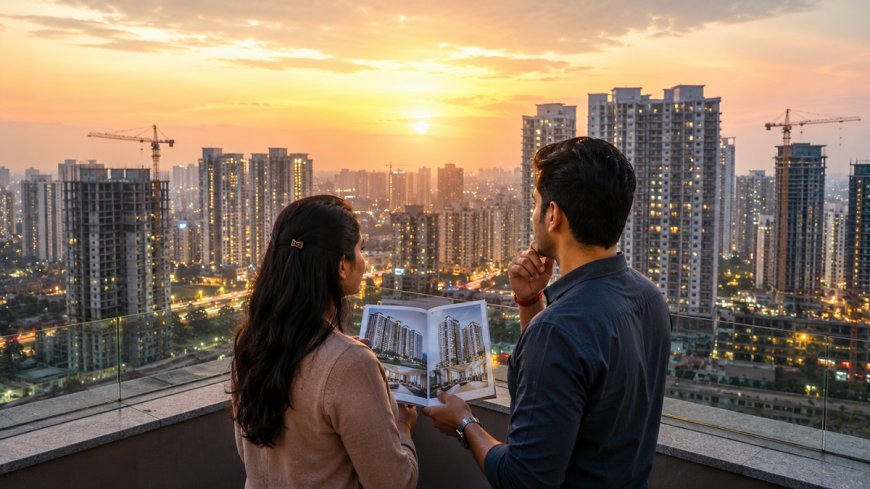
Earning ₹2 lakh a month used to be a big deal in India. It meant you’d made it; you were set, even. People saw it as a symbol of financial stability and the promise of a good life. Fast-forward to now, and that kind of salary is a lot more common among urban professionals, but guess what? Owning a home still feels like a pipe dream in cities like Mumbai, Bengaluru, or Delhi.
A Delhi couple earning a combined ₹2 lakh per month went viral after admitting they can’t afford a ₹2 crore apartment. It struck a nerve; not because anyone felt sorry for them, but because a lot of people saw themselves in that story. The debate quickly moved beyond just one family; it became a larger question about exploding property prices, what "affordable" even means anymore, and whether owning a home is becoming a privilege rather than a normal milestone for the middle class.

When ₹2 Lakh a Month Meant You Had "Made It"
About ten years ago, making ₹2 lakh a month as a household meant you were pretty well off. You’d qualify as upper middle class, with manageable expenses. Housing was expensive, but not unattainable. Mortgage EMIs felt within reach. Groceries, school fees, health care; all those bills were lower.
But today? Everything from rent to school and medical bills keeps going up. Even though salaries have climbed, a lot of professionals feel like they’re constantly running to keep up. As someone wrote online, “₹2 lakh a month used to mean you were rich. Now, it means you’re doing fine; but you still worry about buying a house.”
The ₹2 Crore 2BHK Shock
What really set off this discussion? Housing prices in big cities. In Delhi NCR, Gurugram, Mumbai, Bengaluru, Hyderabad, and Pune, a regular 2BHK in a “nice” neighbourhood now goes for anywhere between ₹1.5 crore and ₹3 crore.
And these aren’t fancy luxury flats. They’re just normal apartments, close to schools, transport, and your office. People are left scratching their heads: How did a basic 2BHK get so expensive?
It’s a mix of things: land prices going up, new metro lines drawing demand, investors swooping in, fancy projects, and everyone fighting for a limited supply of homes.
Not Just the EMI; It’s the Down Payment
Most people think, “Hey, if you can afford the EMI, you can buy the house, right?” It’s not that simple.
Picture this: For a ₹2 crore apartment, you need to put down at least ₹40 lakh up front. Add another ₹10 lakh or so for registration, stamp duty, broker’s cut, moving, and basic interiors. That’s close to ₹50 lakh in cash before you even set foot in your new place.
Most salaried professionals just don’t have that lying around. Even families making ₹20–25 lakh a year struggle to scrape together the down payment after paying rent, supporting relatives, saving for retirement, and managing everyday expenses. Like one commenter said, “We can manage the EMI; it’s the entry ticket we can’t afford.”
The Real Problem: The Down Payment
There’s this old belief: Two incomes mean double the progress, right? That used to work. But now, more and more couples earning ₹20–30 lakh a year feel they’re priced out of the main property markets.
The problem? Housing prices have sprinted way ahead of salaries in many big cities. Sure, an extra income helps, but it doesn’t guarantee easy homeownership anymore. No wonder stories about housing stress keep popping up among young professionals.
Salaries vs. Property Prices: The Widening Gap
People are frustrated. They see their salaries going up by 8–12% a year, but property prices seem to leapfrog way faster, especially when a new metro or business hub opens up nearby. You can save hard and still find the goalpost moving.
Lots of young earners feel stuck in a race where the finish line keeps shifting further away. The debate isn’t just about a flat in Delhi; it’s about whether any regular person can actually afford to own a home in India’s biggest cities.
Scroll through social media and the stories all sound the same: “If families earning ₹2 lakh a month can’t buy a home, what about the rest of us?” That anxiety is real.

Is Homeownership Now a Luxury?
Owning a home has always been a sort of “arrival” moment for India’s middle class; a sign of stability, a legacy, a safety net. But now, experts say in places like Mumbai or Delhi, buying a house is edging toward being a premium aspiration. Lots of new projects are aimed at the high end. Investors snap up apartments hoping for price jumps or rent, adding to demand.
So, while it’s still possible to buy homes in smaller cities, in the metros it often takes a massive income, an inheritance, years of saving, or a willingness to seriously compromise.
Are Investors Making Things Worse?
Another big question: Are “real” homebuyers being priced out by investors? In major cities, investors buy hoping for future appreciation or rental yields. That drives up prices, making things harder for end-users.
Sure, it’s not just investors; it’s also booming populations, new flyovers, and swelling urban economies. But the feeling sticks: Too many homes are seen as investments, not as houses for families.
Owning Isn’t the Only Path - Renting Gets a Makeover
For decades, renting was “just for now.” You rented until you could finally own. Now, lots of younger people think differently.
Why take on a huge loan when you can rent where you want to live, invest your savings in the market, and stay flexible if your job (or city) changes? Financial planners talk about “rent vs. buy” like it’s a smart, deliberate decision; not just a stepping stone.
In some cases, renting and investing the difference actually makes you wealthier in the long run.
Smaller Cities, Better Value
Not everywhere is unaffordable. Cities like Indore, Ahmedabad, Jaipur, Chandigarh, Coimbatore, Nagpur, Kochi, and Lucknow offer a lot more for your money. You can buy bigger homes and enjoy a decent lifestyle without taking on crushing debt.
Thanks to remote and hybrid work, more people are drifting toward these cities in search of balance and breathing room.
What’s Next? No Simple Answers
The future of India’s housing market will rest on a mix of things: interest rates, fresh supply, new infrastructure, how people move for work, and how the economy grows. Builders are trying new strategies: smaller apartments, flexible payment plans, and creative models for younger buyers.
At the same time, urban professionals are challenging the old script. These days, the big question isn’t, “When will you buy?” It’s, “Does buying even make sense for you?”
In the End...
The debate about the couple earning ₹2 lakh a month is really just a mirror. It reflects a growing sense that the old middle-class dream; buying a home, raising a family, building security; is getting tougher to achieve.
People followed all the usual advice: study hard, get a stable job, save every month; and now they’re wondering if the finish line even exists. With property prices racing ahead, that dream is changing shape. For some, buying still matters. For others, renting and investing look smarter.
One thing’s clear: India’s housing dream isn’t gone, but it’s definitely evolving; and slipping further out of reach for a lot of young professionals.
What's Your Reaction?
 Like
0
Like
0
 Dislike
0
Dislike
0
 Love
0
Love
0
 Funny
0
Funny
0
 Wow
0
Wow
0
 Sad
0
Sad
0
 Angry
0
Angry
0















Comments (0)