

Nepenthes khasiana: India’s Only Pitcher Plant and the Enchanted Insect Trap of Meghalaya
Discover the fascinating Nepenthes khasiana, India’s rare carnivorous pitcher plant from Meghalaya. Learn about its unique insect-trapping abilities, cultural significance, and urgent conservation efforts to protect this natural treasure.
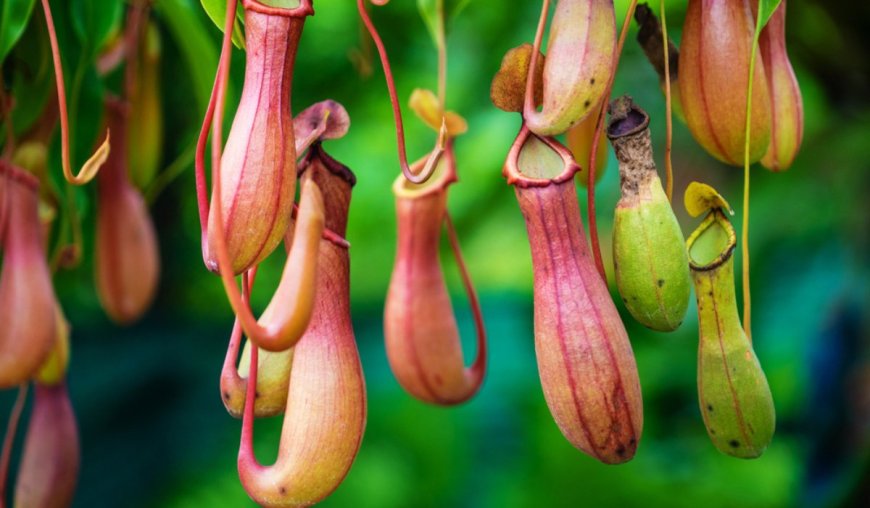
When we think of plants, we usually imagine green leaves soaking up the sun and quietly growing in the soil. But what if we told you that nestled in the misty hills of Northeast India lives a plant that doesn’t just grow—it hunts?
Say hello to Nepenthes khasiana, the only pitcher plant native to India, a fascinating carnivorous marvel thriving in the misty hills of Meghalaya. With its jug-shaped traps and insect-hunting skills, this rare plant is one of nature’s most fascinating marvels—and it’s in urgent need of our attention.
A Glimpse into Nature’s Hidden Hunter
The Nepenthes khasiana is no ordinary plant. Native to the Khasi, Jaintia, and Garo Hills of Meghalaya—and in smaller patches across Assam and Nagaland—this rare carnivorous species stands out for its unique approach to survival. Instead of relying solely on nutrient-poor soil, it supplements its diet by trapping and digesting insects.
This isn't just another unusual plant—it's something truly remarkable. It's a symbol of ecological balance, local folklore, and natural ingenuity—all wrapped in a leafy green pitcher.
What Makes the Pitcher Plant So Special?
At first glance, Nepenthes khasiana looks like a climbing vine with long, narrow leaves. But here’s the twist: the tips of those leaves grow into hollow, jug-shaped “pitchers” with a top lid. These pitchers aren’t just decorative—they’re functional traps designed to lure, capture, and digest prey.
Interestingly, the plant forms two distinct kinds of pitchers:
1. Lower Pitchers: These are rounder and broader, often sitting near the ground to trap crawling insects.
2. Upper Pitchers: Slender and elevated, they are better suited for catching flying bugs.
The lid helps keep rainwater out and, as the pitcher matures, it turns a reddish hue, adding to the plant's visual allure.
The Art of Insect Hunting
So, how does a plant manage to trap insects without lifting a finger (or a leaf)? Nepenthes khasiana uses a passive strategy known as the pitfall trap.
Here’s how it works:
1. Attraction: This plant secretes a sugary, occasionally glowing nectar around the edge of its pitcher.
2. Deception: Insects, drawn to the scent and color, land on the edge—called the peristome—which is extremely slippery.
3. Capture: One wrong step and the insect slips into the pitcher.
4. Digestion: Inside the pitcher, enzymes secreted by the plant break down the prey, releasing essential nutrients, especially nitrogen, which the plant absorbs.
Recent studies even suggest that the nectar may contain mild neurotoxins that disorient the insects, making them even more vulnerable.
Home Among the Hills
Nepenthes khasiana thrives in a very specific kind of environment—high-rainfall, acidic, nutrient-poor soil, often found on mossy forest slopes or tree branches.
Its natural habitat is limited to Meghalaya’s Khasi, Jaintia, and Garo Hills, Small populations in Assam and Nagaland, and elevations between 500 to 1500 meters
These regions, with their cool, moist climate and organic debris, offer the perfect home for this plant. Unfortunately, this limited range also makes it vulnerable to change.
A Plant of Myths and Meaning
In the cultures of Northeast India, the pitcher plant is more than just flora—it’s a piece of folklore. The local tribes have given it names that reflect its mysterious nature:
Khasi: Tiew-rakot (demon-flower or devouring plant)
Jaintia: Kset phare (lidded fly net)
Garo: Memang-koksi (basket of the devil)
Biate (Assam): Jug-par or Loisul Kola (jug-flower or pitcher-plant)
These names show just how deeply the plant is embedded in the local consciousness, often seen as both fascinating and fearsome.
A Fragile Beauty Under Threat
Despite its striking presence and role in nature, Tiew Rakot is on the brink of extinction. Over the past five decades, more than 40% of its wild population has vanished.
The reasons? Sadly, they’re all too familiar:
1. Habitat destruction due to mining and deforestation
2. Shifting cultivation practices that disturb the soil
3. Over-harvesting for ornamental and medicinal use
Its delicate ecosystem is under pressure, and unless urgent conservation efforts continue, we risk losing this natural wonder forever.
Fighting Back: Conservation in Action
Thankfully, all hope is not lost. Botanical institutes, local communities, and government agencies are collaborating to protect this endangered species. Some of the key strategies include:
1. Tissue culture and micropropagation to grow the plant in labs
2. Germplasm preservation to maintain genetic diversity
3. Community-led awareness programs in Northeast India
Cultivation in controlled environments, particularly in Nagaland, where it's being grown outside its natural range
These efforts aim to not just conserve the plant in the wild, but also to make cultivation sustainable and widespread.
Why Scientists—and Gardeners—Are Obsessed
Plant lovers and botanists are equally drawn to the charm of Tiew Rakot. Researchers study it for insights into evolutionary biology, plant-insect interactions, and even natural medicine.
On the ornamental side, hobbyists are increasingly growing it in greenhouses or shaded gardens—provided they can replicate its needs:
1. High humidity
2. An acidic, well-draining soil
3. Cool, tropical temperatures
While it's a challenging plant to care for, the rewards—watching a living trap in action—are worth the effort.
Final Thoughts: A Living Treasure Worth Protecting
Nepenthes khasiana is more than just a plant—it’s a living piece of art, an ecological engineer, and a cultural icon. In a world where biodiversity is rapidly shrinking, this unique pitcher plant reminds us of nature’s creativity and fragility.
If we don’t act now, we risk losing one of India’s most enchanting natural treasures. By supporting conservation efforts, spreading awareness, and appreciating the wonders of our natural world, we can ensure that this magical insect trap continues to thrive in the misty hills of Meghalaya for generations to come.
What's Your Reaction?
 Like
0
Like
0
 Dislike
0
Dislike
0
 Love
0
Love
0
 Funny
0
Funny
0
 Wow
0
Wow
0
 Sad
0
Sad
0
 Angry
0
Angry
0

I’m Ryan Rehan, Business Development Executive and a passionate blogger dedicated to sharing insights, tips, and experiences that inspire and inform. Through my blogs, I explore topics that matter, spark curiosity, and encourage thoughtful conversations. Whether I’m breaking down complex ideas, offering practical advice, or simply sharing stories, my goal is to create content that adds real value to a growing community of curious minds and passionate readers.











Comments (0)