

Bishnoi Village in Jodhpur: A Complete Travel Guide for First-Time Visitors
Explore Bishnoi Village in Jodhpur with this complete travel guide covering wildlife safaris, local crafts, traditions, best time to visit, costs, and key experiences.
-
Introduction
Most people visit Jodhpur for its blue houses, big forts, and busy bazaars. But if you step just a little outside the city, you’ll find a world that moves at its own calm pace. That’s Bishnoi Village.
The moment you arrive, the noise fades out. You see open fields, wildlife wandering freely, and families carrying forward traditions that have survived for centuries. A trip here isn’t just sightseeing; it’s a quiet look at rural Rajasthan and the remarkable Bishnoi community that treats nature like family. For a first-time visitor, this experience feels honest and refreshing.
-
Location and How to Reach
Bishnoi Village sits roughly 22–25 km from Jodhpur, depending on which cluster of homes you visit. The roads are smooth, and the drive usually takes 30–40 minutes.
Best ways to reach:
1. From Jodhpur Airport:
A cab drops you there in about half an hour.2. From Jodhpur Railway Station:
Expect around 40–45 minutes by taxi or auto.3. From City Centre:
Most safari operators include pick-up and drop, which makes things simple.Network coverage stays reliable throughout the route, and the journey itself gives you a good glimpse of village life.
-
What Makes Bishnoi Village Special
The heart of this place lies in the Bishnoi community’s philosophy. For more than 500 years, they’ve followed teachings that emphasise caring for animals, conserving water, and living in harmony with the land.
Here’s what that looks like when you’re actually there:
1. Wildlife doesn’t fear humans
Blackbucks and chinkaras walk past farms as if they own the land. Nilgai, peacocks, and birds appear without warning.2. Simplicity guides everything
From how homes are built to how food is cooked, nothing feels excessive.3. Art forms still breathe
Potters, weavers, and craftsmen keep old skills alive because it’s part of who they are, not because tourists expect it.4. People are genuinely welcoming
Conversations are real, warm, and unhurried.So while the village is known for safaris and crafts, the deeper charm is this rare blend of culture, nature, and respect for life.
-
Best Time to Visit
You can visit any month, but your experience changes with the season.
1. October to March:
This is the most pleasant period. Wildlife sightings are clear, and the weather feels perfect for open-jeep safaris.2. April to June:
It gets hot, but the dry landscape looks dramatic and animals gather around water bodies, so spotting them becomes easier.3. July to September:
Monsoon paints everything green. Safaris slow down a bit due to muddy tracks, but the scenery is lovely.Winter is almost always the safest bet for comfort and photography.
-
Top Things to Do in Bishnoi Village
Wildlife Spotting
A Bishnoi Village safari is nothing like a typical Wildlife safari Jodhpur experience. Animals here aren’t pushed into hiding. They move openly, protected by the community’s long-standing rules. You may see:
1. Blackbucks leaping across farmlands
2. Chinkaras grazing quietly
3. Nilgai wandering in groups
4. Peacocks perched on rooftops
It’s calm, real and perfect for anyone who enjoys nature without crowds.
Pottery Sessions
Local potters work with simple tools and a manual wheel, shaping clay with practiced ease. They often invite visitors to try spinning the wheel themselves, which usually leads to laughter and a slightly crooked souvenir.
Weaving and Handloom Work
Handwoven rugs, shawls, and durries come from families who’ve passed down the craft through generations. Watching them work on traditional looms gives you a deeper appreciation for every piece they create.
Opium Ceremony Demonstration
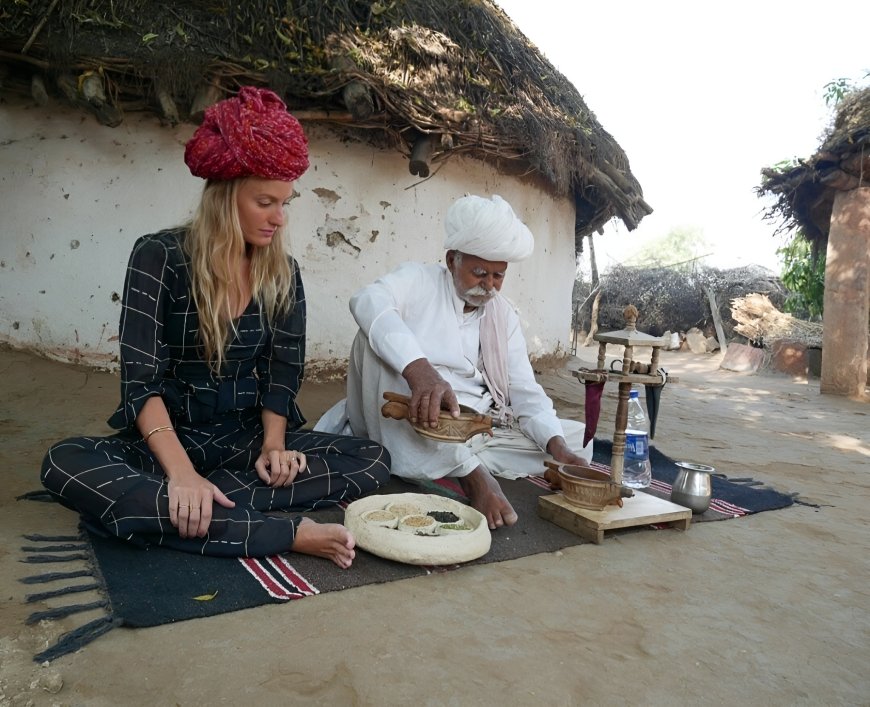
This ritual, known as Amrit, is a symbolic way of welcoming guests in the Bishnoi community. The demonstration explains the cultural importance of the ceremony and the steps involved. Visitors simply observe; there’s no expectation to consume anything. It’s one of the most interesting aspects of a cultural village tour in Rajasthan.
Visit to Traditional Homes
Houses here often have mud walls, neat courtyards, and open kitchens. Spending time with families gives you a closer look at everyday life, food habits, festivals, and stories that rarely reach the cities.
Migratory Bird Watching
During winter, the area becomes a peaceful stop for many migratory birds. Bird lovers find this part really rewarding.
Safari Prices and Tour Costs
Prices depend on whether you choose a shared or private tour and how long you want to explore.
Here’s the usual range:
1. Jeep Safari (2–3 hrs): 1,500–2,500 INR per person
2. Half-Day Tour: 2,500–4,000 INR per person
3. Full-Day Tour: 4,000–6,000 INR per person
4. Private Jeep (4–6 people): 4,000–7,000 INR total
Most packages cover:
1. Pick-up and drop
2. Wildlife spotting
3. Pottery and weaving visits
4. Opium ceremony demo
5. Guide/driver charges
Some operators also offer chai or snacks at a local home.
-
What a Typical Village Tour Looks Like
Every tour is slightly different, but the general flow stays similar.
1. Pick-up from Jodhpur
Your guide arrives with a jeep and gives you a quick idea of what’s ahead.2. Drive through the countryside
You’ll pass small settlements, farms, camel carts and broad desert stretches.3. Wildlife spotting
This usually happens early in the tour because animals are more active then.4. Crafts and artisan visits
You’ll meet potters, weavers and other local artists. They demonstrate their work and often let visitors give it a try.5. Opium ceremony demonstration
A short, culturally guided session that showcases an important tradition of the Bishnoi community.6. Conversations with locals
This is the part most travellers remember fondly. You hear their stories, understand their routines, and see how Bishnoi values shape their everyday decisions.7. Return to Jodhpur
Depending on your package, the entire tour lasts between three to five hours.Nothing feels rushed, and the experience stays warm and personal.
-
Practical Tips
A few things that make the trip smoother:
1. Wear light, airy clothes
2. Keep sunscreen, a hat, and sunglasses handy
3. Early mornings offer the best wildlife sightings
4. Always ask before photographing people
5. Avoid making loud noises near animals
6. Respect local customs
If you want to see a side of Rajasthan that isn’t polished for tourists, Bishnoi Village is the place. It brings together nature, culture, and hospitality in a way that stays with you long after you return to Jodhpur
What's Your Reaction?
 Like
0
Like
0
 Dislike
0
Dislike
0
 Love
0
Love
0
 Funny
0
Funny
0
 Wow
0
Wow
0
 Sad
0
Sad
0
 Angry
0
Angry
0

I’m Ryan Rehan, Business Development Executive and a passionate blogger dedicated to sharing insights, tips, and experiences that inspire and inform. Through my blogs, I explore topics that matter, spark curiosity, and encourage thoughtful conversations. Whether I’m breaking down complex ideas, offering practical advice, or simply sharing stories, my goal is to create content that adds real value to a growing community of curious minds and passionate readers.












Comments (0)