

Welcome to Slowjamastan: The World's Most Unexpected 'Country' is Right Here in America
Discover Slowjamastan, America's most unexpected micronation, a 11-acre desert country in California with 100,000+ citizens, a Crocs ban, and a slow jams soundtrack. Here's everything you need to know.
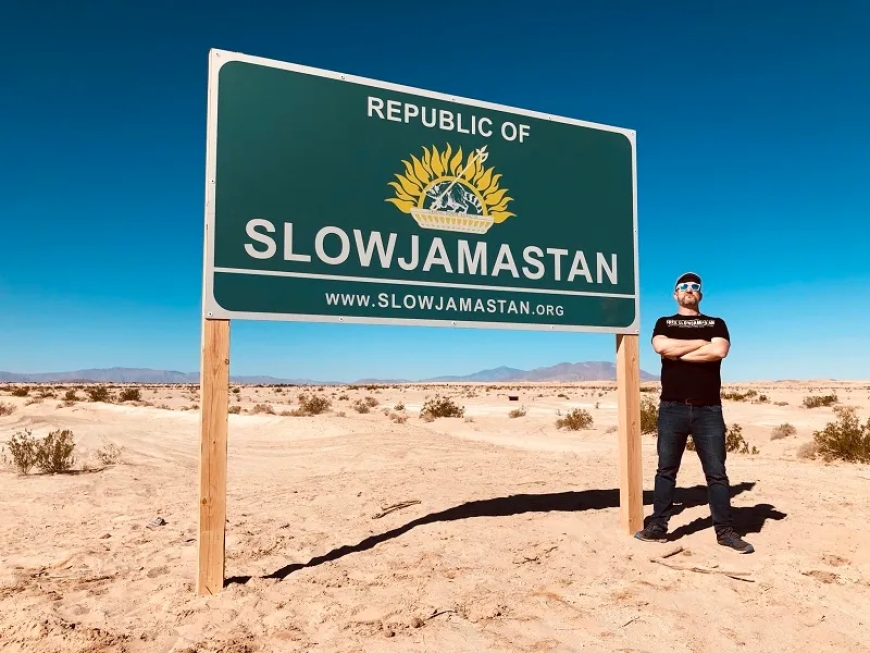
Table of Contents
- What Exactly Is Slowjamastan?
- The Founding Story: How a DJ Built a Nation
- Where in the World Is Slowjamastan?
- The Rules of the Land: No Crocs, No Problem
- Government, Culture & National Identity
- How to Become a Citizen of Slowjamastan
- Visiting Slowjamastan: What You Need to Know
- Why Slowjamastan Matters More Than You Think
- Frequently Asked Questions
- Final Thoughts
-
What Exactly Is Slowjamastan?
Somewhere in the sun-scorched expanse of Southern California's Imperial County, sandwiched between stretches of desert scrubland and the occasional passing tumbleweed, sits a place unlike any other on the map. It goes by the name Slowjamastan and no, that is not a typo, a joke country from a Netflix series, or the name of a lo-fi playlist. It is, according to its founders and its 100,000-plus citizens, a fully functioning micronation.
A micronation, for the uninitiated, is a self-declared independent state that exists outside the formal recognition of world governments and international organizations. They have a long, wonderfully eccentric history stretching from medieval-themed castles in Europe to oceanic platforms in the North Sea. But Slowjamastan stands apart from most, not because of political ambition or territorial dispute, but because its entire foundation rests on one profoundly simple premise: life should have more slow jams and fewer Crocs.
Welcome to the most laid-back corner of the American Southwest. Population: growing by the day.
-
The Founding Story: How a DJ Built a Nation
Every great nation has an origin myth, a tale of revolution, exploration, or divine inspiration. Slowjamastan's origin story, by contrast, involves a San Diego radio DJ, 11 acres of empty desert land, and an irresistible impulse to do something completely absurd.
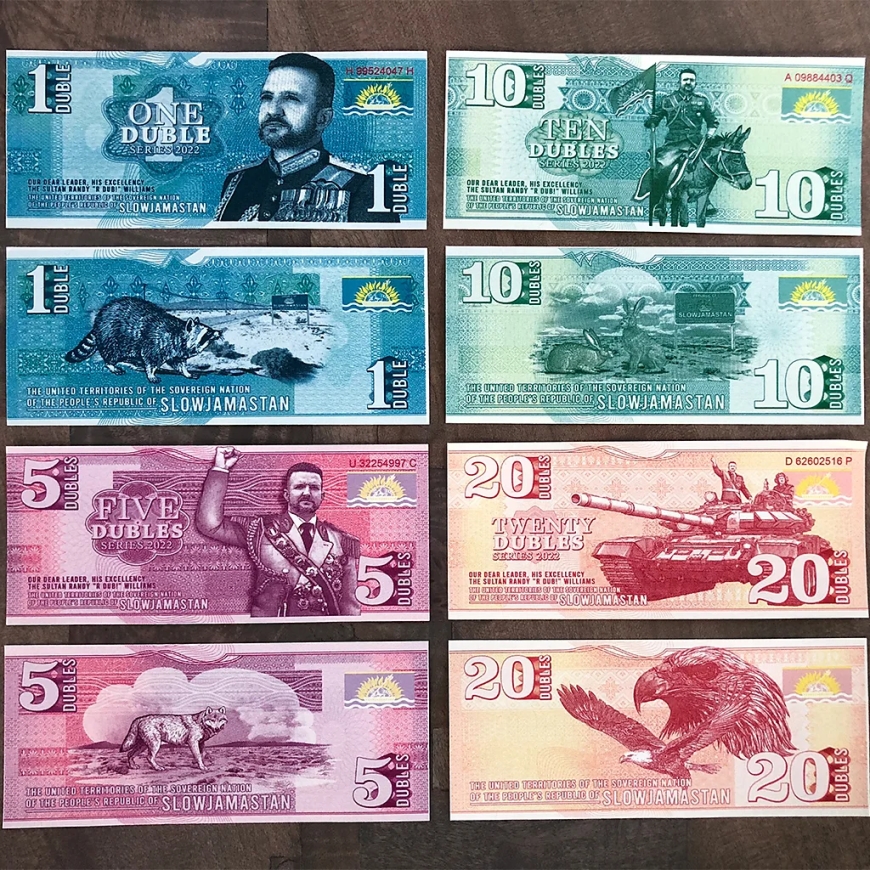
Randy "R-Dub!" Williams, the host of the nationally syndicated radio show Sunday Night Slow Jams, purchased the land in Imperial County, California, with the single-minded intention of turning it into a country. The show, which has aired across the United States for over two decades, became the cultural backbone of what would eventually grow into a small but enthusiastic nation-state.
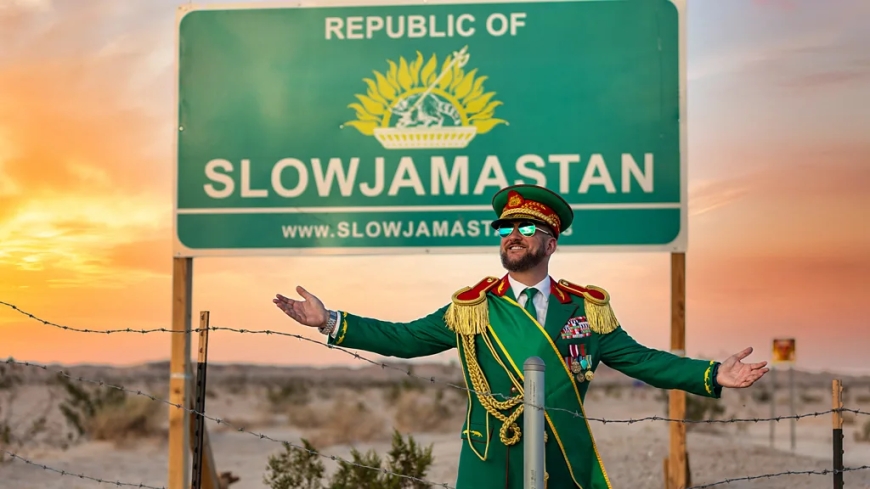
Williams declared Slowjamastan's independence in December 2021, complete with a formal ceremony, a national flag, a constitution, and the kind of unbridled enthusiasm typically reserved for championship parades. He named himself Sultan because if you're going to build a country, you might as well give yourself a title and got to work establishing the foundational principles of his new realm.
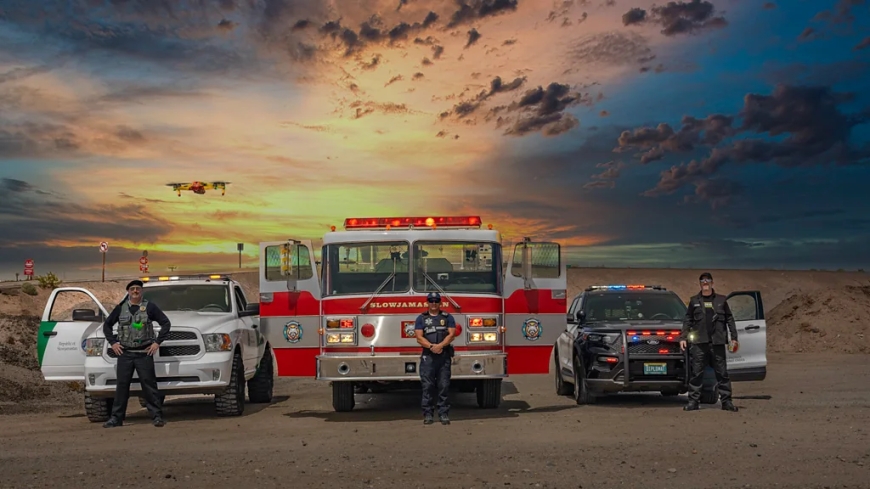
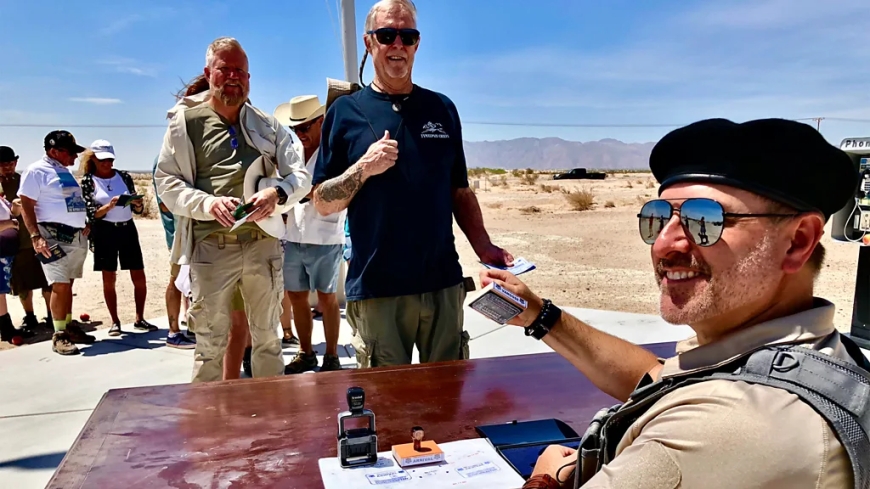
What makes the founding so remarkable is how earnestly it was embraced. This wasn't a cynical stunt or a fleeting publicity gimmick. Williams built real infrastructure: a border crossing with an actual gate, a stamp for your passport, a national anthem, and even immigration processes for those wishing to claim citizenship. The people came. Slowly, then all at once.
-
Where in the World Is Slowjamastan?
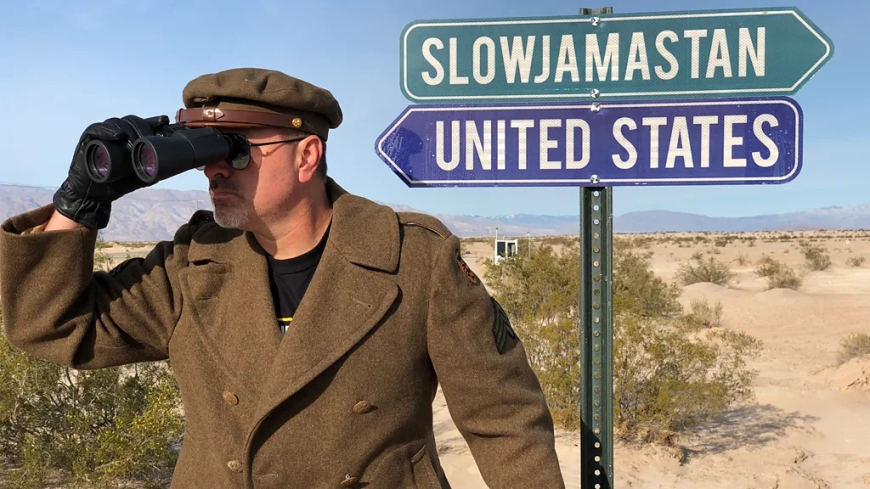
Geographically, Slowjamastan occupies approximately 11 acres of desert terrain in Imperial County, California, not far from the town of Plaster City. The landscape is classic Sonoran Desert, flat, hot, dusty, and spectacularly empty in the way that only the American Southwest can be. There are no shopping malls. There are no traffic jams. There is, however, a sense of possibility that city dwellers rarely find in their day-to-day lives.
The nearest major city is El Centro, though visitors typically make the drive from San Diego, which sits about two hours to the west. The journey itself becomes part of the experience, a gradual unwinding as the urban sprawl gives way to open horizons, as if the desert itself is preparing you for the slow-jam frequency of what lies ahead.
The territory sits within the borders of the United States, meaning it operates under U.S. law in the technical sense. Slowjamastan makes no formal claim to sovereignty in the legal or United Nations sense. Instead, it operates as a micronation, a playful but sincere declaration of cultural and communal identity, not a geopolitical standoff. Think of it less as a rebellion and more as a love letter to the idea that humans get to decide what makes a community worth belonging to.
-
The Rules of the Land: No Crocs, No Problem
Every country needs laws, and Slowjamastan has taken its legislative responsibilities with the perfect balance of seriousness and wit. The national rulebook is short, memorable, and oddly clarifying as a statement of values.
The most famous and most enforced law in Slowjamastan is the ban on Crocs. Those rubber-soled foam clogs beloved by chefs, toddlers, and people who've stopped caring? Strictly prohibited within national borders. It's a rule that sounds ridiculous until you consider that most national identities are built around exactly these kinds of social contracts: what we wear, what we eat, what music we play. Slowjamastan has simply chosen to be transparent about it.
Other notable national policies include:
- Slow jams are mandatory mood music. The genre is not just celebrated — it is treated as a civic institution. The smooth sounds of classic R&B ballads, neo-soul, and mellow grooves form the cultural soundtrack of daily life.
- Positivity is a national value. The culture actively discourages cynicism and encourages citizens to lead with warmth and good humor.
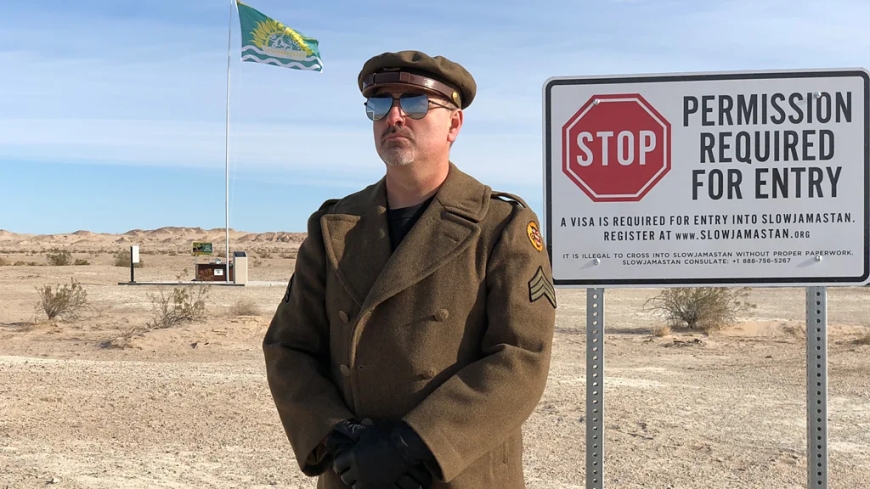
- Visitors must obtain a "visa", a fun formality that adds to the theatrical joy of crossing the border.
- Photography is welcome. Slowjamastan actively wants people to share their experience, treating tourism and storytelling as ambassadorial acts.
These aren't laws designed to control, they are a declaration of vibe. And in a world where most institutions feel heavy and exhausting, that distinction matters enormously.
-
Government, Culture & National Identity
The political structure of Slowjamastan is refreshingly uncomplicated. Sultan R-Dub! leads the nation, assisted by a cabinet of officials who bear titles both regal and playful. There's a Minister of Smooth, a Secretary of Chill, and various other roles that manage the serious business of keeping spirits high and bureaucratic headaches low.
The national flag features warm, desert-inspired tones and represents the laid-back spirit at the heart of the project. The national anthem draws from the slow-jam tradition that gave the country its name, setting a tone that most heads of state would struggle to match with their own formal compositions.
Culturally, Slowjamastan occupies a fascinating space. It functions as a community gathering point for people who feel drawn to something more human-scaled and joy-focused than the news cycle typically offers. Citizens report that the act of "joining" the nation, however playfully gives them a genuine sense of belonging. There is a shared language, a shared set of references, and the particular warmth that comes from being in on a good joke with thousands of other people.
National holidays are observed with appropriate ceremony. Visitor days are treated as diplomatic occasions. The Sultan gives interviews, appears at events, and generally conducts the affairs of state with the cheerful gravity that the role demands.
-
How to Become a Citizen of Slowjamastan
Perhaps the most remarkable thing about Slowjamastan is how easy and how meaningful it is to become a citizen. The process is deliberately open and accessible, a conscious rejection of the bureaucratic nightmare that real-world immigration often involves.
To claim Slowjamastan citizenship, interested parties can apply through the official channels (the nation maintains an active online presence, including a website and social media platforms). Upon approval, new citizens receive official documentation, a passport or citizenship card, that marks their membership in the community.
As of 2026, Slowjamastan has issued citizenship to well over 100,000 individuals from across the United States and beyond. The citizenry includes teachers, musicians, truck drivers, retirees, and everyone in between united not by geography or ethnicity but by a shared appreciation for the absurd, the joyful, and the melodically mellow.
There are no citizenship fees in the traditional sense, though donations and support for the ongoing development of the nation are welcomed. What's notable is that people are not joining out of obligation or necessity, they're joining because it makes them happy. That is, quietly, a radical thing.
-
Visiting Slowjamastan: What You Need to Know
Slowjamastan welcomes visitors on scheduled open border days, which are announced through official channels and draw crowds from across the region. These are not mere tourist traps, they are genuine community events where citizens old and new gather, music plays, and the spirit of the nation comes fully alive in the desert air.
When you arrive, you'll encounter the official border crossing, a proper gate with signage that makes the experience feel legitimately international, even though you drove there from San Diego. Border officials (volunteers, typically, but enthusiastic ones) will process your entry, stamp your passport or visitor documentation, and welcome you to the land.
What to expect during a visit:
- Music, always. Slow jams flow freely. Come prepared to sway.
- Community. Fellow visitors tend to be warm, curious people. Conversations start easily here.
- The landscape. It's desert. It's raw. It's unexpectedly beautiful in the way the Southwest often is especially at golden hour when the light turns everything amber and the shadows stretch long across the scrub.
- Merchandise and mementos. Official Slowjamastan gear is available, allowing you to carry a piece of the nation home with you.
- Leave your Crocs in the car. This cannot be overstated.
The experience sits somewhere between road trip adventure, outdoor festival, and performance art which is to say, it's unlike anything else you'll do this year.
-
Why Slowjamastan Matters More Than You Think
It would be easy to dismiss Slowjamastan as a novelty, a quirky footnote in the long tradition of American eccentricity. That reading, however, misses something genuinely important about what the place represents.
We are living through an era of profound institutional fatigue. Trust in governments, media, and traditional community structures has eroded across nearly every demographic. People are hungry for belonging, for shared meaning, for something to be part of that doesn't immediately demand something painful in return.
Slowjamastan offers a different model. It asks: What if community could just feel good? What if the act of declaring shared values, even absurd, playful ones was enough to bind people together in ways that matter? What if a country built around slow jams and anti-Croc legislation was actually, in its own low-stakes way, doing something profound about human loneliness?
The answer, based on its 100,000-plus citizens, seems to be: yes. It can. And it does.
Micronations have always served as social laboratories, spaces where people experiment with what community can look like outside the constraints of the mainstream. Slowjamastan is among the most successful and genuinely joyful examples of that tradition in recent American history. It takes seriously the things that make life worthwhile: music, laughter, connection, and the freedom to be a little silly together.
-
Frequently Asked Questions
Is Slowjamastan a real country?
Slowjamastan is a micronation, a self-declared independent state. It is not recognized by the United Nations or world governments, and it operates within U.S. legal jurisdiction. But its culture, citizenship, and community are entirely real.
Can anyone become a citizen?
Yes. Citizenship is open to applicants from anywhere in the world through the official Slowjamastan channels.
Is it legal to visit?
Absolutely. The land is privately owned and operated, and visiting during official open days is completely legal and encouraged.
Why are Crocs banned?
Because Sultan R-Dub! said so. Also, it makes for a very good national conversation starter.
Is there an entry fee?
Visiting policies and any associated costs are updated through official Slowjamastan platforms. Check current information before planning your trip.
Can I get a Slowjamastan passport?
Citizens can receive official documentation including passport-style ID cards. These are ceremonial rather than legally recognized travel documents.
-
Final Thoughts
Slowjamastan is, by almost every conventional measure, ridiculous. It is also, by the measure of what it has actually achieved community, joy, creative expression, and a peculiar but genuine sense of national pride, a quiet triumph.
In the flat desert of Imperial County, California, a DJ built something that thousands of people wanted to be part of. He gave it a flag, a Sultan, a ban on foam clogs, and an infinite playlist of the smoothest music ever recorded. People drove hours to stand at its border. They applied for citizenship in their hundreds of thousands. They told their friends.
That's not nothing. That's, in fact, quite a lot.
The next time the world feels too big, too loud, or too fast to remember that somewhere in the California desert, the slow jams are playing, the Crocs are banned, and a nation of over 100,000 citizens has collectively decided that this, right here, is enough.
Welcome to Slowjamastan. Try to relax.
What's Your Reaction?
 Like
0
Like
0
 Dislike
0
Dislike
0
 Love
0
Love
0
 Funny
0
Funny
0
 Wow
0
Wow
0
 Sad
0
Sad
0
 Angry
0
Angry
0

A spirit that pursues sunsets and tales. Entrepreneur at heart, globe-trotter by soul. Founder of an art-worshiping jewelry brand that embodies emotion & individuality — where each piece is a tale of culture, craft, and character. From trails up mountains to gem markets, I'm inspired by all journeys — transforming wanderlust into enduring design. Establishing a brand built on authenticity, refinement & purpose — one work at a time.













Comments (0)