
































































Satya Nadella’s Warning: Microsoft’s AI Future and Workplace Challenges
Satya Nadella warns Microsoft employees about AI’s disruptive future, cultural challenges, and the need for reinvention. Explore his vision of transforming Microsoft into an intelligence-driven company while rebuilding employee trust and securing long-term relevance.

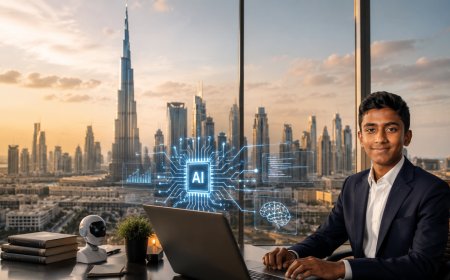
Artificial Intelligence is changing the way the world works, and no company is more deeply invested in this shift than Microsoft. Recently, CEO Satya Nadella held a company-wide townhall that went far beyond the usual corporate updates. His remarks revealed both an ambitious vision for Microsoft’s role in the AI era and a deep concern about the cultural and business challenges ahead.
Nadella was candid about what keeps him up at night, openly warning employees that even Microsoft’s strongest businesses could lose relevance if the company fails to keep evolving. At the same time, he acknowledged internal challenges, from layoffs to workplace culture, and called on leaders to rebuild trust with employees. Let’s break down the key takeaways from this rare and revealing session.
Surviving the AI Era
At the heart of Nadella’s message was a sobering reminder: survival in the age of AI is not guaranteed, not even for industry leaders like Microsoft. To make his point, he brought up the story of Digital Equipment Corporation (DEC), a once-dominant technology company that collapsed after failing to adapt to innovations like RISC architecture.
By referencing DEC, Nadella sent a clear signal that complacency is dangerous. He admitted that some of Microsoft’s most profitable businesses, such as cloud services and software, may not hold the same value in the future. His words were blunt: “Some of the biggest businesses we’ve built might not be as relevant going forward.”
What this really means is that Microsoft cannot simply rely on its past successes. Even giants can fall if they do not anticipate change and reinvent themselves in time. Nadella’s message was as much a warning to his own team as it was a reminder of how fast technology is moving.
Cultural Challenges Inside Microsoft
Nadella did not shy away from addressing concerns raised by employees about the company’s culture. In recent months, some workers described Microsoft as colder and more rigid, with less empathy than before. These concerns grew stronger after workforce reductions and the company’s push to bring employees back to physical offices.
Rather than dismissing this criticism, Nadella acknowledged the shortcomings. He admitted that Microsoft has not always done enough to support its people and stressed that the company needs to do better. Rebuilding trust, he said, is a leadership priority.
This was an important moment because it showed Nadella is aware of the human side of transformation. For all of Microsoft’s technical progress, employee morale and culture cannot be ignored. In his words, leadership at Microsoft now requires both ambition for the future and empathy for the people who will make that future possible.
From Software Factory to Intelligence Engine
One of the boldest shifts Nadella laid out was how Microsoft should see itself in the coming years. The old identity of being a “software factory” no longer fits. Instead, he wants the company to transform into an “intelligence engine.”
The difference is more than just wording. In this new model, AI is not an add-on or a separate business unit. It becomes the foundation of every product and service Microsoft offers. From productivity tools like Office to cloud solutions through Azure, the goal is to integrate AI so deeply that it changes how people work, create, and make decisions.
Nadella described a future where AI does not just answer questions but takes proactive action. Think of an AI assistant that not only reminds you of an upcoming deadline but also drafts the presentation, schedules the meeting, and coordinates with your colleagues. This kind of “agentic AI” could redefine how businesses and individuals interact with technology.
Strategic Priorities for Microsoft
To make this vision a reality, Nadella laid out three major priorities that will guide Microsoft’s next phase.
1. AI Transformation
Leading in Agentic AI is at the top of the list. Microsoft is not content with chatbots or simple digital assistants. The goal is to create systems that can complete tasks, coordinate across platforms, and act almost like team members in their own right. This is a high-stakes race, as every tech company is racing to dominate the AI space.
2. Security and Quality
Nadella was very clear about this: security and quality are not negotiable. As Microsoft becomes more central to the world’s digital infrastructure, the responsibility to deliver safe and reliable systems only grows. In an age where cyberattacks and data breaches are constant threats, trust in Microsoft’s platforms will depend on these standards.
3. Dual Mandate
Perhaps the most difficult challenge Nadella highlighted is balancing the present with the future. On one side, Microsoft has to keep running its existing profitable businesses, from Windows to Azure. On the other hand, it must invest heavily in new categories that could disrupt those very businesses. Walking this tightrope is not easy, but it is the only way to stay relevant in a rapidly shifting landscape.
Rebuilding Employee Trust
Beyond strategy and vision, Nadella circled back to what he called the heart of Microsoft’s challenge: its people. He admitted that layoffs and rigid workplace policies have strained trust. Employees need to feel valued and heard, especially when asked to adapt to constant change.
Nadella urged leaders to listen more, respond with empathy, and create an environment where people feel supported rather than sidelined. He also emphasized the need for everyone at Microsoft to be willing to “unlearn and re-learn” as the industry changes at an unprecedented speed.
This balance between technical ambition and cultural renewal is critical. Without employee buy-in, even the best strategy can fail. Nadella’s acknowledgement of this fact shows he understands the risk of losing not just market share, but also the loyalty of the people building the company’s future.
The Bigger Picture: Opportunities and Risks
It is easy to see the opportunities in Microsoft’s AI push. The company has already made major strides with its investments in OpenAI and its integration of AI tools into products like Office and Windows. If Nadella’s vision succeeds, Microsoft could redefine how billions of people interact with technology in their daily lives.
But the risks are equally real. AI is advancing so quickly that today’s breakthrough could be tomorrow’s outdated feature. Competitors like Google, Amazon, and startups worldwide are moving just as aggressively. At the same time, ethical and regulatory challenges around AI could complicate growth.
Nadella’s reference to DEC was not just history trivia. It was a reminder that even great companies can disappear if they fail to adapt. For Microsoft, the challenge is not only to innovate but also to do so faster, smarter, and more responsibly than the rest.
Looking Ahead
Satya Nadella’s townhall was more than a leadership update. It was a candid reflection on the crossroads Microsoft faces in the AI era. The message was clear: Microsoft must transform from a software giant into an intelligence-driven company, all while balancing innovation with trust, culture, and security.
The coming years will test Microsoft’s ability to reinvent itself, maintain relevance, and lead responsibly in the age of AI. Nadella’s vision is ambitious, but his warning is equally urgent. Microsoft’s future will depend on both the technology it builds and the culture it nurtures.
For employees, partners, and customers alike, this was a moment of transparency that showed just how high the stakes are. AI is both the company’s biggest opportunity and its greatest risk, and Microsoft’s response to this challenge will shape the future of technology itself.
What's Your Reaction?
 Like
0
Like
0
 Dislike
0
Dislike
0
 Love
0
Love
0
 Funny
0
Funny
0
 Angry
0
Angry
0
 Sad
0
Sad
0
 Wow
0
Wow
0