













































































Your Brain Thinks Notifications Are Emergencies - Here’s Why
Your brain reacts to notifications like emergencies due to instinct, anticipation, and stress responses. Learn why alerts feel urgent and how they hijack focus.

Your phone buzzes.
You weren’t waiting for anything.
Still, you check.
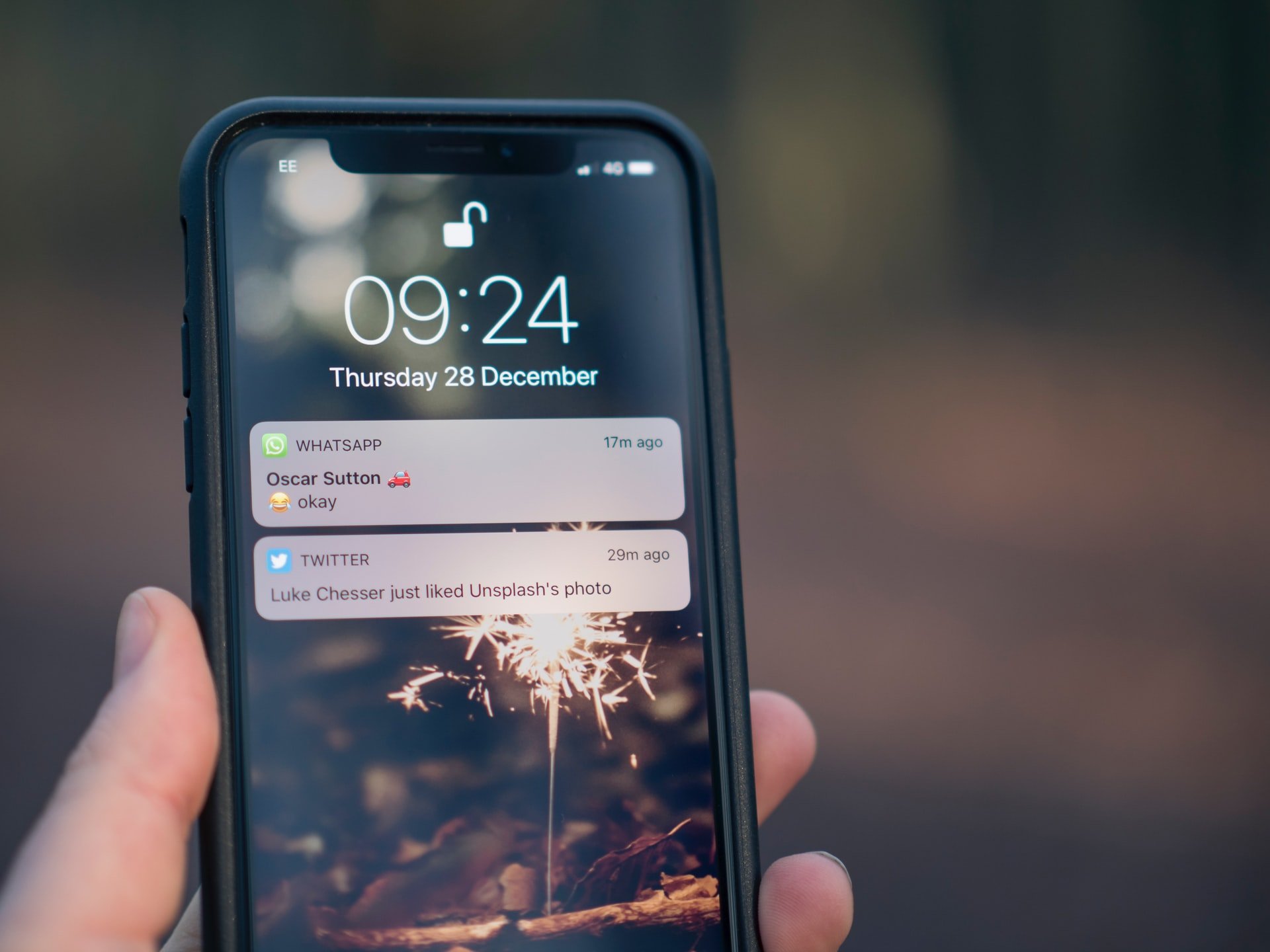 Image Credit: Unsplash
That split-second reaction is almost universal now. It happens in meetings, during meals, while reading, and even in the middle of conversations. Most notifications turn out to be harmless or forgettable. Yet they feel urgent in the moment, like something that needs immediate attention.
This isn’t about weak focus or bad habits. It’s about how the human brain works and how notifications quietly tap into instincts we didn’t even know were there.
Let’s break down why alerts feel so powerful, why they interrupt us so easily, and why knowing this changes how you see your phone forever.
Why Your Brain Treats Notifications Like Threats
Long before phones existed, humans survived by reacting quickly to sudden changes. A noise in the dark. Movement in the corner of the eye. Hesitation could mean danger.
That instinct still runs in the background of your mind.
 Image Credit: iStock
Notifications trigger the same alert system. A sound, vibration, or flashing screen tells your brain something has changed. It doesn’t stop to ask whether it’s important. It reacts first and asks questions later.
That’s why even a random app alert can pull your attention instantly. Your brain is doing its job, even if the situation doesn’t deserve it.
The Anticipation That Keeps You Hooked
Notifications don’t just interrupt. They tease.
You don’t know what’s behind the alert. It could be good news. A message. Recognition. Or nothing useful at all. That uncertainty is what makes them hard to ignore.
Your brain releases dopamine not only when something good happens, but when you expect something to happen. The waiting itself becomes stimulating.
This is why checking notifications can feel strangely satisfying, even when the content disappoints. The reward isn’t the message. It’s the anticipation.
Over time, this creates a loop:
Notification appears
Curiosity kicks in
You check immediately
Your brain remembers the feeling
Eventually, the checking becomes automatic. You stop deciding and start reacting.
Why Urgent Feels More Important Than Meaningful
There’s a mental shortcut most people fall into without realizing it. When something feels urgent, we treat it as important.
This is known as urgency bias. Tasks that demand immediate attention get prioritized over tasks that actually matter more but don’t shout for attention.
A message that arrives now feels more pressing than work that improves your future. An alert feels more important than deep thinking.
Image Credit: Dreamstime
Email is a perfect example. Most people believe they’re expected to reply quickly, even when that expectation isn’t real. This false pressure creates stress and keeps people in constant response mode.
Notification badges make this worse. That small red circle feels like unfinished business. Your brain wants closure, so you click.
What’s happening is simple. Urgency hijacks your priorities.
The Stress You Don’t Notice Building Up
Every notification causes a tiny stress reaction.
Your body becomes alert. Your attention sharpens. Your system prepares to respond. You may not feel anxious, but your body reacts anyway.
Now multiply that by dozens of alerts every day.
Over time, this constant state of readiness leads to mental fatigue. Focus becomes shallow. Relaxation feels harder. Even when nothing is wrong, your body stays on edge.
This is why frequent phone use is linked to feeling tired, distracted, or overwhelmed. It’s not about the content. It’s about the repeated activation of stress responses.
Why Focus Feels Harder Than It Used To
Each time a notification interrupts you, your brain has to switch tasks. That switch has a cost.
Even after you put the phone down, part of your attention stays with the interruption. You think about the message. You anticipate another alert. Your mind doesn’t fully return.
This constant splitting of attention makes deep thinking difficult. Tasks take longer. Creativity suffers. Mistakes increase.
The tricky part is that the interruptions feel small. One alert doesn’t seem like a big deal. But together, they change how your brain works.
The Illusion of Productivity
Responding quickly feels productive. It feels responsible. It feels like staying on top of things.
But constant responsiveness often replaces real progress.
Notifications push you into reaction mode. You answer instead of choosing. You respond instead of creating. You stay busy without moving forward.
This creates a cycle where the day fills up, but nothing meaningful gets finished. You feel active, yet unsatisfied.
True productivity isn’t about speed. It’s about direction.
Why Knowing All This Still Isn’t Enough
Even when people understand how notifications work, they still struggle to resist them. That’s because this isn’t a willpower problem.
These systems are designed to trigger automatic responses. Awareness helps, but it doesn’t cancel instinct.
The real issue isn’t discipline. It’s exposure.
When alerts constantly reach you, your brain stays alert. To regain control, the environment needs to change.
Regaining Control Without Disconnecting
You don’t need to give up your phone or disappear from the digital world. Small changes can make a big difference.
Start by deciding what truly deserves your attention.
A few simple shifts help:
1. Turn off notifications that don’t add value
2. Remove badges that create unnecessary pressure
3. Check messages at planned times instead of instantly
4. Keep your phone out of reach during focused work
These changes reduce noise. Your brain relaxes. Focus returns.
You stop reacting and start choosing.
What This Really Means
Notifications feel urgent because they tap into deep survival instincts, curiosity, and stress responses that evolved long before screens existed.
Your brain isn’t failing you. It’s responding exactly as it was designed to. The problem is that modern technology keeps pulling the same psychological levers over and over.
Once you see this clearly, something shifts.
The next time your phone buzzes, you notice the urge without obeying it. You pause. You decide.
Urgency loses its grip.
And in that pause, you get something back that’s become rare.
Your attention.
What's Your Reaction?
 Like
0
Like
0
 Dislike
0
Dislike
0
 Love
0
Love
0
 Funny
0
Funny
0
 Angry
0
Angry
0
 Sad
0
Sad
0
 Wow
0
Wow
0