

The Last Dark Place: How a Remote Himalayan Village Became a Window to the Universe
Discover Hanle, a remote Himalayan village in Ladakh that became home to India's first Dark Sky Reserve and one of the world's highest observatories. A complete guide to its science, stargazing, and astro-tourism.
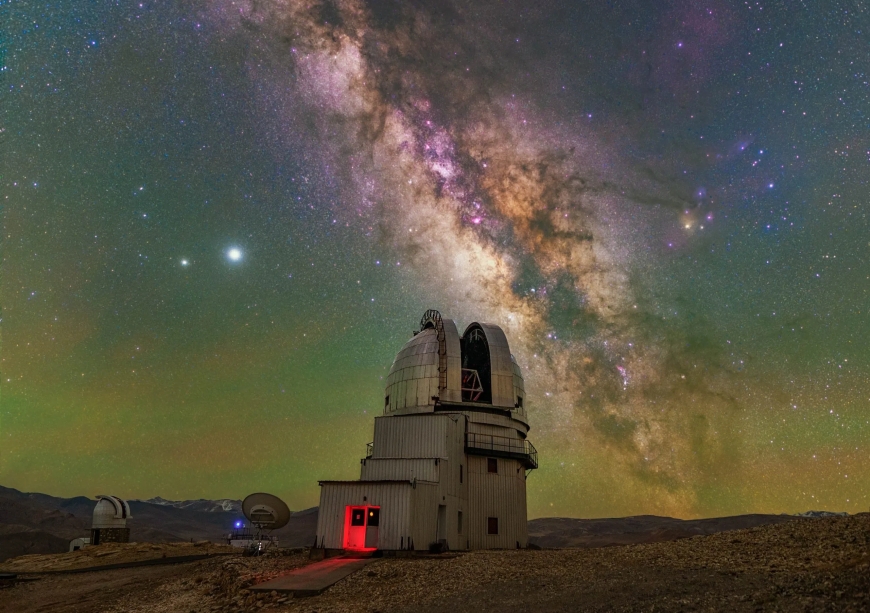
Table of Contents
- Introduction: A Village at the Edge of the Map
- Where Is Hanle? Geography of a High-Altitude Cold Desert
- Why Hanle's Night Skies Are Among the Darkest on Earth
- The Indian Astronomical Observatory: Science at 4,500 Metres
- The Telescopes of Hanle
- India's First Dark Sky Reserve
- The Rise of Astro-Tourism in Hanle
- Protecting the Darkness: A Community Effort
- Planning Your Visit to Hanle
- Conclusion: A Window Worth Keeping Open
-
Introduction: A Village at the Edge of the Map
There are places on Earth so quiet that the sky almost seems to speak. Hanle, a tiny settlement tucked deep in the Changthang region of eastern Ladakh, is one of them. For most of its history, this windswept hamlet of stone houses, barley fields, and grazing pashmina goats was known only to a handful of nomadic herders and the occasional adventurer. Today, it carries a remarkable distinction: it is the location of India's first Dark Sky Reserve and one of the highest astronomical observatories on the planet.
How did a remote Himalayan village with no petrol pump and patchy mobile coverage become a serious window to the universe? The answer lies in a rare combination of altitude, dryness, and an almost total absence of artificial light. This is the story of Hanle, where science, silence, and the night sky meet.
-
Where Is Hanle? Geography of a High-Altitude Cold Desert
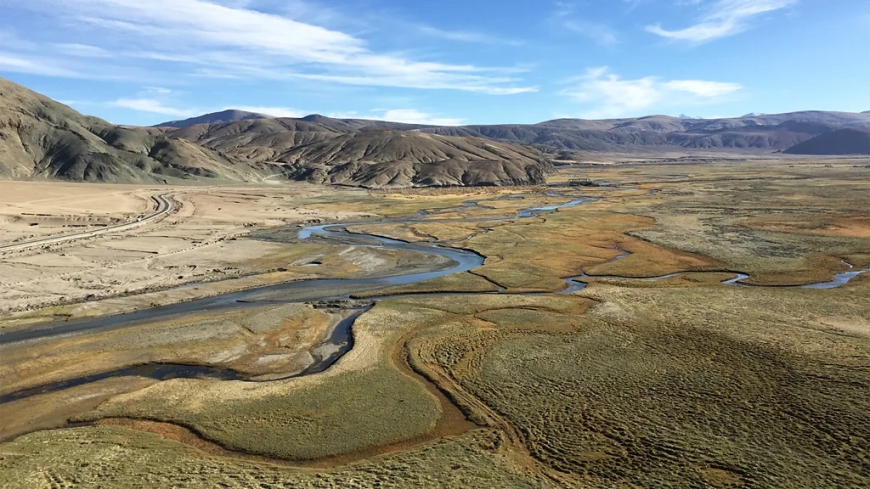
Hanle sits in the southeastern corner of Ladakh, not far from the Indo-China border, inside the vast Changthang Cold Desert Wildlife Sanctuary. At roughly 4,500 metres (about 14,700 feet) above sea level, it is high even by Ladakhi standards, and the thin, oxygen-poor air is something visitors feel within minutes of arriving.
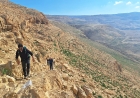
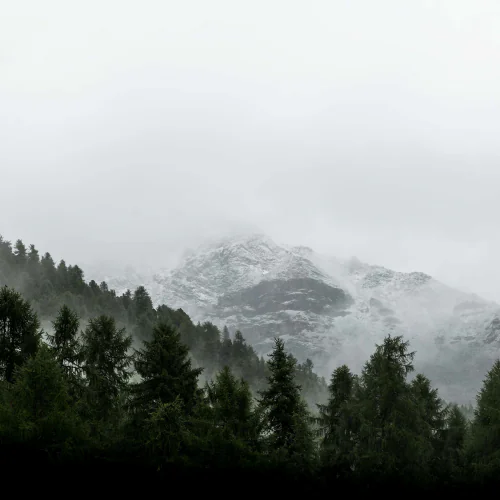
The landscape here is a study in extremes. Days can be bright and sunny, while nights plunge below freezing even in the heart of summer. The valley floor is ringed by bare, sculpted mountains, and the openness of the terrain gives the place a feeling of enormous space. Unlike the postcard-famous destinations of Pangong Lake or Nubra Valley, Hanle is not about dramatic crowds and selfie points. Its appeal is stillness, distance, and the sense of being genuinely far from everything.
Watching over the valley is a seventeenth-century hilltop monastery, while below it traditional homes cluster along the river and narrow strips of cultivated land trace green lines across the cold desert. It is a working village first and a tourist site second, and that authenticity is a large part of its charm.
-
Why Hanle's Night Skies Are Among the Darkest on Earth
What makes Hanle extraordinary is not visible during the day. It is what appears after sunset.
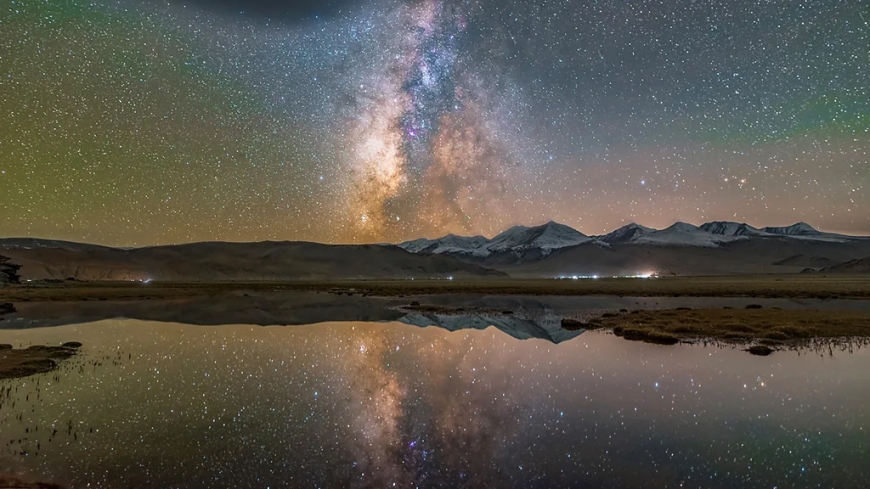
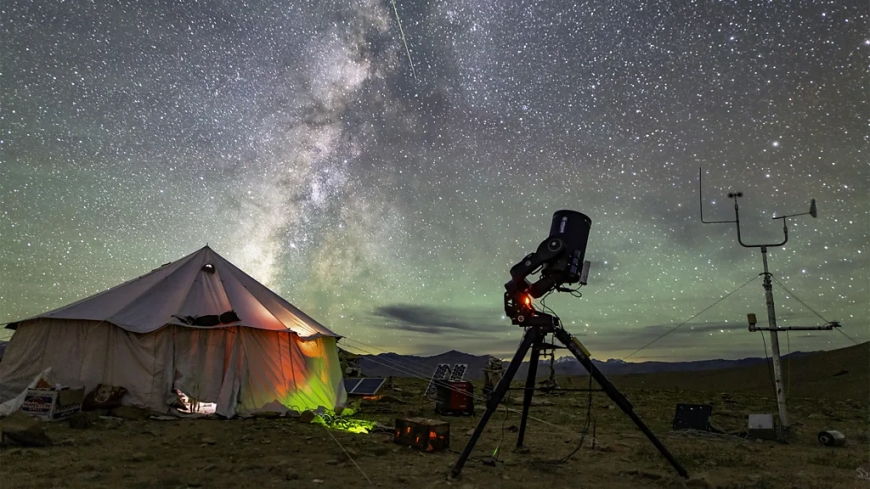
Several natural factors combine to make this one of the finest stargazing locations on the planet. The high altitude means the atmosphere above is thinner, so less light is scattered and stars appear sharper and more numerous. The cold, dry desert air holds very little water vapour, which keeps the sky exceptionally clear and steady for observation. Crucially, the region experiences a huge number of cloud-free nights, with research stations recording somewhere around 250 to 260 clear, observation-quality nights every year.
Then there is the darkness itself. With almost no towns, highways, or industry for many kilometres in any direction, light pollution is virtually nonexistent. The result is a sky so dark that visitors regularly report being able to see their own shadows cast by starlight alone, an experience encountered only at the world's most pristine sites. Phenomena that are nearly impossible to witness elsewhere in India, such as the faint glow of zodiacal light, sometimes called the "false dawn," can be observed clearly from here.
Measurements back up the reputation. Studies of the night-sky brightness above Hanle have confirmed scientifically that it ranks as a genuinely dark site, ideal for capturing faint and distant objects that brighter skies would simply wash out.
-
The Indian Astronomical Observatory: Science at 4,500 Metres
The transformation of Hanle from anonymous hamlet to scientific landmark began in the 1990s. Astronomers needed a site with stable, clear, dark skies for a new national observatory, and a careful search was launched. Researchers studied weather records across the subcontinent, examined topographic maps of high-altitude Himalayan and trans-Himalayan zones, and surveyed several candidate locations during a reconnaissance mission in 1993.
A peak near Hanle, part of the Digpa-ratsa Ri range, emerged as the winner. Its highest point, standing above the surrounding plain, was renamed Mount Saraswati after the Hindu goddess of learning. It offered a small but flat summit area, exceptional dark skies, and excellent conditions for both optical and infrared work.
Construction and installation followed through the late 1990s. The observatory's flagship telescope achieved its "first light," the moment a telescope captures its first image of the sky, on the night between 26 and 27 September 2000. A dedicated satellite link connecting the high-altitude site to a control centre near Bengaluru was inaugurated in June 2001, and the observatory was formally dedicated to the nation in August of that year.
The Indian Astronomical Observatory (IAO) is operated by the Indian Institute of Astrophysics and ranks among the highest sites in the world for optical, infrared, and gamma-ray astronomy. That a facility this sophisticated runs in a place this remote is a quiet triumph of Indian science.
-
The Telescopes of Hanle
The observatory is home to several instruments, each pointed at a different corner of the cosmos.
The Himalayan Chandra Telescope (HCT) is the centrepiece. A two-metre optical-infrared telescope built by a specialist firm in Tucson, Arizona, it is operated entirely by remote control. Astronomers do not need to brave the freezing nights at 4,500 metres; instead, they command the telescope through a satellite link from the institute's research centre at Hosakote, near Bengaluru, more than two thousand kilometres away. The HCT carries a set of science instruments mounted together so that several can be ready for use on the same night, including a faint-object spectrograph, a near-infrared imaging spectrograph, and a high-resolution echelle spectrograph. This flexibility lets scientists study everything from exploding stars to the chemistry of distant suns.
Gamma-ray astronomy has also found a home here. A High-Altitude Gamma Ray (HAGAR) array was commissioned in the late 2000s to study some of the most energetic processes in the universe.
The MACE telescope short for Major Atmospheric Cherenkov Experiment — is among the most striking structures on the mountain. With a reflector around twenty-one metres in diameter, it is described in scientific literature as one of the world's highest imaging Cherenkov telescopes. It hunts for very-high-energy gamma rays, the faint flashes produced when these particles strike the atmosphere, helping scientists probe violent cosmic events such as gamma-ray bursts and the behaviour of distant active galaxies. Hanle's extreme altitude is a genuine scientific advantage here, because the thin air and low background light allow the instrument to detect lower-energy signals than telescopes at sea level can.
-
India's First Dark Sky Reserve
For two decades, Hanle's skies were treasured mainly by professional astronomers. That changed in 2022, when the administration of the Union Territory of Ladakh formally notified the Hanle Dark Sky Reserve (HDSR), the first protected night-sky destination of its kind in India.
The reserve covers a substantial area surrounding the observatory, described in official documents as spanning more than a thousand square kilometres, with a protected core extending roughly twenty-two kilometres around the village. Its purpose is twofold: to safeguard the pristine darkness that makes cutting-edge astronomy possible, and to open the region to carefully managed tourism that benefits local people.
The project was driven in large part by the observatory's engineer-in-charge, Dorje Angchuk, an honorary member of the International Astronomical Union, who has long championed the idea that Hanle's dark skies are a resource worth protecting and sharing. The designation was a recognition that darkness itself, once taken for granted, has become a rare and valuable commodity in a world increasingly drowned in artificial light.
-
The Rise of Astro-Tourism in Hanle
Since the reserve was established, Hanle has quietly become one of India's most exciting emerging astro-tourism destinations. Travel coverage suggests visitor numbers have climbed sharply, with estimates of roughly ten thousand tourists in 2024, a dramatic jump from the few thousand who used to make the long journey.
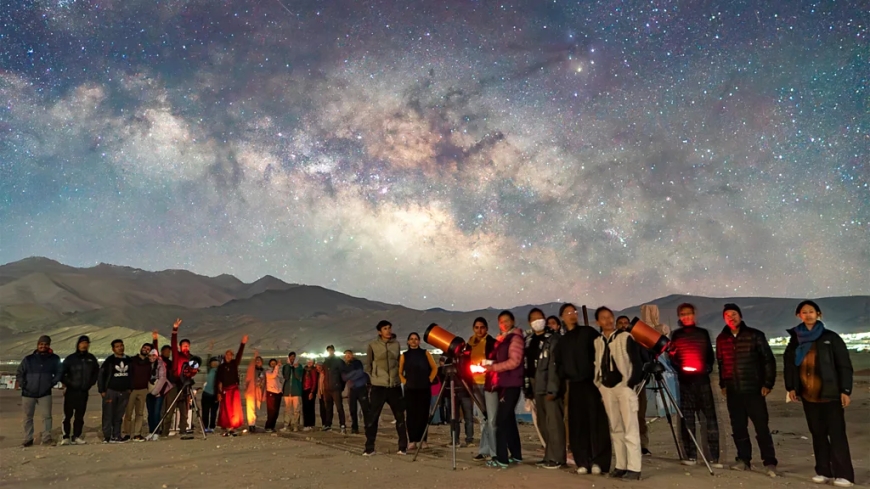
What sets a visit to Hanle apart is the seamless blend of frontier science and traditional village life. Travellers stay in family-run homestays, eat simple Ladakhi meals, and sip butter tea in mountain kitchens, then step out into the cold night for guided sky sessions in open courtyards. Local hosts and trained guides trace constellations with laser pointers, set up telescopes, and explain the kind of research happening just a short drive away on the mountain.
The community has also embraced organised events. The first official star party for experienced amateur astronomers was held over four nights in October 2023, drawing roughly thirty enthusiasts who travelled with their own telescopes and cameras to photograph faint celestial objects that simply cannot be captured from light-polluted cities. An annual Ladakh astronomy festival has since added to the village's growing reputation among night-sky lovers across India and beyond.
Importantly, the model here is community-led. Several families have been trained as "astronomy ambassadors," equipped with telescopes and the knowledge to share the sky with guests. This turns the night itself into a sustainable livelihood, giving residents a direct stake in keeping it dark.
-
Protecting the Darkness: A Community Effort
Promoting Hanle is only half the challenge. Protecting what makes it special is the other, and it requires genuine discipline.
The Dark Sky Reserve operates under a light-management plan that places real limits on outdoor lighting. Residents and businesses are encouraged to use warm, low-intensity indoor lights and shielded fixtures that point downward rather than spilling glare into the sky. Drivers are asked to avoid using high beams near sensitive observation zones, and new infrastructure is screened for its potential impact on the night environment, an unusual level of scrutiny for any development project.
These measures may sound modest, but together they preserve something irreplaceable. A single bright, unshielded streetlight can degrade the view for kilometres, and once a dark site is lost it is almost impossible to recover. By weaving light discipline into daily village life, the Hanle community is protecting both world-class scientific research and a tourism economy that depends entirely on the stars staying visible.
-
Planning Your Visit to Hanle
A trip to Hanle is a genuine expedition, and a little preparation goes a long way.
Getting there and permits. Hanle lies in a sensitive border region, so Indian visitors typically need an Inner Line Permit and foreign nationals require the relevant protected-area clearance. These are usually arranged in Leh before setting out. The drive from Leh is long and remote, crossing high passes and open desert.
Altitude and acclimatisation. At around 4,500 metres, altitude sickness is a real risk. Spend a few days acclimatising in Leh or along the route before heading to Hanle, stay hydrated, and ascend gradually.
What to expect on the ground. Facilities are basic and that is part of the experience. Mobile coverage is limited and largely confined to one network, electricity is mostly solar-powered, and internet, where it exists, is slow satellite-based access in some homestays. There is no petrol pump in the village, so travellers refuel at points such as Karu or Nyoma along the way.
When to go and what to pack. Clear, cold seasons offer the best stargazing, but nights are bitterly cold throughout the year, so warm layers, a good jacket, gloves, and a hat are essential even in summer. A red-light torch helps preserve your night vision, and a tripod transforms a basic camera into a tool for astrophotography.
Etiquette. Respect the light rules, keep beams low, and follow the guidance of local hosts. Visiting the observatory itself is restricted to designated areas, so coordinate with the staff and never wander into off-limits zones.
-
Conclusion: A Window Worth Keeping Open
Hanle is more than a destination. It is a reminder of what we lose when we light up every corner of the world, and what we can protect when we choose to act. Here, in a cold desert village near the roof of the world, the absence of light has become its greatest asset, sustaining serious astronomy and offering travellers a glimpse of a sky their ancestors knew but most of us have never truly seen.
As cities everywhere grow brighter, places like Hanle grow rarer. India's first Dark Sky Reserve stands as both a scientific outpost and a quiet act of conservation, proof that darkness, properly cared for, can be a window to the entire universe. If you ever stand beneath those stars and watch your own shadow stretch across the ground by starlight alone, you will understand exactly why this last dark place is worth keeping dark.
What's Your Reaction?
 Like
0
Like
0
 Dislike
0
Dislike
0
 Love
0
Love
0
 Funny
0
Funny
0
 Wow
0
Wow
0
 Sad
0
Sad
0
 Angry
0
Angry
0

A spirit that pursues sunsets and tales. Entrepreneur at heart, globe-trotter by soul. Founder of an art-worshiping jewelry brand that embodies emotion & individuality — where each piece is a tale of culture, craft, and character. From trails up mountains to gem markets, I'm inspired by all journeys — transforming wanderlust into enduring design. Establishing a brand built on authenticity, refinement & purpose — one work at a time.











Comments (0)