

Which Desert Is Known as the Cold Desert? | Ladakh & Spiti Guide
Discover which desert is known as the Cold Desert of India. Explore Ladakh & Spiti Valley, climate, wildlife, best time to visit, and travel tips.
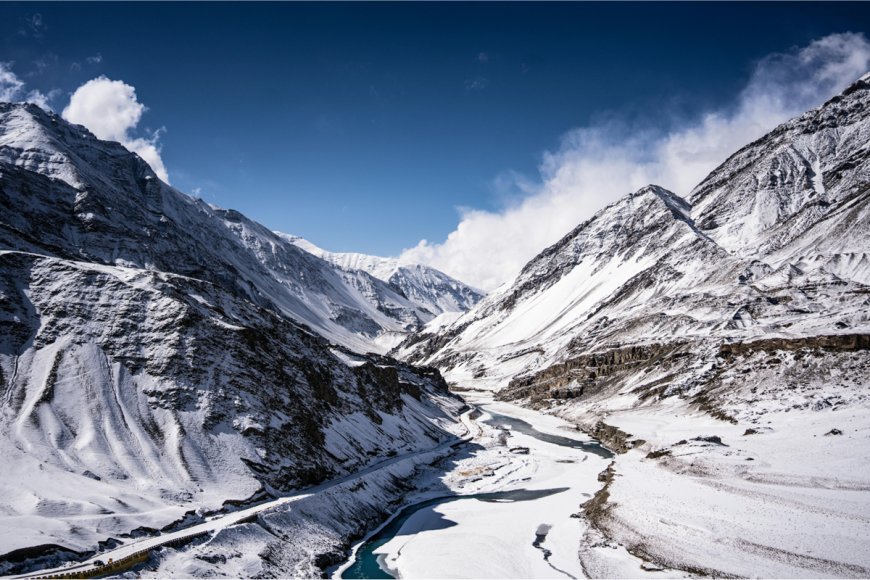
Table of Contents
- Introduction: The Mystery of the Cold Desert
- What Is a Cold Desert?
- The Great Himalayan Cold Desert – An Overview
- Geography and Climate Features
- Ladakh: The Heart of India’s Cold Desert
- Spiti Valley: The Desert That Touches the Sky
- The Trans-Himalayan Region and Its Unique Ecosystem
- Flora and Fauna of the Cold Desert
- The People and Culture of the Cold Desert
- Tourism in the Cold Desert: A Journey of a Lifetime
- Best Time to Visit the Cold Desert
- How to Reach the Himalayan Cold Desert
- Adventure Tourism and Activities
- Cold Desert National Park, Ladakh
- Preservation and Environmental Challenges
- The Global Perspective: Other Cold Deserts in the World
- Interesting Facts about Cold Deserts
- Conclusion
-
Introduction: The Mystery of the Cold Desert
When we hear the word desert, most of us picture endless sandy dunes, scorching sunlight, and dry winds. But imagine a desert where snow sparkles under the sun, icy winds blow across barren mountains, and rivers freeze during winter. Welcome to India’s Cold Desert, tucked away in the higher Himalayas.
This is not your typical desert; it is a stunning blend of extremes — where the oxygen is thin, the air is frosty, and the landscape looks painted by nature’s most minimalist artist. Known locally for its raw beauty and spiritual stillness, this desert lies far from the familiar heat of Rajasthan. Here, the mountains are rugged, the sky intensely blue, and monasteries cling to cliffs as if defying gravity.
So, which desert is known as the “Cold Desert”? Let’s travel to the highlands of Ladakh and Spiti Valley, two jewels of the Trans-Himalayan region, to discover the answer.
-
What Is a Cold Desert?
A cold desert is a region that experiences extremely low temperatures for most of the year while receiving minimal rainfall or snow. Unlike tropical deserts such as the Thar, a cold desert remains arid due to very low atmospheric moisture but feels cold because of its high altitude and northerly latitude.
Key features of a cold desert:
-
Low precipitation (less than 25 cm annually).
-
Harsh winters with sub-zero temperatures.
-
Sparse vegetation and dry soil.
-
Thin air and low oxygen levels due to altitude.
Cold deserts exist in various corners of the world, such as the Gobi Desert in Mongolia, the Taklamakan in China, and parts of Antarctica. However, in India, one of the most famous cold deserts lies in the Himalayan region, mainly covering Ladakh, Spiti, and some parts of northern Himachal Pradesh.
-
-
The Great Himalayan Cold Desert – An Overview
The Himalayan Cold Desert, often referred to as the Trans-Himalayan Cold Desert, is a high-altitude arid zone located mainly in northern India, extending across Ladakh (Jammu & Kashmir) and Spiti and Lahaul (Himachal Pradesh).
It’s called a cold desert because, despite being dry, it experiences snowfall instead of rain, extremely low temperatures, and has minimal vegetation. The average elevation varies between 3,000 to 5,000 meters, and temperatures can plunge below -30°C in winter.
-
Geography and Climate Features
The terrain is an interplay of rocky mountains, dry valleys, glacial streams, and salt plains. Since the region lies beyond the rain shadow of the Great Himalayas, it receives less than 10 cm of rain annually.
Climatic characteristics:
-
Summer temperatures: 5°C to 20°C.
-
Winter temperatures: -30°C or lower.
-
Air pressure: Extremely low, causing breathlessness.
-
Precipitation: Mostly in the form of snow.
This unique geography has earned it the name “Cold Desert of India”, distinguishing it from the hot Thar Desert located thousands of kilometers south.
-
-
Ladakh: The Heart of India’s Cold Desert
When people talk about the Cold Desert, the first region that comes to mind is Ladakh — the land of high passes. Once part of Jammu and Kashmir, Ladakh became a separate Union Territory in 2019. It lies tucked between the Karakoram Range in the north and the Himalayas in the south.
Highlights of Ladakh’s Cold Desert:
-
Leh and Kargil are its main districts.
-
The Indus River flows through this barren landscape.
-
World’s highest motorable passes: Khardung La and Chang La.
-
Iconic lakes like Pangong Tso, Tso Moriri, and Tso Kar.
Despite its dryness, the desert glows with color — the sapphire blue lakes, ochre mountains, and white snowcaps create a surreal painting. The monasteries of Hemis, Thiksey, and Diskit add to Ladakh’s spiritual charm.
-
-
Spiti Valley: The Desert That Touches the Sky
South of Ladakh lies another cold desert — Spiti Valley in Himachal Pradesh. The word Spiti literally means “The Middle Land,” as it lies between Tibet and India.
Spiti mirrors Ladakh’s geography but with its own serene rhythm. It houses beautiful villages like Kaza, Kibber, and Langza, each offering glimpses into traditional Himalayan life.
Highlights of Spiti’s Cold Desert:
-
Home to some of the world’s highest villages (Komic and Kibber).
-
Houses the Key Monastery, perched dramatically on a hill.
-
A hub for trekking, biking, and cultural exploration.
-
Summer months (June–September) are the best time to visit.
Spiti and Ladakh together are called the twin cold deserts of India, each offering adventure, spirituality, and scenic solitude.
-
-
The Trans-Himalayan Region and Its Unique Ecosystem
The Trans-Himalayan ecosystem is unlike any other in India. Limited rainfall and high altitude mean only specialized plant and animal life can survive here. The environment is fragile — one small disturbance can take decades to heal.
Natural elements defining the Cold Desert ecosystem:
-
Sandy valleys shaped by glacial rivers.
-
Sparse vegetation such as seabuckthorn, juniper, and wild rose.
-
Snow-leopard habitat zones in the higher ranges.
-
Nomadic herding by local families.
The Indus, Zanskar, and Spiti Rivers are lifelines, carving deep valleys and nurturing limited green patches.
-
-
Flora and Fauna of the Cold Desert
Despite harsh conditions, the cold desert supports remarkable biodiversity. Plants grow close to the ground to avoid wind damage, while animals have thick fur and remarkable endurance.
Flora
-
Seabuckthorn – Used for juices and jams.
-
Caragana and Juniper – Provide fuel and shelter.
-
Poplar and Willow – Found near village water bodies.
Fauna
-
Snow Leopard, the elusive big cat.
-
Tibetan Wild Ass (Kiang) and Blue Sheep (Bharal).
-
Himalayan Ibex and Marmots.
-
Lammergeiers and Griffon Vultures – soaring high above the ranges.
The Cold Desert National Park in Ladakh is one of the most important conservation zones for these species.
-
-
The People and Culture of the Cold Desert
Life here is incredibly challenging but deeply spiritual. The local people are mostly of Tibeto-Mongoloid origin, following Buddhism and living in tight-knit communities.
Villages are built with stone and mud houses to withstand intense cold. Festivals like Losar (Tibetan New Year) and Hemis Festival bring color and cheer to the barren winters.
Cultural highlights:
-
Monastic traditions and chanting rituals.
-
Handcrafted woolens, thangkas, and prayer flags.
-
Nomadic tribes like the Changpas, who rear yaks and goats.
Their resilience and simple joy are testaments to the human spirit thriving in adversity.
-
-
Tourism in the Cold Desert: A Journey of a Lifetime
Tourism in the cold desert has grown rapidly in the last decade. Travelers come for spiritual retreats, motorbike adventures, Himalayan treks, and the sheer beauty of untouched landscapes.
Must-visit attractions:
-
Nubra Valley – Sand dunes with double-humped camels.
-
Pangong Lake – Changes color through the day.
-
Spiti’s Dhankar and Tabo Monasteries – Thousand-year-old Buddhist marvels.
-
Hemis National Park – Snow leopard trails.
Responsible tourism is essential here due to the fragile environment.
-
-
Best Time to Visit the Cold Desert
The ideal time to explore is between May and September, when mountain passes remain open. Winter is breathtaking but often inaccessible due to snow.
Season-wise guide:
-
May–June: Blooming valleys and moderate weather.
-
July–September: Best for photography and trekking.
-
October–April: Harsh winter; suitable only for hardcore adventurers.
During summer, you can access both Ladakh and Spiti via motorable routes, making it a perfect time for overland expeditions.
-
-
How to Reach the Himalayan Cold Desert
Ladakh:
-
By Air: Flights to Leh from Delhi, Srinagar, and Chandigarh.
-
By Road: Via Manali-Leh Highway or Srinagar-Leh Highway (open June–October).
Spiti Valley:
-
By Road: Accessible through Manali–Rohtang Pass–Kaza or Shimla–Kinnaur–Kaza.
-
No functional airport; nearest one is Bhuntar near Kullu.
Keep in mind, adequate acclimatization is vital due to high altitude and reduced oxygen levels.
-
-
Adventure Tourism and Activities
The cold desert offers unparalleled adventure activities for thrill seekers and nature enthusiasts alike.
Popular experiences:
-
High-altitude trekking (Markha Valley, Pin-Parvati Pass).
-
Biking expeditions to Nubra and Spiti.
-
River rafting on the Zanskar River.
-
Wildlife photography, especially snow leopards and Himalayan ibex.
-
Camping near lakes like Pangong and Tso Moriri.
These adventures offer a perfect mix of adrenaline and serenity against one of the most spectacular backdrops on Earth.
-
-
Cold Desert National Park, Ladakh
Located in Ladakh, this park spreads across Hemis, Zanskar, and Changthang regions, covering an area of about 4,000 sq. km. Established to protect snow leopards and Himalayan biodiversity, it represents India’s most pristine cold desert ecosystem.
Key species found:
-
Snow leopard
-
Tibetan wolf
-
Eurasian brown bear
-
Himalayan blue sheep
Visitors can trek across marked trails or take guided wildlife tours accompanied by local naturalists. The best time to visit is June to September.
-
-
Preservation and Environmental Challenges
The cold desert faces growing threats from over-tourism, plastic pollution, glacier melt, and infrastructure development. Due to limited vegetation, soil erosion and water scarcity are common.
Key challenges:
-
Melting glaciers due to global warming.
-
Waste management under increasing tourist footfall.
-
Pressure on fragile ecosystems.
Efforts by the Ladakh Autonomous Hill Development Council (LAHDC) and local NGOs emphasize eco-tourism, waste reduction, and carbon neutrality. Travelers are encouraged to leave no trace and respect local culture.
-
-
The Global Perspective: Other Cold Deserts in the World
India’s cold desert isn’t an isolated geographic phenomenon. Similar landscapes exist across the world.
-
Gobi Desert (Mongolia and China) – A vast, cold, rocky desert known for harsh winters.
-
Taklamakan Desert (China) – Surrounded by snowy peaks yet remains arid.
-
Antarctica – The largest and coldest desert on Earth.
-
Patagonian Desert (South America) – Wind-swept plains with freezing temperatures.
These regions share similar climatic challenges and ecological importance.
-
-
Interesting Facts about Cold Deserts
-
The average rainfall in Ladakh is less than 100 mm per year.
-
Changtang region of Ladakh lies at over 4,500 meters, among the highest inhabited plateaus.
-
The double-humped Bactrian camel in Nubra Valley came along ancient Silk Route caravans.
-
Seabuckthorn juice, a local delicacy, is rich in Vitamin C.
-
The night sky in the cold desert is one of the clearest in the world for stargazing.
-
-
Conclusion
The Cold Desert of India isn’t just a geographical wonder — it’s a living example of endurance, beauty, and balance. Between sun-scorched days and frozen nights, life thrives here in quiet determination.
From the prayer flags fluttering in thin air to the soundless spread of snow on sandy valleys, every moment in this desert feels sacred. Visiting Ladakh or Spiti isn’t merely a trip — it’s an awakening. You witness nature stripped to its essence and the human spirit finding warmth in simplicity.
So, the next time someone asks which desert is known as the Cold Desert? — you’ll know it’s the Himalayan Cold Desert, stretching through Ladakh and Spiti, where adventure, culture, and silence coexist under an endless blue sky.
What's Your Reaction?
 Like
0
Like
0
 Dislike
0
Dislike
0
 Love
0
Love
0
 Funny
0
Funny
0
 Wow
0
Wow
0
 Sad
0
Sad
0
 Angry
0
Angry
0

I'm currently based in dehradun. A language enthusiast and creative storyteller, I’m currently pursuing my bachelor’s in Spanish (Hons.) & Research from doon university . I work with Social IT as a content writer & blog writer, where I create SEO-optimized, research-based content that aligns with brand strategy and audience needs. I also lead Nutan Silver Art as the Director & Designer, overseeing jewelry design, creative direction, and product development. My work blends creativity, strategic thinking, and effective communication. Outside work,A fond traveller at heart, travelling inspires my ideas, helping me connect cultures, stories, and design. https://www.doonuniversity.ac.in/ https://socialastro.com/ thenutanartjewelry














Comments (0)