

Lençóis Maranhenses: The Brazilian Desert Where Sand Meets a Thousand Lagoons
Discover Lençóis Maranhenses, Brazil's surreal "desert" of white dunes and turquoise lagoons. Learn the best time to visit, how to get there, top things to do, and why UNESCO crowned it a World Heritage Site.
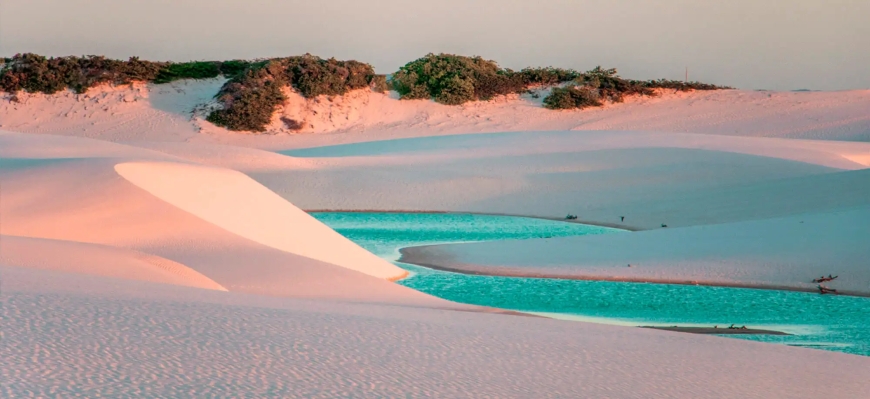
Table of Contents
- Where Is Lençóis Maranhenses?
- The Desert That Isn't: How a Thousand Lagoons Are Born
- What's in a Name? The Story Behind "Lençóis"
- Best Time to Visit Lençóis Maranhenses
- How to Get There and Where to Stay
- Top Things to Do in Lençóis Maranhenses
- Wildlife and the Riddle of the Fish
- A UNESCO World Heritage Site at Last
- Practical Tips for a Smooth Trip
- Frequently Asked Questions
- Final Thoughts
-
Where Is Lençóis Maranhenses?
Lençóis Maranhenses National Park sits along the Atlantic coast of Maranhão, a state tucked into Brazil's northeast where the country's drier interior gives way to lush, watery coastline. The park spreads across roughly 155,000 hectares (about 600 square miles), making it the largest field of coastal dunes in South America.
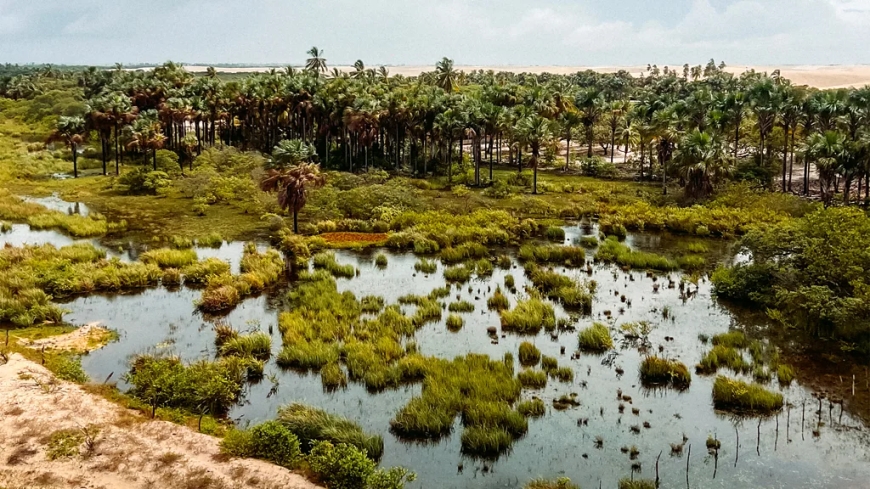
Geographically, it occupies a fascinating crossroads. The region marks a transition zone where three of Brazil's great ecosystems brush up against one another: the steamy Amazon rainforest to the west, the savanna-like Cerrado to the south, and the semi-arid Caatinga of the interior. That blend of influences helps explain why the area feels so unlike anywhere else, and why so few places on the planet can claim a comparable mix of sand, water, and tropical air.
The nearest major city and your gateway to the park is São Luís, Maranhão's coastal capital, which lies around 250 kilometers away. From there, the adventure into the dunes begins.
-
The Desert That Isn't: How a Thousand Lagoons Are Born
Here's the twist that surprises almost every first-time visitor: Lençóis Maranhenses is not a true desert at all. Real deserts are defined by scarce rainfall, but this region is soaked by a generous rainy season every year. So how does a place with abundant rain end up looking like the Sahara's prettier cousin?
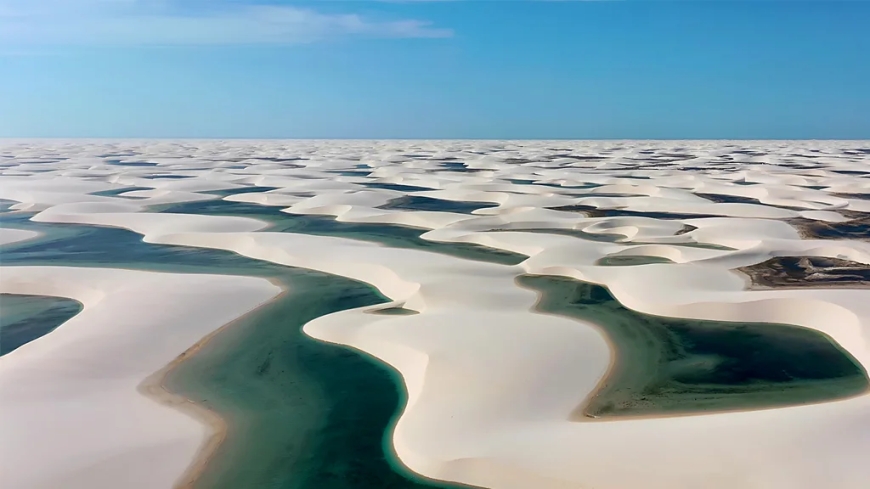
The answer lies in a near-perfect geological accident. Strong ocean winds push fine white sand inland from the coast, sculpting it into vast chains of crescent-shaped dunes known as barchans. These dunes are constantly on the move, marching steadily inland and growing taller as they climb over older dunes beneath them. Some can rise dozens of meters high, and the dune chains can extend for tens of kilometers.
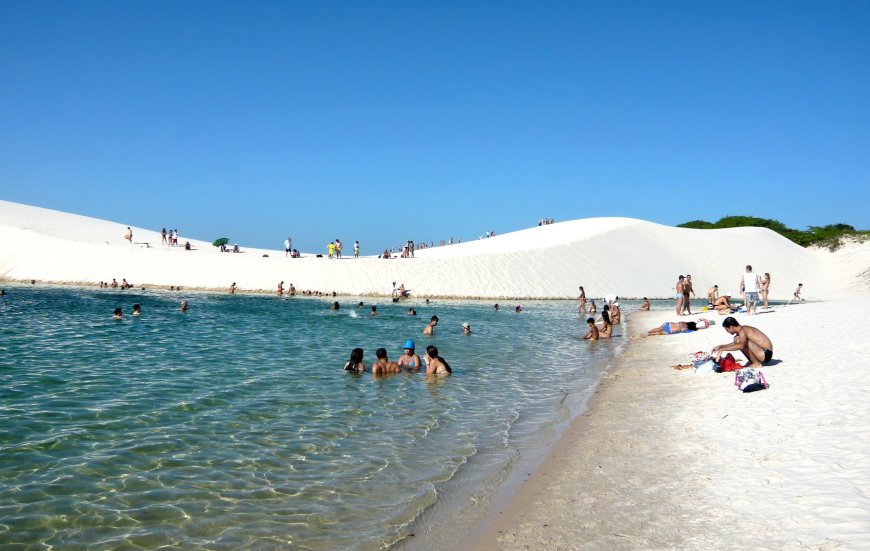
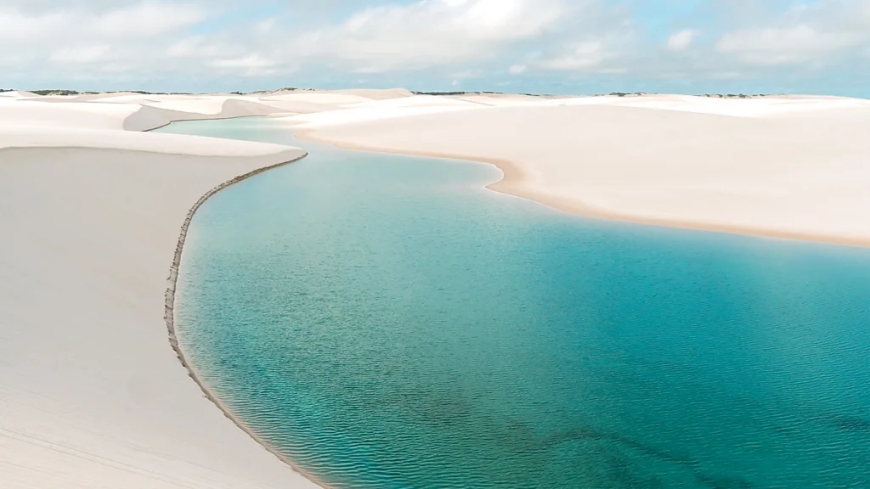
Now add water. Between roughly January and June, heavy rains pour down on the dune field. Ordinarily, water would simply vanish into porous sand. But just below the surface lies a layer of impermeable rock that refuses to let the water drain away. Trapped between the dunes and unable to seep deeper, the rainwater collects in the valleys and forms thousands of separate lagoons. The result is a shimmering patchwork of turquoise, sapphire, and emerald pools cradled by brilliant white sand.
Then comes the second act of this seasonal drama. As the dry months arrive, the sun and wind slowly drink the lagoons dry. By the end of the dry season many pools shrink, fade, or disappear entirely, only to be reborn when the next rains come. No two visits are ever quite the same, because the landscape is endlessly rewriting itself.
-
What's in a Name? The Story Behind "Lençóis"
The park's evocative name is wonderfully literal. In Portuguese, "lençóis" means bedsheets, and "Maranhenses" simply means from Maranhão. Seen from above, the smooth, rippling dunes really do resemble crisp white linens billowing across a giant bed, draped over the land in soft folds.
It's the kind of name that sticks because it's accurate. Stand at the crest of a dune at sunrise, watch the low light ripple across the sand, and the comparison writes itself. The landscape looks freshly made, as though someone smoothed out the sheets just before you arrived.
-
Best Time to Visit Lençóis Maranhenses
Timing is everything here, and getting it right is the single most important decision you'll make.
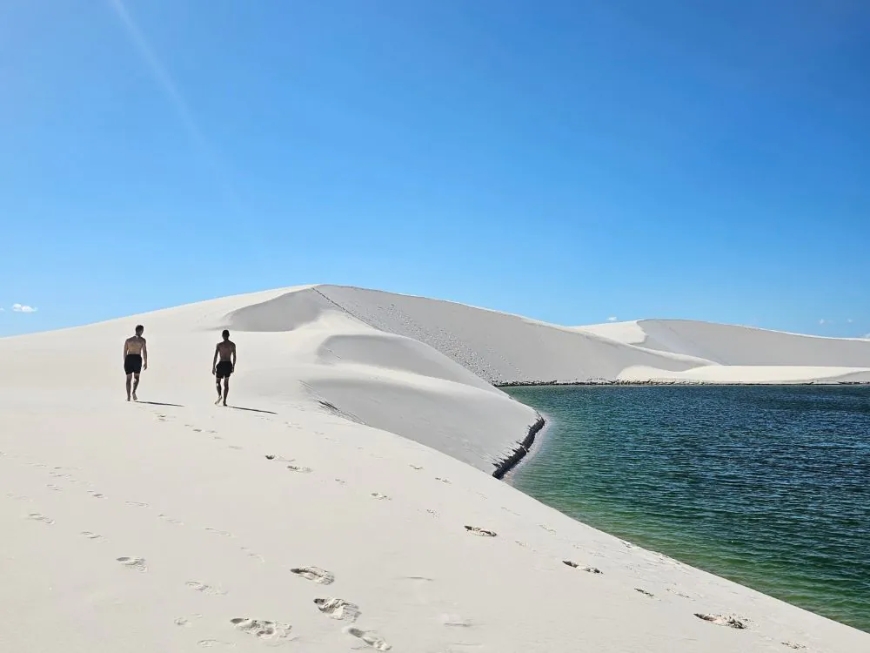
The sweet spot runs from roughly May to September, after the rainy season has filled the lagoons and before the dry months drain them. During this window the pools are at their deepest and clearest, the skies are stable, and the water is warm enough for a refreshing swim.
For the postcard experience, June and July are widely considered the peak. The lagoons are brimming, the colors are vivid, and the contrast between white sand and turquoise water is at its most dramatic. The trade-off is crowds: July coincides with Brazilian school holidays, so the gateway towns get busy and accommodation books out fast. The good news is that the park itself is so enormous that even in high season the dunes rarely feel crowded once you're inside them.
If you visit later, around August into early September, plan carefully. Lagoons in some areas dry out earlier than others, so your choice of base town matters more during this period. Visiting between roughly October and December usually means dry or low lagoons, so unless you're chasing a different kind of stark, sandy beauty, it's best to plan around the wetter, fuller months.
-
How to Get There and Where to Stay
Reaching Lençóis Maranhenses takes a little effort, which is part of the reason it still feels relatively unspoiled.
Getting there: Fly into São Luís International Airport (SLZ), which connects to major Brazilian hubs like São Paulo, Brasília, Recife, and Fortaleza. From São Luís, it's roughly a four to five hour drive or shuttle ride to the main gateway town. Many travelers arrange transfers through their accommodation or a local agency, which simplifies the logistics considerably.
Once you arrive, you'll choose a base. Each option offers a different balance of comfort and access:
- Barreirinhas is the most popular and best-equipped hub. It has the widest range of hotels, guesthouses, and restaurants, making it ideal for families and first-timers. From here you can easily reach the famous Lagoa Azul (Blue Lagoon) and Lagoa Bonita circuits, though these are also the busiest spots in the park.
- Santo Amaro sits closer to the heart of the dune field, which means shorter transfers to some of the most scenic and less-visited lagoons. Infrastructure is more limited, so booking well ahead is essential, but for many travelers the trade-off is worth it.
- Atins is a small, laid-back fishing village favored by independent travelers and those seeking a remote, rustic vibe. Amenities are sparser here, but the sense of being off the beaten path is hard to beat.
A common strategy is to base yourself in Barreirinhas for easy logistics, then take day excursions deeper into the park. Adventurous travelers often split their time between two towns to experience both the accessible highlights and the wilder corners.
-
Top Things to Do in Lençóis Maranhenses
The park rewards curiosity. Here are the experiences worth building your trip around.
Swim in the Lagoons
This is the headline act. Floating in a warm, freshwater lagoon surrounded by nothing but towering white dunes is a sensory experience that's almost impossible to describe. The water in many pools is so clear it looks artificial. Lagoa Azul and Lagoa Bonita are the classic, easy-to-reach favorites near Barreirinhas, while quieter circuits accessed from Santo Amaro reward those willing to travel a bit further.
Take a 4x4 Dune Expedition
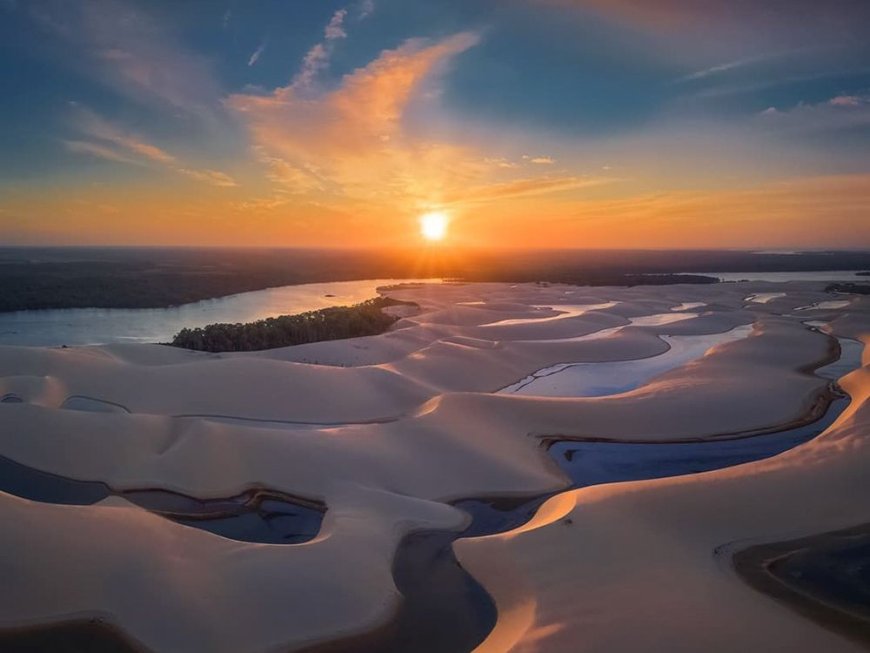
Most lagoon visits begin with a thrilling ride in a 4x4 vehicle, bouncing across rugged sandy tracks to reach the dunes. These tours typically depart twice a day, and the afternoon run is timed so you can watch the sun melt into the horizon from a dune crest, turning the whole landscape molten gold.
Cruise the Preguiças River
If you have a spare day, a speedboat journey along the Preguiças River is a wonderful change of pace. The route passes mangroves, sleepy riverside villages, and even a colony of monkeys, eventually reaching small communities and lighthouses near the coast. It's a gentle, scenic complement to the high-energy dune adventures.
Watch the Stars
With minimal light pollution for miles, the park offers some of the clearest, most star-drenched skies in Brazil. On a moonless night the Milky Way arches overhead in startling detail. Lying back on a still-warm dune and watching the cosmos unfold is one of the most underrated experiences in the entire park.
Catch the Sunrise and Sunset
The dunes are at their most photogenic when the sun sits low. Sunrise brings cool blue tones and long shadows, while sunset bathes everything in amber and rose. Serious photographers should make at least one early start; the empty, silent dunes at dawn feel like another planet.
-
Wildlife and the Riddle of the Fish
Life in Lençóis Maranhenses has adapted to an extreme, ever-shifting environment. Hardy plants cling to the dune edges, and birds, reptiles, and small mammals make their homes around the wetter margins of the park.
But the most charming mystery is the fish. Each year, as the lagoons fill, many of them teem with fish, leaving visitors baffled about how aquatic creatures appear in pools that vanished entirely months earlier. The leading explanation is that fish eggs and small species survive in the damp mud and connected waterways during the dry season, then spring to life when the rains return. Birds traveling between water sources are thought to help carry eggs from lagoon to lagoon as well. It's nature improvising brilliantly within a landscape that resets itself every single year.
-
A UNESCO World Heritage Site at Last
After decades as one of Brazil's most beloved natural treasures, Lençóis Maranhenses received global recognition on July 26, 2024, when UNESCO inscribed it on the World Heritage List during the committee's session in New Delhi, India. The park was created back in 1981, and the path to inscription took years of preparation and evaluation before the honor finally arrived.
UNESCO recognized the site for its exceptional natural beauty and the rare geological processes that create its seasonal lagoon system. The designation places Lençóis Maranhenses among Brazil's most important natural sites and is expected to raise its international profile considerably. With that spotlight comes responsibility: protecting the fragile dunes and pristine waters becomes even more crucial as more travelers arrive to see them.
-
Practical Tips for a Smooth Trip
A few pointers will help you make the most of this remarkable place:
- Book accommodation early, especially for June and July. The best guesthouses in Santo Amaro and Atins fill up quickly.
- Pack light but smart: sunscreen, a hat, sunglasses, water shoes for hot sand, and a quick-dry towel are all worth their space.
- Bring cash. Smaller towns and remote spots may not reliably accept cards.
- Hire local guides. They know which lagoons are full, how to navigate the shifting terrain safely, and where the crowds aren't.
- Tread lightly. Stick to designated areas, take all litter with you, and respect the ecosystem so this wonder stays wondrous for future visitors.
- Build in buffer days. Travel in this region can be unpredictable, and the relaxed pace is part of the charm.
-
Frequently Asked Questions
Is Lençóis Maranhenses really a desert?
Not technically. It looks like a desert because of its vast white dunes, but it receives heavy seasonal rainfall, which is precisely what creates the lagoons. Geologists describe it as a coastal dune field rather than a true desert.
How many lagoons are there?
Thousands, though the exact number changes constantly. The lagoons form, grow, shrink, and disappear with the seasons, so the count is never fixed.
Can you swim in the lagoons?
Yes, and you absolutely should. During the peak season the lagoons are clean, clear, freshwater pools that are perfect for swimming.
How many days do you need?
Two to three full days is enough to see the highlights from one base. If you want to explore multiple areas or include a river cruise, four to five days gives you a more complete and relaxed experience.
Is it safe to visit?
Yes. With a reputable guide and basic travel precautions, the park is a safe and welcoming destination for solo travelers, couples, and families alike.
-
Final Thoughts
Lençóis Maranhenses is the rare place that genuinely lives up to the photographs, and then quietly exceeds them. There's something humbling about standing in a landscape that erases and rebuilds itself every year, indifferent to your itinerary, generous with its beauty. The white sheets of sand, the impossible blue of the water, the silence broken only by wind, all of it adds up to a memory that lingers long after the sand has shaken loose from your shoes.
If a journey to Brazil is anywhere on your horizon, carve out time for this corner of Maranhão while it remains relatively untouched. Time your visit for the full-lagoon months, choose your base wisely, and let the desert that defies its own definition do the rest. Some destinations you simply read about. This one you have to feel beneath your feet.
What's Your Reaction?
 Like
0
Like
0
 Dislike
0
Dislike
0
 Love
0
Love
0
 Funny
0
Funny
0
 Wow
0
Wow
0
 Sad
0
Sad
0
 Angry
0
Angry
0

A spirit that pursues sunsets and tales. Entrepreneur at heart, globe-trotter by soul. Founder of an art-worshiping jewelry brand that embodies emotion & individuality — where each piece is a tale of culture, craft, and character. From trails up mountains to gem markets, I'm inspired by all journeys — transforming wanderlust into enduring design. Establishing a brand built on authenticity, refinement & purpose — one work at a time.










Comments (0)