

Leh Protests: Deadly Clashes Over Statehood and Sixth Schedule
Leh protests over statehood and the Sixth Schedule turn violent, sparking deadly clashes. Explore the causes, demands, and impact on Ladakh’s future as locals push for constitutional safeguards, identity, and rights in India’s newest Union Territory.


Leh, a region admired for its stillness and cultural warmth, witnessed an unexpected wave of violence on September 24 when protests demanding statehood and constitutional safeguards for Ladakh turned bloody. What started as a movement led by hunger strikers ended in clashes between protesters and security forces, leaving four people dead and more than 80 injured. The unrest has once again put the spotlight on Ladakh’s long-standing demand for autonomy and protection of local rights.
What Sparked the Protests in Leh?
1. The protests were triggered when two activists, who had been on a 35-day hunger strike, were admitted to the hospital on the evening of September 23 due to serious health problems.
2. Their fast was part of a larger campaign demanding statehood and the inclusion of Ladakh under the Sixth Schedule of the Constitution.
3. In response, the youth wing of the Apex Body, Leh, one of the main groups leading the movement, called for a shutdown in Leh the next day. By morning, hundreds of people had taken to the streets.
From Peaceful Gathering to Violent Clashes
1. A Peaceful Start: The protest began as a peaceful demonstration, with people gathering to show support for Ladakh’s demands.
2. Violence Breaks Out: Tensions rose when groups of youth started throwing stones at the Bharatiya Janata Party (BJP) office and the Hill Council building.
3. BJP Office and Vehicles Attacked: The situation escalated further as the BJP office was vandalized and later set on fire. Several vehicles, including police vans, were also torched
4. Security Forces Respond: To control the crowd, security forces first used teargas and batons. When the clashes became more violent, they resorted to firing live rounds.
5. Casualties Reported: The violent turn of events left at least four people dead and over 80 injured. Both protesters and security personnel were among those hurt.
Curfew and Restrictions Imposed
1. The administration imposed a strict curfew across Leh and banned public gatherings of more than five people under Section 163 of the Bharatiya Nyaya Sanhita (BNSS). Security was tightened in sensitive areas to prevent further escalation.
2. Officials accused some protest leaders of making provocative speeches that encouraged violence and added fuel to the already tense situation.
3. Meanwhile, activist Sonam Wangchuk appealed to the youth to maintain peace and announced the end of his hunger strike, urging supporters not to let anger overshadow their cause.
What Are the Protesters Demanding?
The protest in Leh is not just about one incident. It reflects years of frustration among the people of Ladakh, particularly the youth. The main demands of the protesters are:
1. Full statehood for Ladakh, so that the region can govern itself instead of being run as a Union Territory.
2. Extension of the Sixth Schedule of the Constitution, which would give Ladakh constitutional protection for land, culture, and resources.
3. Separate Lok Sabha seats for Leh and Kargil to ensure equal political representation.
4. Job reservations and employment safeguards for locals to protect their rights in the government and private sectors.
These demands highlight the deep sense of neglect that people in Ladakh feel. Many believe that after the region was separated from Jammu and Kashmir in 2019, promises of empowerment and development have remained unfulfilled.
Why Are Ladakh’s Youth Angry?
1. Young people have been at the center of the protests. They are worried about losing control over their land and jobs to outsiders.
2. They also feel that the government has not done enough to protect their cultural identity or to provide opportunities for education and employment.
3. The hunger strike and subsequent protests reflect the growing frustration among the younger generation, who no longer want to wait for promises that never seem to materialize.
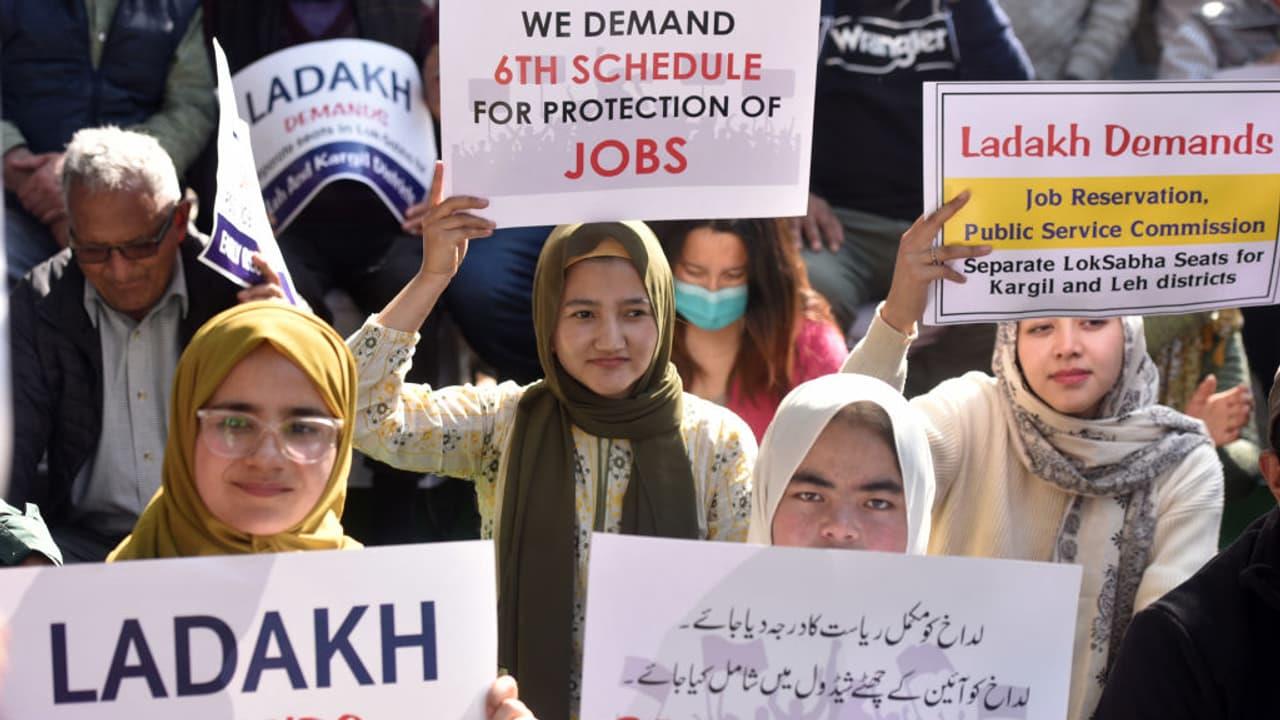 Image Credits: menafn.com
Political Fallout of the Violence
1. The violence in Leh has created a serious challenge for the administration. The torching of the BJP office has sent strong political shockwaves, raising questions about the party’s standing in the region.
2. The government now faces pressure to address the demands of the people while also ensuring peace and security.
3. At the same time, the role of protest leaders is being closely watched. While some are accused of provoking violence, others like Sonam Wangchuk are trying to steer the movement towards peaceful negotiation.
The Road Ahead for Ladakh
Beyond a Single Protest: The events in Leh are not limited to one day of violence. They reflect a deeper debate about Ladakh’s identity, governance, and political future.
Balancing Development and Concerns: The central government now faces the challenge of balancing its development agenda with the genuine concerns of Ladakh’s people, especially over rights and representation.
A Region at Crossroads: Without a clear dialogue on statehood, constitutional safeguards, and job security, dissatisfaction may continue. Ladakh, often seen as a land of peace and beauty, stands at a crucial turning point.
Key Facts at a Glance
-
Date of protest: September 24, 2025
-
Trigger: Hospitalization of two hunger strikers after a 35-day fast
-
Casualties: At least four people killed, 80+ injured
-
Damage: The BJP office and vehicles, including police vans, were set on fire
-
Restrictions: Curfew and ban on gatherings under Section 163 BNSS
-
Main Demands: Statehood, Sixth Schedule protection, separate Lok Sabha seats, job reservations
Frequently Asked Questions (FAQs)
1. What triggered the Leh protests on September 24?
The protests began after two hunger strikers, who were demanding statehood and Sixth Schedule protections, were hospitalized on September 23, leading to a call for a shutdown.
2. Who organized the protests?
The youth wing of the Apex Body, Leh, organized the shutdown and led the demonstrations.
3. What is the Leh Apex Body (LAB)?
LAB is a group representing local political, social, and religious organizations working to secure constitutional and political safeguards for Ladakh.
4. Why are people demanding statehood for Ladakh?
Statehood would allow Ladakh to govern itself, make laws for its people, and protect local rights more effectively than its current Union Territory status.
5. What is the Sixth Schedule of the Constitution?
The Sixth Schedule provides special protections for tribal areas, including control over land, culture, and resources. Protesters want these safeguards extended to Ladakh.
6. How many people were killed in the protests?
At least four people lost their lives during the clashes on September 24.
7. How many were injured in the Leh violence?
More than 80 people, including protesters and security personnel, were injured.
8. What action did the administration take?
A curfew was imposed, gatherings were banned under Section 163 BNSS, and security forces were deployed across Leh.
9. What role did Sonam Wangchuk play in the protests?
Sonam Wangchuk led the hunger strike but later appealed for peace and ended his fast after the violence broke out.
10. What could be the long-term impact of these protests?
The unrest has increased pressure on the government to hold talks on statehood, safeguards under the Sixth Schedule, and job security for locals, shaping the future of Ladakh’s politics.
What's Your Reaction?
 Like
1
Like
1
 Dislike
0
Dislike
0
 Love
0
Love
0
 Funny
0
Funny
0
 Wow
0
Wow
0
 Sad
0
Sad
0
 Angry
0
Angry
0













Comments (0)