









































































Save a Life, Earn ₹25,000: UP’s Raah-Veer Scheme Turns Ordinary Citizens into Real Heroes
Uttar Pradesh’s Raah-Veer Scheme rewards citizens with ₹25,000 for helping road accident victims reach hospitals within the golden hour, inspiring ordinary people to act fast and save lives.


Every minute counts after a serious road crash. The Uttar Pradesh government is now putting money and respect behind that truth. The Uttar Pradesh government has introduced the Raah-Veer Scheme, a Good Samaritan program that rewards citizens who take road accident victims to hospitals within the vital first hour, often called the "golden hour".
The message is simple: act fast, save a life, and get recognized for it.
What Is the Raah-Veer Scheme?
The Raah-Veer (Good Samaritan) Scheme is a program that looks to recognize and incentivize those who intervene in road emergencies. Essentially, a person who provides to a road accident victim the necessary medical help within the golden hour can get a cash prize of ₹25,000 and a Raah-Veer certificate from the government.
This move is inspired by the Central Government’s Good Samaritan guidelines under the Motor Vehicles Act, designed to reduce hesitation among bystanders and promote quick rescue action.
5 Key Highlights of this Scheme You Should Know
-
Reward Price:
A cash reward of ₹25000 will be given to the person who takes responsibility and shows courage to shift the accident victim to the nearest hospital on time.
-
Official Certificate:
The Raah-Veer certificate is a courageous deed token given to the rescuers.
-
Eligibility:
The requirement is that the victims should be those who are seriously injured, e.g., brain or spinal cord injury, hospitalization for at least three days, or death during treatment.
-
Equal Distribution:
If there is more than one person who is leading the way, the 25,000 rupees prize will be equally divided among them. -
One Reward Rule:
A rescuer who helps multiple victims in a single accident is only awarded one 25,000 rupee reward.
Who Can Become a Raah-Veer?
Anyone, a passerby, a driver, a shopkeeper, or a student, can be a Raah-Veer. The only condition is that they must have genuinely helped a crash victim reach medical care quickly.
Police officers, hospital staff, or government officials doing their regular duties are not eligible for this reward.
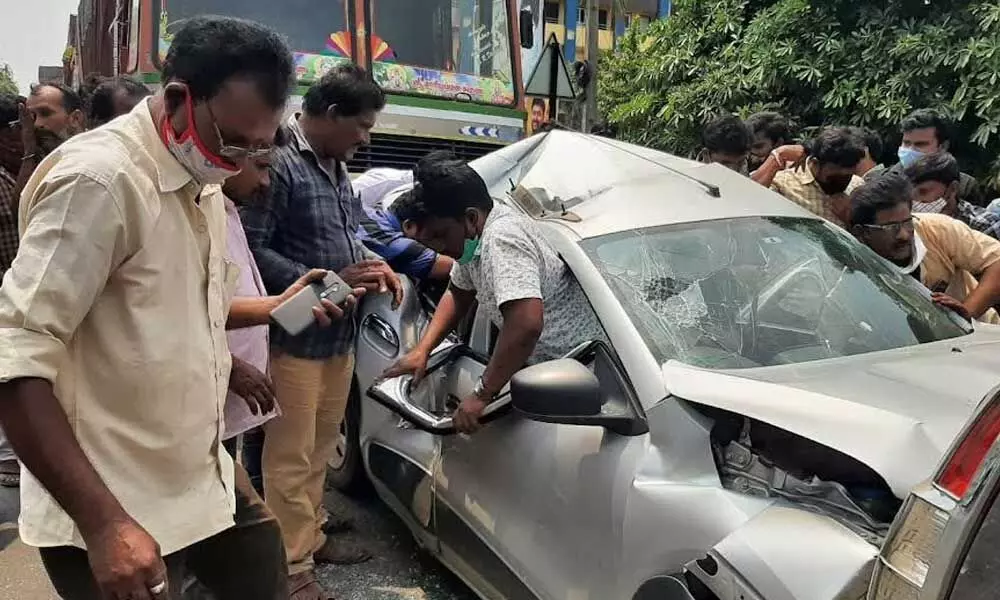 Image Credit: The Hans India
Verification and Approval Process
To keep the scheme transparent, every case goes through a proper verification system:
-
Police and hospital staff record the rescuer’s details and verify the accident.
-
Then the information is sent to a district-level committee, which is headed by the District Magistrate.
-
The committee reviews the report and approves the ₹25,000 reward and certificate.
This process ensures genuine helpers are recognized quickly while preventing false claims.
Why Uttar Pradesh Launched This Initiative
Uttar Pradesh has one of the highest road accident fatality rates in India. In 2023, over 22,500 people died in road crashes in the state, about 14% of the country’s total deaths from accidents.
Many of these deaths could have been prevented if victims had received medical help within the first hour. That’s why the Raah-Veer Scheme focuses on rewarding immediate action.
It’s not only about money, it’s also about saving the lives of common people and changing public behavior. The government wants people to act fast without worrying about police questioning or legal trouble.
How to Claim the ₹25,000 Reward
If you’ve helped an accident victim, here’s how to claim your Raah-Veer reward:
-
Take the victim to the nearest hospital immediately after the accident.
-
Inform hospital authorities and the police about the incident.
-
Provide your details, name, contact, and a brief account of what happened.
-
The case will be reviewed by the district committee for final approval.
-
Once verified, you will receive your ₹25,000 reward and certificate from the government.
 Image Credit: Cartoq
Why the Scheme Matters
The Raah-Veer Scheme changes the way people think about road accidents. Many bystanders hesitate to help because they fear getting involved in legal or police issues. This initiative removes that fear and adds motivation.
With this program, the government sends a clear message that saving lives comes first, and helpers will be appreciated, not questioned.
It also supports India’s larger goal of reducing road fatalities by 50% by 2030.
5 Proven Tips for Safe Rescue
-
Don’t move the injured person unless it’s necessary.
-
Call emergency services or the police immediately.
-
If moving the victim, support their neck and back carefully.
-
Stay calm and ensure the person reaches a hospital as fast as possible.
-
Keep all documents or hospital slips for verification later.
Frequently Asked Questions (FAQs)
1. What is the Raah-Veer Scheme about?
It’s a UP government program that rewards citizens who take road accident victims to hospitals within the first hour after the crash.
2. How much is the reward under this scheme?
The reward is ₹25,000 per incident, along with a certificate of recognition.
3. Who can apply for the reward?
Any ordinary citizen who helps a road accident victim reach a hospital in time can apply.
4. Is the scheme only for severe accidents?
Yes. It applies to cases with major injuries, hospitalization over three days, or deaths during treatment.
5. What happens if more than one person helps the same victim?
The ₹25,000 reward will be shared equally among all rescuers who qualify.
6. Can a rescuer get multiple rewards?
No. Even if you help more than one victim in the same accident, you’ll receive only one reward of ₹25,000.
7. Who verifies the rescue case?
The police and hospital staff verify the helper’s role, and the district committee approves the payment.
8. What documents are needed for verification?
You’ll need basic ID proof and hospital or police records showing your involvement.
9. Will I get in legal trouble for helping?
No. The Good Samaritan law protects you from any legal or police harassment for helping accident victims.
10. Why is this scheme important?
It encourages people to act fast during road accidents, reduces deaths, and builds a culture of compassion and responsibility
What's Your Reaction?
 Like
0
Like
0
 Dislike
0
Dislike
0
 Love
0
Love
0
 Funny
0
Funny
0
 Angry
0
Angry
0
 Sad
0
Sad
0
 Wow
0
Wow
0