

Miracle in the Sky: Afghan Boy Survives Flight Inside Plane Wheels!
An Afghan boy miraculously survives 94 minutes trapped inside a Kam Air plane’s landing gear on the Kabul-Delhi flight. Discover how he cheated death and the shocking story that stunned aviation experts worldwide.
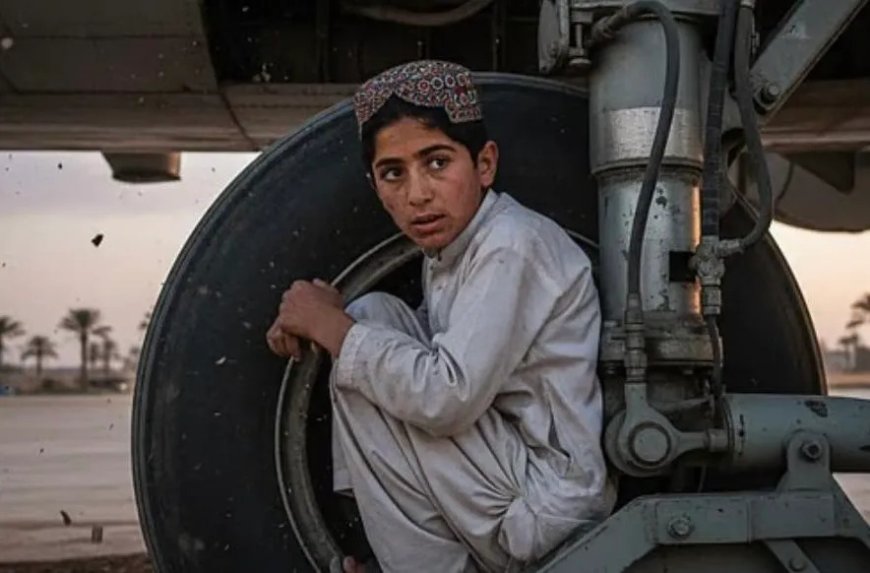
A 13-year-old boy from Kunduz, Afghanistan, pulled off something that has left aviation experts stunned. He survived a flight from Kabul to Delhi by hiding inside the landing gear compartment of a Kam Air Airbus A340. For 94 minutes, he remained in an unpressurized, freezing-cold space where most people wouldn’t last long. When the plane touched down at Delhi’s Indira Gandhi International Airport, the boy was discovered wandering near the aircraft, alive and in surprisingly good condition. What unfolded next raised serious questions about airport security and gave the world one of the rarest survival stories in aviation history.
The Boy’s Risky Journey
The story began at Kabul’s Hamid Karzai International Airport. Somehow, the boy managed to slip into a restricted area that should have been heavily guarded. He mingled among passengers without being noticed and climbed into the rear landing gear of the Airbus A340 operating Kam Air flight RQ-4401.
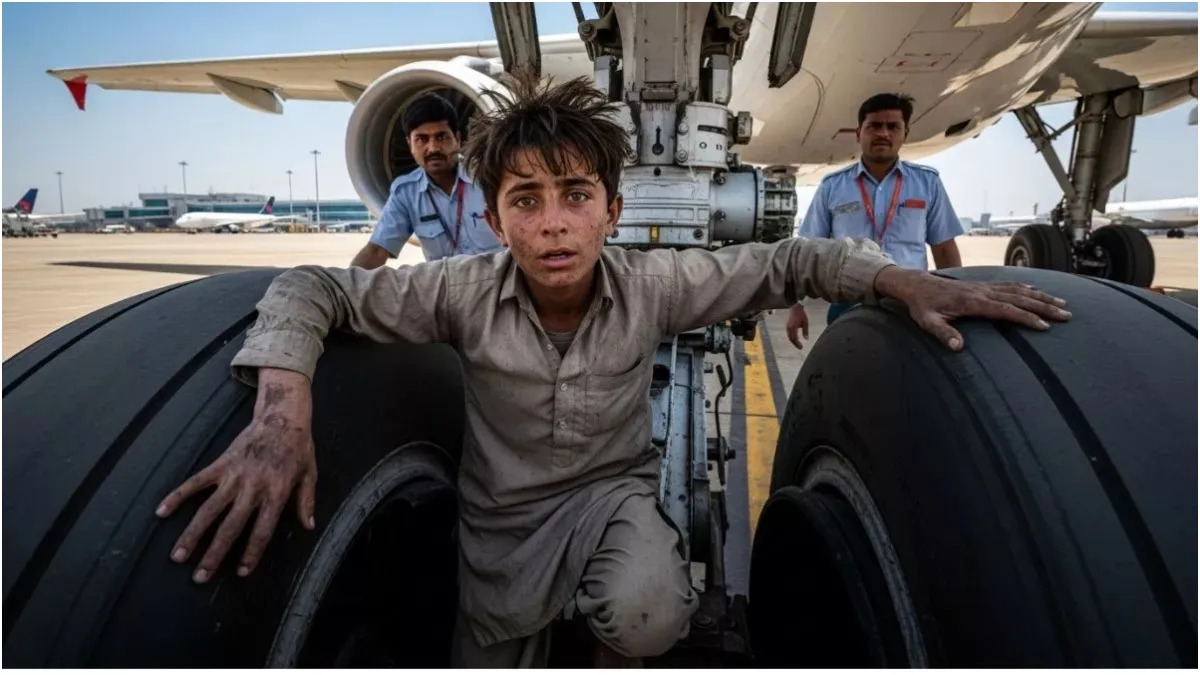
Image Credits: The Daily Jagran
He later told investigators that his actions were not about escaping Afghanistan or seeking asylum. He was simply curious and thought the aircraft might be heading toward Iran. What he didn’t know was that he had chosen one of the most dangerous places on a plane to hide.
The Flight to Delhi
The aircraft departed Kabul and spent about 94 minutes in the air before landing in Delhi around 11:10 am. During that time, the boy was inside a space that offered no heating, no oxygen supply, and temperatures that could drop far below freezing. Aviation professionals say survival under such conditions is close to impossible. Most stowaways who attempt this never make it through the flight.
That’s why his case is being called a miracle. The fact that he was able to stand and walk near the aircraft after landing shocked even seasoned security officers.
Discovery at IGI Airport
Soon after the plane landed, airport staff and Kam Air officials noticed the boy moving close to the aircraft. They alerted the Central Industrial Security Force (CISF) and other agencies stationed at Terminal 3. He was immediately taken into custody for questioning.
During the interrogation, he explained that he wasn’t trying to run away from home. He was motivated purely by curiosity, a decision that nearly cost him his life. Officials found he had carried a small red audio speaker during the journey. Security teams then carried out a detailed inspection of the aircraft to confirm that nothing had been tampered with. Only after a thorough anti-sabotage check was the plane cleared as safe.
The Dangers of Wheel-Well Stowaways
For those unfamiliar, the wheel-well or landing gear compartment is designed only for machinery. It’s unpressurized, unheated, and exposed to the outside air during flight. At cruising altitude, oxygen levels drop dramatically, and temperatures can fall to life-threatening lows.
The human body cannot tolerate such conditions for long. Many stowaways suffer hypothermia, frostbite, or lose consciousness within minutes. Records show that very few people have ever survived long-distance journeys this way. That’s why aviation experts quickly labeled this boy’s survival as nothing short of extraordinary.
Handling and Repatriation
Authorities in Delhi had to decide carefully how to handle the situation. Since the boy was only 13 and had no travel documents or visa, charging him with a crime was never an option. Instead, priority was given to ensuring his safety and returning him to his home country.
Later that same day, he was sent back to Kabul on Kam Air flight RQ-4402. His physical condition was stable, though medical experts pointed out that such attempts usually end in tragedy. The outcome in this case was unusually positive, but it highlighted risks no child should ever be exposed to.
Security Questions Raised
The incident raised sharp questions about how a minor managed to slip past several layers of security at Kabul airport. Hamid Karzai International Airport has been under heavy scrutiny due to the volatile situation in Afghanistan, and this event added another layer of concern.
If a 13-year-old could breach perimeter controls and access the landing gear, it suggests serious flaws in monitoring and passenger safety systems. Indian and Afghan authorities both recognized the lapse and responded with heightened vigilance. Anti-sabotage checks were conducted thoroughly, and extra measures are now being considered for future flights, particularly those coming from conflict zones.
Why This Case Matters Globally
Stowaway cases are rare, and survivors are even rarer. According to aviation records, the wheel well is one of the most hostile environments a human can enter. Temperatures can fall below minus 50 degrees Celsius at higher altitudes, and the lack of oxygen makes it nearly impossible to breathe.
Despite these dangers, desperate or curious individuals continue to attempt such journeys. Some do it in hopes of escaping poverty, conflict, or political instability. Others, like this young boy, are driven by curiosity and a lack of understanding of the risks. Whatever the motivation, the outcomes are often tragic. This survival story, while extraordinary, should not overshadow the grim reality that most similar attempts end in death.
Lessons From the Incident
There are several takeaways from this event. First, airport security in unstable regions like Afghanistan needs urgent reinforcement. A lapse of this scale could have led to a much bigger crisis if the situation had involved sabotage instead of a child’s reckless curiosity.
Second, it highlights the dangers faced by stowaways, particularly minors. The idea of hiding inside a landing gear may sound adventurous to a child, but in reality, it’s almost a death sentence. Education and awareness in conflict areas are critical to prevent such life-threatening decisions.
Third, this incident underlines how aviation authorities must be prepared to handle unexpected scenarios with sensitivity. The boy was treated with care and deported safely, which was the right approach in this case.
Rare but Not Unheard Of
Over the years, there have been a few other reported cases of people attempting to travel as wheel-well stowaways. Most have not survived. Those who did are often left with severe physical damage due to frostbite, lack of oxygen, or injuries sustained during takeoff and landing.
This Afghan boy’s survival adds to a very short list of people who managed to beat the odds. His story will likely be studied by aviation experts for years, both as an example of human resilience and as a warning about the risks of inadequate airport security.
Conclusion
What happened on Kam Air flight RQ-4401 is being described as both miraculous and alarming. A 13-year-old boy survived a journey that should have been fatal, sparking admiration for his resilience but also concern about how he managed to get there in the first place.
The incident has put Kabul airport security under the spotlight and served as a reminder that stowaway attempts are rarely stories of survival. For every case like this one, many others end in tragedy.
This boy’s survival is a rare outcome, but it shouldn’t distract from the real issues it highlights: the urgent need for stronger airport security, the dangers faced by vulnerable children, and the responsibility of authorities worldwide to prevent such risky incidents from happening again.
What's Your Reaction?
 Like
0
Like
0
 Dislike
0
Dislike
0
 Love
0
Love
0
 Funny
0
Funny
0
 Wow
0
Wow
0
 Sad
0
Sad
0
 Angry
0
Angry
0

Ryan Rehan
I’m Ryan Rehan, Business Development Executive and a passionate blogger dedicated to sharing insights, tips, and experiences that inspire and inform. Through my blogs, I explore topics that matter, spark curiosity, and encourage thoughtful conversations. Whether I’m breaking down complex ideas, offering practical advice, or simply sharing stories, my goal is to create content that adds real value to a growing community of curious minds and passionate readers.
















Comments (0)