

Trump’s 50% Tariff on Indian Goods: What It Means for Jobs, Trade, and the Economy
Donald Trump’s 50% tariff on Indian exports to the U.S. is set to shake up trade. Here’s how it affects jobs, industries, and India’s economy.
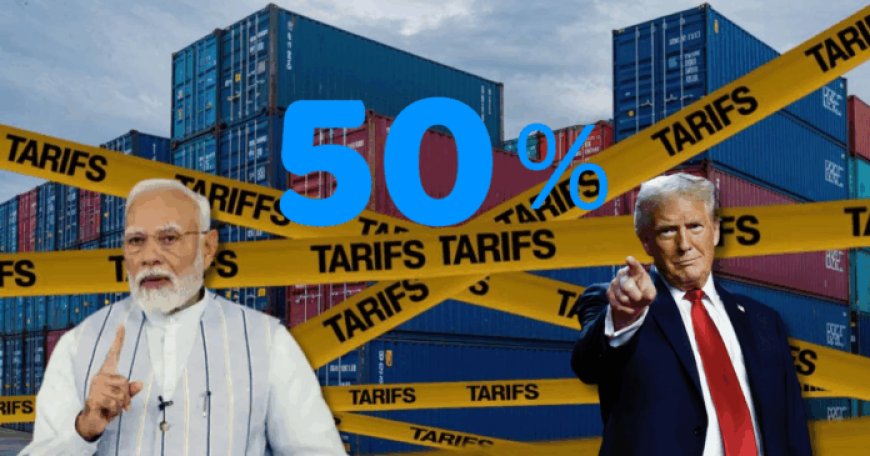
On August 6, 2025, U.S. President Donald Trump signed an executive order that’s making headlines across global markets. The order imposes an additional 25% tariff on Indian exports, raising the total tariff rate on key Indian goods to 50%. This move serves as a warning shot aimed at India for continuing its energy trade with Russia despite Western sanctions.
This blog breaks down what the tariff actually covers, why Trump did it, and what it means for India’s economy, exporters, workers, and everyday citizens.
What’s Behind the 50% Tariff?
Let’s start with the core issue. Trump’s decision is tied directly to India’s ongoing import of Russian oil. According to Trump, by buying oil from Russia, India is “funding the Russian war machine” and undermining the U.S.-led sanctions against Moscow for its war in Ukraine.
While Trump described India as a "friend," he said friends don’t fund enemies. The result? A dramatic escalation of trade tensions. This 50% tariff is not symbolic; rather, it’s a powerful economic lever, and it comes into effect on August 27, 2025.
What Exports Are Affected?
Here’s what’s included in the new tariff bracket:
1. Textiles and garments
2. Gems and jewelry
3. Footwear
4. Auto parts
These are not niche categories. They’re major export industries for India and employ millions of workers, especially in small and medium-sized enterprises (SMEs).
What’s Excluded For Now
1. Electronics (including iPhones manufactured in India)
2. Pharmaceuticals
3. Steel and aluminum (already under earlier tariffs)
4. Items tied to U.S. national security interests
The Economic Hit: How Big Is the Damage?
India exports around $87 billion worth of goods annually to the U.S., making it the country’s largest export market. A tariff of this magnitude won’t collapse the economy, but it’s far from harmless.
A recent study by the PHD Chamber of Commerce & Industry estimated that a 25% tariff would shave off 0.19% from India’s GDP. With tariffs now doubled to 50%, that impact could rise to 40-50 basis points (0.4%–0.5%) in FY26, according to several economists.
That may sound small in percentage terms, but it translates into billions in lost income, missed opportunities, and potential job losses.
Why These Sectors Are Especially Vulnerable
The worst-hit sectors are also labor-intensive and job-heavy. These include:
The Bigger Political Picture
This is a clear breakdown in U.S.-India diplomatic ties.
Trade negotiations between the two countries have stalled. Indian officials are calling the tariff move “unfair, unjustified, and unreasonable.” Their argument? India’s decision to buy oil from Russia was not only legal under international law but also initially encouraged by the West to help stabilize global oil prices after the Ukraine war erupted.
These new tariffs suggest that the friendly phase between the US and India might be coming to an end for now.
What It Means for the Common Indian Citizen
You might be wondering: Will this affect me directly?
Short answer: not immediately. But the ripple effects are real.
1. Jobs and Wages: The impact will be sharpest in export-dependent industries. Workers in garments, textiles, jewelry, and fisheries, many of them in rural or semi-urban areas, could see: Job losses, Stagnant or falling wages, Contract work drying up, Factory closures, or reduced shifts.
Small exporters who relied heavily on U.S. orders will suffer the most, with many unable to compete with lower-cost countries.
2. Prices and Cost of Living: There won’t be a direct spike in prices for the average consumer since the tariff targets exports to the U.S., not imports to India. However, if economic growth slows, job creation and wage hikes across sectors could stall, and local economies tied to export clusters may see slower business activity.
Some high-end goods like jewelry or premium textiles may get cheaper in India due to oversupply, but this won’t affect essential commodities.
3. Currency and Stock Market Effects: A weaker rupee could be another consequence if export earnings fall and foreign investor sentiment dips. That might make imported goods like fuel and electronics costlier over time.
But the Reserve Bank of India and most economists expect this impact to be moderate, not catastrophic. India’s economy is diversified enough to absorb the shock though the pain will be unevenly spread.
Government’s Response: What’s Being Done?
The Indian government has signaled it won’t roll over. A few measures under consideration:
1. Financial support for MSMEs
2. Interest subvention or cheaper working capital loans
3. Faster clearances and waivers on export certification
4. New trade outreach programs to diversify export markets
India is also quietly working on shifting more exports toward the EU, Africa, Southeast Asia, and the Middle East, to reduce its dependence on the U.S. But don’t expect any cash handouts or big subsidies, the government is watching its fiscal math closely.
Could This Be a Turning Point?
For many exporters and policy analysts, this crisis could be the push India needed to modernize and diversify its export strategy.
Some business leaders are calling it a “once-in-a-generation opportunity” to rebuild India’s export ecosystem, make manufacturing more resilient, and become less dependent on any single market.
It won’t be easy. But it could force the kind of structural shifts that benefit the country in the long run - if India plays it right.
Final Word
This goes way beyond just a trade issue. It’s a stress test for India’s export model and diplomatic strategy. While the tariffs will cause short-term pain, they could also force much-needed long-term change if India moves fast, protects its small businesses, and opens up new frontiers for trade.
India has been through worse. But whether it emerges stronger this time depends on the next moves, both in Delhi and in boardrooms across the country.
What's Your Reaction?
 Like
0
Like
0
 Dislike
0
Dislike
0
 Love
0
Love
0
 Funny
0
Funny
0
 Wow
0
Wow
0
 Sad
0
Sad
0
 Angry
0
Angry
0

I’m Ryan Rehan, Business Development Executive and a passionate blogger dedicated to sharing insights, tips, and experiences that inspire and inform. Through my blogs, I explore topics that matter, spark curiosity, and encourage thoughtful conversations. Whether I’m breaking down complex ideas, offering practical advice, or simply sharing stories, my goal is to create content that adds real value to a growing community of curious minds and passionate readers.














Comments (0)