

Why Asia's Cleanest Village Closes Its Doors to Tourists Every Sunday
Mawlynnong, Asia's cleanest village in Meghalaya, now bans day tourists every Sunday. Discover the reasons, history, and travel tips for visiting this Khasi Hills gem.
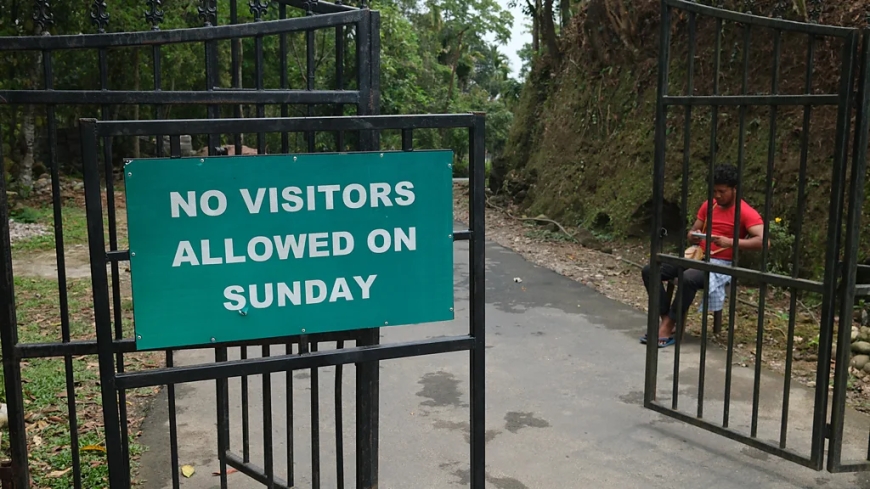
Table of Contents
- Introduction
- Where Is Mawlynnong and Why Is It Famous?
- What Exactly Changed: The Sunday Tourist Ban Explained
- The Real Reasons Behind the Sunday Closure
- The Roots of Mawlynnong's Cleanliness Culture
- How Tourism Numbers Pushed the Village to Its Limit
- What Villagers Are Saying
- Other Villages Following the Same Pattern
- What This Means for Travelers Planning a Visit
- A Larger Lesson in Sustainable Tourism
- Conclusion
- Frequently Asked Questions (FAQs)
-
Introduction
Imagine traveling for hours to reach a village celebrated across the world for its spotless lanes, only to find the gates shut. That is now a real possibility for anyone hoping to visit Mawlynnong, a tiny settlement tucked into the East Khasi Hills of Meghalaya, on a Sunday. Since the start of 2026, this village of roughly a hundred families has done something almost unheard of for a place that depends heavily on tourist footfall: it has voluntarily turned away visitors one full day a week.
The decision has surprised travel writers, delighted sustainable tourism advocates, and inconvenienced more than a few unsuspecting tourists who built their itineraries around a weekend getaway. So why would a village famous for welcoming guests suddenly decide to close its doors? The answer lies in a mix of faith, fatigue, and a fierce desire to protect an identity that took generations to build.
-
Where Is Mawlynnong and Why Is It Famous?
Mawlynnong sits about 90 kilometers from Shillong, the capital of Meghalaya, in the East Khasi Hills district near the border with Bangladesh. It is home to the Khasi community, a matrilineal indigenous group where lineage and property typically pass through the mother's side of the family.
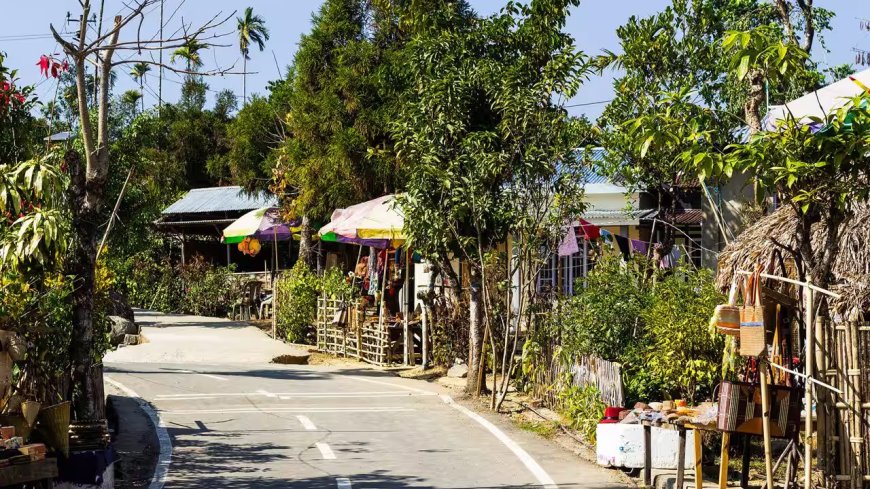
The village shot to international attention in 2003 when Discover India magazine labeled it the cleanest village in Asia. That single line of recognition changed everything. What had been a quiet agricultural community known mainly to locals soon found itself hosting visitors from across India and abroad, all curious to see a place where streets had no litter and bamboo dustbins lined every pathway.
Over the years, the accolades kept stacking up. The BBC filmed segments there. Condé Nast Traveller wrote about it. Discovery Channel India ran a feature. In 2015, India's Prime Minister praised Mawlynnong's cleanliness mission during a national radio address, holding it up as proof that ordinary citizens could transform their surroundings through discipline and community effort. More recently, prominent business figures have referenced the village on social media as a model worth emulating nationwide.
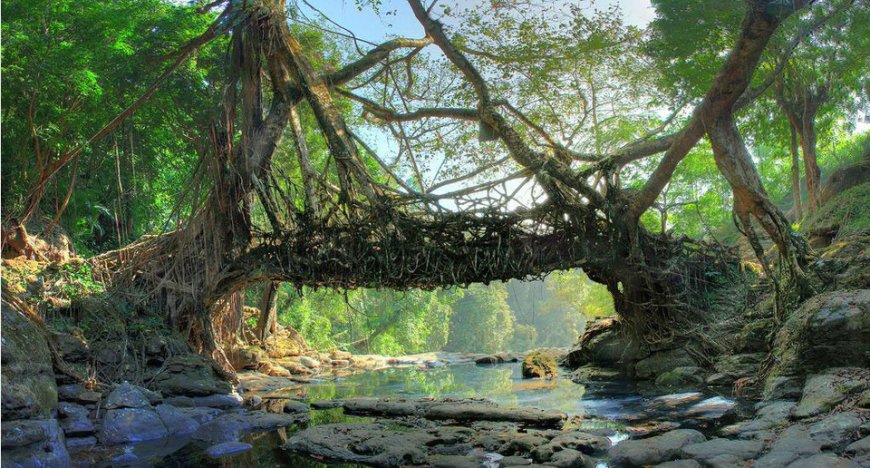
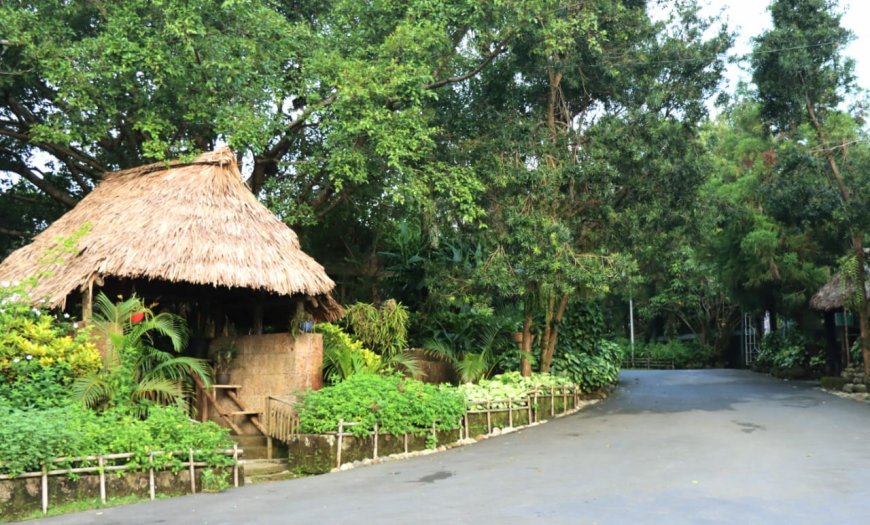
Villagers proudly call their home "God's Own Garden," a phrase displayed on signboards throughout the settlement. The nearby attractions only add to the area's appeal: Riwai village, about a kilometer away, is known for its living root bridge woven from rubber tree roots, while the town of Dawki, roughly 30 kilometers further, draws crowds for the crystal-clear waters of the Umngot River.
-
What Exactly Changed: The Sunday Tourist Ban Explained
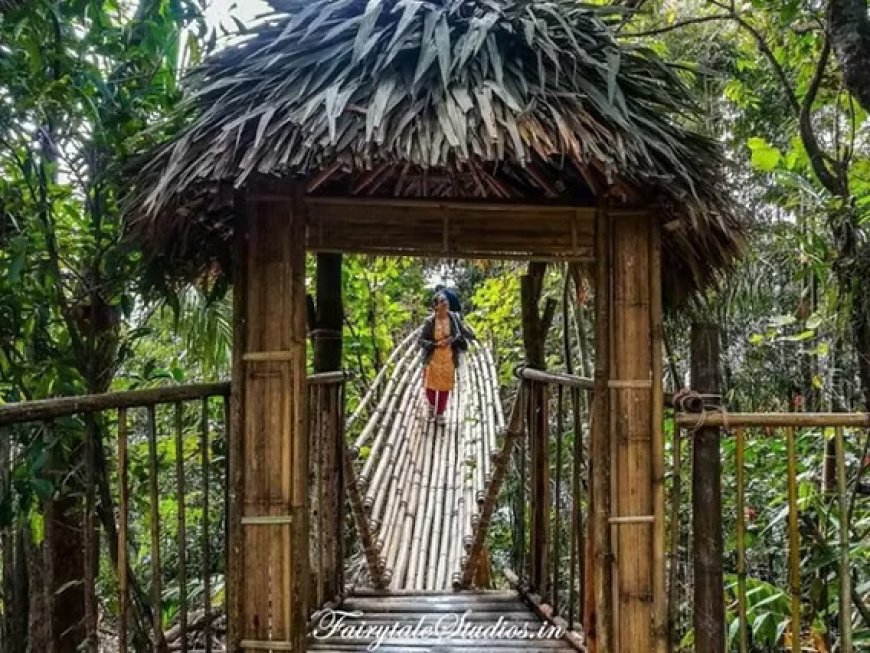
In January 2026, the village's governing body, known locally as the Dorbar, formally announced that Mawlynnong would no longer admit day-trippers on Sundays. The rule applies specifically to one-day visitors arriving by bus, taxi, or private vehicle for a few hours of sightseeing. Shops, cafés, souvenir stalls, and the popular bamboo viewing platform that overlooks the surrounding hills all shut down for the day.
The closure does come with a notable exception. Tourists who have already booked an overnight homestay are permitted to remain through Sunday, since they are considered part of the community's temporary household rather than passing visitors. This distinction matters: the village isn't rejecting tourism altogether, it is specifically targeting the high-volume, low-engagement day-trip model that brings in large crowds for a few hours and leaves little behind except foot traffic and litter.
For travelers planning a Northeast India trip, this means itineraries built around a classic Shillong-to-Dawki loop now need careful timing. Arriving on a Sunday without an overnight booking means being turned back at the entrance, regardless of how far one has traveled.
-
The Real Reasons Behind the Sunday Closure
According to the official statement released by the village Dorbar, three reasons sit at the heart of the decision.
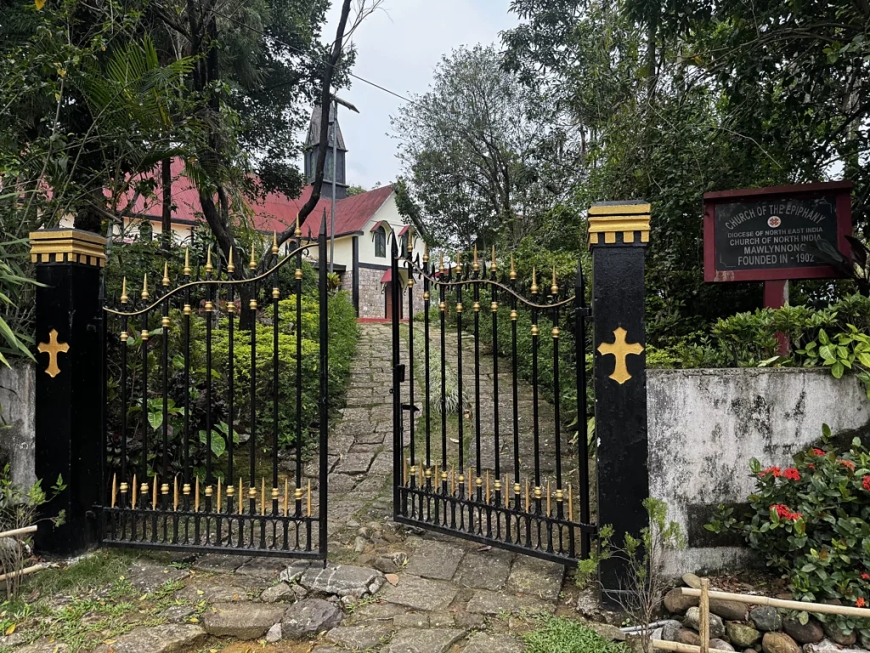
The first and most prominent reason is religious observance. Nearly every resident of Mawlynnong is Christian, and Sundays are traditionally devoted to church services that occupy much of the day. With two large churches in the village holding services throughout the morning and afternoon, residents found it increasingly difficult to balance worship with the demands of hosting hundreds of visitors.
The second reason involves the quality of the visitor experience itself. When shopkeepers, guides, and homestay owners are at church rather than running their businesses, tourists arriving on Sundays often found restaurants closed, stalls unmanned, and services unavailable. Rather than continuing to offer an inconsistent experience, the village decided it was better to be transparent about unavailability than to disappoint guests who had traveled long distances expecting full hospitality.
The third reason is reputation management. The Dorbar's notice specifically mentioned the risk of "giving a bad impression and damaging the village's hard-earned reputation" if visitors kept encountering shuttered shops and frustrated residents. For a community whose entire tourism economy rests on the word "cleanest" and the implied promise of order and discipline, protecting that brand mattered enormously.
-
The Roots of Mawlynnong's Cleanliness Culture
To understand why this village guards its identity so fiercely, it helps to look back more than a century. Local oral history traces the origins of Mawlynnong's hygiene practices to the late 1800s, when Welsh Christian missionaries arrived in the Khasi Hills. At the time, the region is said to have suffered serious disease outbreaks, including instances of plague.
Alongside religious teaching, the missionaries introduced basic hygiene practices: boiling drinking water, washing clothes regularly, and keeping living spaces clean to prevent the spread of illness. Over generations, these practical health measures fused with religious and moral teaching, eventually becoming an inseparable part of community identity. Cleanliness stopped being merely a health precaution and became, for many residents, a form of collective discipline and even spiritual practice.
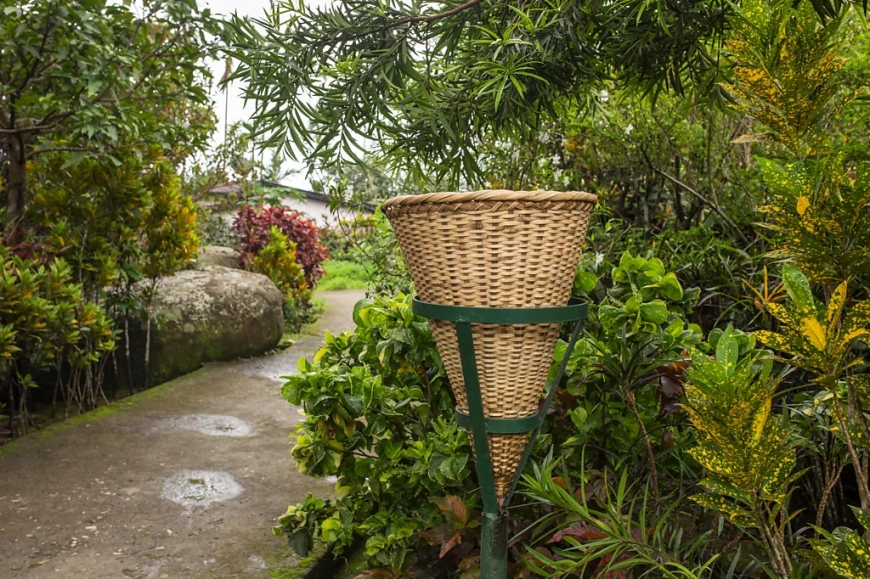
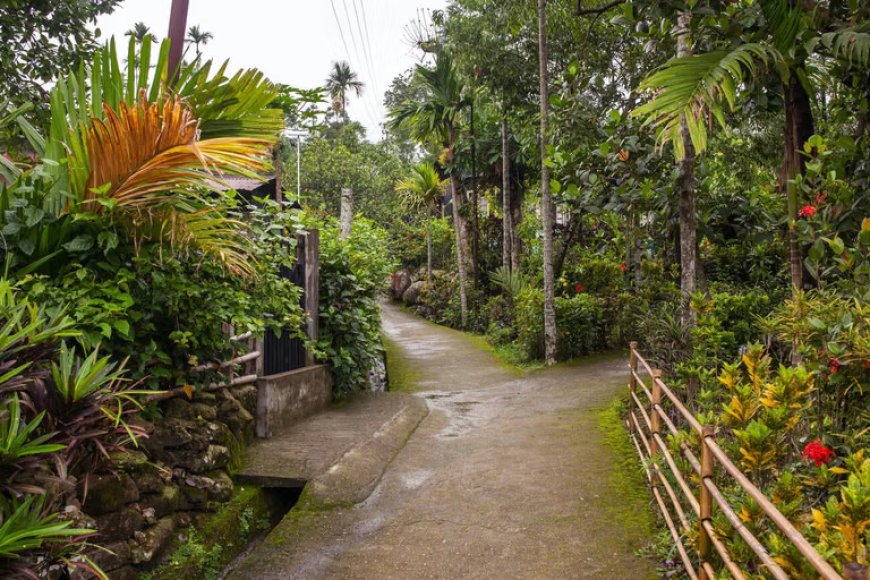
This explains why the village has no municipal sanitation department. Instead, every household is bound by community bylaws to sweep the public paths in front of their homes, deposit waste in bamboo baskets placed throughout the village, and contribute to composting efforts that turn organic waste into manure. Even children participate, learning from an early age that the upkeep of shared spaces is a personal responsibility rather than someone else's job.
-
How Tourism Numbers Pushed the Village to Its Limit
Mawlynnong's population hovers around 900 people across roughly a hundred households. During peak tourist seasons, the village can receive between 800 and 1,500 visitors in a single day, and on some of the busiest weekends, footfall has reportedly touched the 1,000 mark in just one afternoon.
Run those numbers and the strain becomes obvious: a village barely large enough to fill a single neighborhood elsewhere is, on its busiest days, absorbing a tourist population that nearly matches its own resident count. The infrastructure that supports this, around 40 guesthouses and six restaurants, along with roughly 25 villagers employed specifically for cleaning and gardening work, has grown substantially over the past two decades to accommodate demand.
But growth in tourist numbers has not been without friction. Visitors arriving in large groups have sometimes played loud music, disrupted the village's quiet rhythm, and left behind a level of noise and disturbance that clashes with the peaceful image the village has spent decades building. Notably, this strain extends beyond Mawlynnong's boundaries too. Neighboring villages along the access roads, which do not share the same rigorous cleanliness bylaws, have reported plastic bottles and snack wrappers accumulating where tourist vehicles stop before entering Mawlynnong itself.
-
What Villagers Are Saying
Conversations with residents reveal a community that overwhelmingly supports the Sunday closure, even those whose livelihoods depend directly on tourist spending. One woman who charges a small fee for tourists to use a bamboo viewing platform acknowledged the income loss but said the trade-off was worth it, explaining that residents need uninterrupted time for church services and prayer.
A finance secretary on the village committee described the decision as one that was uniformly endorsed by villagers, framing it as an effort to preserve both cultural identity and the discipline that originally made the village stand out. Another resident, who runs a small café, summed up the sentiment simply: six days belong to daily life and livelihood, but one day is set aside entirely for matters of faith.
This consensus is notable because it did not happen overnight. Reports indicate the decision matured over years of internal debate before the Dorbar finally formalized the rule in early 2026.
-
Other Villages Following the Same Pattern
Mawlynnong is not acting in isolation. Several nearby communities in the Khasi Hills had already embraced similar Sunday restrictions before Mawlynnong made its move. Nongjrong village, for instance, closes its popular sunrise viewpoint every Sunday. A well-known viewpoint near Mawlynnong known locally as the Sky View remains shut on the same day. Even in Riwai, home to the famous living root bridge, shops and markets pause operations for the Sabbath.
In this sense, Mawlynnong was arguably a latecomer to a regional pattern rather than a pioneer, one that reflects a broader Khasi Christian community value: the conviction that work and worship occupy separate, non-overlapping spaces.
-
What This Means for Travelers Planning a Visit
For anyone mapping out a trip to Meghalaya, a few practical adjustments are now essential.
Day-trip visitors should plan their Mawlynnong stop for any day between Monday and Saturday, with midweek days like Tuesday through Thursday typically offering the quietest, least crowded experience. Those determined to experience a Sunday in the village should book an overnight homestay for Saturday night, which allows access to a nearly empty village on Sunday morning before the rest of the day's restrictions take effect.
Travelers who specifically want a Sunday itinerary in the region can redirect that day toward nearby alternatives that remain open, such as the Umngot River in Dawki, the waterfalls and viewpoints around Cherrapunji, or simply exploring Shillong city itself. The classic Shillong–Mawlynnong–Riwai–Dawki loop, often completed in a single long day, still works well on any non-Sunday date.
It is also worth noting that mobile network connectivity in the area can be inconsistent, so sharing your itinerary with someone before heading out, and confirming homestay bookings in advance, are sensible precautions regardless of which day you choose to visit.
-
A Larger Lesson in Sustainable Tourism
Mawlynnong's Sunday closure offers a rare example of a tourist destination prioritizing community welfare over short-term revenue, and doing so by choice rather than under external pressure or government mandate. In an era when overtourism has strained destinations from Venice to Bali, often prompting reactive measures like entry fees or visitor caps imposed from above, Mawlynnong's approach stands out for being entirely community-driven and rooted in cultural values rather than purely economic calculation.
The decision also highlights an important distinction in how sustainable tourism can work in small communities: rather than rejecting tourism altogether, the village has simply drawn a boundary around it, preserving one day a week as untouchable while continuing to welcome and benefit from visitors the rest of the time. It is a model that balances economic reality with cultural preservation, suggesting that destinations do not have to choose between growth and identity if they are willing to set firm, transparent limits.
-
Conclusion
Mawlynnong's decision to close its doors every Sunday is less about rejecting tourists and more about reclaiming something the village feared losing: its rhythm, its faith, and the very discipline that made it famous in the first place. What began as missionary-era hygiene practices over a century ago evolved into an internationally recognized identity, and the village is now taking deliberate steps to ensure that identity survives the pressures of its own popularity.
For travelers, the takeaway is simple. Plan around the Sunday closure, respect the reasons behind it, and perhaps appreciate that the very discipline being protected is the same discipline that made Mawlynnong worth visiting at all.
-
Frequently Asked Questions (FAQs)
Q1: Why is Mawlynnong closed to tourists on Sundays?
The village closes to day-trippers on Sundays mainly to allow residents to attend church services, avoid the inconvenience of closed shops affecting visitors, and protect its reputation as Asia's cleanest village.
Q2: When did the Sunday ban start?
The rule went into effect in January 2026, following years of internal community discussion.
Q3: Can tourists visit Mawlynnong at all on Sundays?
Only visitors who have booked an overnight homestay before Sunday are allowed to stay. Day-trip access by bus or taxi is not permitted.
Q4: Why is Mawlynnong called Asia's cleanest village?
Discover India magazine gave it this title in 2003, recognizing its community-run cleanliness system involving bamboo waste baskets, composting, and mandatory upkeep by every household.
Q5: What is the best time to visit Mawlynnong?
Weekdays, particularly Tuesday through Thursday, offer the quietest experience with fewer crowds. Avoid Sundays unless staying overnight.
Q6: How far is Mawlynnong from Shillong?
Mawlynnong is approximately 90 kilometers from Shillong, roughly a two to three hour drive depending on road conditions.
Q7: What else can I visit near Mawlynnong?
Nearby attractions include the living root bridge at Riwai and the Umngot River at Dawki, both popular additions to a single-day Meghalaya itinerary.
What's Your Reaction?
 Like
0
Like
0
 Dislike
0
Dislike
0
 Love
0
Love
0
 Funny
0
Funny
0
 Wow
0
Wow
0
 Sad
0
Sad
0
 Angry
0
Angry
0

A spirit that pursues sunsets and tales. Entrepreneur at heart, globe-trotter by soul. Founder of an art-worshiping jewelry brand that embodies emotion & individuality — where each piece is a tale of culture, craft, and character. From trails up mountains to gem markets, I'm inspired by all journeys — transforming wanderlust into enduring design. Establishing a brand built on authenticity, refinement & purpose — one work at a time.












Comments (0)