

Nipah Virus in India: What the 2026 West Bengal Outbreak Means for You
The Nipah virus outbreak in West Bengal has put India on alert. Understand the risks, symptoms, and how to protect yourself.

If you’ve been keeping an eye on the news, you might have noticed the Nipah virus outbreak again in India. For many Indians, this isn’t unfamiliar. The virus has surfaced before, faded from attention, and then quietly returned when people assumed it was gone for good.
Nipah doesn’t behave like common seasonal illnesses. It doesn’t spread rapidly, but when it appears, it carries serious consequences. The latest cases in West Bengal have once again prompted health officials to go into emergency mode, leaving ordinary people with the same questions: What exactly is Nipah? How dangerous is it? And should this outbreak worry you?
Let’s walk through it calmly, without panic or complicated explanations.
What’s Going On in West Bengal
In early 2026, five cases of Nipah virus were confirmed in Barasat, a town near Kolkata. What raised immediate concern was not just the number of cases, but who was infected. Most of them were healthcare workers.
The chain began at a private hospital, where two nurses tested positive. Soon after, a doctor, another nurse, and a health worker were also confirmed to be infected. This pattern set off alarms because hospitals can unintentionally become centers of spread if strict precautions are not followed.
 Image Credit: Freepik
Nearly 100 people who had close contact with the patients were quickly identified and placed under quarantine. The infected individuals were moved to specialized facilities, including Beleghata ID Hospital in Kolkata. At the time of reporting, one patient remains in critical condition.
To stop the situation from spiraling, the central government stepped in. A National Joint Outbreak Response Team was deployed to assist local authorities. Hospitals across the region remain on high alert, and monitoring has been tightened.
This fast response is not accidental. Past outbreaks have shown that early action can mean the difference between control and chaos.
Nipah Virus: Where It Comes From
Nipah is not a new virus for India. The country first encountered it more than two decades ago, and it has resurfaced periodically since then.
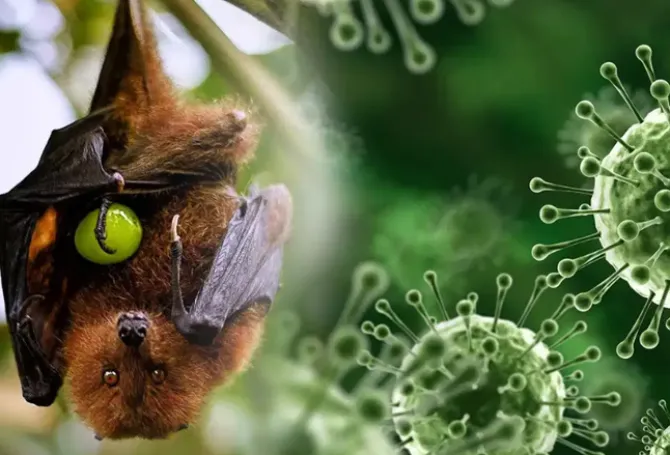 Image Credit: Observer Research
The virus originates from fruit bats, commonly known as flying foxes. These bats carry Nipah without falling sick themselves. Problems begin when the virus moves from bats to humans, usually through contaminated food or close contact.
What makes Nipah especially dangerous is not how easily it spreads, but how severe it can become once someone is infected.
A Look Back at Nipah Outbreaks in India
History explains why even a handful of cases triggers such a strong response.
West Bengal
Siliguri, 2001: 66 people were infected, and 45 lost their lives.
Many infections occurred inside hospitals, affecting patients, caregivers, and medical staff.
Nadia district, 2007: 5 cases were reported, and all were fatal.
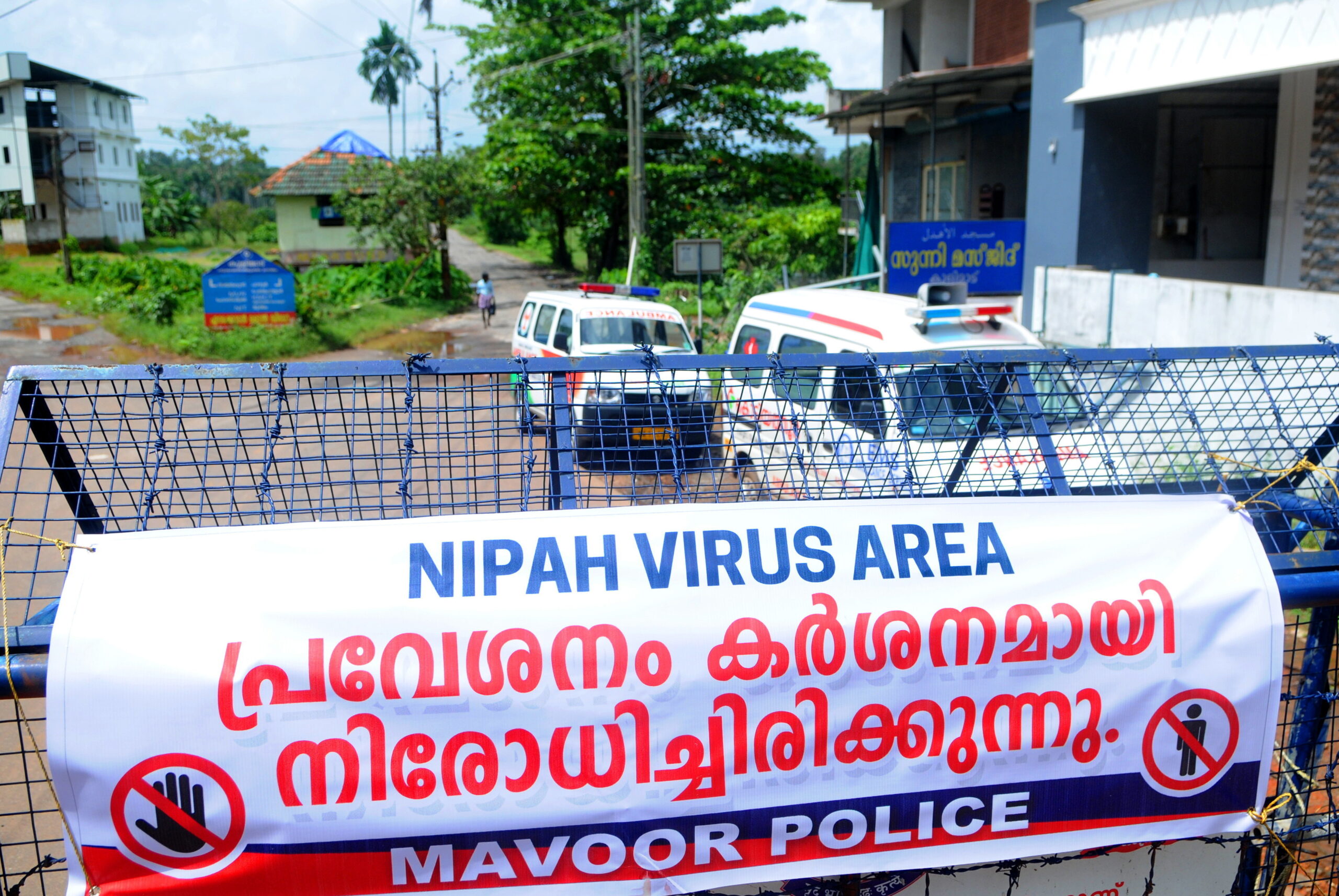 Image Credit: WABE
Kerala
Kerala has faced Nipah more often than any other state.
1. 18 confirmed cases, 17 deaths in 2018.
2. Smaller outbreaks followed in 2019, 2021, 2023, 2024, and 2025.
3. In 2025, 4 people were infected, and 2 died.
Kerala is considered a recurring hotspot due to repeated links between infections and food contaminated by bats, particularly raw date palm sap.
How Nipah Virus Spreads
This is where most people get confused, so let’s keep it simple.
Nipah spreads mainly in three ways.
1. From bats to humans
Fruit bats can contaminate fruits or sap. Eating fruit that has been bitten or drinking raw palm sap can pass the virus to humans.
2. From animals to humans
In some countries, pigs have acted as carriers. People who handle infected animals can get sick through close contact.
3. From one person to another
This usually happens through close physical contact, such as caring for an infected person or coming into contact with body fluids. Hospitals can become high-risk spaces if protective steps are not followed strictly.

Image Credit: Practo
This explains why doctors, nurses, and health workers often face the highest risk during outbreaks.
Symptoms You Should Not Ignore
Nipah doesn’t start dramatically. Early symptoms often feel like a common illness, which makes it easy to overlook.
Early signs include:
1. Fever
2. Headache
3. Body aches
4. Vomiting
5. Sore throat
As the infection progresses, symptoms can worsen:
6. Confusion or dizziness
7. Seizures
8. Trouble breathing
9. Loss of consciousness or coma
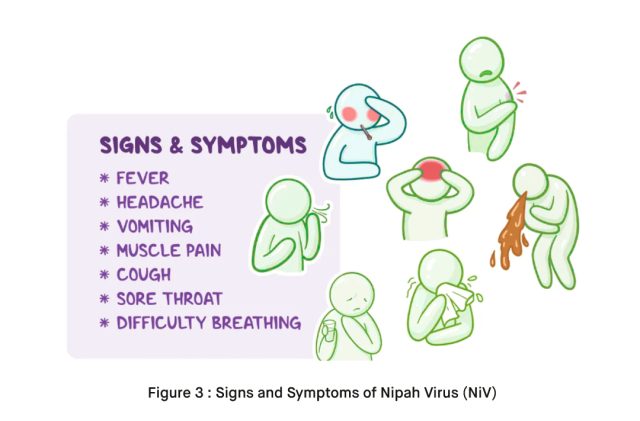 Image Credit: Vitrosens Biotechnology
In many cases, the virus affects the brain, which is why the condition can turn life-threatening very quickly if not managed in time.
How Serious Is Nipah?
There’s no easy way to say this, so let’s be direct.
Nipah is among the deadliest viruses known. The death rate ranges between 40 and 75 percent.
About 20 percent of survivors may face long-term issues like memory problems, difficulty focusing, or changes in behavior
This is why health authorities treat even a few confirmed cases as a national concern.
How Nipah Is Diagnosed
Detecting Nipah early is challenging because its symptoms look similar to many common illnesses.
Doctors confirm infection using laboratory tests on blood or other body fluids. However, because time is critical, health teams don’t wait for results before taking action. Close contacts are identified, isolated, and monitored immediately to prevent further spread.
Is There Any Cure or Vaccine?
At present, there is no specific medicine or vaccine for the Nipah virus.
Treatment focuses on:
1. Supporting breathing
2. Managing complications related to the brain
3. Providing intensive care when needed
Research and trials are ongoing worldwide, but for now, prevention and early response remain the most effective tools.
How You Can Reduce Your Risk
The reassuring part is that Nipah is largely preventable with simple precautions.
At home and outdoors
1. Avoid fruits that appear bitten or damaged
2. Wash and peel fruits before eating
3. Do not consume raw date palm sap
4. Make sure the palm sap is boiled properly
In hospitals or care settings
1. Maintain proper hygiene
2. Wash hands frequently
3. Use masks and protective gear when advised
4. Follow isolation guidelines strictly
5. If you are a close contact
6. Follow quarantine instructions fully
7. Monitor your health for at least 21 days
8. Report fever or illness immediately
Health teams also keep an eye on bat and animal populations to spot early warning signs.
Should You Be Worried Right Now?
Being alert is sensible. Panicking is not.
The current West Bengal outbreak involves a limited number of cases, and authorities moved quickly. India’s response systems today are far more prepared than they were during the early outbreaks.
For most people, the overall risk remains low. Staying informed, practicing basic hygiene, and following official health updates is enough.
Final Thoughts
Nipah virus is serious, but it is not unstoppable. Each outbreak has delivered the same lesson: awareness saves lives.
The 2026 Nipah Virus cases in West Bengal remind us that viruses don’t vanish forever. How quickly and responsibly we respond decides what happens next.
Stay alert, not afraid. Small, sensible actions still make the biggest difference.
What's Your Reaction?
 Like
0
Like
0
 Dislike
0
Dislike
0
 Love
0
Love
0
 Funny
0
Funny
0
 Wow
0
Wow
0
 Sad
0
Sad
0
 Angry
0
Angry
0

I’m Ryan Rehan, Business Development Executive and a passionate blogger dedicated to sharing insights, tips, and experiences that inspire and inform. Through my blogs, I explore topics that matter, spark curiosity, and encourage thoughtful conversations. Whether I’m breaking down complex ideas, offering practical advice, or simply sharing stories, my goal is to create content that adds real value to a growing community of curious minds and passionate readers.















Comments (0)