

Varun Dagar Harassment Case: Delhi Police Controversy and the Fight for Artists’ Rights in India
Varun Dagar’s harassment case exposes Delhi Police brutality and the lack of rights for street artists in India. Explore his fight for justice and artistic freedom.
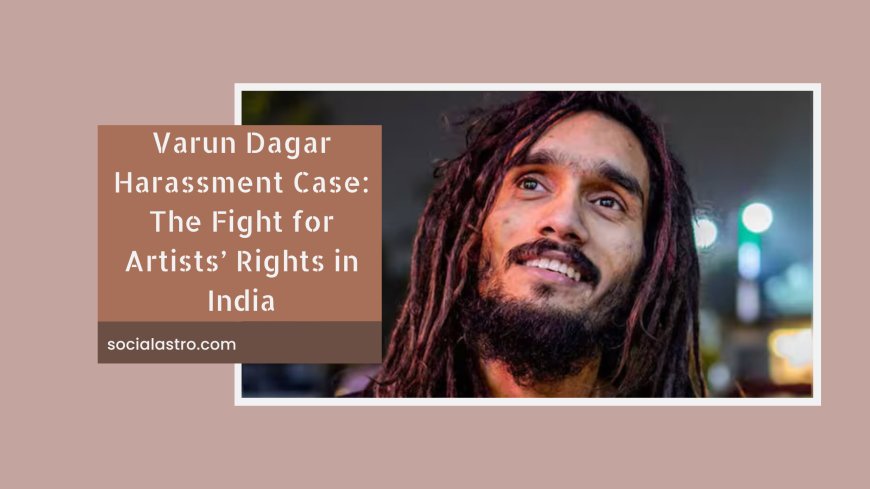
If you’ve ever walked through Delhi’s Connaught Place, you’ve probably paused to watch a dancer commanding a crowd with nothing but rhythm and raw expression. That performer is Varun Dagar, a street artist, choreographer, and contestant on India’s Best Dancer 2, known for his fluid, balletic movement and emotional storytelling.
For the readers who have encountered his art and stardom for the first time, read his early journey here: Known For His Balletic and Graceful Dance, Varun Dagar Has Won The Heart Of Netizens.
But in recent years, the name Varun has also represented something. It now squarely belongs to a chilling script, a script of persistent hounding, police brutality, and the lack of proper security protocols for artists in India.
A Timeline of Harassment: 2023 to 2025
The First Public Assault - April 2023
A video on social media went viral in April 2023 in which Varun was pushed, slapped, and dragged into a police van outside Connaught Place (CP). He was packing his equipment after a show when, the witnesses claimed, a parking manager caught hold of him by the collar and charged him with creating a ruckus.
In that video, Varun was pulled by his hair and assaulted, and the nation grew angry. Aly Goni and Rajesh Tailang condemned the act. Twitter and Facebook joined as a series of hashtags asking for an explanation from the Delhi Police.
The use of force was explained by police officials as "crowd control," and the performance was violating public order. But to all who saw the attack, the video did not need to be explained: a young artist assaulted for sharing his work.
Recurring Abuse and Emotional Toll
Nothing was altered as a consequence of the public protest. During the next two years, whenever Varun played at CP, he was hassled day and night, told to desist, cautioned against a fine, and even physically handled roughly at times.
Every time, he reported the incident and uploaded it on Instagram, and his Instagram record was a chronicle of violence, determination, and defiance. The fans saw him beaten but unbroken, returning days later to the same theater to perform again.
They were not random incidents. They were manifestations of an institutional trend - a performer subjected repeatedly to harassment by police and local officials under a sweeping pretext of maintaining order.
October 2025: The Pattern Continues
Varun again uploaded a reel of a new battle with Delhi Police and parking personnel in October 2025. The setting looked painfully familiar: fury, yelling, and humiliation with onlookers present.
Neither an official apology nor a legal settlement nor disciplinary action has been made in any of these instances. Exposures spanning decades, celebrity activism, and ongoing documentation aside, Varun is still being harassed for simply performing on the street.
It's unmistakable now that this is not one artist but a broken system criminalizing public creativity.
The Legal Vacuum That Facilitates Police Overreach
At the heart of this dilemma lies a bitter reality: India lacks a specific law that grants legal protection to buskers or street performers. Public performance is errantly defined as a nuisance or, worse, begging through municipal ordinances.
This loophole gives the police complete discretion. Officers may close down a show, confiscate equipment, or arrest performers at whim - all in the guise of upholding "public order."
Compare this to London, Melbourne, or New York, where street performers survive on the level playing field of licensed permits. There, busking is tolerated and even coddled as urban culture.
Here, an artist like Varun - once featured on national television - can be assaulted physically during the day for entertaining the same art on the street. Until and unless legislation catches up to and legalizes street art as legitimate cultural work, artists will continue to be at the mercy of discretionary policing.
The Human Toll: Humiliation and Emotional Trauma
Each public humiliation leaves its scar. With Varun, the price is real. His captions and tweets deliberately engineer the psychological price and helplessness of being dragged, teased, or gagged at getting along with practicing his faith.
But he continues to perform. His videos are now both creative and recorded. They are both a piece of art and proof, a survival tactic in a system against him.
Behind each show, there is a silent calculation: Will the police make an appearance today? Will I even get to complete my performance? Will I make it home alive?
This harassment is not new to Varun. Harassment is also the same for most Indian street performers, musicians, painters, and dancers. There are scarcely any who make a fuss about this because harassment is something one is accustomed to, and safety is just an illusion.
Public and Celebrity Response
When the first video in 2023 was viral, the internet went up in flames with outrage. The art community came together. Aly Goni, Rajesh Tailang, and other influencers started posting messages against police brutality. Hashtags #JusticeForVarunDagar and #ProtectStreetArtists were trending across platforms.
But more cases continued to arrive, and anger became the new normal. With each new video came the same argument, followed by complicity until the next one.
The trend points to a bitter reality of Indian social media activism: we cry in pain but do not quite stick long enough to produce change. No political or administrative organization has even discussed policy changes for safeguarding performers in public spaces during mass sympathy.
A Mirror to Policing and Power in Urban India
Varun's case reveals more than the weakness of art; it indicates that urban policing sees unauthorized creativity as mayhem. Connaught Place is one of Delhi’s most tightly controlled commercial hubs. The sight of an independent artist drawing crowds without permits or sponsors challenges that control.
In this ecosystem, art becomes rebellion. The artist becomes a threat. And “law and order” becomes a convenient excuse for suppression.
This spirit pervades Delhi. Everywhere throughout India, these very same narratives are being retold: street artists in Mumbai getting fined for "disturbance," graffiti artists arrested in Bengaluru, and performers pushed out of public space. It's a class bias that is institutionalized and class unease with serendipity culture. Indian public space remains administrative space, not cultural commons. That mindset must shift.
The Way Forward: What India Must Do
To avoid another Varun Dagar case, India requires a shift in the system, not sympathy.
1. Street Performance as a Legal Right
Busking can be legalised as a part of culture and not a nuisance. The municipal corporations can issue low-cost performance licenses or allocate areas where the artists can perform without restriction.
2. Police Sensitization and Accountability
Law enforcement officers must be trained in cultural sensitivity and non-violent crowd management. Police officers who use any form of violence or indulge in words need to be publicly punished.
3. Creating Cultural Spaces
Town planners and cities can set aside spaces such as open plazas, parks, and metro lines as art-friendly spaces. This ensures ordering while keeping creativity intact.
4. Promoting Art for Mental Health
Harassed artists experience chronic trauma. Cultural organizations and NGOs should provide mental counseling, legal aid, and peer counseling to street-performing artists.
5. Public Awareness and Education
The public confuses busking with begging. Public opinion can be channeled through awareness campaigns, highlighting community benefit over nuisance in the case of street art.
Until then, the cycle continues- violence, outrage, silence, repeat.
Varun Dagar's Defiance: Art as Resistance
Put aside years of violence, Varun won't be gagged. His art is no longer performance but protest, a visual outcry against censorship, abuse of power, and complacency. Every dance, every tweet, every bruise is a reminder that creativity is unbreakable, even when institutions won't see it.
To hear the man behind the mission, his modest education as an artist, humility, and success before this all began, read his story here:
For his graceful and ballet-like performance, Varun Dagar has won over the internet.
Varun's is the story of what is lost when imagination runs up against power. It's not a war of men; it's the issue of the country
Can India rejoice over creativity in any form if it demonizes those who offer it freely?
Conclusion
Varun Dagar's harassment case is not only between a choreographer and the Delhi Police but also a broader Indian dynamic of art, power, and freedom. It shows how confused legislation, unpoliced policing, and disengaged citizenry all cross over to stifle art.
As long as the system is not altered to consider artists to be contributors to society and not annoyances, public space will be unfriendly to expression.
While Varun danced, his message echoed beyond Connaught Place: Art belongs to the people, and no authority can drive it out forcibly.
What's Your Reaction?
 Like
0
Like
0
 Dislike
0
Dislike
0
 Love
0
Love
0
 Funny
0
Funny
0
 Wow
0
Wow
0
 Sad
0
Sad
0
 Angry
0
Angry
0

I’m Ryan Rehan, Business Development Executive and a passionate blogger dedicated to sharing insights, tips, and experiences that inspire and inform. Through my blogs, I explore topics that matter, spark curiosity, and encourage thoughtful conversations. Whether I’m breaking down complex ideas, offering practical advice, or simply sharing stories, my goal is to create content that adds real value to a growing community of curious minds and passionate readers.














Comments (0)