

Air India Flight 171 Crash: Did Fuel Control Switches Cause Engine Shutdown?
Investigators are focusing on the engine fuel control switches in the Air India Flight 171 crash that killed 241. Learn what experts say may have caused the Boeing 787 to lose power seconds after takeoff.
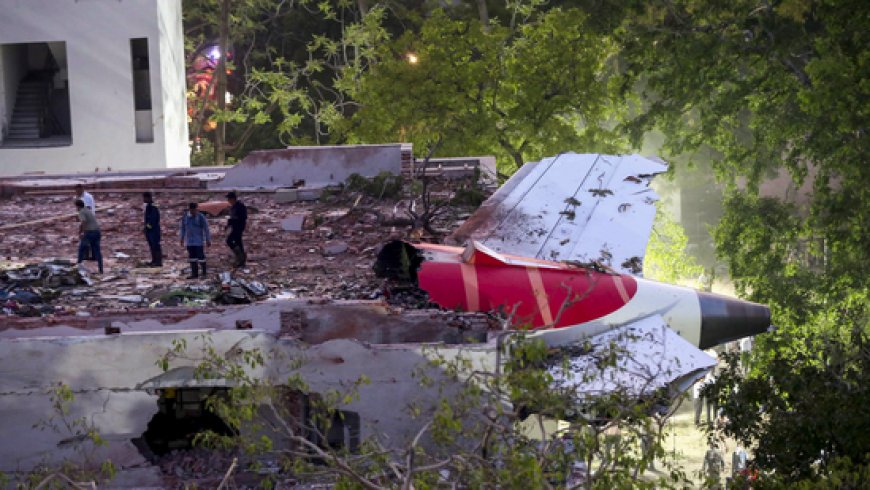
Aviation disasters are rare but devastating when they occur. The tragic crash of Air India Flight 171 on June 12, 2025, is one such heartbreaking event that has left the aviation world searching for answers. Just 32 seconds after takeoff from Ahmedabad, a Boeing 787-8 Dreamliner bound for London Gatwick fell from the sky, claiming the lives of 241 people, including passengers, crew members, and civilians on the ground.
Now, almost a month later, investigators have zeroed in on a small but potentially critical detail in the cockpit: the engine fuel control switches.
What Happened on June 12?
Flight AI171 was operating a long-haul journey from Ahmedabad to London Gatwick, a popular route that typically runs smoothly. On this fateful day, however, just moments after takeoff, the aircraft experienced a catastrophic failure. Witnesses on the ground described a sudden loss of engine sound before the plane veered and crashed near a populated area.
This marked one of India’s worst aviation tragedies in recent memory. Emergency responders arrived quickly, but there were no survivors. The global aviation community has since turned its focus to understanding what exactly went wrong in those crucial 32 seconds.
Investigators at Work: Who's Involved?
The investigation is being led by the Aircraft Accident Investigation Bureau of India (AAIB), with crucial support from international partners such as the U.S. National Transportation Safety Board (NTSB) and the UK’s Air Accidents Investigation Branch (AAIB).
Thanks to the quick recovery of the flight data recorder and cockpit voice recorder, investigators have been able to reconstruct the plane’s final moments. This data has brought a surprising new focus to an area of the cockpit that rarely plays a central role in such incidents - the engine fuel control switches.
The Fuel Control Switches: A Small Detail with Big Consequences
So, what are fuel control switches, and why are they important?
In most modern aircraft, especially in jets like the Boeing 787 Dreamliner, each engine is controlled via a fuel control switch. These switches typically have two positions: RUN and CUTOFF. While in RUN mode, the switch ensures steady fuel flow to the engine. Moving the switch to CUTOFF stops the fuel, essentially shutting down the engine.
They’re not switches that pilots flip casually. These controls are protected by metal stop-locks and guarded brackets, making accidental movement highly unlikely. That’s what makes the latest findings so alarming.
According to preliminary data, investigators believe that shortly after takeoff, one or both of these switches may have been moved to the CUTOFF position, either intentionally or by mistake. This would have instantly cut off fuel, leading to loss of engine thrust and also disabling the engine-driven electrical generators.
Was It Human Error or a System Glitch?
This is where the investigation gets complex.
So far, no mechanical issues have been found in the engines or the switches themselves. Fuel contamination has been ruled out, and the aircraft’s flap settings were reportedly normal.
This leaves three main possibilities:
1. Pilot error – The switches were accidentally or mistakenly moved.
2. Intentional act – A deliberate move by one of the crew members.
3. System malfunction – Some unknown issue caused the switches to move without manual input.
Each of these possibilities raises serious concerns. If it was human error, it raises questions about training, design ergonomics, or cockpit procedures. If it was intentional, it opens a far darker chapter. If it were mechanical, then every Boeing 787 in the world may need an urgent review.
Right now, investigators haven’t made a final determination.
Experts React: How Could This Happen?
Aviation safety experts are cautious but curious. The fact that such a guarded switch could have been flipped unintentionally is rare, but not impossible. Ergonomics, cockpit layout, or even high-stress scenarios can sometimes lead to "slip errors", where a pilot’s hand might bump or mistakenly move a control.
One former Boeing test pilot noted, “The fuel control switches are designed to be tamper-proof during flight. If they were moved, it will be critical to understand how and why, because that’s not something that should ever happen during takeoff.”
The industry is now closely watching how this investigation unfolds, as it could lead to global safety advisories or design reviews for Boeing’s fuel systems.
What’s Next in the Investigation?
The Aircraft Accident Investigation Bureau is expected to release a preliminary report soon. This report may include:
• More detailed timeline of the cockpit activity
• Condition of the switches upon recovery
• Communication between the pilots
• Health and experience of the crew
Depending on what the report reveals, further analysis of cockpit ergonomics, pilot behavior, and technical logs may be required. For now, no one cause has been officially confirmed, and multiple factors may be at play.
A Wake-Up Call for Aviation Safety
Whether this tragedy was caused by human error, technical malfunction, or an extremely rare sequence of missteps, one thing is clear: the crash of Air India Flight 171 is a wake-up call.
The aviation industry, despite being the safest mode of travel, can never afford to be complacent. Small oversights, even involving protected switches, can lead to devastating outcomes. As the investigation continues, global aviation authorities will be under pressure to review not just technical systems but also pilot training, checklist protocols, and emergency response measures.
Final Thoughts
The loss of 241 lives aboard Flight 171 is a national tragedy and a global concern. As we await further answers, the focus must remain on uncovering the truth with transparency and urgency. Every detail matters, especially when a tiny switch could hold the key to understanding how one of the world's most advanced aircraft fell from the sky in less than a minute.
What's Your Reaction?
 Like
0
Like
0
 Dislike
0
Dislike
0
 Love
0
Love
0
 Funny
0
Funny
0
 Wow
0
Wow
0
 Sad
0
Sad
0
 Angry
0
Angry
0

I’m Ryan Rehan, Business Development Executive and a passionate blogger dedicated to sharing insights, tips, and experiences that inspire and inform. Through my blogs, I explore topics that matter, spark curiosity, and encourage thoughtful conversations. Whether I’m breaking down complex ideas, offering practical advice, or simply sharing stories, my goal is to create content that adds real value to a growing community of curious minds and passionate readers.
















Comments (0)