

Swadeshi 4G for India: PM Modi Launches BSNL’s Future-Ready Network – All You Need to Know
Explore PM Modi’s launch of BSNL’s Swadeshi 4G network, connecting 26,700 villages, promoting self-reliance, sustainable infrastructure, and future-ready technology, empowering India with advanced digital connectivity and inclusive growth.

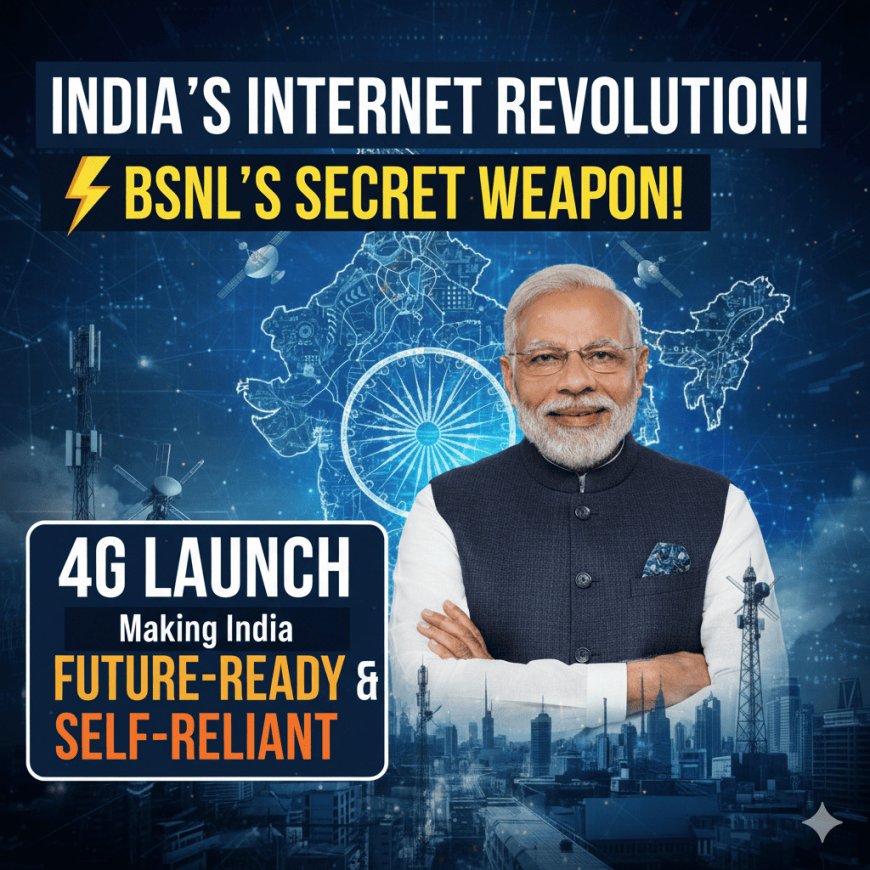
When was the last time you saw a government project grab global attention for innovation, sustainability, and scale? On September 27, 2025, Prime Minister Narendra Modi launched BSNL’s 100% indigenous 4G “Swadeshi Network Stack.” This launch is more than a telecom story. It is about India showing the world what self-reliance in technology looks like.
Let’s break down what makes this event a turning point in India’s digital journey.
100% Indigenous Telecom Stack: India’s Tech Pride
For the first time, India built a complete 4G telecom system on its own. The core network came from C-DOT, the Radio Access Network from Tejas Networks, and system integration from TCS.
This means India has joined an elite global group that includes Denmark, Sweden, South Korea, and China. These nations already manufacture their own telecom gear. Now India stands proudly beside them.
This is more than technology. It is about technological sovereignty and reducing dependency on foreign suppliers.
Massive Scale and Rural Connectivity
India has rolled out 97,500 mobile towers, out of which 92,600 are BSNL sites. Another 18,900 towers funded under Digital Bharat Nidhi will serve 26,700 villages that had no coverage until now.
These are not just numbers. These towers bring digital power to remote, border, and tribal regions. They connect villages affected by left-wing extremism.
They give people access to online education, telemedicine, e-commerce, and government services. This launch is a giant step toward closing the rural-urban digital gap.
Sustainable Green Infrastructure
Here’s something equally exciting. India now has its largest cluster of solar-powered telecom towers.
This means the expansion of digital infrastructure is not harming the planet. Instead, it reduces carbon emissions and operational costs.
This balance between progress and sustainability is a model for the world.
Future-Proof Cloud Architecture
This 4G network is cloud-based, fully software-driven, and future-ready. It is designed for a seamless shift to 5G.
That means India is not only solving today’s needs. It is also preparing for tomorrow’s challenges. The architecture ensures scale, reliability, and speed.
Multi-Sectoral Development Impact
The launch of the 4G network was not a standalone event. PM Modi also unveiled ₹60,000 crore worth of projects in Odisha.
These projects include:
-
Super-specialty upgrades for medical colleges
-
Expansion of eight IIT campuses
-
Skill development programs for youth
-
Railway modernization and connectivity projects
-
Approval for two semiconductor manufacturing units
This shows how digital growth is linked with healthcare, education, transport, and local industries.
How Does BSNL’s 4G Reflect the Spirit of Aatmanirbhar Bharat?
1. 100% Indigenous Technology
-
Developed entirely by Indian companies: C-DOT (core network), Tejas Networks (radio access), and TCS (integration).
-
Reduces dependence on imported telecom equipment and strengthens local innovation.
2. Boosting Economy and Jobs
-
Supports homegrown industries and creates employment opportunities in engineering, tech, and maintenance.
-
Keeps investment within India, fueling economic growth and local expertise.
3. Confidence in India’s Capabilities
-
Shows India can design, build, and scale advanced telecom infrastructure independently. Positions India as a global player in strategic technology sectors.
 Image Credit: The Times of India
How Will BSNL’s 4G Empower Remote and Tribal Communities?
-
The biggest winners of this rollout are people in tribal, border, and remote villages.
-
For the first time, they will get stable digital access. This means students can attend online classes.
-
Patients can reach doctors through telemedicine.
-
Farmers can explore digital markets. Citizens can access government services without traveling miles.
Why This Matters Globally?
-
Global Leadership: India joins the elite group of countries with indigenous telecom stacks, proving that developing nations can lead in advanced technology.
-
Future-Ready: The network is designed for seamless 5G upgrades, ensuring scalability and advanced capabilities.
-
Sustainable Growth: It maintains low costs while supporting green infrastructure, combining progress with environmental responsibility.
Frequently Asked Questions (FAQs)
Q1. What is unique about BSNL’s new 4G network?
It is built entirely with Indian technology, making it 100% indigenous and a symbol of self-reliance.
Q2. Which companies developed the network?
C-DOT built the core, Tejas Networks built the radio access system, and TCS handled integration.
Q3. How many towers have been launched?
Over 97,500 towers, including 92,600 BSNL sites.
Q4. How many villages will benefit?
More than 26,700 villages, including border, tribal, and remote areas.
Q5. What makes this launch eco-friendly?
The towers are powered by solar energy, creating India’s largest green telecom cluster.
Q6. Is the network future-ready?
Yes. It is cloud-based and can be upgraded to 5G without major changes.
Q7. What is the cost of the project?
Around ₹37,000 crore has been invested in building the indigenous network.
Q8. How does this benefit rural communities?
It brings online education, healthcare access, e-governance, and digital marketplaces to underserved areas.
Q9. How is this linked to India’s self-reliance mission?
It reduces dependency on foreign telecom gear and strengthens India’s domestic tech industry.
Q10. What other projects were launched along with it?
Projects worth ₹60,000 crore in Odisha covering healthcare, IIT expansion, railways, skill development, and semiconductor manufacturing.
What's Your Reaction?
 Like
0
Like
0
 Dislike
0
Dislike
0
 Love
0
Love
0
 Funny
0
Funny
0
 Wow
0
Wow
0
 Sad
0
Sad
0
 Angry
0
Angry
0
















Comments (0)