

Narendra Modi Becomes India’s 2nd Longest-Serving PM – A Look at His Journey and Legacy
Narendra Modi surpasses Indira Gandhi to become India’s second longest-serving Prime Minister. Discover his journey, achievements, challenges, and what this historic milestone means for the future of Indian politics and leadership.
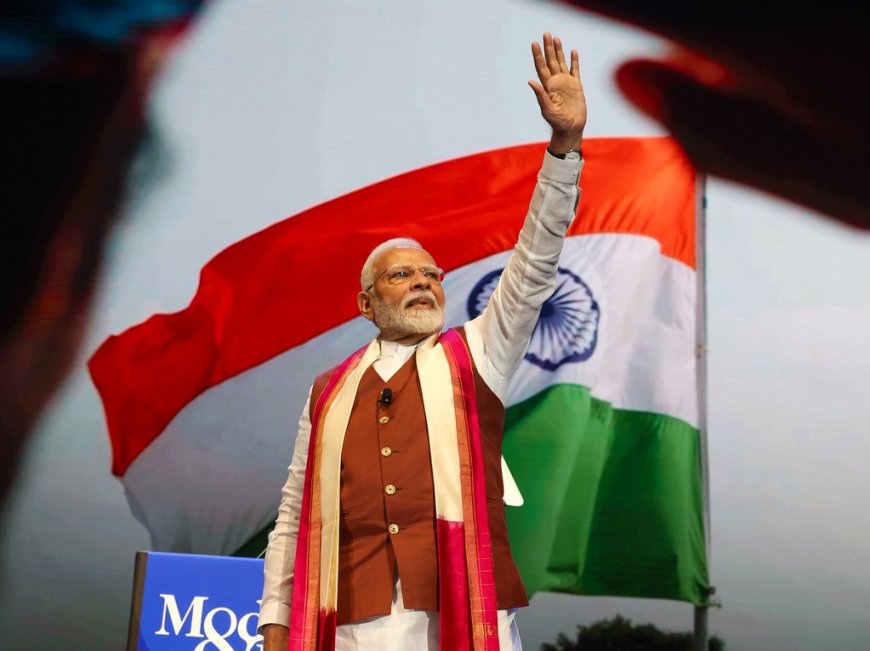
History was made in Indian politics recently when Narendra Modi became the second-longest-serving Prime Minister of India, overtaking Indira Gandhi’s record. This achievement is not just about numbers. It’s about leadership, resilience, and a decade that has reshaped India’s political narrative.
So, what makes this milestone so significant? How does Modi’s journey compare with other leaders who held office for a long time? And what could it mean for India’s future as the country looks toward the next big election in 2029? Let’s break it all down in simple terms.
The Milestone Explained
Narendra Modi took oath as Prime Minister on May 26, 2014, after a historic election win that gave the Bharatiya Janata Party (BJP) a full majority for the first time in three decades. Since then, he has been at the helm of the government continuously, securing another resounding victory in 2019.
By crossing this milestone, Modi has now served longer than Indira Gandhi, who held office for over 11 years across two terms. The only person ahead of him in terms of tenure is Jawaharlal Nehru, India’s first Prime Minister, who served for over 16 years.
In a country where coalition governments were once the norm, Modi’s ability to complete two full terms and begin a third is a rare and noteworthy achievement. It signals political stability and strong electoral support, something India hasn’t seen often since the early years of independence.
India’s Longest-Serving Leaders – A Quick Context
To understand the importance of this record, think about this: in over 75 years of independence, only a handful of Prime Ministers have managed to stay in office for more than a decade. Nehru was the first, serving as a guiding force in post-independence India. Indira Gandhi came next, known for her bold leadership and controversial decisions.
Then came leaders like Manmohan Singh, who held office for 10 years during a period of economic growth and policy reforms, and Atal Bihari Vajpayee, who served three terms but never crossed the decade mark in one stretch. Modi joining this elite list places him in a small circle of leaders who have shaped India’s long-term direction.
Modi’s Journey: From Gujarat to Delhi’s Power Corridor
Modi’s rise is often called one of the most remarkable political stories in India’s history. Starting from humble beginnings, he became the Chief Minister of Gujarat in 2001 and held that position for nearly 13 years. His tenure in Gujarat built his image as a leader focused on development and governance.
In 2014, riding on promises of economic revival and strong leadership, Modi led the BJP to a historic victory, ending decades of coalition politics at the national level. His re-election in 2019 with an even bigger mandate reinforced his popularity and ability to connect with voters across the country.
What shaped his decade in power?
Digital Push: The Digital India campaign aimed to make government services accessible online and boost internet penetration.
Economic Changes: Reforms like GST, insolvency laws, and initiatives like Make in India targeted structural transformation of the economy.
Social Welfare Schemes: Programs such as Ujjwala Yojana (LPG connections), Ayushman Bharat (healthcare), and PM-Kisan (support for farmers) impacted millions.
Infrastructure Development: Roads, expressways, electrification, and railway modernization became focal points.
Global Diplomacy: Modi positioned India strongly on the world stage, from leading G20 discussions to climate change initiatives.
Of course, it wasn’t all smooth sailing. His tenure also saw challenges like the economic slowdown after demonetization, the COVID-19 pandemic, unemployment concerns, and major protests such as the farmers’ agitation. Yet, despite these hurdles, Modi has maintained his image as a decisive leader with a strong personal brand.
Modi and Indira Gandhi: Two Different Eras, Two Distinct Legacies
Comparisons are inevitable when milestones like this are reached. Indira Gandhi, India’s first and only woman Prime Minister, ruled during a very different era. Her leadership was marked by centralized control and dramatic decisions like bank nationalization and the imposition of Emergency.
Modi, on the other hand, operates in a digital, globally connected world. His governance style combines centralized authority with extensive use of technology and mass communication. While Indira leaned toward socialist policies, Modi emphasizes market-driven growth, investment, and economic reforms.
Both leaders, however, share one trait: the ability to dominate India’s political narrative for years and command a loyal voter base despite controversies and criticism.
Why This Milestone Matters for Indian Politics
Now, why should this record matter to the average Indian? Here’s why:
A Signal of Political Stability: Long tenures in a multiparty democracy like India are rare. Modi’s continuity indicates a shift toward stable governance, which has implications for economic and social policies.
Impact on Party Dynamics: His leadership has cemented the BJP’s dominance nationally, changing the balance of power that once favored Congress.
Shaping Leadership Norms: Modi’s era has normalized a style of politics where personality, branding, and digital outreach play a central role in elections.
The Road Ahead: Implications for the 2029 Elections
With this record in hand, one big question remains: What does this mean for the future? Modi is still in his third term, and while the next general election is years away, this milestone will play a role in shaping narratives.
For supporters, it reinforces his image as an experienced and proven leader. For the opposition, it could spark debates around leadership fatigue and the need for change. Either way, the 2029 election is likely to be framed against the backdrop of this historic achievement.
Conclusion
Narendra Modi becoming India’s second-longest-serving Prime Minister is not just a political headline - it’s a defining moment in the country’s democratic journey. It reflects how Indian politics has evolved, how leadership styles have adapted to new realities, and how one leader has managed to stay at the center of it all for over a decade.
As India looks toward the future, one question remains open: Will Modi go on to break Nehru’s record and become the longest-serving Prime Minister, or will history take a different turn in 2029?
Only time will tell. But this milestone ensures that Modi’s name will be remembered as one of the most influential leaders in modern India.
What's Your Reaction?
 Like
0
Like
0
 Dislike
0
Dislike
0
 Love
0
Love
0
 Funny
0
Funny
0
 Wow
0
Wow
0
 Sad
0
Sad
0
 Angry
0
Angry
0

I’m Ryan Rehan, Business Development Executive and a passionate blogger dedicated to sharing insights, tips, and experiences that inspire and inform. Through my blogs, I explore topics that matter, spark curiosity, and encourage thoughtful conversations. Whether I’m breaking down complex ideas, offering practical advice, or simply sharing stories, my goal is to create content that adds real value to a growing community of curious minds and passionate readers.














Comments (0)