

When Cells Refuse to Die: The Science of Post-Death Cellular Awareness
Cells don’t die instantly. Explore the science behind post-death cellular activity, xenobots, and what it means for medicine and consciousness.
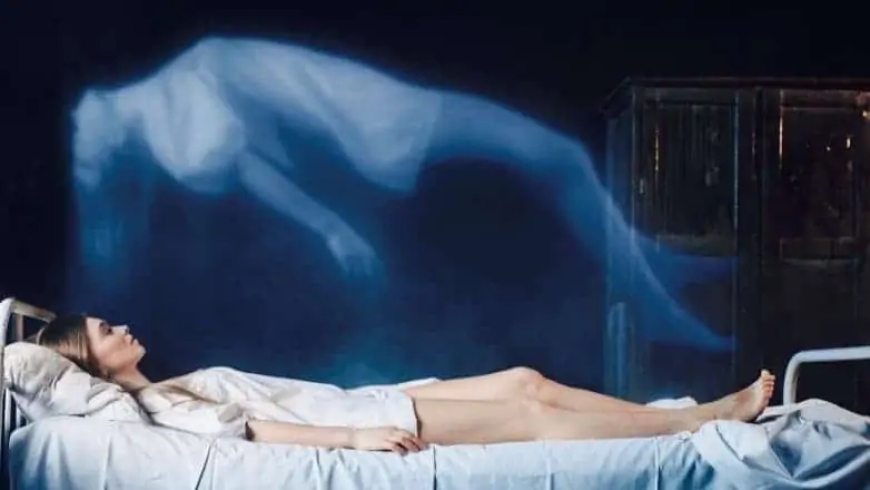
Death might not be the clean, instant shutdown we’ve always imagined.
For decades, biology treated death as a hard stop. Heart stops, brain shuts down, cells collapse, end of story. But a growing body of research is quietly challenging that idea. Not with mysticism or sci-fi, but with lab data showing that some cells don’t just linger after death. They adapt. They reorganize. In some cases, they act in surprisingly purposeful ways.
This has led to a provocative concept called post-death cellular consciousness. It doesn’t claim that dead bodies think or feel. What it does suggest is more subtle and more unsettling: individual cells may retain a form of awareness, decision-making, or problem-solving ability even after the organism as a whole is gone.
Let’s break it down
What Happens To Cells After Death?
When an organism dies, oxygen supply stops, energy production collapses, and tissues begin to break down. That part is familiar. What’s less familiar is what happens in the hours and days that follow at the cellular level.
Studies show that many cells don’t immediately shut off. Some actually become more active.
In the brain, glial cells, which support neurons, have been observed increasing their activity after death. Instead of fading away, they grow longer appendages, change shape, and switch on specific genes. Researchers have nicknamed these genes “zombie genes” because they kick in only after death.
These genes are linked to inflammation, stress response, immune defense, and repair. In other words, the cell behaves as if something has gone wrong and it needs to fix it.
White blood cells show similar behavior. Some can survive for days after death, continuing gene expression and responding to their environment. This activity isn’t random. It follows recognizable biological patterns.
Temperature, oxygen levels, the person’s age, and overall health all influence how long these cells remain active. Cooler conditions slow decay. Healthier cells resist breakdown longer. Death, it turns out, is not a single moment but a gradual, uneven process.
This gray zone between life and death is what some researchers call a “third state.”
The Idea Of A Biological “Third State”
Traditionally, biology recognizes two states: alive or dead. The postmortem cellular data complicates that picture.
In this third state, the organism is clearly dead. There’s no heartbeat, no breathing, no integrated brain function. Yet individual cells remain metabolically active. Some sense their surroundings. Some communicate chemically. Some change their behavior in response to stress.

They are no longer serving the organism, but they aren’t inert either.
This raises a difficult question. If cells can sense, respond, and adapt independently, what does that say about agency at the cellular level?
That question became impossible to ignore after the creation of xenobots.
Xenobots: Cells With A Second Life
Xenobots are one of the most fascinating developments in modern biology.
They are built from skin cells taken from African clawed frog embryos. These cells, once removed from the frog and placed in a controlled lab environment, don’t just sit there. They self-assemble into new structures.
These structures can move using cilia. They can navigate their surroundings. Some can push tiny particles. Others can work together in groups. And most strikingly, they do this without a brain, nervous system, or genetic modification.

Image Credits: Wikimedia Commons
The cells were never “designed” to do this in nature. Yet when freed from their original role, they reorganized themselves into something new.
This behavior suggests that cells carry an internal logic beyond genetic instructions. They don’t just follow a script. They respond creatively within constraints.
That idea became even more provocative when similar behavior was observed in human cells.
Anthropoids And Human Cellular Adaptability
Human lung cells, when cultured under specific conditions, have been shown to form multicellular structures called anthrobots.
Like xenobots, anthrobots can move. They can self-repair minor damage. In lab experiments, they have even helped repair damaged neural tissue by encouraging growth in nearby neurons.
Again, there is no brain involved. No conscious planning. Yet the collective behavior appears goal-directed.
Critically, these structures only form under laboratory conditions. They require oxygen, nutrients, and a carefully controlled environment. This doesn’t mean cells spontaneously form tiny creatures after death in the real world.
What it does mean is that cellular potential extends far beyond what we see inside a living body.
Are Cells Conscious?
This is where the debate heats up.
Some researchers, including developmental biologist Michael Levin, argue that cells exhibit what he calls basal cognition. Not human consciousness. Not self-awareness. But a minimal form of intelligence.
Basal cognition includes abilities like sensing the environment, evaluating options, and acting in ways that promote survival or stability. By that definition, many cells qualify.
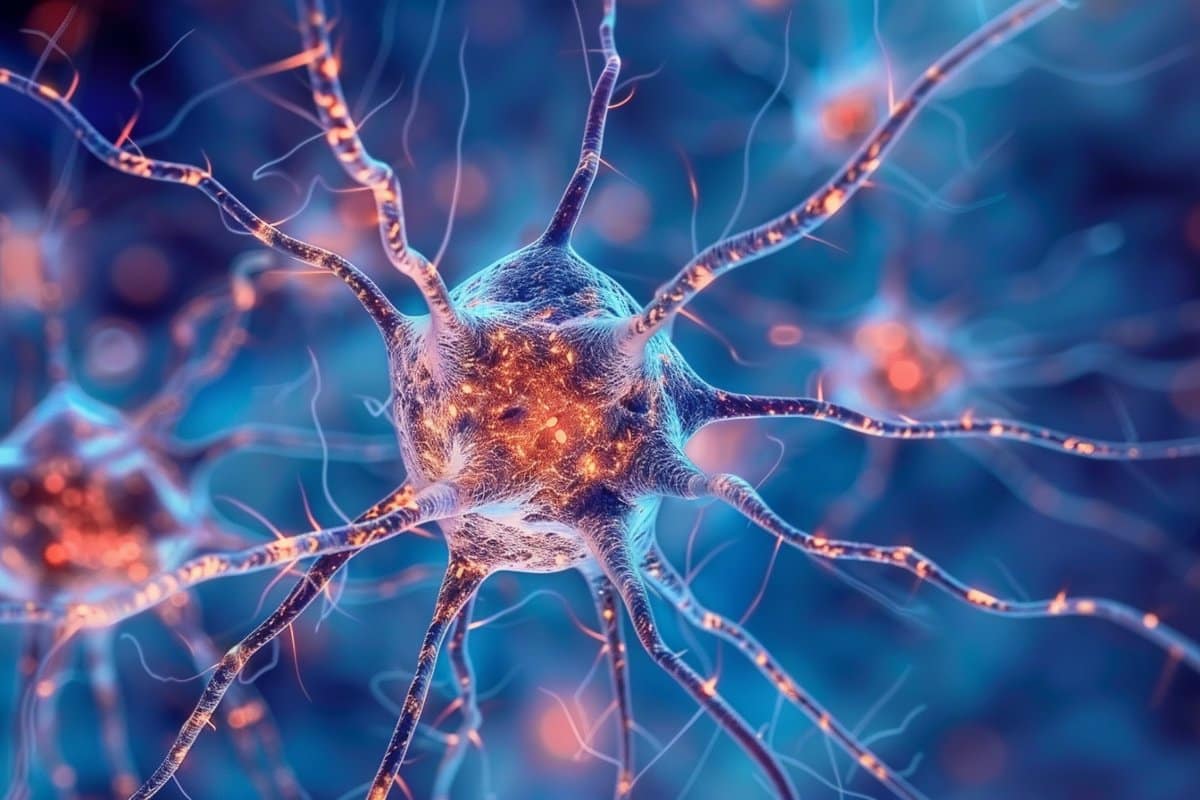 Image Credit: Neuroscience News
They detect chemical gradients. They move toward nutrients. They coordinate with neighboring cells. They adjust gene expression in response to stress. They pursue goals like maintaining integrity or repairing damage.
Supporters argue that consciousness doesn’t suddenly appear at the level of brains. It may exist on a spectrum, with simple forms present even at the cellular level.
Critics strongly disagree.
Biologists like Lincoln Taiz and Wendy Ann Peer argue that these behaviors don’t imply consciousness at all. They see them as automatic biochemical reactions. In their view, calling this “consciousness” muddies the scientific waters and lacks falsifiable criteria.
They point out that cells lack neurons, synapses, or any known structures associated with awareness. Without those, consciousness claims remain speculative at best.
Both sides agree on one thing: the data is real. The interpretation is what’s contested.
Postmortem Brain Activity And Near-Death Questions
The debate becomes even more sensitive when brain studies enter the picture.
In some monitored cases, low-frequency brain waves have been detected up to 30 to 80 minutes after cardiac arrest. These waves resemble patterns seen during dreaming or memory recall.
 Image Credit: Freepik
Separately, experiments on pig brains showed that hours after death, cellular activity could be partially restored when oxygenated blood-like solutions were circulated through the tissue. Neurons didn’t regain consciousness, but basic cellular functions resumed.
These findings don’t prove near-death experiences are real perceptions after death. But they complicate our assumptions about when brain activity truly ends.
If cells in the brain can remain active longer than expected, the boundary between life, dying, and death becomes less precise.
Medical and Ethical Implications
This research isn’t just philosophical. It has real-world consequences.
For organ transplantation, understanding postmortem cellular survival could extend viable transplant windows. Organs might be preserved more effectively if we work with cellular stress responses rather than against them.
In regenerative medicine, xenobots and anthrobots offer clues about how cells can be encouraged to repair tissues, heal injuries, or rebuild damaged systems without external hardware.
There are ethical questions, too. If death is a process rather than a moment, how should we define it medically? Legally? Morally?
At What Point Does Cellular Activity No Longer Matter?
Science doesn’t have clear answers yet. But our old definitions are under pressure.
Post-death cellular consciousness doesn’t mean cells think like humans. It doesn’t mean awareness survives death in any spiritual sense. And it doesn’t mean corpses are secretly alive.
What it does mean is that life is more decentralized than we thought.
Cells are not passive building blocks waiting for orders from genes or brains. They are active agents, capable of sensing, adapting, and sometimes reinventing themselves under the right conditions.
Death, from this perspective, is not a light switch. It’s a slow dimming, uneven across tissues, with pockets of activity persisting long after the system as a whole has failed.
Whether we call that consciousness, cognition, or complex chemistry is still up for debate. But the implications are undeniable.
Biology is no longer just the study of living things. It’s the study of systems that resist ending.
And cells, it turns out, are far more stubborn than we ever imagined.
What's Your Reaction?
 Like
0
Like
0
 Dislike
0
Dislike
0
 Love
0
Love
0
 Funny
0
Funny
0
 Wow
0
Wow
0
 Sad
0
Sad
0
 Angry
0
Angry
0

I’m Ryan Rehan, Business Development Executive and a passionate blogger dedicated to sharing insights, tips, and experiences that inspire and inform. Through my blogs, I explore topics that matter, spark curiosity, and encourage thoughtful conversations. Whether I’m breaking down complex ideas, offering practical advice, or simply sharing stories, my goal is to create content that adds real value to a growing community of curious minds and passionate readers.














Comments (0)