

Top Influencer Marketing Platforms for Brands and Agencies in 2026
Discover the top influencer marketing platforms for brands and agencies in 2026. Compare creator discovery, campaign management, affiliate tools, analytics, USPs and pricing.

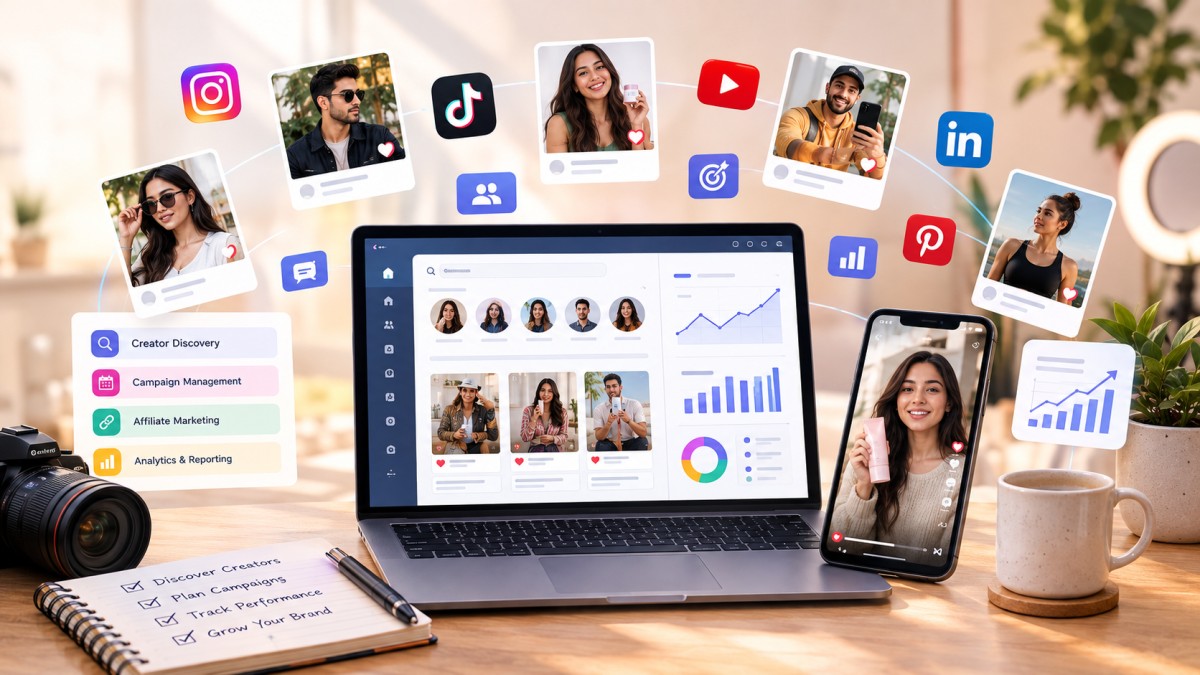
Influencer marketing has moved far beyond sending direct messages to creators and tracking campaigns in spreadsheets. In 2026, brands and agencies are using dedicated influencer marketing platforms to discover relevant creators, evaluate audiences, manage collaborations, track content, handle payments, measure sales, and build long-term creator relationships.
The right platform can make influencer campaigns significantly easier to scale. Instead of manually searching thousands of profiles, teams can use advanced filters, AI-powered discovery, audience analytics, campaign workflows, affiliate tracking, content management and performance reporting from a central dashboard.
But not every platform is built for the same purpose. Some are designed for enterprise brands running global creator programs, while others are better suited to ecommerce businesses, agencies, smaller teams or brands that simply want a creator marketplace.
In this guide, we compare some of the top influencer marketing platforms for brands and agencies in 2026, including their key features, unique selling points, pricing approach and ideal use cases.
What Is an Influencer Marketing Platform?
An influencer marketing platform is software that helps brands and agencies manage one or more stages of the creator marketing process.
Depending on the platform, this can include:
- Influencer and creator discovery
- Audience and engagement analysis
- Creator outreach
- Campaign planning
- Brief and deliverable management
- Content approval
- Product seeding
- Affiliate campaigns
- Creator payments
- Performance tracking
- Sales attribution
- Brand safety monitoring
- Reporting and analytics
Modern platforms are increasingly adding AI-powered search and automation. This allows marketers to describe the type of creator they want in natural language instead of relying entirely on traditional filters.
Why Brands Need Influencer Marketing Platforms in 2026
Influencer campaigns can become difficult to manage as the number of creators increases.
A campaign involving five creators may be manageable through email and spreadsheets. A campaign involving 50, 100 or several hundred creators is a different story.
Teams need to keep track of creator information, contracts, content deadlines, posting requirements, usage rights, payments, performance data and campaign results.
Influencer marketing platforms bring these activities together and can help businesses:
Save time: Automate repetitive creator research, communication and campaign tasks.
Improve creator selection: Compare audience demographics, engagement, content and other performance indicators.
Scale campaigns: Manage larger creator programs without increasing administrative work at the same rate.
Measure ROI: Connect creator activity with engagement, traffic, conversions and sales.
Build long-term relationships: Maintain a centralized creator database rather than starting from scratch for every campaign.
Top Influencer Marketing Platforms in 2026: Quick Comparison
| Platform | Best For | Key Strength | Pricing |
|---|---|---|---|
| CreatorIQ | Enterprise brands and agencies | Large-scale creator intelligence and campaign management | Custom |
| GRIN | Ecommerce and DTC brands | Creator relationships, campaigns and affiliate programs | Free; paid plans from around $200/month |
| Upfluence | Ecommerce brands and agencies | Creator discovery, ecommerce integrations and affiliate marketing | Custom |
| Modash | Data-driven creator discovery | Large creator database and audience analytics | From around $199/month on annual billing |
| Aspire | Creator communities and ambassador programs | Marketplace plus campaign management | Custom |
| HypeAuditor | Influencer analytics and verification | Audience quality and fraud detection | Paid/custom plans |
| Traackr | Global enterprises | Creator relationship management and measurement | Custom |
| Later Influence | Enterprise influencer programs | Campaign management combined with social marketing | Custom |
| Influencity | Brands and agencies | Discovery, campaign management and analytics | Paid plans; pricing varies |
| Collabstr | Small brands and creator hiring | Simple creator marketplace | Free to start; pay per collaboration |
Pricing can vary according to billing cycle, region, seats, usage and features. Brands should check the latest pricing before purchasing.
1. CreatorIQ
Best for: Enterprise brands, agencies and global creator programs
CreatorIQ is designed for businesses managing influencer and creator marketing at significant scale. Its platform combines creator discovery, campaign management, reporting, payments and creator relationship management.
Its discovery system uses AI and creator intelligence to help marketing teams identify suitable creators based on factors such as audience, interests, content and performance.
Key Features
- AI-powered creator discovery
- Creator recommendations
- Audience and performance data
- Campaign management
- Content approval
- Creator onboarding
- Workflow automation
- Creator payments
- Brand safety features
- Advanced reporting
- Global creator program management
- Agency and team collaboration
USP
CreatorIQ's biggest advantage is enterprise-scale creator marketing infrastructure.
The platform is particularly useful when a company needs centralized governance across multiple markets, teams and campaigns.
Pricing
CreatorIQ uses custom pricing rather than publishing a standard public subscription price. Pricing can depend on program requirements, users, markets, campaigns and other factors.
Best For
Large brands and agencies running complex, multi-market influencer programs.
2. GRIN
Best for: Ecommerce, DTC brands and creator relationship management
GRIN focuses heavily on helping ecommerce businesses turn influencer marketing into an ongoing creator channel rather than a collection of one-off campaigns.
It brings creator discovery, relationship management, campaign workflows, affiliate activity and ecommerce functionality together.
GRIN has also introduced AI-powered functionality designed to automate parts of creator marketing.
Key Features
- Creator discovery
- Creator CRM
- Campaign management
- Product seeding
- Affiliate marketing
- Creator payments
- Ecommerce integrations
- Performance tracking
- Content management
- AI-powered workflows
- Creator relationship management
USP
GRIN stands out for connecting creator marketing with ecommerce operations.
This makes it particularly attractive to DTC brands that want to understand not just reach and engagement, but how creators contribute to sales.
Pricing
GRIN currently offers a free entry option, with paid self-serve plans ranging from approximately $200 to $1,500 per month, depending on usage and creator volume.
Best For
Shopify and ecommerce brands building long-term creator and affiliate programs.
3. Upfluence
Best for: Ecommerce brands, agencies and creator discovery
Upfluence combines influencer discovery with campaign management, affiliate functionality and ecommerce integrations.
The platform allows brands to search creators across major social networks, analyze creator performance and identify potential partners.
One particularly useful feature for ecommerce companies is its ability to connect creator marketing with commerce platforms and customer data.
Key Features
- Creator discovery
- 14M+ creator database
- AI-powered creator search
- Creator lookalikes
- Audience analytics
- Creator outreach
- Campaign management
- Affiliate tracking
- Discount codes
- Shopify integration
- WooCommerce integration
- Amazon integration
- Product shipment
- Creator payments
- Sales analytics
- Social listening
USP
Upfluence is particularly strong for connecting influencer discovery with ecommerce and affiliate marketing.
It can help brands move from simply finding creators to tracking creator-driven sales.
Pricing
Upfluence uses custom modular pricing based on the products and features selected, team size and program requirements.
Its current structure includes modules such as creator discovery, creator program management and automated creator campaign functionality.
Best For
Ecommerce brands and agencies that want creator discovery and commerce functionality in the same platform.
4. Modash
Best for: Creator discovery and data-driven influencer research
Modash is a strong option for marketers whose biggest challenge is finding the right creators.
The platform focuses heavily on creator discovery, audience analytics and campaign tracking. It is also popular among ecommerce teams because of its connection with Shopify and creator payment workflows.
Key Features
- Creator discovery
- Audience demographics
- Engagement analysis
- Creator performance data
- Fake follower and audience quality insights
- Creator contact information
- Campaign tracking
- Creator tracking
- Affiliate functionality
- Shopify integration
- Creator payments
- Content monitoring
USP
Modash is particularly useful for marketers who want powerful creator discovery without committing to a large enterprise platform.
Its searchable creator database and audience intelligence make it useful when research and creator selection are the main priorities.
Pricing
Modash currently has published plans starting at approximately $199 per month when billed annually, with higher plans around $499 per month on annual billing. Monthly pricing can be higher, and enterprise programs use custom pricing.
Best For
DTC brands, startups, agencies and marketers that prioritize creator discovery and analytics.
5. Aspire
Best for: Creator communities, ambassador programs and UGC
Aspire takes a relationship-focused approach to influencer marketing.
Rather than only helping brands search for influencers, Aspire allows businesses to create creator communities and attract creators through its marketplace.
Brands can publish campaigns and allow relevant creators to apply, reducing the need for entirely outbound creator recruitment.
Key Features
- Creator marketplace
- AI-powered creator discovery
- Influencer search
- Ambassador management
- Affiliate marketing
- Product seeding
- UGC campaigns
- Campaign management
- Content approval
- Creator CRM
- Automated workflows
- Payments
- Shopify integration
- ROI reporting
- Content library
USP
Aspire's creator marketplace and community-building approach are its biggest differentiators.
Instead of always searching for creators individually, brands can create an inbound pipeline where interested creators apply to relevant opportunities.
Pricing
Aspire uses custom pricing and requires brands to request a demo for a tailored plan.
Best For
Consumer brands that want to build long-term communities of influencers, ambassadors, affiliates and UGC creators.
6. HypeAuditor
Best for: Influencer analytics, audience quality and fraud detection
HypeAuditor is particularly valuable when creator verification and data quality are important.
Choosing an influencer based only on follower count can be risky. A creator may have inactive followers, suspicious engagement or an audience that does not match the brand's target market.
HypeAuditor provides data that helps marketers investigate creator and audience quality before starting a partnership.
Key Features
- Influencer discovery
- Audience analytics
- Engagement analysis
- Audience quality analysis
- Fake follower detection
- Brand safety analysis
- Influencer benchmarking
- Campaign analytics
- Competitor analysis
- Reporting
USP
HypeAuditor's strongest advantage is influencer intelligence and audience-quality analysis.
It is especially useful for brands that want to reduce the risk of choosing creators based purely on vanity metrics.
Pricing
Paid plans are available, with pricing depending on features and usage. Some current 2026 pricing references place entry-level access around $299 per month, while more advanced requirements may require custom pricing.
Best For
Brands and agencies that prioritize influencer verification, analytics and brand safety.
7. Traackr
Best for: Global brands and enterprise creator relationship management
Traackr is built for organizations that manage influencer relationships at a large scale.
Instead of focusing solely on creator discovery, it puts considerable emphasis on managing creator relationships, campaign investment and performance.
Key Features
- Influencer discovery
- Creator relationship management
- Campaign management
- Influencer performance tracking
- Spend management
- ROI measurement
- Audience insights
- Competitive analysis
- Global creator management
- Reporting
- Brand safety tools
USP
Traackr is particularly strong for managing creator investment and relationships across large organizations.
For global companies working with many creators across markets, centralized data and reporting can be more important than simply having the biggest creator database.
Pricing
Traackr uses custom pricing. Brands and agencies need to request pricing based on their influencer marketing requirements.
Best For
Large organizations, multinational brands and agencies managing substantial creator budgets.
8. Later Influence
Best for: Enterprise influencer programs and social-first brands
Later Influence, formerly known as Mavrck, combines influencer marketing functionality with the broader Later ecosystem.
The influencer platform is designed for brands and agencies that want to manage ongoing influencer programs, discover creators, coordinate campaigns and measure performance.
Key Features
- Influencer discovery
- Creator recommendations
- Campaign management
- Creator applications
- Content management
- Creator payments
- Performance tracking
- Social commerce
- Social listening
- Brand health monitoring
- Influencer relationship management
USP
Its connection with the broader Later social marketing ecosystem makes it attractive to teams already working heavily across social media.
This can make the transition from influencer content to broader social publishing and marketing workflows easier.
Pricing
Later Influence uses custom pricing for its influencer marketing platform. The company also offers platform-plus-services packages for brands that want strategic and execution support.
Best For
Enterprise brands and agencies that need influencer marketing alongside broader social media operations.
9. Influencity
Best for: Brands and agencies that want an all-in-one influencer workflow
Influencity brings creator discovery, influencer relationship management, campaign execution and measurement together.
The platform is designed for both brands and agencies, making it useful when teams need to manage several campaigns or clients from one system.
Key Features
- Influencer discovery
- Creator database
- Audience analytics
- Influencer relationship management
- Campaign planning
- Creator recruitment
- Casting calls
- Deliverable tracking
- Campaign monitoring
- Performance measurement
- Reporting
- Team collaboration
USP
Influencity focuses on bringing the entire influencer workflow into one platform.
Its discovery database and campaign tools can be particularly useful for agencies that need to research creators and then manage campaigns after selection.
Pricing
Influencity offers paid plans and a 7-day free trial. Pricing varies based on plan, creator analysis, tracked creators, campaigns and other usage requirements.
Best For
Marketing agencies, growing brands and teams managing multiple influencer campaigns.
10. Collabstr
Best for: Small businesses and brands looking for creators quickly
Collabstr works differently from traditional enterprise influencer software.
It operates primarily as a creator marketplace where brands can search for creators, review their services and book collaborations.
This makes it especially attractive to smaller businesses that do not need a large influencer CRM or enterprise campaign-management system.
Key Features
- Creator marketplace
- Influencer discovery
- UGC creator discovery
- Creator packages
- Upfront creator pricing
- Campaign booking
- Creator communication
- Multiple social platforms
- UGC services
USP
Simplicity is Collabstr's biggest advantage.
Instead of paying for a large software platform, a brand can browse creator offerings and book collaborations based on its campaign requirements.
Pricing
Collabstr is free to start for brands, with costs associated with booked collaborations rather than a traditional monthly software subscription.
Best For
Small businesses, startups, ecommerce brands and agencies looking for straightforward creator hiring.
Influencer Marketing Platforms vs Creator Marketplaces
These terms are often used interchangeably, but they are not exactly the same.
A creator marketplace primarily helps brands find and hire creators.
An influencer marketing platform usually goes further by providing tools for managing the entire campaign.
| Capability | Creator Marketplace | Influencer Marketing Platform |
|---|---|---|
| Creator discovery | Yes | Yes |
| Creator profiles | Yes | Yes |
| Booking creators | Usually | Sometimes |
| Campaign management | Basic to moderate | Advanced |
| Creator CRM | Limited | Usually |
| Content approval | Limited | Usually |
| Affiliate management | Sometimes | Often |
| Payments | Often | Often |
| Advanced analytics | Limited | Usually |
| ROI measurement | Limited | Advanced |
| Enterprise workflows | Rare | Common |
For a one-off UGC campaign, a marketplace may be enough.
For an agency managing 20 clients and hundreds of creators, a complete influencer marketing platform is usually a better investment.
What Features Should You Look for in an Influencer Marketing Platform?
Choosing a platform based on the number of creators in its database is not enough.
Here are the features that matter most in 2026.
1. Advanced Creator Discovery
The platform should allow you to search creators using more than follower count.
Useful filters include:
- Location
- Age
- Gender
- Language
- Category
- Interests
- Engagement rate
- Audience demographics
- Audience location
- Brand affinity
- Content type
- Previous brand collaborations
AI-powered natural-language search is also becoming increasingly useful.
Instead of manually selecting dozens of filters, marketers can describe the creator they are looking for and let the platform narrow down potential matches.
2. Audience Quality Analysis
A creator with 500,000 followers isn't necessarily more valuable than one with 50,000 followers.
Audience quality can matter more than audience size.
Look for data around:
- Fake followers
- Audience authenticity
- Engagement quality
- Audience location
- Audience interests
- Follower growth
- Demographic information
3. Campaign Management
A good platform should reduce administrative work.
Campaign features may include:
- Creator onboarding
- Brief creation
- Deliverable tracking
- Deadlines
- Content approvals
- Communication
- Contracts
- Usage rights
- Payments
4. Affiliate Marketing
Affiliate functionality is increasingly important for ecommerce brands.
Look for tools that support:
- Affiliate links
- Discount codes
- Creator commissions
- Sales tracking
- Conversion attribution
- Commission management
- Creator performance reports
This allows brands to move from paying only for exposure toward rewarding creators for measurable sales.
5. Content Management
Influencer campaigns produce a large amount of content.
A good platform can help brands organize:
- Reels
- TikTok videos
- YouTube videos
- Stories
- Product photos
- UGC
- Usage rights
- Campaign assets
This becomes particularly valuable when brands want to reuse influencer content in paid advertising.
6. Reporting and ROI Measurement
The most important question isn't simply:
"How many people saw our influencer campaign?"
It is:
"What did the campaign achieve for the business?"
Look for reporting around:
- Reach
- Impressions
- Engagement
- Clicks
- Website traffic
- Conversions
- Revenue
- Cost per engagement
- Cost per acquisition
- Creator-level performance
- Campaign ROI
How Much Does Influencer Marketing Software Cost in 2026?
Influencer marketing software pricing varies dramatically.
Some platforms provide free or relatively affordable self-serve plans, while enterprise solutions require customized contracts.
A rough pricing structure looks like this:
Free or Pay-as-You-Go
Best for small businesses and occasional campaigns.
These platforms typically charge when you book a creator or purchase a specific service.
Around $100–$500 Per Month
Suitable for smaller brands, startups and lean marketing teams.
Platforms in this category can offer creator discovery, audience analytics and campaign tools without requiring an enterprise contract.
$500–$2,000+ Per Month
Better suited to growing brands and agencies running influencer programs regularly.
These plans often include more creators, campaigns, automation, analytics and ecommerce functionality.
Enterprise Pricing
Large brands may require custom solutions involving multiple users, markets, creator programs, integrations, reporting requirements and brand safety controls.
Enterprise platforms such as CreatorIQ, Aspire and Traackr generally use custom pricing.
How Agencies Can Use Influencer Marketing Platforms
For agencies, influencer marketing platforms can provide benefits beyond creator discovery.
An agency can use one platform to manage multiple clients, build creator databases, organize campaign workflows and create reports.
A typical agency workflow could look like:
Client brief → Creator research → Shortlist → Outreach → Negotiation → Campaign launch → Content approval → Publishing → Performance tracking → Reporting
Without dedicated software, every stage may require separate spreadsheets, email threads, documents and analytics dashboards.
The right platform can bring many of these processes into one workflow.
How Ecommerce Brands Can Use Influencer Platforms
For ecommerce companies, the most valuable feature may not be reach.
It may be sales attribution.
A brand can identify creators, provide unique affiliate links or discount codes and then monitor how much revenue each creator generates.
For example:
Creator A → 100,000 views → 1,500 clicks → 120 purchases
Creator B → 40,000 views → 2,100 clicks → 190 purchases
Creator B generated fewer views but more sales.
This is why ecommerce brands should look beyond vanity metrics when selecting an influencer platform.
AI Is Changing Influencer Marketing in 2026
Artificial intelligence is becoming a major part of creator marketing platforms.
AI can help with:
- Creator recommendations
- Natural-language creator searches
- Creator matching
- Outreach emails
- Campaign briefs
- Content analysis
- Performance predictions
- Reporting
- Audience analysis
- Campaign automation
However, AI should support human decision-making rather than completely replace it.
A creator may have excellent metrics but still be a poor fit for a brand because their tone, audience or content style does not match the company's identity.
Which Influencer Marketing Platform Should You Choose?
There is no single best platform for every brand.
Choose CreatorIQ if:
You are an enterprise brand or agency managing large, complex creator programs.
Choose GRIN if:
You are an ecommerce or DTC brand focused on creator relationships, affiliate marketing and sales.
Choose Upfluence if:
You want creator discovery combined with ecommerce and affiliate functionality.
Choose Modash if:
Your priority is finding and researching creators using detailed data.
Choose Aspire if:
You want to build an ambassador community, run UGC campaigns and attract creators through a marketplace.
Choose HypeAuditor if:
Audience quality, influencer verification and fraud detection are your main concerns.
Choose Traackr if:
You are a global brand that needs sophisticated creator relationship and investment management.
Choose Later Influence if:
You want influencer marketing connected with broader social media operations.
Choose Influencity if:
You are an agency or growing brand that wants discovery, campaign management and analytics together.
Choose Collabstr if:
You are a small business that wants a straightforward way to find and hire creators.
Final Thoughts
Influencer marketing in 2026 is becoming less about simply paying creators to post and more about building measurable creator-led marketing systems.
The best influencer marketing platforms now combine creator discovery, audience intelligence, campaign management, content workflows, affiliate marketing, payments and performance measurement.
For enterprise brands, CreatorIQ, Aspire, Traackr and Later Influence offer sophisticated options for managing large-scale creator programs. Ecommerce businesses may find GRIN, Upfluence and Modash particularly useful because of their focus on creator relationships, ecommerce and sales. Meanwhile, HypeAuditor is valuable for influencer intelligence and audience quality, Influencity offers an all-in-one workflow for brands and agencies, and Collabstr provides a simpler marketplace approach.
The most important thing is to choose a platform based on your actual workflow rather than the size of its creator database.
If your goal is simply to hire creators for occasional UGC, you may not need expensive enterprise software. But if you are managing hundreds of creators, multiple campaigns or affiliate programs, investing in specialized influencer marketing software can save significant time while giving your team much better visibility into campaign performance.
What's Your Reaction?
 Like
0
Like
0
 Dislike
0
Dislike
0
 Love
0
Love
0
 Funny
0
Funny
0
 Wow
0
Wow
0
 Sad
0
Sad
0
 Angry
0
Angry
0





Comments (0)