

The Making of Jaipur: The Vision That Built a City
Discover how Jaipur became India’s first planned city, built on strategy, science, and bold vision. Explore its history, design, and modern-day challenges.

If you’ve ever walked through Jaipur’s old quarters, you already know the city feels different. The streets are wider, the markets feel more organized, and the flow of people somehow makes sense even in rush hour. That wasn’t luck. Jaipur was engineered with intent back in 1727, long before the world began talking about urban planning. What this really means is that one king, a mathematician at heart, built a city so ahead of its time that modern planners still study it.
Let’s break it down in a way that shows both the brilliance behind Jaipur’s creation and the challenges the city faces today.
A Capital That Needed to Move
Before Jaipur existed, the Kachwaha Rajput kingdom operated from Amber. It was beautiful but had a problem no kingdom could afford: water scarcity. The local reservoirs simply couldn’t keep up with the growing population.
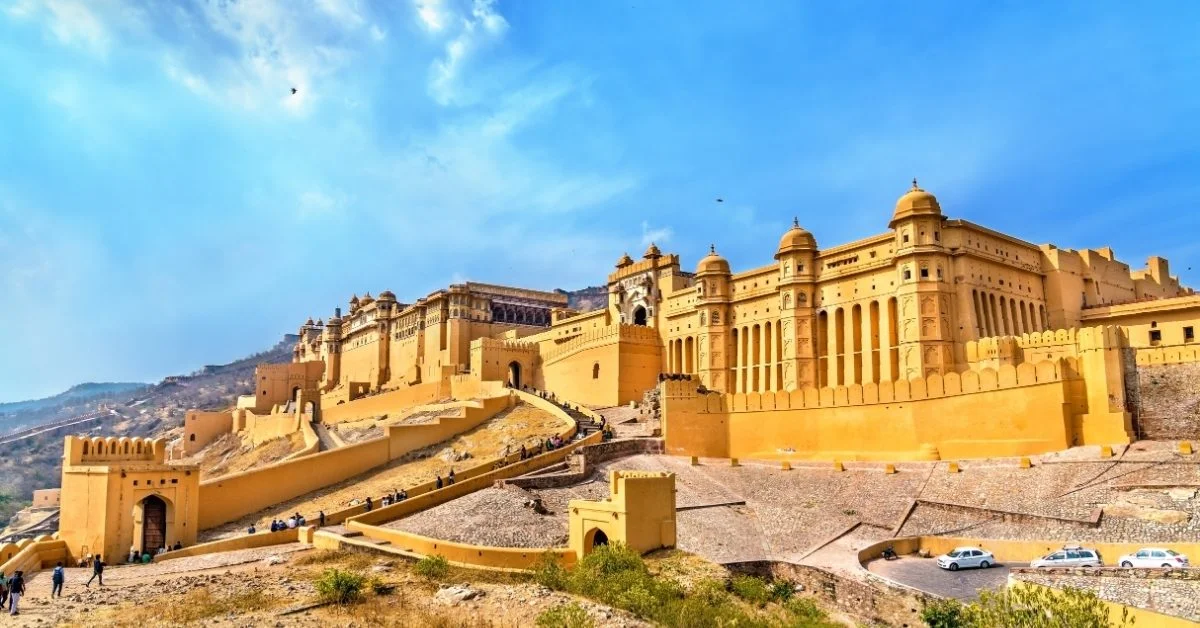 Image Credit: Experience My India
Add the constant political stress from Mughal and Maratha power struggles, and Amber became vulnerable. The kingdom needed a safer, more sustainable base. That’s when Maharaja Sawai Jai Singh II stepped in with a clear decision - build a new capital from scratch.
So the shift wasn’t about grandeur. It was survival and strategy.
Jai Singh II: The King Who Thought Like a Scientist
Here’s the thing: most kings built cities with aesthetics and power in mind. Jai Singh built his with math.
He was an astronomer, a scholar of geometry, and someone who loved precision. He wasn’t interested in chaotic expansion or winding medieval streets. He wanted order, symmetry, and logic.
He found an open plain surrounded by hills - a natural shield - and decided that was where the kingdom’s future would sit. Instead of rushing into construction, he brought in an expert who could translate his vision into a living, breathing city.
Vidyadhar Bhattacharya, the Architect Who Made It Happen
Vidyadhar Bhattacharya was a Bengali architect well-versed in ancient Indian texts like Vastu Shastra and Shilpa Shastra. Jai Singh paired his expertise with influences from Ptolemy and Euclid. So the blueprint for Jaipur wasn’t just traditional or just scientific - it blended both worlds.
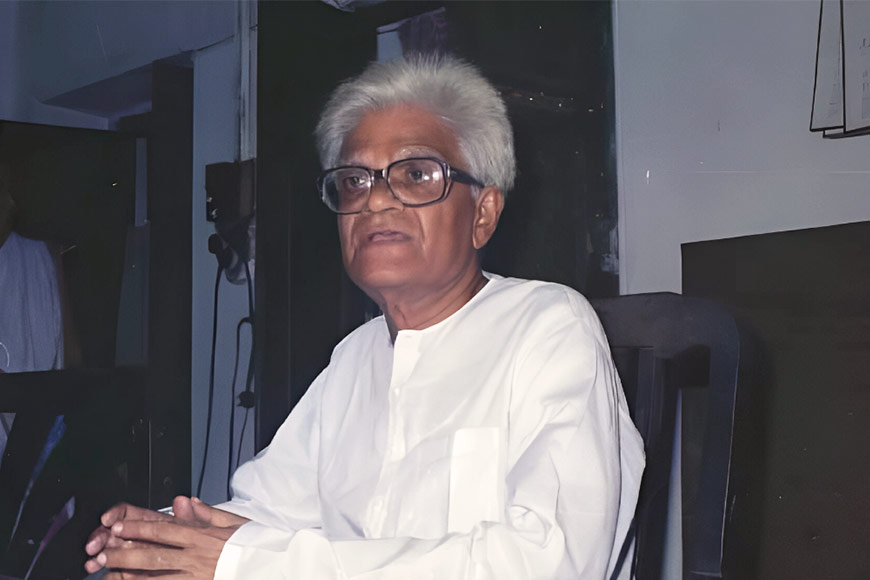 Image Credit: Get Bengal
This fusion is why Jaipur stands out. It didn’t rely on trial and error. It used formulas, directional science, proportion, and human movement patterns.
Construction started in 1727, and within just four years, the main squares, palaces, roads, and markets were ready. Think about that speed and scale for the 18th century - it’s wild.
The Nine-Block Grid: The City’s Signature Move
One of Jaipur’s smartest decisions was its nine-block layout, inspired by the nine planets.
Two blocks were reserved purely for the royal family. The remaining seven were meant for the public, ensuring that commerce, markets, and residential areas all had designated space.
This grid wasn’t just symbolic. It helped the city breathe. Wide north-south and east-west roads ensured proper ventilation and easy movement. During a time when most Indian cities grew organically and became narrow labyrinths, Jaipur felt open.
And then came the markets.
The bazaars were lined with covered structures that shielded people from Rajasthan’s heat while keeping trade flowing. Even today, walking through Johari Bazaar or Bapu Bazaar gives you a sense of that built-in climate intelligence.
Walls, Gates, and a City Built to Stay Safe
Jaipur wasn’t just beautiful. It was secure.
The entire city was wrapped in 20-foot-high walls, with seven gates serving as controlled entry points.
Each gate had a role:
1. Ajmeri Gate focused on trade routes
2. Sanganeri Gate is linked to southern connections
3. Chandpole Gate catered to the west
More gates were added over time as the city expanded, but the original idea stayed solid - protect the capital, control movement, and maintain order.
The more you look at it, the more obvious it becomes: this wasn’t a king building a vanity project. This was strategic urban engineering.
How Jaipur Became the Pink City
Fast-forward to 1876. The Prince of Wales was set to visit India. To make a memorable impression, the city was washed in a soft terracotta pink, a color considered welcoming.
People loved it so much that Jaipur kept the shade, and the nickname stuck.
Around the same time, Jaipur started adding facilities that pushed it far ahead of other cities. Gas lighting was installed on major streets. Hospitals, colleges, and broader avenues arrived. Businessmen were encouraged to settle with tax reliefs and land grants.
The city wasn’t just surviving - it was thriving.
And yes, this approach eventually earned Jaipur a UNESCO nod for its planning and development model.
Why Jaipur Became a Benchmark in City Planning
Jaipur succeeded because it combined:
1. Scientific principles
2. Ancient Indian urban wisdom
3. Strong trade incentives
4. Strategic safety elements
5. Climate-sensitive design
Modern planners often talk about mixed land use, ventilation, walkability, and human-centric design. Jaipur had all of this in the 1700s.
You could say it was a city built centuries before the world fully understood city planning.
The Modern Problem: Growth Faster Than Planning
Now let’s be honest. Even the best-designed city struggles when the population grows beyond what it was built for.
Jaipur’s original grid wasn’t meant to handle today’s scale. Unplanned settlements started mushrooming around the old city. Hygiene systems faced pressure. Roads meant for carts now handle cars, bikes, buses, and autos all at once.
That doesn’t make Jaipur a failed model. It just shows that planning needs to evolve with time - and Jaipur’s expansion often didn’t.
What Went Wrong With the BRTS
Around 2010, Jaipur tried to fix traffic chaos with a Bus Rapid Transit System. Good intention, messy execution.
The issues were pretty clear:
1. Poor lane design
2. Not enough dedicated buses
3. Confusing junctions
4. Lack of public awareness
5. Added congestion instead of easing it
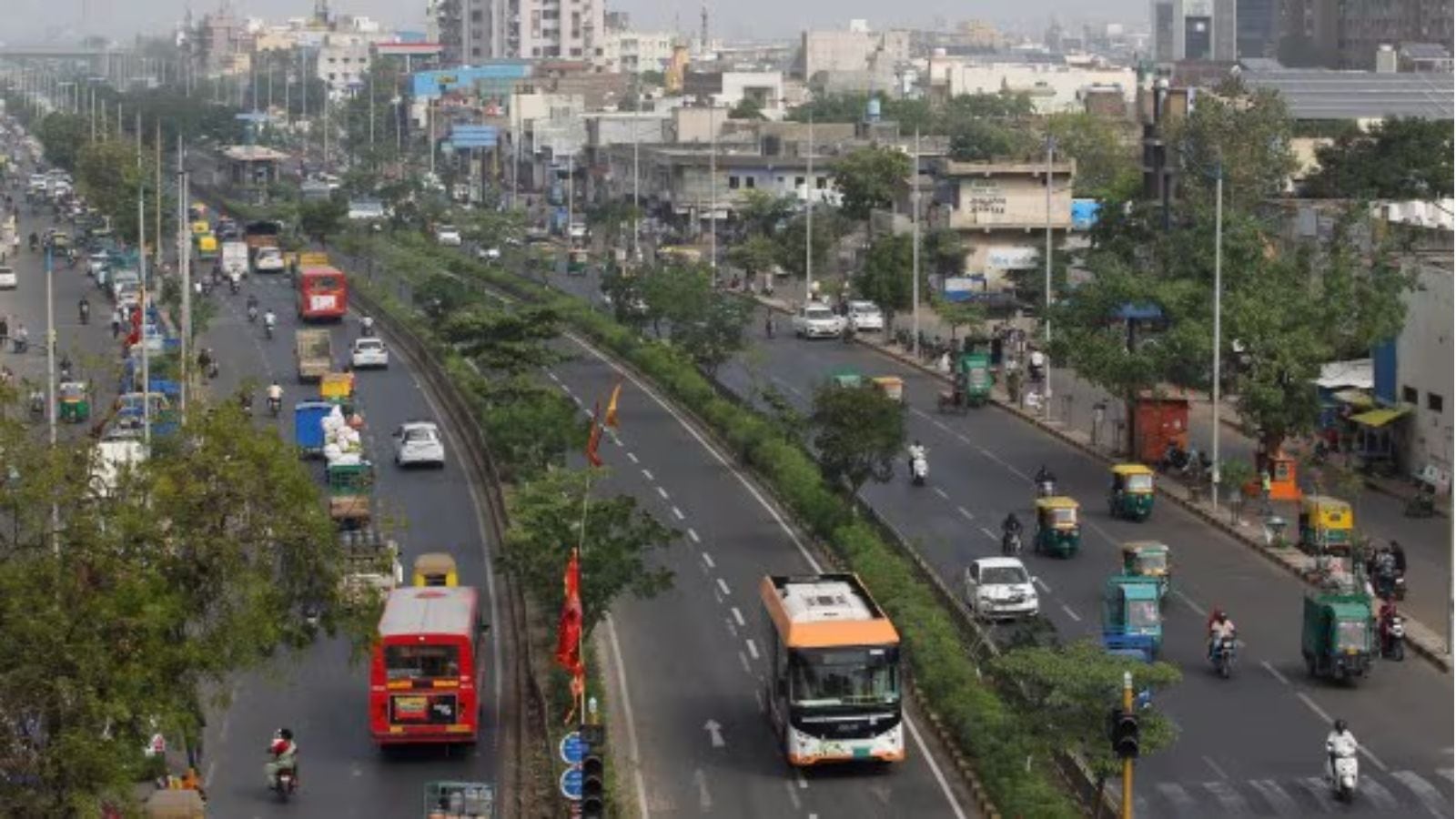 Image Credit: The Indian Express
The system never took off the way it should have. Money was spent, but the result didn’t match the promise.
Metro Lines and the Old City: A Difficult Balance
The Jaipur Metro brought modern mobility, but it also came with downsides. Digging through heritage-heavy zones caused disruptions. Residents complained about movement restrictions. Old structures felt the impact of vibrations and construction work.
Balancing heritage with development is tricky. And in Jaipur’s case, it sometimes tilts toward conflict instead of collaboration.
Despite the Challenges, Jaipur’s Original Blueprint Still Wins
Even today, think about how effortlessly the old city handles tourism, festivals, and daily trade. That’s planning at work.
Jaipur teaches a simple lesson: when a city is built with science, culture, and human life in mind, it continues to function long after its founders are gone.
The modern issues don’t erase the brilliance behind its creation. They simply highlight that even the best frameworks need adaptation.
Conclusion
Jaipur isn’t just a historic city. It’s a case study in how thoughtful planning can outlive centuries of change. Jai Singh II and Vidyadhar Bhattacharya didn’t just build a capital - they built a model the world still learns from.
Yes, modern expansion has brought challenges. But the core principles that shaped Jaipur remain powerful: order, openness, climate awareness, and human-centered design.
And maybe that’s the real legacy of India’s first planned city - proof that when a city is built with intention, it keeps giving back.
What's Your Reaction?
 Like
0
Like
0
 Dislike
0
Dislike
0
 Love
0
Love
0
 Funny
0
Funny
0
 Wow
0
Wow
0
 Sad
0
Sad
0
 Angry
0
Angry
0

I’m Ryan Rehan, Business Development Executive and a passionate blogger dedicated to sharing insights, tips, and experiences that inspire and inform. Through my blogs, I explore topics that matter, spark curiosity, and encourage thoughtful conversations. Whether I’m breaking down complex ideas, offering practical advice, or simply sharing stories, my goal is to create content that adds real value to a growing community of curious minds and passionate readers.














Comments (0)