

Jaigarh Fort Jaipur: The Warrior Fort Overlooking Amber
Explore Jaigarh Fort, Jaipur, the Warrior Fort Overlooking Amber. Discover its military architecture, Jaivana cannon, secret tunnels & stunning Amber views.

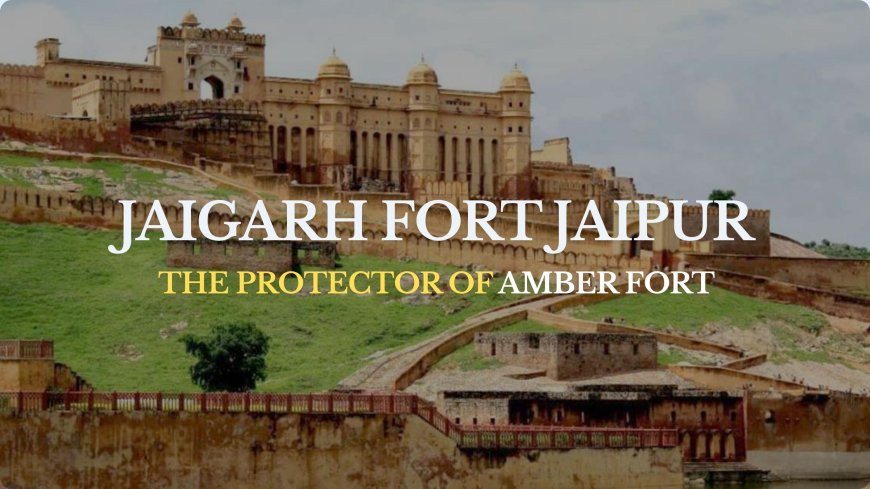
Table of Contents
- Introduction: The Mighty Fortress Above Amber
- Military Importance & Architecture of Jaigarh Fort Jaipur
- The Close Connection Between Jaigarh & Amber Fort
- Interesting Facts: Hidden Tunnels, Weapon Museum & Largest Cannon in the World
- Visitor Information and Ideal Visit Time
- Conclusion: Why This Fortress Must Be Visited
-
Introduction: The Mighty Fortress Above Amber
If you're passing through Rajasthan, Jaipur has one of its most daunting fortresses concealed behind the dry Aravalli hills: Jaigarh Fort. Locally referred to as the "Warrior Fort Over Amber", Jaigarh Fort sits atop the world-famous Amber Fort and presents stunning views of the Pink City and the rolling hills. With its red-sandstone walls, hidden passageways, and sweeping vistas, this fort is a tribute to Rajput military ambition, and it is not to be missed on travel through Jaipur's historic landscape.
Along the way, we'll tell you how Jaigarh Fort Jaipur (our target phrase) was formed, analyze its military design, show its connection to Amber Fort, add some interesting trivia (like the huge cannon and hidden tunnels), and finally give you practical visitor tips, including best times, tips, and how to get the most from your visit.
-
Military Importance & Architecture of Jaigarh Fort Jaipur
The strategic importance of Jaigarh Fort, Jaipur, cannot be overstated. Built atop the crest of Cheel ka Teela (Hill of Eagles) in the Aravalli series of hills, the raised position of the fort gave it a commanding view over the surrounding terrain, including the Amber Fort below.
The fort was commissioned in 1726 by Maharaja Jai Singh II of Amber/Jaipur, primarily as a defensive fortress and not a recreation palace.
Its purpose is to guard Amber Fort and the royal treasury, to host foundries for the manufacture of cannons, and to serve as an unbreachable stronghold against siege.
Architecturally, Jaigarh, Fort Jaipur, is built entirely in red sandstone with ramparts thick and spreading around 3 km in length and 1 km in breadth.
From the outer walls, bastions, watchtowers, ramped access roads, enormous guns mounted on terraces, and inner courtyards and halls constructed for the warriors and foundry-workers of their time can be seen. One report confirms, "The fort's massive sandstone walls stretch over 3 kilometres long and stand elevated 400 metres above Amer."
Inside, the architecture is a blend of Rajput and Mughal warlike characteristics: protected gateways, screened windows in palace-hall form (though still with defence as a priority), water-retaining tanks that enabled the fort to survive extended sieges, and an armoury and foundry.
In short, what you see, recall, you do not just look upon a beautiful palace, you walk through a war fortress: observation, artillery, strategic positioning, quick defence, a warehouse of supplies, and exits.
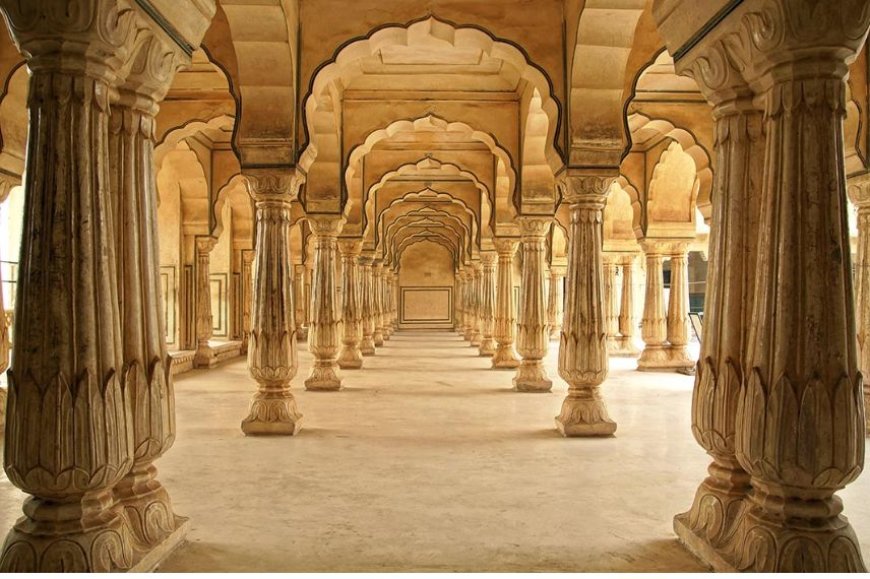
Image Credit: Remote Lands
-
The Close Connection Between Jaigarh & Amber Fort
One of the most fascinating aspects about Jaigarh Fort, Jaipur, is the close association with Amber Fort. While Amber Fort (also "Amer Fort") is the more well-known of the two, Jaigarh lies above, and the relationship between them was planned.
Secondly, Jaigarh Fort was built to protect Amber. Being high, it could be the first line of defense against intruders.
Second, there are tunnels underground which are claimed to connect Amber Fort and Jaigarh, and would have allowed the royal household or garrison to travel between the two forts in case of an emergency.
The appearances also emphasize this connection: from Jaigarh you look down over Amber Fort, and from a decent many vantage points inside the Amber complex you get a glimpse of the sprawling red walls of Jaigarh surrounding the lower fortress. It's a fortress-and-palace pair in conjunction: the palace (Amber) below for domesticity, ceremony, and display - the warrior fortress (Jaigarh) above for defense and cannon.
So as you step into Jaigarh Fort,t Jaipur, keep this dual role in mind; it's not just one individual fort – it's the twinned guardian to Amber.
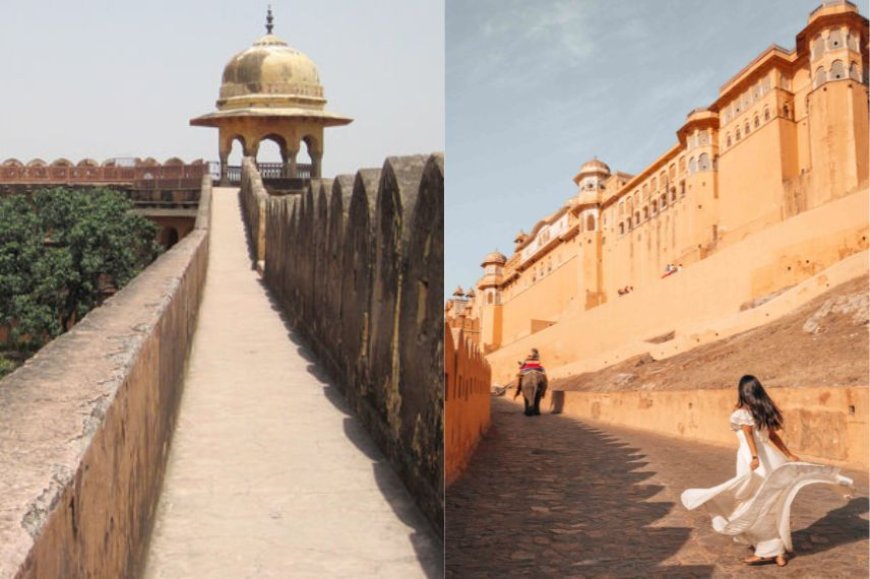
Image Credit: Jaipur Tourism and Travel with CG
-
Interesting Facts: Hidden Tunnels, Weapon Museum & Largest Cannon in the World
-
World's Largest Cannon on Wheels – the Jaivana
Perhaps the most iconic single attraction at Jaigarh Fort, Jaipur, is the Jaivana Cannon. Cast on site in around 1720 (during Jai Singh II’s reign) at the fort’s foundry, this enormous artillery piece is claimed to have been the world’s largest cannon on wheels at the time of its manufacture.
Details: Approximately 50 tons in weight, approximately 6.15 m (20 ft) barrel length, and equipped with enormous wheels to make it mobile.
It was a one-off test-fired (at least on record) and never actually employed in combat - a showpiece of military power.
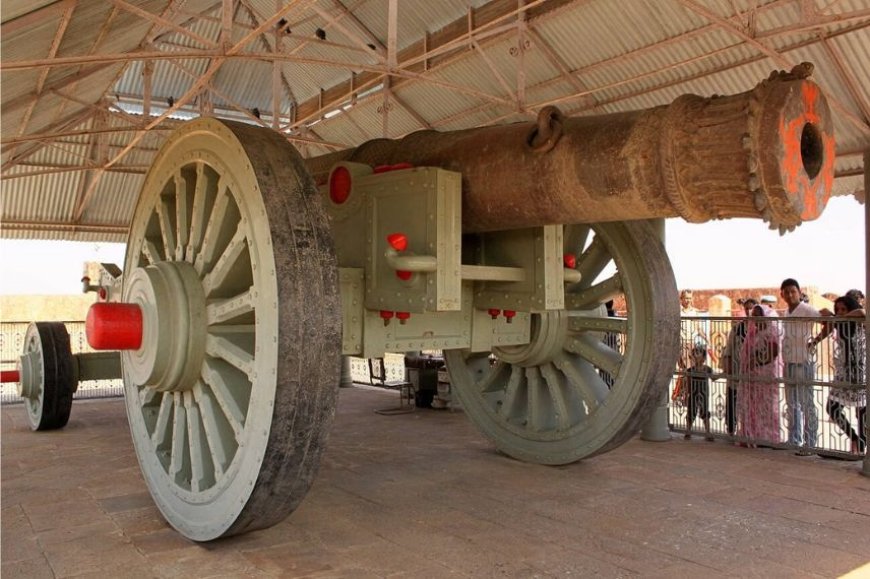
Image Credit: WanderOn
-
Underground Tunnels & Secret Passages
Myths center on secret passageways linking Jaigarh to Amber. While not all the ones available for tourists or excavated in their entirety, records at Jaigarh Fort have been talked about, where it was reached from Amber Fort through subterranean pathways, providing scope for surreptitious movement during war.
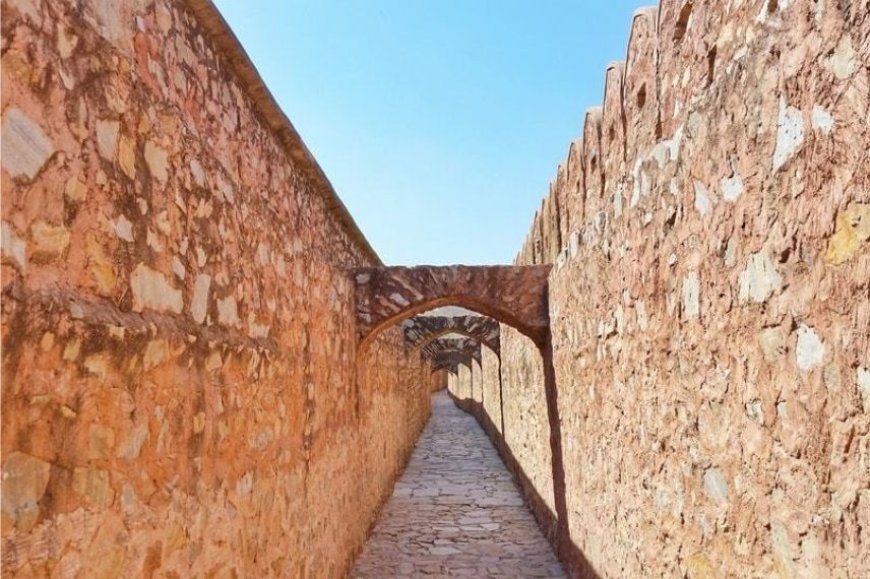
Image Credit: Flashpacking Kerala
-
Weapons Museum & Armoury
Within Jaigarh Fort, Jaipur, there's the armoury - now a museum/gallery - which displays weapons, small cannon, and fort machinery employed by past rulers.
Other Interesting Side Notes
For fans of military architecture and history, it's an in-depth glimpse at the Rajput and Mughal war-tech.
-
The fort has never been taken in war.
-
The fort is roughly 400 meters above the Amber Fort on the hill and therefore shows its
-
walls to the Amber view and the commanding view of the city.
-
The name "Victory Fort" is given in certain situations to Jaigarh (Jai = victory; garh = fort) in appreciation of its defensive role.
These facts combined render Jaigarh Fort, Jaipur, more than just a mere historical site - it is a story of military brilliance, architectural resilience, and tradition intertwined with legend.
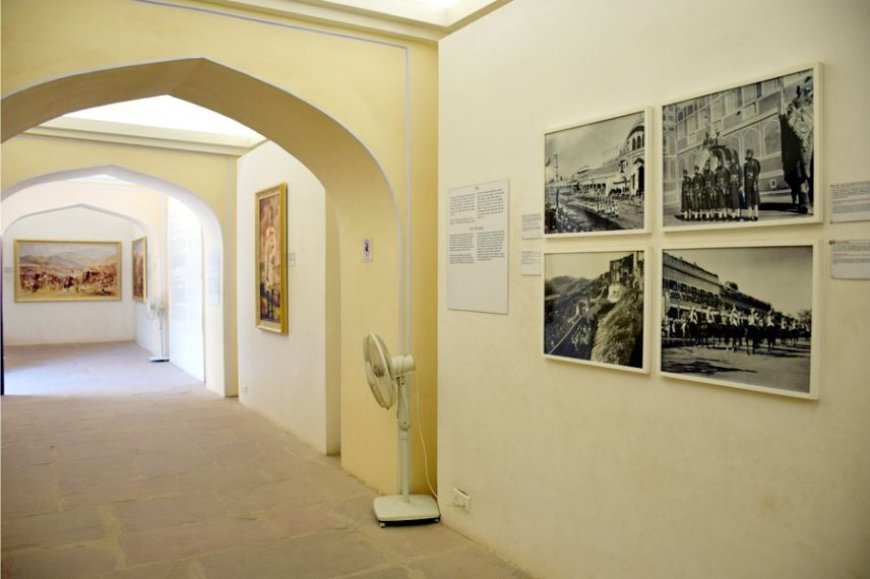
Image Credit: Museum of India
-
-
-
Visitor Information and Ideal Visit Time
As you go about organizing a visit to Jaigarh Fort, Jaipur, the following useful facts will assist you in maximizing your visit.
Location & How to Reach
The fort is situated near Amer (Amber) in Jaipur district, Rajasthan. By car from Jaipur city, or as part of an overall itinerary with the Amber Fort. On the official tourism website: "Jaigarh Fort is approximately 11 km from the city of Jaipur."
Timings
Officially, the fort opens around 9:00 AM and closes around 5:00 PM to 6:30 PM, depending on the source. For instance
-
One place: "open daily, from 9:00 hrs to 18:30 hrs IST".
-
Another place: "opening time – 09:30 AM; closing time – 05:00 PM".
Keeping this in mind, the most suitable time slot for leisurely touring is early morning upon opening, or late afternoon when it is about to close, to avoid the crowds and the heat of the day. As another travel guide suggests: "Plan Your Visit Early: To avoid the crowds and the heat, try to visit the fort early in the morning."
Best Time of Year
It is preferable to go from October to March since the weather remains cooler and more pleasant for walking around the large open areas of the fort.
Visitor Duration & Tips
-
Allow a minimum of 1.5 to 2 hours, preferably 2–3 hours, if you plan to visit in depth (weapon museum, ramparts, and views included). One site suggests 2 hours.
-
Wear comfortable walking shoes - the fort has uneven terrain, ramps, and steps.
-
Carry water, sun-protection (hat, sunscreen,n), and ideally a local guide for a richer context.
-
Combine the visit with Amber Fort, as they lie in proximity, and the view from Jaigarh of Amber is a highlight in itself.
-
If you’re into photography, aim for vantage points near the ramparts to frame Amber Fort below.
Entry Fee
Fees are by category (Indian adult/child, foreign tourist) and change over time. One recent instance: Indians: INR 150 for adults, INR 75 for children (5-12 years). Foreigners: INR 200 for adults.
What to See
-
The giant cannon (Jaivana) is on the top level of the fort.
-
The armoury/weapon museum with vintage arms.
-
The view of Amber Fort and Maota Lake in the lower plain.
-
Walk along the ramparts and observe the imposing red sandstone walls, bastions, and watch-towers.
-
If feasible, look for remnants of the underground passage to Amber.
-
The physical layout, i.e., Awani Darwaza gateway and inner palace halls.
-
-
Conclusion: Why This Fortress Must Be Visited
Inheritage-filled Jaipur city, where several forts and palaces vie for your attention, "Jaigarh Fort Jaipur" stands apart for many reasons. Not merely beautiful - though it is, with its dramatic site and architecture - but also the martial, protective, strategic essence of Rajput and Mughal warfare. Its commanding hilltop location, with its cannon foundry which cast the world's largest wheeled cannon, with the subterranean tunnels linking it to the palace below, Jaigarh Fort unites large vision and practical military engineering.
If your itinerary includes visiting Amber Fort (which it very likely will), carve out time for Jaigarh Fort in Jaipur. You’ll gain that elevated vantage, the sense of scale, the fortress atmosphere, and the story behind the weapons, the ramparts, and the rugged remains of wartime preparedness. Whether you’re a history enthusiast, architecture admirer, photographer, or casual traveller, Jaigarh Fort offers layered appeal.
In the soft early morning light or the golden hour of late afternoon, the fort walls glimmer, the Aravalli hills stretch out, and yesteryear's grandeur is formed. Do your visit right - visit early or late, wear comfortable walking shoes, carry water in your hand, and spend two hours. And look out there and connect your eye with the distant Amber Fort and question yourself about the sort of defence, iron, stone, and human effort which went into crafting this "Warrior Fort Overlooking Amber".
What's Your Reaction?
 Like
0
Like
0
 Dislike
0
Dislike
0
 Love
0
Love
0
 Funny
0
Funny
0
 Wow
0
Wow
0
 Sad
0
Sad
0
 Angry
0
Angry
0














Comments (0)